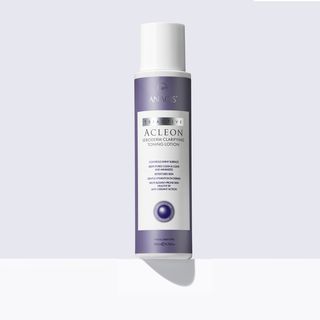
ANACIS Triactive Acleon Seboderm Clarifying Toning Lotion
Works for
1 of 1 advertised claim delivered
Moisturizing12 ingredients credited for this claimStrong support
“Offers anti-oxidation and hydration to skin with Tricolour Viola Flower Extract.”
This product contains good ingredients to attract water to the upper layer of the skin. These ingredients are called "humectants": glycerin, butylene glycol.
When humectants are on the surface of the skin, they “pull in” the moisture from the outside environment, or from within deeper layers of the skin. If the air is dry, humectants can speed up the moisture loss from the skin. This is why it is a good idea to use another product on top of this one to help "seal in" the moisture (look for ingredients like dimethicone, squalane, oils and butters).
The following ingredients in this product are especially good for supporting the skin barrier and helping with the hydration level: panthenol
Anti-oxidationNot advertised by the brand · 9 ingredients credited for this claimStrong support
This product contains antioxidants (asiaticoside) that can help neutralize free radicals in skin. By doing so, they can lessen the damage the skin gets from the UV light (sun).
Anti-agingNot advertised by the brand · 5 ingredients credited for this claimModerate support
This product contains asiaticoside. This ingredient might be able to help reduce and prevent fine lines and wrinkles, improve skin elasticity and firmness, but there is not enough evidence that it actually works.
Can it cause trouble?
Irritancy11 strong irritants: Citrus junos fruit extract, Mentha piperita extract + 9 more — patch-test recommendedHigh risk
Comedogenic1 ingredient rated 2 or more on the 0–5 pore-clogging scale1 flagged


User reviews
Be the first — your take helps the next person decide.
Ingredients
Filter by role to see what each ingredient is doing.
Water~40–60%
Butylene glycol~4.5–6.7%
- Irritation risk
- Low
Used to create a nice product texture and help delivery of other ingredients. Might be somewhat helpful in attracting water to the upper layer of the skin
More about Butylene glycolGlycerin~2.9–4.3%
- Irritation risk
- Low
One of the best moisturizing ingredients. Naturally present in skin. It attracts water to the upper layer of the skin working as a humectant
More about GlycerinPanthenol~2.2–3.3%
- Irritation risk
- Low
Helps attract water to the upper layer of the skin and can help improve skin barrier function
More about PanthenolAloe barbadensis leaf juice~1.6–2.5%
- Irritation risk
- Medium
Traditionally used to treat sunburns, dermatitis and inflammation, but evidence for its effectiveness is lacking. The extract can contain humectants that help attract water into the skin
More about Aloe barbadensis leaf juiceDiospyros kaki leaf extract~1.2–1.8%
- Irritation risk
- Low
Salix alba bark extract~0.6–1.35%
- Irritation risk
- High
A plant extract that can help neutralize free radicals in skin. It contains a compound salicin that can theoretically be converted into salicylic acid that, in turn, helps reduce inflammation in skin, but the evidence of effectiveness in skin is lacking and the extract is usually not used in a concentration that would enable an exfoliating effect
More about Salix alba bark extractPlantago asiatica extract~1.1–1.6%
- Irritation risk
- Low
Laminaria digitata extract~0.85–1.3%
- Irritation risk
- Low
- Comedogenicity
- 3/5
Seaweed extract that helps the skin to attract water and make it more smooth for touch. Also shows promise of anti-aging properties, but good research is lacking at the moment
More about Laminaria digitata extractUlmus campestris bark extract~0.45–1.05%
- Irritation risk
- Low
Epilobium fleischeri extract~0.35–0.8%
- Irritation risk
- Low
Citric acid~0.15–0.65%
- Irritation risk
- Medium
Can work as an exfoliant but is typically used to adjust the product pH
More about Citric acidPotassium sorbate~0.1–0.45%
Asiaticoside~0.05–0.25%
- Irritation risk
- Medium
An active compound of Centella Asiatica plant extract. In combination with other active compounds of Centella Asiatica extract (madecasosside, asiatic acid and madecassic acid), asiaticoside has been shown to be helpful in wound-healing, restoring skin barrier function and supporting collagen production in skin. It can, however, itself be irritating
More about AsiaticosidePinus densiflora leaf extract~0.1–0.3%
- Irritation risk
- Low
Citrus junos fruit extract~0.05–0.25%
- Irritation risk
- High
Contains essential oil. Can be irritating and lead to photosensitivity
More about Citrus junos fruit extractArtemisia annua extract~0.05–0.3%
- Irritation risk
- Low
Camellia sinensis leaf extract~0.1–0.3%
- Irritation risk
- Low
Can contain potent anti-oxidant compounds (abbreviated ECG, GCG, EGC, and EGCG) that might help protect the skin from free radicals. Can help calm down inflammation and has some anti-bacterial properties. Unfortunately, these antioxidants are unstable and lose their effectiveness very quickly in products. The concentration of the antioxidant compounds in the extract also tends to be low to be effective in topical formulation
More about Camellia sinensis leaf extractViola tricolor extract~0.1–0.3%
- Irritation risk
- Medium
A plant extract that might have an anti-inflammatory effect in skin
More about Viola tricolor extractMentha piperita extract~0.1–0.3%
Magnesium ascorbyl phosphate~0.05–0.15%
- Irritation risk
- Medium
A derivative of vitamin C that is more stable, but less bioavailable than the pure form of vitamin C. It does not penetrate the skin well, but has been shown to convert to pure vitamin C once in skin. It can be helpful in stimulating collagen production and lightening the skin tone, but the required concentration is likely to be very high
More about Magnesium ascorbyl phosphateDipropylene glycol~0.01–0.1%
- Irritation risk
- Low
Helps to dissolve other ingredients in a formulation. Slows down the rate of product drying
More about Dipropylene glycolTocopheryl acetate~0.05–0.1%
- Irritation risk
- Medium
A more stable but less bio-available form of vitamin E compared to Tocopherol. Might help moisturize and protect the skin from free radicals, but mostly used in low concentrations to stabilize other ingredients.
More about Tocopheryl acetateHydrogenated lecithin~0.05–0.1%
- Irritation risk
- Low
Helps to retain moisture by creating a protective barrier on the skin. Rich in fatty acids. Improves product texture and helps with the penetration of other ingredients.
More about Hydrogenated lecithinCeramide np~0.05–0.15%
- Irritation risk
- Low
A type of lipid similar to ceramides naturally present in skin. Helps to soften the upper layer of the skin and supports the skin barrier function to keep it hydrated. Can help to prevent inflammation in skin
More about Ceramide npRosmarinus officinalis leaf oil~0.01–0.05%
- Irritation risk
- High
A plant oil with high content of volatile compounds that can irritate the skin. Can be used as a fragrance. Has anti-bacterial properties and might help neutralize free radicals on the surface of the skin
More about Rosmarinus officinalis leaf oilLavandula angustifolia oil~0.01–0.05%
- Irritation risk
- High
An essential oil. Potential allergen and can be irritating. It has some anti-bacterial properties
More about Lavandula angustifolia oilOcimum basilicum oil~0.01–0.05%
Salvia sclarea oil~0.01–0.1%
- Irritation risk
- High
Pelargonium graveolens flower oil~0.01–0.1%
- Irritation risk
- High
An essential oil. Can be irritating. Can become an allergen with oxidation
More about Pelargonium graveolens flower oilCitrus grandis peel oil~0.01–0.05%
- Irritation risk
- High
A plant oil with high content of volatile compounds that, especially when exposed to air, can cause allergic reactions and irritate the skin
More about Citrus grandis peel oilCitrus limon peel oil~0.01–0.05%
Citrus aurantium dulcis peel oil~0.05–0.1%
- Irritation risk
- High
An essentil oil from orange peel. Potential allergen and can be irritating
More about Citrus aurantium dulcis peel oilCitrus aurantium bergamia fruit oil~0.01–0.1%
- Irritation risk
- High
A plant oil with a high content of volatile compounds that can irritate the skin and lead to allergic reactions. Can lead to photosensitivity
More about Citrus aurantium bergamia fruit oilDipotassium glycyrrhizate~0.05–0.15%
- Irritation risk
- Low
A salt derived from licorice. Works as an emollient to soften the upper layer of the skin and can help calm down inflammation. Might be helpful for skin lightening
More about Dipotassium glycyrrhizateArginine~0.05–0.15%
- Irritation risk
- Low
An amino acid that is naturally present in skin and helps keep it hydrated. When used together with AHAs, it can reduce their irritating effect on the skin
More about ArginineXanthan gum~0.05–0.15%
- Irritation risk
- Low
Used to create a thicker product consistency
More about Xanthan gumAcrylates/c10-30 alkyl acrylate crosspolymer~0.05–0.15%
- Irritation risk
- Medium
Maintains the texture of skincare products. Allows the product to spread evenly. Helps oil and water mix together
More about Acrylates/c10-30 alkyl acrylate crosspolymerChlorphenesin~0.01–0.05%
Polysorbate 20~0.05–0.15%
1,2-hexanediol~0.01–0.1%
Caprylyl glycol~0.01–0.1%
- Irritation risk
- Medium
Helps preserve products and creates a nice product texture
More about Caprylyl glycolIngredient list view
Water, Butylene glycol, Glycerin, Panthenol, Aloe barbadensis leaf juice, Diospyros kaki leaf extract, Salix alba bark extract, Plantago asiatica extract, Laminaria digitata extract, Ulmus campestris bark extract, Epilobium fleischeri extract, Citric acid, Potassium sorbate, Asiaticoside, Pinus densiflora leaf extract, Citrus junos fruit extract, Artemisia annua extract, Camellia sinensis leaf extract, Viola tricolor extract, Mentha piperita extract, Magnesium ascorbyl phosphate, Dipropylene glycol, Tocopheryl acetate, Hydrogenated lecithin, Ceramide np, Rosmarinus officinalis leaf oil, Lavandula angustifolia oil, Ocimum basilicum oil, Salvia sclarea oil, Pelargonium graveolens flower oil, Citrus grandis peel oil, Citrus limon peel oil, Citrus aurantium dulcis peel oil, Citrus aurantium bergamia fruit oil, Dipotassium glycyrrhizate, Arginine, Xanthan gum, Acrylates/c10-30 alkyl acrylate crosspolymer, Chlorphenesin, Polysorbate 20, 1,2-hexanediol, Caprylyl glycol
Compare prices
Retailers ranked by price — lowest first.

Affiliate links · prices updated regularly
Worth comparing, line by line.
Match % combines shared ingredients, the first five ingredients, shared actives and hero ingredients, irritancy (lower counts in the alternative's favour), texture and body area. Only products in the same routine step are compared.
| ANACISTriactive Acleon Seboderm Clarifying Toning LotionYOUR PRODUCT | mixsoonMaster Repair Cream Deep Soothing | TOSOWOONGDexpanthenol Cream | LAGOMCellus Sensitive Cica Cream | |
|---|---|---|---|---|
| Match | — | 61% | 61% | 61% |
| Price | $22.95 | $42.00+$19.05 | $19.10−$3.85 | $18.50−$4.45 |
| Shared key ingredients | — | 5 of 6 | 5 of 6 | 5 of 6 |
| Key difference | — | Madecassoside | Madecassoside | Madecassoside |
| Irritancy | High | Medium | Medium | Medium |
| Drying alcohol | — | — | Contains drying alcohol | — |
| View product | Shop | Shop | Shop |

Product summary
Based on the ingredients included, "ANACIS - Triactive Acleon Seboderm Clarifying Toning Lotion" works well for moisturizing the skin. As we expect from a proper moisturizer, the formula includes a combo of effective humectants and emollients. These are the two different types of ingredients that are essential for improving the skin hydration and supporting a healthy skin barrier. Panthenol, glycerin, butylene glycol and caprylyl glycol in this product (humectants) attract water molecules to the upper layer of the skin (the water comes from the outside air or from the deeper layers of the skin if the air is dry). Caprylyl glycol and viola tricolor extract in this product help decrease the water evoporation from the skin, so that it stays hydrated for longer. These ingredients also soften the skin and take away the feeling of tightness and dryness.
Ingredient callouts
- Another benefit is that this moisturizer contain ceramides (ceramide np 0.05% - 0.15%). Ceramides are an important part of our natural skin barrier. The Ceramides used in skincare are synthetic or come from plants. They help soften the skin and can help "fill the gaps" in the skin barrier, keeping the skin hydrated and resilient for longer.
- Actives derived from an extract of the Centella Asiatica plant (also known as Gotu Kola) - asiaticoside 0.05% - 0.25% The Centella Asiatica Actives, even in low concentration, can help reduce inflammation in skin, strengthen the skin barrier and reduce photodamage. They can also help to decrease scarring.
- Panthenol (pro-vitamin B5) at about 2.20% - 3.30% concentration. In this concentration, Panthenol works effectively to improve the skin barrier and reduce inflammation.
Irritation risk
This moisturizer contains a bunch of common irritants, including ingredients that do not provide any known benefit for the skin. It might not be the best choice if your skin is sensitive. We assess the overall irritancy of this moisturizer to be high. For a detailed overview of all potential irritants: click here
You can see the detailed formula review with the breakdown of all actives in the product and the full ingredient list with estimated concentrations in the tables below.
Price
The product retails for 22.95$ in the United States.
For a detailed price comparison: click here.
Sources cited in this review
Every concentration estimate and effectiveness label is anchored to one of these 27 studies and safety reviews.
- 1
- 2Skin moisturizing effects of panthenol-based formulationspdfs.semanticscholar.org
- 3
- 4Efficacy and Safety of White Willow Bark (Salix alba) Extractonlinelibrary.wiley.com
- 5
- 6Centella asiatica in cosmetologyncbi.nlm.nih.gov

Affiliate links · As an Amazon Associate, WIMJ earns from qualifying purchases.