Works for:
based on ingredients and %- Moisturizing
- Anti-oxidation
Doesn't work for:
based on ingredients and %- Anti-aging
Can it cause trouble?
- Irritation risk: high
- Comedogenic risk ingredients: 2
Key actives

Anti-oxidation
This product contains antioxidants (pinus pinaster bark extract) that might be able to help neutralize free radicals in skin to lessen the damage it gets from the UV light (sun). There is not enough evidence to confirm their effectiveness in skin though.
A plant extract that might help neutralize free radicals and reduce hyperpigmentation, but evidence of effectiveness of topical application is lacking. It can be an INCI name for the trademarked ingredient Pycnogenol (but could also be a different type of this plant's bark extract)
A fermentation product created by bacteria Lactobacillus. The fermented product has anti-bacterial properties and might be helpful in calming down inflammation, but studies are lacking. Helps attract water to the upper layer of the skin. Can be used as a preservative
An algae extract. Might help to attract water to the upper layer of the skin and have an anti-oxidant effect
Pure form of vitamin E. Can help moisturise and protect the skin from free radicals. Often used to help stabilise other ingredients or the formula itself
Moisturizing
What does the product description say?
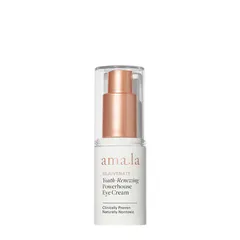
The Amala Youth-Renewing Powerhouse Eye Cream leaves skin feeling hydrated and glowing.
Source: Content
This product can help improve hydration of the skin with the two types of ingredients.
The first type is called “humectants”:
these ingredients help attract water.
When humectants are on the surface of the skin, they “pull in” the moisture from the outside environment, or from
within deeper layers of the skin. The following ingredients in this product do the job:
glycerin, lactobacillus ferment.
This product also contains ingredients called “occlusives”. They help reduce the speed with which our skin loses moisture to the outside environment. These ingredients also help soften the upper layer of the skin, so it feels less tight and nicer to the touch. The following ingredients in this product do the job: helianthus annuus seed oil, simmondsia chinensis seed oil.
A great emollient due to its high linoleic acid content. One of the most effective plant oils in helping skin hydration and repairing skin barrier function
A non-living ingredient made by fermentation with the bacteria Lactobacillus. It can help attract water to the upper layer of the skin and might help reduce inflammation
A fermentation product created by bacteria Lactobacillus. The fermented product has anti-bacterial properties and might be helpful in calming down inflammation, but studies are lacking. Helps attract water to the upper layer of the skin. Can be used as a preservative
An emollient that helps soften the skin and could be helpful in repairing its barrier function
Helps attract water to the upper layer of the skin
A plant extract that typically contains linolenic and linoleic acids that help soften the upper layer of the skin and can support skin barrier function
Softens the upper layer of skin and helps restore the healthy skin barrier. Has shown to help calm down inflammation in skin. It is a stable oil, meaning that it retains its properties even when exposed to air.
One of the best moisturizing ingredients. Attracts water into the upper layer of the skin
Helps soften the upper layer of the skin and might as well help to attract moisture to its upper layer
One of the best moisturizing ingredients. Naturally present in skin. It attracts water to the upper layer of the skin working as a humectant
Helps attract water to the upper layer of the skin. Is claimed to support the growth of "good" bacteria in skin (as a "prebiotic"), but the research is lacking
An algae extract. Might help to attract water to the upper layer of the skin and have an anti-oxidant effect
A plant oil that helps soften the upper layer of the skin
A non-drying alcohol. Works as an emollient. Helps water and oil mix together and creates a nice product texture
Helps oil and water mix together while softening the upper layer of the skin
Used to preserve products, dissolve other ingredients and create a nice product texture
Lecithin derivative. It helps oil and water mix together and can enhance penetration of other ingredients. It helps soften the upper layer of the skin
Used as a fragrance. Can be irritating
Pure form of vitamin E. Can help moisturise and protect the skin from free radicals. Often used to help stabilise other ingredients or the formula itself
Anti-aging
What does the product description say?
A proprietary blend of age-fighting bio-botanicals helps target dark circles, puffiness, and the look of lines.
Source: Content
This product does not contain ingredients that are able to reduce fine lines and wrinkles or help with skin elasticity, but it can improve the look of the skin temporarily through moisturization. Well-moisturized skin might also be able to repair the sun damage better.
This ingredient pinus pinaster bark extract might be able to help neutralize free radicals in skin and help it fight off some of the sun damage.
Pure form of vitamin E. Can help moisturise and protect the skin from free radicals. Often used to help stabilise other ingredients or the formula itself
How honest is this product?
| Promise | Can it deliver? |
|---|---|
| Moisturizing | |
| Anti-aging |
Total Promises Fulfilled score: 62/100.
We receive a small commission for purchases made through these links at no cost for you. Thank you for your support! Learn more
Potential irritants
Comedogenic ingredients
User reviews (0)
Averages from community submissions.
No reviews yet for this product.
Be the first to share your experience!
Tried this product?
Help capture what the ingredient list can't—texture, finish, pilling, scent, and more. Answer what you can, skip the rest.
Takes ~30 seconds.
Reviews are shown in aggregate. No personal details.
Key Actives
A fermentation product created by bacteria Lactobacillus. The fermented product has anti-bacterial properties and might be helpful in calming down inflammation, but studies are lacking. Helps attract water to the upper layer of the skin. Can be used as a preservative
Pure form of vitamin E. Can help moisturise and protect the skin from free radicals. Often used to help stabilise other ingredients or the formula itself
Helps attract water to the upper layer of the skin. Is claimed to support the growth of "good" bacteria in skin (as a "prebiotic"), but the research is lacking
A plant extract that might help neutralize free radicals and reduce hyperpigmentation, but evidence of effectiveness of topical application is lacking. It can be an INCI name for the trademarked ingredient Pycnogenol (but could also be a different type of this plant's bark extract)
Softens the upper layer of skin and helps restore the healthy skin barrier. Has shown to help calm down inflammation in skin. It is a stable oil, meaning that it retains its properties even when exposed to air.
An emollient that helps soften the skin and could be helpful in repairing its barrier function
Helps soften the upper layer of the skin and might as well help to attract moisture to its upper layer
One of the best moisturizing ingredients. Naturally present in skin. It attracts water to the upper layer of the skin working as a humectant
A plant extract that typically contains linolenic and linoleic acids that help soften the upper layer of the skin and can support skin barrier function
A non-living ingredient made by fermentation with the bacteria Lactobacillus. It can help attract water to the upper layer of the skin and might help reduce inflammation
Helps attract water to the upper layer of the skin
One of the best moisturizing ingredients. Attracts water into the upper layer of the skin
A great emollient due to its high linoleic acid content. One of the most effective plant oils in helping skin hydration and repairing skin barrier function
Creates a thin drying film on the skin resulting in a short-term tightening effect
Potential irritants
An aromatic blend of unspecified and possibly irritating ingredients
A plant extract used as a fragrance. Can be irritating
Used as a fragrance. Can be irritating
Creates a thin drying film on the skin resulting in a short-term tightening effect
A common frangrance that can easily irritate skin, especially if exposed to air, light or heat
Softens the upper layer of skin and helps restore the healthy skin barrier. Has shown to help calm down inflammation in skin. It is a stable oil, meaning that it retains its properties even when exposed to air.
An emollient that helps soften the skin and could be helpful in repairing its barrier function
Helps soften the upper layer of the skin and might as well help to attract moisture to its upper layer
Used to preserve products, dissolve other ingredients and create a nice product texture
A preservative that comes from radishes fermented by a bacteria. New research suggests that the preservation properties in the ingredient come from an ammonium salt that is not present naturally in radish root but used in its cultivation. Is problematic because the exact amount of the preservative agents is difficult to determine
A plant extract that typically contains linolenic and linoleic acids that help soften the upper layer of the skin and can support skin barrier function
A plant extract that might help neutralize free radicals and reduce hyperpigmentation, but evidence of effectiveness of topical application is lacking. It can be an INCI name for the trademarked ingredient Pycnogenol (but could also be a different type of this plant's bark extract)
Comedogenic ingredients
A non-drying alcohol. Works as an emollient. Helps water and oil mix together and creates a nice product texture
An algae extract. Might help to attract water to the upper layer of the skin and have an anti-oxidant effect
All ingredients
Softens the upper layer of skin and helps restore the healthy skin barrier. Has shown to help calm down inflammation in skin. It is a stable oil, meaning that it retains its properties even when exposed to air.
A plant oil that helps soften the upper layer of the skin
An emollient that helps soften the skin and could be helpful in repairing its barrier function
Helps soften the upper layer of the skin and might as well help to attract moisture to its upper layer
Used to preserve products, dissolve other ingredients and create a nice product texture
Helps oil and water mix together while softening the upper layer of the skin
One of the best moisturizing ingredients. Naturally present in skin. It attracts water to the upper layer of the skin working as a humectant
A preservative that comes from radishes fermented by a bacteria. New research suggests that the preservation properties in the ingredient come from an ammonium salt that is not present naturally in radish root but used in its cultivation. Is problematic because the exact amount of the preservative agents is difficult to determine
Can be used to help absorb oil as well as add volume and imporve texture of products.
A non-drying alcohol. Works as an emollient. Helps water and oil mix together and creates a nice product texture
A plant extract that typically contains linolenic and linoleic acids that help soften the upper layer of the skin and can support skin barrier function
Helps attract water to the upper layer of the skin. Is claimed to support the growth of "good" bacteria in skin (as a "prebiotic"), but the research is lacking
A non-living ingredient made by fermentation with the bacteria Lactobacillus. It can help attract water to the upper layer of the skin and might help reduce inflammation
An algae extract. Might help to attract water to the upper layer of the skin and have an anti-oxidant effect
A plant extract that might help neutralize free radicals and reduce hyperpigmentation, but evidence of effectiveness of topical application is lacking. It can be an INCI name for the trademarked ingredient Pycnogenol (but could also be a different type of this plant's bark extract)
Helps attract water to the upper layer of the skin
One of the best moisturizing ingredients. Attracts water into the upper layer of the skin
A great emollient due to its high linoleic acid content. One of the most effective plant oils in helping skin hydration and repairing skin barrier function
A fermentation product created by bacteria Lactobacillus. The fermented product has anti-bacterial properties and might be helpful in calming down inflammation, but studies are lacking. Helps attract water to the upper layer of the skin. Can be used as a preservative
An aromatic blend of unspecified and possibly irritating ingredients
A plant extract used as a fragrance. Can be irritating
Used as a fragrance. Can be irritating
Pure form of vitamin E. Can help moisturise and protect the skin from free radicals. Often used to help stabilise other ingredients or the formula itself
Lecithin derivative. It helps oil and water mix together and can enhance penetration of other ingredients. It helps soften the upper layer of the skin
Used to stabilize the product formulation and can help absorb oil
Creates a thin drying film on the skin resulting in a short-term tightening effect
A common frangrance that can easily irritate skin, especially if exposed to air, light or heat
Ingredient list view
Water, Simmondsia chinensis seed oil, Macadamia integrifolia seed oil, Persea gratissima oil, Theobroma grandiflorum seed butter, Pentylene glycol, Glyceryl stearate citrate, Polyglyceryl-3 stearate, Glycerin, Leuconostoc/radish root ferment filtrate, Cellulose, Cetearyl alcohol, Lactobacillus/cocoa fruit ferment filtrate, Cedrus atlantica bark extract, Salvia hispanica seed extract, Inulin, Lactobacillus, Phyllanthus emblica extract, Paeonia lactiflora extract, Spirulina platensis extract, Pinus pinaster bark extract, Amorphophallus konjac root extract, Vigna aconitifolia seed extract, Alpha-glucan oligosaccharide, Sodium hyaluronate, Helianthus annuus seed oil, Colloidal gold, Lactobacillus ferment, Parfum, Citrus limon peel oil, Styrax benzoin resin extract, Vanilla planifolia fruit extract, Cananga odorata flower oil, Dipteryx odorata seed extract, Rosa damascena flower oil, Jasminum grandiflorum flower extract, Citrus aurantium bergamia peel oil, Sodium stearoyl glutamate, Tocopherol, Lysolecithin, Sclerotium gum, Maltodextrin, Pullulan, Xanthan gum, Silica, Limonene, Linalool
- Fatty acids profile of oil from nine varieties of Macadamia nut
- Advanced Skin Care – A Novel Ingredient
- Glycerol and the skin: holistic approach to its origin and functions
- The Chemical Composition and Nutritional Value of Chia Seeds—Current State of Knowledge
- Probiotics and prebiotics potential for the care of skin, female urogenital tract, and respiratory tract
- Spirulina for Skin Care: A Bright Blue Future
- Study of nutraceutical, nutricosmetics and cosmeceutical potentials of polyphenolic bark extracts from Canadian forest species
- Hyaluronic acid: A key molecule in skin aging
- Hyaluronan (Hyaluronic Acid): a natural moisturizer for skin care
- Effect of Olive and Sunflower Seed Oil on the Adult Skin Barrier: Implications for Neonatal Skin Care
- Topically Applied Sunflower Seed Oil Prevents Invasive Bacterial Infections in Preterm Infants in Egypt
- Effect of topically applied lipids on surfactant-irritated skin
- Impact of topical oils on the skin barrier: possible implications for neonatal health in developing countries
- The effect of probiotics on immune regulation, acne, and photoaging
- Comparison of clinical and histological effects between lactobacillus-fermented Chamaecyparis obtusa and tea tree oil for the treatment of acne: an eight-week double-blind randomized controlled split-face study
- Use of Probiotics for Dermal Applications
- Annex I: Clinical evidence regarding sensitisation to individual fragrance chemicals and to natural extracts
- Vitamin E in dermatology
- Vitamin E and Skin Health