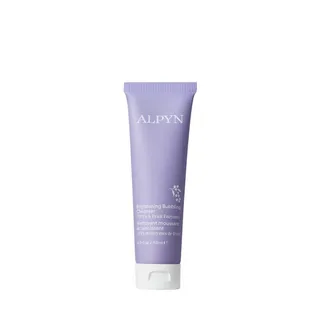
Alpyn Beauty Brightening Bubbling Cleanser
Works for
CleansingSodium cocoyl isethionate, Sodium methyl cocoyl taurate + 9 moreCleanses gently
“A silky, sudsy cleanser—perfect for parched complexions and formulated with skin-friendly AHAs—that gently dissolves dirt, oil, and makeup while supporting balanced skin-pH levels.”
This product works by removing dirt and oil from the surface of the skin. It uses a combination of mild cleansing agents (cetearyl alcohol, coconut acid, hexylene glycol, lauric acid, linoleic acid, myristic acid, palmitic acid, sodium cocoyl apple amino acids, sodium cocoyl isethionate, sodium methyl cocoyl taurate, stearic acid) and should be able to cleanse the skin gently. Still keep in mind that any cleansing can disrupt the skin barrier, and most people do not need to cleanse their skin more than once per day.
Even though this formulation is mild, the following cleansing agents could trigger an irritation or allergy for some people: sodium methyl cocoyl taurate
ExfoliationSide benefit the brand mentions · Glycolic acid, Lactobacillus/punica granatum fruit ferment extract + 1 moreWorks well
“It refines the look of pores, dissolves excess oil, and gently exfoliates with papaya enzymes and AHAs while hydrating skin with hyaluronic acid.”
This product can help exfoliate the skin. In other words, it helps break down the bonds between dead cells on the surface of the skin and speed up the skin turnover. Skin often appears softer and brighter after exfoliation, but overdoing it can result in disrupted skin barrier. The following ingredient is doing the exfoliating job in this product: glycolic acid.
Can it cause trouble?
Irritancy9 strong irritants: Hamamelis virginiana water, Alcohol + 7 more — patch-test recommendedHigh risk
Comedogenic3 ingredients rated 2 or more on the 0–5 pore-clogging scale3 flagged

User reviews
Be the first — your take helps the next person decide.
Ingredients
Filter by role to see what each ingredient is doing.
Water~45–55%
Glycerin~4.3–5.3%
- Irritation risk
- Low
One of the best moisturizing ingredients. Naturally present in skin. It attracts water to the upper layer of the skin working as a humectant
More about GlycerinSodium cocoyl isethionate~4.7–5.7%
- Irritation risk
- Medium
Helps water and oil mix together. Can be used as a cleansing agent
More about Sodium cocoyl isethionateSodium methyl cocoyl taurate~3.9–4.7%
- Irritation risk
- High
Helps oil and water mix together. Can be used as cleansing agent
More about Sodium methyl cocoyl taurateHamamelis virginiana water~2.1–2.5%
- Irritation risk
- High
A plant extract that can help calm down inflammation in skin. Can, however, itself be irritating
More about Hamamelis virginiana waterMyristic acid~1.8–2.2%
- Irritation risk
- Medium
- Comedogenicity
- 3/5
Helps oil and water mix together. Could be comedogenic
More about Myristic acidCetearyl alcohol~1.6–1.9%
- Irritation risk
- Low
- Comedogenicity
- 2/5
A non-drying alcohol. Works as an emollient. Helps water and oil mix together and creates a nice product texture
More about Cetearyl alcoholPalmitic acid~1.4–1.7%
- Irritation risk
- Low
An emollient that is naturally present in skin and helps soften it
More about Palmitic acidCoconut acid~1.2–1.5%
Stearic acid~1–1.2%
- Irritation risk
- Low
Helps oil and water mix together and works as an emollient
More about Stearic acidPolyacrylate-33~0.65–0.95%
- Irritation risk
- Low
Lactobacillus/punica granatum fruit ferment extract~0.5–0.8%
- Irritation risk
- High
An enzyme-based exfoliant
More about Lactobacillus/punica granatum fruit ferment extractTromethamine~0.5–0.7%
Benzyl alcohol~0.35–0.65%
- Irritation risk
- High
A preservative. Can be used to mask unpleasant smell. Can be irritating
More about Benzyl alcoholAlcohol~0.4–0.6%
- Irritation risk
- High
Can be drying and contribute to skin irritation. Used in formulars to dissolve other ingredients, create a thinner product consistency or for its antibacterial properties
More about AlcoholSodium isethionate~0.45–0.7%
- Irritation risk
- Low
Sodium cocoyl apple amino acids~0.35–0.6%
Potassium sorbate~0.35–0.6%
Citrus aurantium dulcis peel oil~0.3–0.5%
- Irritation risk
- High
An essentil oil from orange peel. Potential allergen and can be irritating
More about Citrus aurantium dulcis peel oilPrunus virginiana bark extract~0.25–0.5%
- Irritation risk
- Low
Dehydroacetic acid~0.25–0.5%
Hexylene glycol~0.25–0.5%
- Irritation risk
- Medium
Helps create a more spreadable product texture
More about Hexylene glycolSodium hyaluronate~0.25–0.45%
- Irritation risk
- Low
One of the best moisturizing ingredients. Attracts water into the upper layer of the skin
More about Sodium hyaluronateSimmondsia chinensis seed oil~0.3–0.55%
- Irritation risk
- Medium
Softens the upper layer of skin and helps restore the healthy skin barrier. Has shown to help calm down inflammation in skin. It is a stable oil, meaning that it retains its properties even when exposed to air.
More about Simmondsia chinensis seed oilLinalyl acetate~0.25–0.45%
- Irritation risk
- Low
Helianthus annuus seed oil~0.25–0.5%
- Irritation risk
- Low
A great emollient due to its high linoleic acid content. One of the most effective plant oils in helping skin hydration and repairing skin barrier function
More about Helianthus annuus seed oilCarica papaya fruit extract~0.25–0.45%
- Irritation risk
- High
Ascorbic acid~0.25–0.45%
- Irritation risk
- High
The most well-researched antioxidant that works in skin. Helps neutralize free radicals supporting collagen production, helping to even out the skin tone and preventing early signs of aging
More about Ascorbic acidLinoleic acid~0.4–0.6%
- Irritation risk
- Low
An excellent emollient. Helps soften the skin, restore its barrier function, and can help to calm down inflammation. It can be helpful to prevent blemishes and clogged pores
More about Linoleic acidLactic acid~0.25–0.45%
- Irritation risk
- Medium
An exfoliating and moisturizing alpha-hydroxy acid (AHA). Typically causes less irritation than other AHAs, for example, glycolic acid. At high concentrations (about 15%), lactic acid can help reduce lines and wrinkles. Recent studies show that lactic acid can support the "good" bacteria living on skin's surface (healthy skin microbiome)
More about Lactic acidLauric acid~0.35–0.6%
- Irritation risk
- Medium
- Comedogenicity
- 3/5
Helps water and oil mix together. Has anti-bacterial properties that might be helpful in preventing blemishes
More about Lauric acidGlycolic acid~0.25–0.45%
- Irritation risk
- High
An alpha-hydroxy acid (AHA) that helps to remove the dead skin cells on the surface of the skin reveling a more even, smoother complexation. It is also able to stimulate collagen production with long-term use. Could help to reduce pore congestion. It can be irritating to the skin. Apply sunscreen daily if using products with glycolic acid
More about Glycolic acidLeuconostoc/radish root ferment filtrate~0.25–0.45%
- Irritation risk
- Medium
A preservative that comes from radishes fermented by a bacteria. New research suggests that the preservation properties in the ingredient come from an ammonium salt that is not present naturally in radish root but used in its cultivation. Is problematic because the exact amount of the preservative agents is difficult to determine
More about Leuconostoc/radish root ferment filtrateLavandula angustifolia oil~0.2–0.4%
- Irritation risk
- High
An essential oil. Potential allergen and can be irritating. It has some anti-bacterial properties
More about Lavandula angustifolia oilLavandula hybrida oil~0.2–0.4%
- Irritation risk
- High
Plant extract that can be irritating and is a known allergen
More about Lavandula hybrida oilLinalool~0.15–0.3%
Tetrasodium glutamate diacetate~0.2–0.35%
- Irritation risk
- Low
Helps stabilize the product formulation
More about Tetrasodium glutamate diacetateCaprylic/capric triglyceride~0.25–0.45%
- Irritation risk
- Medium
A good mix of fatty acids that forms a protective layer on the skin. Improves the shelf life of products. Derived from coconut and glycerin
More about Caprylic/capric triglycerideCamphor~0.15–0.25%
- Irritation risk
- High
Sodium benzoate~0.1–0.15%
Ceramide ng~0.15–0.3%
- Irritation risk
- Low
A type of lipid similar to ceramides naturally present in skin. Helps to soften the upper layer of the skin and supports the skin barrier function to keep it hydrated. Can help to prevent inflammation in skin
More about Ceramide ngAlkanna tinctoria root extract~0.1–0.2%
- Irritation risk
- Low
Limonene~0.05–0.1%
- Irritation risk
- High
A common frangrance that can easily irritate skin, especially if exposed to air, light or heat
More about LimoneneIngredient list view
Water, Glycerin, Sodium cocoyl isethionate, Sodium methyl cocoyl taurate, Hamamelis virginiana water, Myristic acid, Cetearyl alcohol, Palmitic acid, Coconut acid, Stearic acid, Polyacrylate-33, Lactobacillus/punica granatum fruit ferment extract, Tromethamine, Benzyl alcohol, Alcohol, Sodium isethionate, Sodium cocoyl apple amino acids, Potassium sorbate, Citrus aurantium dulcis peel oil, Prunus virginiana bark extract, Dehydroacetic acid, Hexylene glycol, Sodium hyaluronate, Simmondsia chinensis seed oil, Linalyl acetate, Helianthus annuus seed oil, Carica papaya fruit extract, Ascorbic acid, Linoleic acid, Lactic acid, Lauric acid, Glycolic acid, Leuconostoc/radish root ferment filtrate, Lavandula angustifolia oil, Lavandula hybrida oil, Linalool, Tetrasodium glutamate diacetate, Caprylic/capric triglyceride, Camphor, Sodium benzoate, Ceramide ng, Alkanna tinctoria root extract, Limonene
Compare prices
Retailers ranked by price — lowest first.


Worth comparing, line by line.
Match % combines shared ingredients, the first five ingredients, shared actives and hero ingredients, irritancy (lower counts in the alternative's favour), texture and body area. Only products in the same routine step are compared.
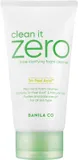
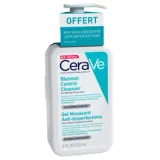
| Alpyn BeautyBrightening Bubbling CleanserYOUR PRODUCT | Banila CoClean It Zero Pore Clarifying Foam Cleanser | ACWELLpH Balancing Soothing Cleansing Foam | CeraVeGel Moussant Anti-Imperfections | |
|---|---|---|---|---|
| Match | — | 50% | 50% | 48% |
| Price | $28.80 | $18.77−$10.03 | $13.16−$15.64 | — |
| Shared key ingredients | — | 10 of 19 | 9 of 19 | 5 of 19 |
| Key difference | — | Salicylic Acid | Lactobionic Acid | Salicylic Acid |
| Irritancy | High | Medium | Medium | Low |
| Drying alcohol | Contains drying alcohol | — | — | — |
| View product | Shop | Shop | Shop |
More alternatives: Ongredients Skin Barrier Moisture Deep CleanserCinch Skin Cleanse + Glow Micellar Water
Sources cited in this review
Every concentration estimate and effectiveness label is anchored to one of these 21 studies and safety reviews.
- 1
- 2Final Report on the Safety Assessment of Sodium Cocoyl Isethionatejournals.sagepub.com
- 3
- 4
- 5Safety Assessment of Tromethamine as Used in Cosmeticscir-safety.org
- 6

Affiliate links · As an Amazon Associate, WIMJ earns from qualifying purchases.