Works for
1 of 1 advertised claim delivered
Moisturizing28 ingredients credited for this claimGood support
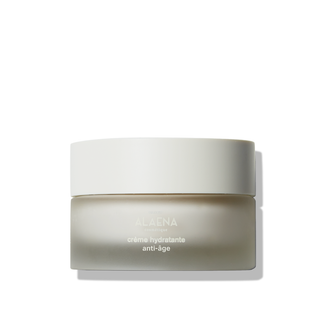
“Crème Hydratante Anti-âge”
This product can help improve hydration of the skin with the two types of ingredients.
The first type is called “humectants”:
these ingredients help attract water.
When humectants are on the surface of the skin, they “pull in” the moisture from the outside environment, or from
within deeper layers of the skin. The following ingredients in this product do the job:
glycerin, polyglycerin-3.
This product also contains ingredients called “occlusives”. They help reduce the speed with which our skin loses moisture to the outside environment. These ingredients also help soften the upper layer of the skin, so it feels less tight and nicer to the touch. The following ingredients in this product do the job: beeswax, butyrospermum parkii butter.
Anti-oxidationNot advertised by the brand · 11 ingredients credited for this claimModerate support
This product contains antioxidants (squalene) that might be able to help neutralize free radicals in skin to lessen the damage it gets from the UV light (sun). There is not enough evidence to confirm their effectiveness in skin though.
Can it cause trouble?
Irritancy2 strong irritants: Parfum, Rosa damascena flower waterMedium risk
Comedogenic4 ingredients rated 2 or more on the 0–5 pore-clogging scale4 flagged


User reviews
Be the first — your take helps the next person decide.
Ingredients
Filter by role to see what each ingredient is doing.
Water~45–55%
Aloe barbadensis leaf water~6.3–7.7%
- Irritation risk
- Medium
Traditionally used to treat sunburns, dermatitis and inflammation, but data on its effectiveness is lacking. While the majority of the content is plain water, it can contain some goodies like vitamins, enzymes, minerals, and humectants that help attract water into the skin
More about Aloe barbadensis leaf waterCamellia oleifera seed oil~4.4–5.4%
- Irritation risk
- Medium
An emollient that does not leave a greasy finish
More about Camellia oleifera seed oilButyrospermum parkii butter~3.2–3.9%
- Irritation risk
- Low
- Comedogenicity
- 3/5
A great moisturising ingredient that softens the skin and reduces water loss from its upper layer. It also can be helpful in protecting skin from free radicals
More about Butyrospermum parkii butterGlycerin~2.4–2.9%
- Irritation risk
- Low
One of the best moisturizing ingredients. Naturally present in skin. It attracts water to the upper layer of the skin working as a humectant
More about GlycerinJojoba esters~1.9–2.3%
- Irritation risk
- Medium
An emollient made of jojoba oil. Helps soften the skin and support its barrier function
More about Jojoba estersVitis vinifera seed oil~1.6–2%
- Irritation risk
- Medium
A great emollient that can also have anti-oxidant properties
More about Vitis vinifera seed oilHelianthus annuus seed oil~1.5–1.8%
- Irritation risk
- Low
A great emollient due to its high linoleic acid content. One of the most effective plant oils in helping skin hydration and repairing skin barrier function
More about Helianthus annuus seed oilBorago officinalis seed oil~1.1–1.4%
- Irritation risk
- Low
A plant oil that is effective in reducing irritation in skin, restore the barrier function and support its hydration
More about Borago officinalis seed oilCera alba~1–1.3%
- Irritation risk
- Medium
Forms a protective barrier that holds water and keeps dry skin hydrated. Keeps an emulsion from separating into its oil and liquid components, and increases the thickness of a product. Can be an allergen
More about Cera albaBeeswax~0.65–1%
- Irritation risk
- Low
Forms a protective barrier that holds water and keeps dry skin hydrated. Keeps an emulsion from separating into its oil and liquid components, and increases the thickness of a product. Can be an allergen
More about BeeswaxSodium hyaluronate~0.5–0.75%
- Irritation risk
- Low
One of the best moisturizing ingredients. Attracts water into the upper layer of the skin
More about Sodium hyaluronatePullulan~0.5–0.75%
- Irritation risk
- High
Creates a thin drying film on the skin resulting in a short-term tightening effect
More about PullulanChondrus crispus extract~0.45–0.65%
- Irritation risk
- Low
- Comedogenicity
- 3/5
Red algae extract that helps attract water to the upper layer of the skin and create a nicer product consistency
More about Chondrus crispus extractParfum~0.35–0.6%
- Irritation risk
- High
An aromatic blend of unspecified and possibly irritating ingredients
More about ParfumRosa damascena flower water~0.35–0.6%
- Irritation risk
- High
Used to add a nice rose smell to the product. Might help attract water to the upper layer of the skin and have some anti-oxidant effect. Can be irritating
More about Rosa damascena flower waterVigna radiata seed extract~0.3–0.6%
- Irritation risk
- Low
Bean extract that in theory might help to reduce hyperpigmentation, but evidence of effectiveness in skin are missing
More about Vigna radiata seed extractLinum usitatissimum seed extract~0.25–0.5%
- Irritation risk
- Low
Avena sativa seed extract~0.3–0.5%
- Irritation risk
- Low
Triticum aestivum seed extract~0.25–0.45%
- Irritation risk
- Low
Prunus domestica seed oil~0.25–0.5%
- Irritation risk
- Medium
Helps soften the upper layer of the skin
More about Prunus domestica seed oilGlycine soja oil~0.3–0.5%
- Irritation risk
- Medium
- Comedogenicity
- 2/5
A good emollient that helps soften the skin and helps repair its barrier function. It can clog pores if used in high concentrations.
More about Glycine soja oilCamelina sativa seed oil~0.25–0.45%
- Irritation risk
- Low
Helps soften the upper layer of the skin
More about Camelina sativa seed oilPropolis extract~0.25–0.5%
- Irritation risk
- High
A complex substance produced by honey bees. Can have anti-bacterial and some anti-oxidant effect. Is an allergen and can be irritating
More about Propolis extractSalvia hispanica seed extract~0.3–0.5%
- Irritation risk
- Medium
A plant extract that typically contains linolenic and linoleic acids that help soften the upper layer of the skin and can support skin barrier function
More about Salvia hispanica seed extractUndaria pinnatifida extract~0.25–0.45%
- Irritation risk
- Low
A seaweed extract that helps attract water to the upper layer of the skin and might have an anti-oxidant effect
More about Undaria pinnatifida extractNephelium lappaceum peel extract~0.25–0.45%
- Irritation risk
- Low
Acacia senegal gum~0.3–0.5%
- Irritation risk
- Medium
Helps mask the small of other ingredients and improve the product texture
More about Acacia senegal gumXanthan gum~0.25–0.5%
- Irritation risk
- Low
Used to create a thicker product consistency
More about Xanthan gumSodium stearoyl glutamate~0.3–0.55%
- Irritation risk
- Medium
Helps oil and water mix together
More about Sodium stearoyl glutamateBenzyl alcohol~0.2–0.4%
- Irritation risk
- High
A preservative. Can be used to mask unpleasant smell. Can be irritating
More about Benzyl alcoholSorbitol~0.25–0.45%
- Irritation risk
- Low
Helps attract water to the upper layer of the skin and improves the product texture
More about SorbitolTrehalose~0.25–0.45%
- Irritation risk
- Low
A sugar that attracts water to the upper layer of the skin
More about TrehaloseGluconolactone~0.25–0.45%
- Irritation risk
- Medium
A polyhydroxy acid (PHA) that helps shed the dead cells from the skin surface revealing smoother skin. Is believed to be genter than AHAs. It helps attract water to the upper layer of the skin and can stimulate production of skin's own hyaluronic acid resulting in improved hydration levels. It has been shown to be helpful against acne and clogged pores if used consistently (e.g over a period of 12 weeks) in high enough concentration. It can help reduce fine lines and wrinkles and improve skin tone with long-term application. Can help neutralize free radicals
More about GluconolactoneSodium benzoate~0.25–0.5%
Citric acid~0.25–0.45%
- Irritation risk
- Medium
Can work as an exfoliant but is typically used to adjust the product pH
More about Citric acidAscorbyl glucoside~0.25–0.45%
- Irritation risk
- Medium
A vitamin C derivative that is more stable but less potent than pure form of vitamin C. Has a potential to boost collagen production, nutralise free radicals and reduce hyperpigmentation, but the required concentration is likely to be much higher than for the pure form of vitamin C, limiting the ingredient's effectiveness in products
More about Ascorbyl glucosideDehydroacetic acid~0.25–0.45%
Ci 77491~0.25–0.45%
- Irritation risk
- Low
A red colorant made of iron oxide. Typically is not irritating
More about Ci 77491Iron oxides~0.25–0.45%
- Irritation risk
- Low
An umbrella term for the following three colorants: CI 77491, CI 77492, CI 77499. They might be able to offer some protection against visible light, but the degree of the protection is not clear
More about Iron oxidesMica~0.25–0.45%
- Irritation risk
- Low
Creates an illusion of smoother and more radiant skin tone. Adds shimmer to the skin by reflecting light
More about MicaPolyglycerin-3~0.2–0.4%
- Irritation risk
- Low
Helps to attract water to the upper layer of the skin
More about Polyglycerin-3Acacia decurrens flower wax~0.2–0.35%
Potassium sorbate~0.15–0.25%
Tocopherol~0.15–0.3%
- Irritation risk
- Low
Pure form of vitamin E. Can help moisturise and protect the skin from free radicals. Often used to help stabilise other ingredients or the formula itself
More about TocopherolBeta-sitosterol~0.2–0.35%
- Irritation risk
- Low
A phytosterol that can support skin's barrier function and help the skin stay hydrated
More about Beta-sitosterolCalcium gluconate~0.15–0.25%
- Irritation risk
- Low
Helps attract water to the upper layer of the skin and helps to improve appearance of the product
More about Calcium gluconateSqualene~0.15–0.3%
- Irritation risk
- Low
- Comedogenicity
- 2/5
An oil that is naturally part of skin sebum that helps to soften its upper layer, reduce water loss and neutralize free radicals. It might be comedogenic. Avoid applying large concentrations (or pure oil) before sun exposure as oxidized squalene can clog pores and lead to skin irritation. Today squalene is mostly derived from vegetable oils or synthetized by yeast
More about SqualeneIngredient list view
Water, Aloe barbadensis leaf water, Camellia oleifera seed oil, Butyrospermum parkii butter, Glycerin, Jojoba esters, Vitis vinifera seed oil, Helianthus annuus seed oil, Borago officinalis seed oil, Cera alba, Beeswax, Sodium hyaluronate, Pullulan, Chondrus crispus extract, Parfum, Rosa damascena flower water, Vigna radiata seed extract, Linum usitatissimum seed extract, Avena sativa seed extract, Triticum aestivum seed extract, Prunus domestica seed oil, Glycine soja oil, Camelina sativa seed oil, Propolis extract, Salvia hispanica seed extract, Undaria pinnatifida extract, Nephelium lappaceum peel extract, Acacia senegal gum, Xanthan gum, Sodium stearoyl glutamate, Benzyl alcohol, Sorbitol, Trehalose, Gluconolactone, Sodium benzoate, Citric acid, Ascorbyl glucoside, Dehydroacetic acid, Ci 77491, Iron oxides, Mica, Polyglycerin-3, Acacia decurrens flower wax, Potassium sorbate, Tocopherol, Beta-sitosterol, Calcium gluconate, Squalene
Compare prices
Retailers ranked by price — lowest first.

Affiliate links · prices updated regularly
Worth comparing, line by line.
Match % combines shared ingredients, the first five ingredients, shared actives and hero ingredients, irritancy (lower counts in the alternative's favour), texture and body area. Only products in the same routine step are compared.
| AlaenaCrème Hydratante Anti-âgeYOUR PRODUCT | SVRTopialyse Moisturising Face + Body Cream for Dry, Sensitive + Eczema-Prone Skin of All Ages | Estelle and ThildUltra Rich Repair Cream | ThalgoSource Marine Hydrating Melting Cream | |
|---|---|---|---|---|
| Match | — | 56% | 55% | 52% |
| Price | $98.00 | $17.00−$81.00 | $329.00+$231.00 | $84.28−$13.72 |
| Shared key ingredients | — | 4 of 22 | 3 of 22 | 8 of 22 |
| Key difference | — | Caprylic/Capric Triglyceride | Ceramide Np | Anhydroxylitol |
| Irritancy | Medium | Low | Low | Medium |
| Drying alcohol | — | — | — | — |
| View product | Shop | Shop | Shop |


Sources cited in this review
Every concentration estimate and effectiveness label is anchored to one of these 37 studies and safety reviews.
- 1
- 2
- 3
- 4Effect of topically applied lipids on surfactant-irritated skinonlinelibrary.wiley.com
- 5
- 6

Affiliate links · As an Amazon Associate, WIMJ earns from qualifying purchases.