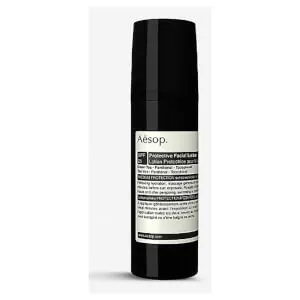
Aesop Protective Facial Lotion SPF25
Works for
Sun protectionSPF 25 · 4 UV filters · Broad spectrumWeak protectionSPF under 30
This product offers broad spectrum sun protection, but it is weak. We recommend to use a broad spectrum sunscreen with at least SPF 30.
This product can be considered "reef safe" because it does not contain the UV filters (oxybenzone and octinoxate) that can be harmful to coral reefs when present in the water in high concentrations.
MoisturizingPanthenol, Coco-caprylate + 6 moreWorks well
“Protective Facial Lotion SPF25”
This product can help improve hydration of the skin with the two types of ingredients.
The first type is called “humectants”:
these ingredients help attract water.
When humectants are on the surface of the skin, they “pull in” the moisture from the outside environment, or from
within deeper layers of the skin. The following ingredients in this product do the job:
glycerin.
This product also contains ingredients called “occlusives”. They help reduce the speed with which our skin loses moisture to the outside environment. These ingredients also help soften the upper layer of the skin, so it feels less tight and nicer to the touch. The following ingredients in this product do the job: squalane, glycine soja oil.
The following ingredients in this product are especially good for supporting the skin barrier and helping with the hydration level: panthenol
Can it cause trouble?
Irritancy5 strong irritants: Lavandula angustifolia oil, Rosmarinus officinalis leaf oil + 3 more — patch-test recommendedHigh risk
Comedogenic1 ingredient rated 2 or more on the 0–5 pore-clogging scale1 flagged

User reviews
0 of 1 community members would buy it again.
Smells very nice of herbs like rosemary and thyme.
But other than that, feels like it would probably clog my pores, leaves a dewy shine on my face and SPF 25 seems like way too little.
Ingredients
Filter by role to see what each ingredient is doing.
Water~45–55%
Homosalate~6.7–8.1%
- Irritation risk
- Medium
A weak sunscreen that offers some protection against the sun rays that cause sunburn (UVB), but does not offer meaningful protection against protect against the most aging sun rays (UVA). It loses its effectiveness quickly when exposed to sunlight. It is an organic, or so called "chemical" sunscreen. When used in low concentrations, helps to stabilize the product formulation
More about HomosalateCoco-caprylate~4.8–5.8%
- Irritation risk
- Medium
An emollient that softens skin and creates a nice product texture
More about Coco-caprylateOctocrylene~3.9–4.8%
- Irritation risk
- Medium
A weak sunscreen that protects against the sun rays that cause sunburn (UVB) and is somewhat effective against the UVA rays. It is quite stable and can help stabilize other, more vulnerable, sunscreen ingredients like Avobenzone. It is an organic, or so called "chemical" sunscreen
More about OctocryleneTribehenin peg-20 esters~2.5–3.1%
- Irritation risk
- Medium
Helps oil and water mix together
More about Tribehenin peg-20 estersGlycerin~2.1–2.6%
- Irritation risk
- Low
One of the best moisturizing ingredients. Naturally present in skin. It attracts water to the upper layer of the skin working as a humectant
More about GlycerinEthylhexyl salicylate~2.2–2.7%
- Irritation risk
- Low
Octisalate. A UV filter. It offers some protection against the sun rays that cause sunburn (UVB), but does not protect against the most aging sun rays (UVA). It loses its effectiveness quickly when exposed to sunlight. It is an organic, or so called "chemical" sunscreen
More about Ethylhexyl salicylateButyl methoxydibenzoylmethane~2–2.5%
- Irritation risk
- Medium
Avobenzone. An organic, or so-called "chemical" UV filter. Protects against both UVA and UVB rays. Needs to be combined with other filters in a formulation to be stable.
More about Butyl methoxydibenzoylmethaneSilica~1.5–1.9%
Squalane~1.1–1.3%
- Irritation risk
- Low
An oil naturally present in skin. Works as an emollient to soften the skin and form a protective layer on its surface without a greasy feeling.
More about SqualanePhenoxyethanol~0.65–1%
- Irritation risk
- Low
A preservative. It helps prevent bacterial growth in cosmetic products
More about PhenoxyethanolEthylhexylglycerin~0.6–0.9%
Benzyl alcohol~0.5–0.7%
- Irritation risk
- High
A preservative. Can be used to mask unpleasant smell. Can be irritating
More about Benzyl alcoholTocopheryl acetate~0.5–0.75%
- Irritation risk
- Medium
A more stable but less bio-available form of vitamin E compared to Tocopherol. Might help moisturize and protect the skin from free radicals, but mostly used in low concentrations to stabilize other ingredients.
More about Tocopheryl acetateTocopherol~0.45–0.7%
- Irritation risk
- Low
Pure form of vitamin E. Can help moisturise and protect the skin from free radicals. Often used to help stabilise other ingredients or the formula itself
More about TocopherolGlycine soja oil~0.45–0.7%
- Irritation risk
- Medium
- Comedogenicity
- 2/5
A good emollient that helps soften the skin and helps repair its barrier function. It can clog pores if used in high concentrations.
More about Glycine soja oilPanthenol~0.45–0.65%
- Irritation risk
- Low
Helps attract water to the upper layer of the skin and can help improve skin barrier function
More about PanthenolLavandula angustifolia oil~0.35–0.65%
- Irritation risk
- High
An essential oil. Potential allergen and can be irritating. It has some anti-bacterial properties
More about Lavandula angustifolia oilAcrylates/c10-30 alkyl acrylate crosspolymer~0.35–0.65%
- Irritation risk
- Medium
Maintains the texture of skincare products. Allows the product to spread evenly. Helps oil and water mix together
More about Acrylates/c10-30 alkyl acrylate crosspolymerRosmarinus officinalis leaf oil~0.3–0.55%
- Irritation risk
- High
A plant oil with high content of volatile compounds that can irritate the skin. Can be used as a fragrance. Has anti-bacterial properties and might help neutralize free radicals on the surface of the skin
More about Rosmarinus officinalis leaf oilSodium stearoyl glutamate~0.35–0.65%
- Irritation risk
- Medium
Helps oil and water mix together
More about Sodium stearoyl glutamateMicrocrystalline cellulose~0.3–0.55%
Sodium dehydroacetate~0.25–0.5%
Cedrus atlantica bark oil~0.25–0.45%
- Irritation risk
- Low
Sodium hydroxide~0.25–0.5%
Cellulose gum~0.25–0.5%
- Irritation risk
- Low
Used to create thicker product consistency and stabilize emulsions
More about Cellulose gumSodium carrageenan~0.25–0.5%
Camellia sinensis leaf extract~0.3–0.5%
- Irritation risk
- Low
Can contain potent anti-oxidant compounds (abbreviated ECG, GCG, EGC, and EGCG) that might help protect the skin from free radicals. Can help calm down inflammation and has some anti-bacterial properties. Unfortunately, these antioxidants are unstable and lose their effectiveness very quickly in products. The concentration of the antioxidant compounds in the extract also tends to be low to be effective in topical formulation
More about Camellia sinensis leaf extractDaucus carota sativa root extract~0.25–0.5%
- Irritation risk
- Low
Carrot extract. Might have anti-oxidant properties and be used to add orange color
More about Daucus carota sativa root extractSea salt~0.25–0.5%
- Irritation risk
- Medium
Used to thicken the product formulation and might help to add minerals to the surface of the skin. It is used in scrubs as a physical exfoliant. Can increase sensitivity to other ingredients if left on the skin or used in high concentration
More about Sea saltMaris sal~0.25–0.45%
- Irritation risk
- Medium
Used to thicken the product formulation and might help to add minerals to the surface of the skin. It is used in scrubs as a physical exfoliant. Can increase sensitivity to other ingredients if left on the skin or used in high concentration
More about Maris salLactic acid~0.25–0.45%
- Irritation risk
- Medium
An exfoliating and moisturizing alpha-hydroxy acid (AHA). Typically causes less irritation than other AHAs, for example, glycolic acid. At high concentrations (about 15%), lactic acid can help reduce lines and wrinkles. Recent studies show that lactic acid can support the "good" bacteria living on skin's surface (healthy skin microbiome)
More about Lactic acidSodium benzoate~0.2–0.35%
Beta-carotene~0.2–0.35%
Potassium sorbate~0.2–0.35%
Linalool~0.15–0.25%
Limonene~0.1–0.2%
- Irritation risk
- High
A common frangrance that can easily irritate skin, especially if exposed to air, light or heat
More about LimoneneGeraniol~0.1–0.15%
Ingredient list view
Water, Homosalate, Coco-caprylate, Octocrylene, Tribehenin peg-20 esters, Glycerin, Ethylhexyl salicylate, Butyl methoxydibenzoylmethane, Silica, Squalane, Phenoxyethanol, Ethylhexylglycerin, Benzyl alcohol, Tocopheryl acetate, Tocopherol, Glycine soja oil, Panthenol, Lavandula angustifolia oil, Acrylates/c10-30 alkyl acrylate crosspolymer, Rosmarinus officinalis leaf oil, Sodium stearoyl glutamate, Microcrystalline cellulose, Sodium dehydroacetate, Cedrus atlantica bark oil, Sodium hydroxide, Cellulose gum, Sodium carrageenan, Camellia sinensis leaf extract, Daucus carota sativa root extract, Sea salt, Maris sal, Lactic acid, Sodium benzoate, Beta-carotene, Potassium sorbate, Linalool, Limonene, Geraniol
Compare prices
Retailers ranked by price — lowest first.
Affiliate links · As an Amazon Associate, WIMJ earns from qualifying purchases.
Worth comparing, line by line.
Match % combines shared ingredients, the first five ingredients, shared actives and hero ingredients, irritancy (lower counts in the alternative's favour), texture and body area. Only products in the same routine step are compared.
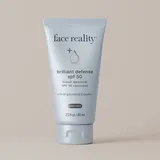
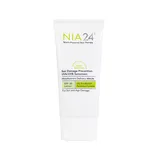
| AesopProtective Facial Lotion SPF25YOUR PRODUCT | Face Reality SkincareBrilliant Defense SPF 50 | La Roche-PosayAnthelios Melt-In Milk Sunscreen for Face & Body SPF 100 | NIA24Sun Damage Prevention UVA UVB Sunscreen SPF 30 | |
|---|---|---|---|---|
| Match | — | 52% | 51% | 49% |
| Price | — | $42.00 | $20.99 | — |
| Shared key ingredients | — | 5 of 10 | 6 of 10 | 4 of 10 |
| Key difference | — | Aminopropyl Ascorbyl Phosphate | Caprylic/Capric Triglyceride | Ceramide 3 |
| Irritancy | High | Low | Low | Medium |
| SPF | SPF 25 | SPF 50 | SPF 100 | SPF 30 |
| Drying alcohol | — | — | — | — |
| View product | Shop | Shop | Shop |

More alternatives: Hawaiian Tropic Face Lotion Sunscreen SPF 30Peter Thomas Roth Max Vitamin D-Fense Sunscreen Serum Broad Spectrum SPF 50
Product summary
"Aesop - Protective Facial Lotion SPF25" offers broad spectrum protection. It means that it protects from both UVA and UVB rays (you can remember UVB as "burning" sunlight - they cause sunburn. You can remember UVA rays as "aging" - they do not lead to sunburn, but they cause photodamage and contribute to early signs of skin aging and hyperpigmentation). On the negative side, the SPF of it is not high enough. We recommend to use a sunscreen with at least SPF 30 daily.
This product should also be hydrating enough to use without an additional moisturizer during the day.
Sunscreen filters
This is a so-called "chemical" sunscreen. It means that it uses organic UV filters. They typically offer good sun protection and rarely leave a white cast, but they can be irritating for some people with sensitive skin. These are the sun protection ingredients in this sunscreen: avobenzone 2.00% - 2.50%, octisalate 2.20% - 2.70%, homosalate 6.70% - 8.10% and octocrylene 3.90% - 4.80%.
Irritation risk
There are quite a few common irritants in this product, including ingredients without particular skin benefits. We would not recommend it for sensitive skin. We assess the overall irritancy of this sunscreen to be high. For a detailed overview of all potential irritants: click here
You can see the detailed formula review with the breakdown of all actives in the product and the full ingredient list with estimated concentrations in the tables below.
What our users say
Based on 1 review 0% recommend this product- As for the white cast, it did not leave a noticeable white residue for the reviewer.
About the brand
According to Cruelty-Free Kitty "Aesop" is cruelty free, but its parent company is not.
Price
The product retails for 75.30CA$ in Canada and from 43.00£ up to 45.00£ in the United Kingdom.
For a detailed price comparison: click here.
Sources cited in this review
Every concentration estimate and effectiveness label is anchored to one of these 16 studies and safety reviews.
- 1
- 2
- 3Vitamin E in dermatologyncbi.nlm.nih.gov
- 4Vitamin E and Skin Healthlpi.oregonstate.edu
- 5Skin moisturizing effects of panthenol-based formulationspdfs.semanticscholar.org
- 6

Affiliate links · As an Amazon Associate, WIMJ earns from qualifying purchases.