
Laboratoire ACM DÉPIWHITE M TINTED CREAM SPF50+
Works for
Sun protectionSPF 50 · 5 UV filtersBroad spectrum
This product offers a good level of protection against both UVB and UVA rays.
This sunscreen uses organic (so-called "chemical") sunscreen filters. Organic, or "chemical" filters usually provide reliable sun protection and rarely leave a white cast. Sunscreens with organic filters can sting eyes.
This product can be considered "reef safe" because it does not contain the UV filters (oxybenzone and octinoxate) that can be harmful to coral reefs when present in the water in high concentrations.
Evens skin toneAscorbyl glucosideWorks well
“This care product provides a very high degree of tinted protection which prevents the occurrence or aggravation of pigmentation marks such as chloasma.”
This product offers broad spectrum sun protection. It means that it can prevent hyperpigmentation and help keep the skin tone even (sun damage is the main factor causing age spots, darkening of post-acne marks and other discolorations).
Anti-agingSide benefit · Ascorbyl glucosideWorks well
This product can help prevent early signs of skin aging because it offers a good level of broad spectrum sun protection. Sun damage is the main cause of premature skin aging, and protecting your skin from the sun is the best anti-aging strategy.
Can it cause trouble?
Irritancy19 flagged ingredientsLow risk
ComedogenicClean of flagged comedogenic ingredientsNone flagged
User reviews
Be the first — your take helps the next person decide.
Ingredients
Filter by role to see what each ingredient is doing.
Water~45–55%
Diisopropyl sebacate~6.5–8%
- Irritation risk
- Low
Helps soften the upper layer of the skin without creatng a greasy finish
More about Diisopropyl sebacateDiethylamino hydroxybenzoyl hexyl benzoate~5.7–7%
- Irritation risk
- Medium
Uvinul A Plus. A new generation broad spectrum sunscreen that offers an effective protection especially in the UVA range. It is stable in formulations. Unfortunately, is not approved by the FDA (US) yet
More about Diethylamino hydroxybenzoyl hexyl benzoateCi 77891~4.2–5.2%
- Irritation risk
- Low
Titanium dioxide~3.9–4.8%
- Irritation risk
- Low
Works as a UV filter when used in high concentrations. It is photostable and is effective mostly against the UVB light, with some protection in the UVA range. In small concentrations, used for its ability to improve the color of cosmetic products. Is usually well tolerated by the skin
More about Titanium dioxideBis-ethylhexyloxyphenol methoxyphenyl triazine~3.2–3.9%
- Irritation risk
- Medium
Tinosorb S. One of the most effective broad spectrum sunscreen ingredients. Protects from both UVA and UVB rays. It is photostable. Approved by the US FDA in 2026 (listed as bemotrizinol on US labels).
More about Bis-ethylhexyloxyphenol methoxyphenyl triazineEthylhexyl triazone~2.7–3.3%
- Irritation risk
- Medium
Uvinul T. A UV filter. Effective against UVB rays. It is photostable. Can increase water resistance properties of the sunscreen. Unfortunately, not approved by the FDA (US) yet
More about Ethylhexyl triazoneMethylene bis-benzotriazolyl tetramethylbutylphenol~2.5–3.1%
- Irritation risk
- Medium
Tinosorb M. A UV filter. Is effective against both UVA and UVB rays. It also provides some protection against visible light. It is photostable and can also be used to improve photostability of other sunscreen ingredients. Its physical properties help to create lightweight sunscreen formulations. It can leave a slight white cast. Unfortunately, it is not approved by the FDA (US) yet
More about Methylene bis-benzotriazolyl tetramethylbutylphenolCaprylic/capric glycerides~1.8–2.2%
- Irritation risk
- Low
Help soften the upper layer of the skin
More about Caprylic/capric glyceridesPropanediol~1.2–1.4%
- Irritation risk
- Low
Acts as a solvent for other ingredients. Speeds up the absorption of other ingredients into the skin
More about PropanediolAluminum starch octenylsuccinate~0.75–1.1%
- Irritation risk
- Medium
Used to thicken the product's consistency
More about Aluminum starch octenylsuccinateCyclopentasiloxane~0.7–1.05%
- Irritation risk
- Low
A silicone that helps improve the product texture and spreadability. Can absorb oil creating a short-term mattifying effect on the skin
More about CyclopentasiloxanePotassium cetyl phosphate~0.6–0.9%
- Irritation risk
- Medium
Helps oil and water mix together
More about Potassium cetyl phosphateGlyceryl stearate~0.6–0.9%
- Irritation risk
- Low
An emollient that softens the skin and forms a protective layer on its surface. Helps water and oil mix together
More about Glyceryl stearatePeg-100 stearate~0.65–0.95%
- Irritation risk
- Low
Helps oil and water mix togehter and creates a nice product texture
More about Peg-100 stearateCi 77492~0.55–0.8%
Iron oxides~0.55–0.85%
- Irritation risk
- Low
An umbrella term for the following three colorants: CI 77491, CI 77492, CI 77499. They might be able to offer some protection against visible light, but the degree of the protection is not clear
More about Iron oxidesPolyhydroxystearic acid~0.5–0.75%
- Irritation risk
- Medium
Used to create a thicker product consistency and stabilize the formulation
More about Polyhydroxystearic acidPentylene glycol~0.5–0.75%
- Irritation risk
- Medium
Used to preserve products, dissolve other ingredients and create a nice product texture
More about Pentylene glycolCoco-glucoside~0.45–0.7%
- Irritation risk
- High
Used as a cleansing agent (surfactant) in cleansers. Helps water and oil mix together in lotions. Can be irritating
More about Coco-glucosideDecyl glucoside~0.5–0.75%
- Irritation risk
- High
Helps oil and water mix together. Can be irritating
More about Decyl glucosideAlumina~0.5–0.8%
- Irritation risk
- Low
The same compound that is used safely in dental implants and bone cements. In cosmetics, it is used to improve the consistency of products
More about AluminaStearic acid~0.55–0.8%
- Irritation risk
- Low
Helps oil and water mix together and works as an emollient
More about Stearic acidPhenoxyethanol~0.4–0.65%
- Irritation risk
- Low
A preservative. It helps prevent bacterial growth in cosmetic products
More about PhenoxyethanolXylitol~0.3–0.6%
- Irritation risk
- Low
Helps attract water to the upper layer of the skin and repair the skin barrier function
More about XylitolCoconut alcohol~0.45–0.7%
Chlorphenesin~0.16–0.32%
Xanthan gum~0.4–0.6%
- Irritation risk
- Low
Used to create a thicker product consistency
More about Xanthan gumCi 77491~0.4–0.6%
- Irritation risk
- Low
A red colorant made of iron oxide. Typically is not irritating
More about Ci 77491Iron oxides~0.35–0.6%
- Irritation risk
- Low
An umbrella term for the following three colorants: CI 77491, CI 77492, CI 77499. They might be able to offer some protection against visible light, but the degree of the protection is not clear
More about Iron oxidesDisodium edta~0.4–0.6%
Ascorbyl glucoside~0.3–0.6%
- Irritation risk
- Medium
A vitamin C derivative that is more stable but less potent than pure form of vitamin C. Has a potential to boost collagen production, nutralise free radicals and reduce hyperpigmentation, but the required concentration is likely to be much higher than for the pure form of vitamin C, limiting the ingredient's effectiveness in products
More about Ascorbyl glucosidePearl powder~0.45–0.65%
- Irritation risk
- Low
Consists of 95% calcium carbonate that does not have any effect on the skin. The remaining 5% can include compounds that can help neutralize free radicals and support skin barrier function
More about Pearl powderPotassium sorbate~0.3–0.6%
Tocopheryl acetate~0.45–0.65%
- Irritation risk
- Medium
A more stable but less bio-available form of vitamin E compared to Tocopherol. Might help moisturize and protect the skin from free radicals, but mostly used in low concentrations to stabilize other ingredients.
More about Tocopheryl acetateCi 77499~0.4–0.6%
Iron oxides~0.35–0.6%
- Irritation risk
- Low
An umbrella term for the following three colorants: CI 77491, CI 77492, CI 77499. They might be able to offer some protection against visible light, but the degree of the protection is not clear
More about Iron oxidesMelanin~0.4–0.6%
- Irritation risk
- Low
Propylene glycol~0.35–0.6%
- Irritation risk
- High
Helps oil and water mix together and can enhance the penetration of other ingredients into the skin. It can be irritating
More about Propylene glycolIsostearyl sebacate~0.3–0.6%
- Irritation risk
- Low
Citric acid~0.3–0.55%
- Irritation risk
- Medium
Can work as an exfoliant but is typically used to adjust the product pH
More about Citric acidPolydextrose~0.35–0.6%
- Irritation risk
- Low
Sodium hydroxide~0.3–0.5%
Disodium stearoyl glutamate~0.3–0.55%
- Irritation risk
- Medium
Helps oil and water mix together and workd as a cleanser
More about Disodium stearoyl glutamateAluminum hydroxide~0.15–0.3%
- Irritation risk
- Low
Is used to add opaque (non-transparent) appearance to formulations. Can be used to coat other ingredients for even dispersion. This is a different ingredient compared to the ones used in antipersperants (aluminium chloride and aluminium chlorohydrate)
More about Aluminum hydroxideEthylhexylglycerin~0.15–0.3%
Ingredient list view
Water, Diisopropyl sebacate, Diethylamino hydroxybenzoyl hexyl benzoate, Ci 77891, Titanium dioxide, Bis-ethylhexyloxyphenol methoxyphenyl triazine, Ethylhexyl triazone, Methylene bis-benzotriazolyl tetramethylbutylphenol, Caprylic/capric glycerides, Propanediol, Aluminum starch octenylsuccinate, Cyclopentasiloxane, Potassium cetyl phosphate, Glyceryl stearate, Peg-100 stearate, Ci 77492, Iron oxides, Polyhydroxystearic acid, Pentylene glycol, Coco-glucoside, Decyl glucoside, Alumina, Stearic acid, Phenoxyethanol, Xylitol, Coconut alcohol, Chlorphenesin, Xanthan gum, Ci 77491, Iron oxides, Disodium edta, Ascorbyl glucoside, Pearl powder, Potassium sorbate, Tocopheryl acetate, Ci 77499, Iron oxides, Melanin, Propylene glycol, Isostearyl sebacate, Citric acid, Polydextrose, Sodium hydroxide, Disodium stearoyl glutamate, Aluminum hydroxide, Ethylhexylglycerin
Compare prices
Retailers ranked by price — lowest first.
Affiliate links · As an Amazon Associate, WIMJ earns from qualifying purchases.
Worth comparing, line by line.
Match % combines shared ingredients, the first five ingredients, shared actives and hero ingredients, irritancy (lower counts in the alternative's favour), texture and body area. Only products in the same routine step are compared.
| Laboratoire ACMDÉPIWHITE M TINTED CREAM SPF50+YOUR PRODUCT | Laboratoire ACMDépiwhite.M Protective Cream SPF50+ | BielendaMoisturizing Barrier Cream Bielenda Hydro Lipidium SPF50 | SVRClairial Hyperpigmentation CC Cream SPF50+ Light | |
|---|---|---|---|---|
| Match | — | 44% | 39% | 39% |
| Price | $21.20 | $15.98−$5.22 | $4.36−$16.84 | $33.64+$12.44 |
| Shared key ingredients | — | 7 of 7 | 5 of 7 | 4 of 7 |
| Key difference | — | Glycerin | Ceramide Eop | Caprylic/Capric Triglyceride |
| Irritancy | Low | Low | Low | Low |
| SPF | SPF 50 | SPF 50 | SPF 50 | SPF 50 |
| Drying alcohol | — | — | — | — |
| View product | Shop | Shop | Shop |


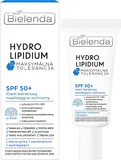

More alternatives: Ultrasun 30 SPF Tinted Face CreamBioderma Photoderm Cream SPF50+ Tinted
Product summary
Based on the ingredients included, we believe that "ACM - DÉPIWHITE M TINTED CREAM SPF50+" can offer reliable sun protection. It can protect from both UVA and UVB rays. This is great news because not all sunscreens with SPF ratings give UVA protection. (UVA rays do not cause sunburn, but still damage our skin and lead to early aging).
As a plus, this sunscreen uses some of the new generation UV filters (Tinosorb M). These filters are more stable and more gentle on the skin.
Like all broad-spectrum sunscreens, this product has an anti-aging benefit.
Sunscreen filters
This is a "mixed" sunscreen in the sense that it uses both mineral and organic (so-called "chemical") sun filters. The organic filters in the product are: tinosorb s, uvinul a plus, uvinul t and tinosorb m. As for the mineral filters, this sunscreen uses titanium dioxide.
Irritation risk
This moisturizer contains some common irritants, including those without a benefit for the skin. We assess the overall irritancy of this moisturizer to be medium. For a detailed overview of all potential irritants: click here
You can see the detailed formula review with the breakdown of all actives in the product and the full ingredient list with estimated concentrations in the tables below.
Sources cited in this review
Every concentration estimate and effectiveness label is anchored to one of these 10 studies and safety reviews.
- 1
- 2Allergen of the Year—Alkyl Glucosidepracticeupdate.com
- 3
- 4
- 5The Roles of Vitamin C in Skin Healthncbi.nlm.nih.gov
- 6

Affiliate links · As an Amazon Associate, WIMJ earns from qualifying purchases.