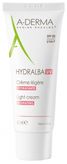
A-DERMA Hydralba UV Light Hydrating Cream
Works for
1 of 1 advertised claim delivered
MoisturizingGlycerin, Betaine + 7 moreGood evidence
“Hydralba UV Light Hydrating Cream”
This product can help improve hydration of the skin with the two types of ingredients.
The first type is called “humectants”:
these ingredients help attract water.
When humectants are on the surface of the skin, they “pull in” the moisture from the outside environment, or from
within deeper layers of the skin. The following ingredients in this product do the job:
betaine, glycerin.
This product also contains ingredients called “occlusives”. They help reduce the speed with which our skin loses moisture to the outside environment. These ingredients also help soften the upper layer of the skin, so it feels less tight and nicer to the touch. The following ingredients in this product do the job: caprylic/capric triglyceride, c12-15 alkyl benzoate.
Can it cause trouble?
Irritancy1 strong irritant: ParfumMedium risk
ComedogenicClean of flagged comedogenic ingredientsNone flagged
User reviews
Be the first — your take helps the next person decide.
Ingredients
Filter by role to see what each ingredient is doing.
Water~45–55%
Dicaprylyl carbonate~5–6.1%
- Irritation risk
- Low
Helps products spread more easily and works as an emollient to soften skin
More about Dicaprylyl carbonateC12-15 alkyl benzoate~4.5–5.5%
- Irritation risk
- Low
Enhances the product texture and makes it more spreadable. Helps reduce water loss from the outer layer of skin. Extands the shelf life by preventing bacteria growth
More about C12-15 alkyl benzoateDiethylhexyl butamido triazone~3.7–4.5%
- Irritation risk
- Medium
Uvasorb HEB. A UV filter. Is effective against UVB and UVA II rays (but not UVA I). It is photostable. Unfortunately, is not approved by FDA (US) yet
More about Diethylhexyl butamido triazoneGlycerin~2.5–3.1%
- Irritation risk
- Low
One of the best moisturizing ingredients. Naturally present in skin. It attracts water to the upper layer of the skin working as a humectant
More about GlycerinBetaine~2–2.4%
- Irritation risk
- Low
Helps attract water to the upper layer of the skin and improves the product texture
More about BetaineCaprylic/capric triglyceride~1.8–2.3%
- Irritation risk
- Medium
A good mix of fatty acids that forms a protective layer on the skin. Improves the shelf life of products. Derived from coconut and glycerin
More about Caprylic/capric triglycerideCoco-caprylate~1.5–1.9%
- Irritation risk
- Medium
An emollient that softens skin and creates a nice product texture
More about Coco-caprylateAluminum starch octenylsuccinate~1.2–1.5%
- Irritation risk
- Medium
Used to thicken the product's consistency
More about Aluminum starch octenylsuccinateBis-ethylhexyloxyphenol methoxyphenyl triazine~1.4–1.7%
- Irritation risk
- Medium
Tinosorb S. One of the most effective broad spectrum sunscreen ingredients. Protects from both UVA and UVB rays. It is photostable. Unfortunately, not approved by FDA (US) yet.
More about Bis-ethylhexyloxyphenol methoxyphenyl triazineMethylene bis-benzotriazolyl tetramethylbutylphenol~1.1–1.3%
- Irritation risk
- Medium
Tinosorb M. A UV filter. Is effective against both UVA and UVB rays. It also provides some protection against visible light. It is photostable and can also be used to improve photostability of other sunscreen ingredients. Its physical properties help to create lightweight sunscreen formulations. It can leave a slight white cast. Unfortunately, it is not approved by the FDA (US) yet
More about Methylene bis-benzotriazolyl tetramethylbutylphenolPolymethyl methacrylate~0.65–0.95%
- Irritation risk
- Low
Is used to enhance product texture and can help to optically mask skin imperfections
More about Polymethyl methacrylatePotassium cetyl phosphate~0.55–0.85%
- Irritation risk
- Medium
Helps oil and water mix together
More about Potassium cetyl phosphatePropylene glycol~0.45–0.7%
- Irritation risk
- High
Helps oil and water mix together and can enhance the penetration of other ingredients into the skin. It can be irritating
More about Propylene glycolButyl methoxydibenzoylmethane~0.6–0.95%
- Irritation risk
- Medium
Avobenzone. An organic, or so-called "chemical" UV filter. Protects against both UVA and UVB rays. Needs to be combined with other filters in a formulation to be stable.
More about Butyl methoxydibenzoylmethaneAcrylates/c10-30 alkyl acrylate crosspolymer~0.45–0.65%
- Irritation risk
- Medium
Maintains the texture of skincare products. Allows the product to spread evenly. Helps oil and water mix together
More about Acrylates/c10-30 alkyl acrylate crosspolymerAvena sativa leaf/stem extract~0.4–0.6%
- Irritation risk
- Low
Benzoic acid~0.25–0.5%
Caprylyl glycol~0.3–0.55%
- Irritation risk
- Medium
Helps preserve products and creates a nice product texture
More about Caprylyl glycolDecyl glucoside~0.3–0.6%
- Irritation risk
- High
Helps oil and water mix together. Can be irritating
More about Decyl glucosideDisodium edta~0.2–0.4%
Parfum~0.2–0.35%
- Irritation risk
- High
An aromatic blend of unspecified and possibly irritating ingredients
More about ParfumSunflower seed oil glycerides~0.2–0.4%
Sodium hydroxide~0.15–0.3%
Tocopherol~0.15–0.25%
- Irritation risk
- Low
Pure form of vitamin E. Can help moisturise and protect the skin from free radicals. Often used to help stabilise other ingredients or the formula itself
More about TocopherolTocopheryl acetate~0.1–0.2%
- Irritation risk
- Medium
A more stable but less bio-available form of vitamin E compared to Tocopherol. Might help moisturize and protect the skin from free radicals, but mostly used in low concentrations to stabilize other ingredients.
More about Tocopheryl acetateXanthan gum~0.1–0.15%
- Irritation risk
- Low
Used to create a thicker product consistency
More about Xanthan gumIngredient list view
Water, Dicaprylyl carbonate, C12-15 alkyl benzoate, Diethylhexyl butamido triazone, Glycerin, Betaine, Caprylic/capric triglyceride, Coco-caprylate, Aluminum starch octenylsuccinate, Bis-ethylhexyloxyphenol methoxyphenyl triazine, Methylene bis-benzotriazolyl tetramethylbutylphenol, Polymethyl methacrylate, Potassium cetyl phosphate, Propylene glycol, Butyl methoxydibenzoylmethane, Acrylates/c10-30 alkyl acrylate crosspolymer, Avena sativa leaf/stem extract, Benzoic acid, Caprylyl glycol, Decyl glucoside, Disodium edta, Parfum, Unknown, Sunflower seed oil glycerides, Sodium hydroxide, Tocopherol, Tocopheryl acetate, Xanthan gum
Compare prices
Retailers ranked by price — lowest first.

Affiliate links · prices updated regularly
Sources cited in this review
Every concentration estimate and effectiveness label is anchored to one of these 7 studies and safety reviews.
- 1
- 2Surfactants and experimental irritant contact dermatitisncbi.nlm.nih.gov
- 3Propylene Glycolpubmed.ncbi.nlm.nih.gov
- 4Skin-sensitizing and irritant properties of propylene glycolonlinelibrary.wiley.com
- 5
- 6Vitamin E in dermatologyncbi.nlm.nih.gov

Affiliate links · As an Amazon Associate, WIMJ earns from qualifying purchases.