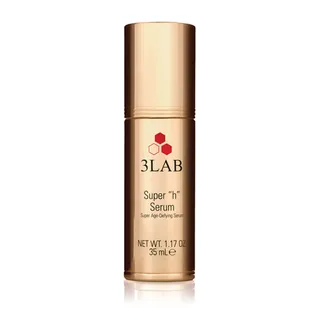
Works for
Anti-agingPalmitoyl oligopeptide, Oligopeptide-9 + 7 moreWorks well
“Reduces age spots for brighter, clearer skin. Moisturizes and smoothes the skin.”
This product can help reduce and prevent fine lines and wrinkles, improve skin elasticity and firmness because it contains adenosine.
These ingredients in the product can also be helpful, even though there is less evidence for their effectiveness: oligopeptide-4, oligopeptide-9, palmitoyl oligopeptide, palmitoyl tetrapeptide-7.
Keep in mind that it typically takes at least 6 weeks to notice any results because the changes that are needed to improve fine lines and elasticity happen in the deeper layers of the skin. No topical anti-aging product can “erase” wrinkles or fully reverse signs of aging.
MoisturizingPalmitoyl oligopeptide, Oligopeptide-9 + 20 moreWorks well
“Reduces age spots for brighter, clearer skin. Moisturizes and smoothes the skin.”
This product can help improve hydration of the skin with the two types of ingredients.
The first type is called “humectants”:
these ingredients help attract water.
When humectants are on the surface of the skin, they “pull in” the moisture from the outside environment, or from
within deeper layers of the skin. The following ingredients in this product do the job:
cyclomethicone, glycerin.
This product also contains ingredients called “occlusives”. They help reduce the speed with which our skin loses moisture to the outside environment. These ingredients also help soften the upper layer of the skin, so it feels less tight and nicer to the touch. The following ingredients in this product do the job: caprylic/capric triglyceride, dimethiconol.
The following ingredients in this product are especially good for supporting the skin barrier and helping with the hydration level: oligopeptide-4, oligopeptide-9, palmitoyl oligopeptide, palmitoyl tetrapeptide-7, urea
Anti-oxidationSide benefit · Ethylbisiminomethylguaiacol manganese chloride, Ginkgo biloba leaf extract + 9 moreWorks well
This product contains antioxidants (ethylbisiminomethylguaiacol manganese chloride) that can help neutralize free radicals in skin. By doing so, they can lessen the damage the skin gets from the UV light (sun).
The following ingredients - ginkgo biloba leaf extract also can have an antioxidant effect, but there is less evidence to confirm their effectiveness in skin.
Can it cause trouble?
Irritancy6 strong irritants: Alcohol, Humulus lupulus extract + 4 more — patch-test recommendedHigh risk
ComedogenicClean of flagged comedogenic ingredientsNone flagged
User reviews
Be the first — your take helps the next person decide.
Ingredients
Filter by role to see what each ingredient is doing.
Water~45–55%
Cyclomethicone~5.8–7.1%
- Irritation risk
- Low
A type of silicone that leaves a nice silky finish on the skin and can help soften its upper layer
More about CyclomethiconeDipropylene glycol~3.9–4.8%
- Irritation risk
- Low
Helps to dissolve other ingredients in a formulation. Slows down the rate of product drying
More about Dipropylene glycolAlcohol~3–3.7%
- Irritation risk
- High
Can be drying and contribute to skin irritation. Used in formulars to dissolve other ingredients, create a thinner product consistency or for its antibacterial properties
More about AlcoholCaprylic/capric triglyceride~2.4–2.9%
- Irritation risk
- Medium
A good mix of fatty acids that forms a protective layer on the skin. Improves the shelf life of products. Derived from coconut and glycerin
More about Caprylic/capric triglycerideGlycerin~1.9–2.3%
- Irritation risk
- Low
One of the best moisturizing ingredients. Naturally present in skin. It attracts water to the upper layer of the skin working as a humectant
More about GlycerinButylene glycol~1.5–1.9%
- Irritation risk
- Low
Used to create a nice product texture and help delivery of other ingredients. Might be somewhat helpful in attracting water to the upper layer of the skin
More about Butylene glycolSodium hyaluronate~1.3–1.6%
- Irritation risk
- Low
One of the best moisturizing ingredients. Attracts water into the upper layer of the skin
More about Sodium hyaluronateJojoba wax peg-120 esters~1–1.3%
Dimethicone/vinyl dimethicone crosspolymer~0.75–1.1%
- Irritation risk
- Low
Used to stabilize product formulations and create a nice product texture
More about Dimethicone/vinyl dimethicone crosspolymerPeg/ppg-19/19 dimethicone~0.6–0.85%
Dimethiconol~0.5–0.75%
- Irritation risk
- Low
A silicone that makes products more spreadable and keeps skin smooth. Helps to add gloss to skin and may visually fill in fine lines/wrinkles for short time
More about DimethiconolPrunus amygdalus dulcis seed extract~0.35–0.65%
- Irritation risk
- Low
Almond extract (oil) - helps soften the upper layer of the skin
More about Prunus amygdalus dulcis seed extractAvena sativa kernel extract~0.35–0.6%
- Irritation risk
- Low
An effective moisturizing and skin barrier repair ingredient. Helps calm down inflammation and has some anti-oxidant properties
More about Avena sativa kernel extractPhyllanthus emblica fruit extract~0.3–0.55%
- Irritation risk
- Medium
A plant extract that might be helpful in neutralizing free radicals and have a skin lightening effect if used in high enough concentrations
More about Phyllanthus emblica fruit extractOligopeptide-9~0.3–0.55%
Palmitoyl tetrapeptide-7~0.3–0.6%
- Irritation risk
- Low
A type of peptide. Peptides are excellent moisturizers and might be able support collagen production reducing fine lines and wrinkles
More about Palmitoyl tetrapeptide-7Palmitoyl oligopeptide~0.35–0.65%
- Irritation risk
- Low
A type of peptide. Peptides are excellent moisturizers and might be able support collagen production reducing fine lines and wrinkles
More about Palmitoyl oligopeptideMalus domestica fruit cell culture extract~0.25–0.4%
- Irritation risk
- Low
Oligopeptide-4~0.2–0.35%
- Irritation risk
- Low
A type of peptide. Peptides are excellent moisturizers and might be able support collagen production reducing fine lines and wrinkles
More about Oligopeptide-4Magnesium ascorbyl phosphate~0.2–0.35%
- Irritation risk
- Medium
A derivative of vitamin C that is more stable, but less bioavailable than the pure form of vitamin C. It does not penetrate the skin well, but has been shown to convert to pure vitamin C once in skin. It can be helpful in stimulating collagen production and lightening the skin tone, but the required concentration is likely to be very high
More about Magnesium ascorbyl phosphateEthylbisiminomethylguaiacol manganese chloride~0.15–0.3%
- Irritation risk
- Medium
A potent anti-oxidant that can help neutralize free radicals in skin and protect from harmful effects of sun exposure, even though more studies are needed to confirm its effectiveness in topical applications
More about Ethylbisiminomethylguaiacol manganese chlorideTocopheryl acetate~0.15–0.3%
- Irritation risk
- Medium
A more stable but less bio-available form of vitamin E compared to Tocopherol. Might help moisturize and protect the skin from free radicals, but mostly used in low concentrations to stabilize other ingredients.
More about Tocopheryl acetateDiacetyl boldine~0.15–0.25%
- Irritation risk
- Low
Adenosine~0.15–0.25%
- Irritation risk
- Low
Might help improve cell turnover and reduce inflammation in skin. One study shows that the ingredients might be able to help reduce dynamic wrinkles (for example, in the corners of the eyes or on the forehead)
More about AdenosineDipotassium glycyrrhizate~0.15–0.25%
- Irritation risk
- Low
A salt derived from licorice. Works as an emollient to soften the upper layer of the skin and can help calm down inflammation. Might be helpful for skin lightening
More about Dipotassium glycyrrhizateBeta-glucan~0.15–0.25%
- Irritation risk
- Low
Helps attract water to the upper layer of the skin, calm down inflammation and irritation, restore the barrier function and support wound healing. It can be helpful in reducing fine lines and wrinkles
More about Beta-glucanFoeniculum vulgare fruit extract~0.15–0.3%
- Irritation risk
- Low
Humulus lupulus extract~0.15–0.25%
- Irritation risk
- High
Hops extract. Can contain common irritants and allergens geraniol, limonene, linalool
More about Humulus lupulus extractMelissa officinalis leaf extract~0.15–0.25%
- Irritation risk
- High
A plant extract that is added for its fragrance. Can be irritating
More about Melissa officinalis leaf extractViscum album leaf extract~0.15–0.25%
- Irritation risk
- Medium
A plant extract that has anti-inflammatory and anti-bacterial properties and might help neutralize free radicals in skin, but solid research is lacking
More about Viscum album leaf extractChamomilla recutita flower extract~0.15–0.25%
- Irritation risk
- High
Plant extract that can have healing and anti-inflammatory properties. It is a potential allergen and can be irritating
More about Chamomilla recutita flower extractAchillea millefolium extract~0.2–0.35%
- Irritation risk
- High
Plant extract that can help neutralize free radicals in skin. Can be used as a fragrance. Can be irritating
More about Achillea millefolium extractGinkgo biloba leaf extract~0.15–0.25%
- Irritation risk
- High
A plant extract that might help neutralize free radicals and reduce inflammation in skin. It can be irritating
More about Ginkgo biloba leaf extractCamellia sinensis leaf extract~0.15–0.3%
- Irritation risk
- Low
Can contain potent anti-oxidant compounds (abbreviated ECG, GCG, EGC, and EGCG) that might help protect the skin from free radicals. Can help calm down inflammation and has some anti-bacterial properties. Unfortunately, these antioxidants are unstable and lose their effectiveness very quickly in products. The concentration of the antioxidant compounds in the extract also tends to be low to be effective in topical formulation
More about Camellia sinensis leaf extractCitrus aurantium amara peel oil~0.15–0.25%
- Irritation risk
- High
Lavandula angustifolia oil~0.15–0.25%
- Irritation risk
- High
An essential oil. Potential allergen and can be irritating. It has some anti-bacterial properties
More about Lavandula angustifolia oilGlyceryl acrylate/acrylic acid copolymer~0.15–0.3%
- Irritation risk
- Medium
Helps attract water to the upper layer of the skin and provide a longer-lasting hydration. Can create a thicker product consistency
More about Glyceryl acrylate/acrylic acid copolymerCarbomer~0.15–0.3%
- Irritation risk
- Low
Helps create a thicker or gel-like product texture. It is not a surfactant but can be used in gentle cleansing formulations
More about CarbomerXanthan gum~0.15–0.3%
- Irritation risk
- Low
Used to create a thicker product consistency
More about Xanthan gumCeratonia siliqua gum~0.2–0.4%
- Irritation risk
- Medium
Used to stabilize product formulations and create thicker consistency
More about Ceratonia siliqua gumSodium polyacrylate~0.2–0.35%
- Irritation risk
- Low
Used to create a gel-like product texture, as well as to stabilize emulsions
More about Sodium polyacrylateAcrylates/c10-30 alkyl acrylate crosspolymer~0.15–0.3%
- Irritation risk
- Medium
Maintains the texture of skincare products. Allows the product to spread evenly. Helps oil and water mix together
More about Acrylates/c10-30 alkyl acrylate crosspolymerPolysorbate 20~0.2–0.35%
Polysorbate 80~0.15–0.3%
Ppg-26-buteth-26~0.15–0.3%
Peg-40 hydrogenated castor oil~0.15–0.3%
- Irritation risk
- Medium
Helps oil and water mix together
More about Peg-40 hydrogenated castor oilTriethanolamine~0.15–0.25%
- Irritation risk
- Medium
Used to adjust pH of the product and can help improve the product's smell
More about TriethanolaminePropylene glycol~0.1–0.2%
- Irritation risk
- High
Helps oil and water mix together and can enhance the penetration of other ingredients into the skin. It can be irritating
More about Propylene glycolUrea~0.1–0.2%
- Irritation risk
- Low
Naturally present in skin (urea makes up about 7% of natural moisturizing factors in skin). Attracts water to the upper layer of the skin. Also has a positive effect on the skin barrier beyond the humectant action. Can enhance penetration of other ingredients. Is an exfoliating ingredient when used in high concentrations
More about UreaAllantoin~0.1–0.15%
- Irritation risk
- Low
Helps calm down inflammation in skin and can help reduce itching. Helps to repair the skin barrier and keep skin hydrated
More about AllantoinLecithin~0.15–0.3%
- Irritation risk
- Low
Used mostly for creating emulsions - helping oil and water mix together. Helps soften the upper layer of the skin
More about LecithinSodium phosphate~0.1–0.2%
Sodium chloride~0.15–0.25%
- Irritation risk
- Low
Used to stabilize mixtures of oil and water, and create thicker, gel-like product textures
More about Sodium chlorideEdta~0.1–0.2%
Caprylyl glycol~0.1–0.2%
- Irritation risk
- Medium
Helps preserve products and creates a nice product texture
More about Caprylyl glycolPhenoxyethanol~0.1–0.25%
- Irritation risk
- Low
A preservative. It helps prevent bacterial growth in cosmetic products
More about PhenoxyethanolIngredient list view
Water, Cyclomethicone, Dipropylene glycol, Alcohol, Caprylic/capric triglyceride, Glycerin, Butylene glycol, Sodium hyaluronate, Jojoba wax peg-120 esters, Dimethicone/vinyl dimethicone crosspolymer, Peg/ppg-19/19 dimethicone, Dimethiconol, Prunus amygdalus dulcis seed extract, Avena sativa kernel extract, Phyllanthus emblica fruit extract, Unknown, Oligopeptide-9, Palmitoyl tetrapeptide-7, Palmitoyl oligopeptide, Malus domestica fruit cell culture extract, Oligopeptide-4, Magnesium ascorbyl phosphate, Ethylbisiminomethylguaiacol manganese chloride, Tocopheryl acetate, Diacetyl boldine, Adenosine, Dipotassium glycyrrhizate, Beta-glucan, Foeniculum vulgare fruit extract, Humulus lupulus extract, Melissa officinalis leaf extract, Viscum album leaf extract, Chamomilla recutita flower extract, Achillea millefolium extract, Ginkgo biloba leaf extract, Camellia sinensis leaf extract, Citrus aurantium amara peel oil, Lavandula angustifolia oil, Glyceryl acrylate/acrylic acid copolymer, Carbomer, Xanthan gum, Ceratonia siliqua gum, Sodium polyacrylate, Acrylates/c10-30 alkyl acrylate crosspolymer, Polysorbate 20, Polysorbate 80, Ppg-26-buteth-26, Peg-40 hydrogenated castor oil, Triethanolamine, Propylene glycol, Urea, Allantoin, Lecithin, Sodium phosphate, Sodium chloride, Edta, Caprylyl glycol, Phenoxyethanol
Compare prices
Retailers ranked by price — lowest first.
Worth comparing, line by line.
Match % combines shared ingredients, the first five ingredients, shared actives and hero ingredients, irritancy (lower counts in the alternative's favour), texture and body area. Only products in the same routine step are compared.
| 3LABSuper h SerumYOUR PRODUCT | Dr. DenesePro C Clinical PM Brightening Serum | Coreana LabPeptide Shot Ampoule | EnvironVita-PeptideC-Quence Serum 1 | |
|---|---|---|---|---|
| Match | — | 45% | 44% | 43% |
| Price | — | — | $14.89 | — |
| Shared key ingredients | — | 8 of 20 | 5 of 20 | 4 of 20 |
| Key difference | — | Caprooyl Tetrapeptide-3 | Niacinamide | Ascorbyl Tetraisopalmitate |
| Irritancy | High | High | Medium | Medium |
| Drying alcohol | Contains drying alcohol | — | Contains drying alcohol | — |
| View product | Shop | Shop | Shop |



More alternatives: Genabelle PDRN Dual Glow Serum MistInstitut Esthederm Lift & Repair Tightening Serum
Product summary
"3LAB - Super h Serum" is effective for: Anti-inflammatory, Anti-aging and Moisturizing
Ingredient callouts
- Peptides (oligopeptide-4 0.20% - 0.35%, palmitoyl oligopeptide 0.35% - 0.65%, oligopeptide-9 0.30% - 0.55% and palmitoyl tetrapeptide-7 0.30% - 0.60%). There are many different kind of Peptides and they are naturally present in our skin. They all are a combination of aminoacids. Some of them work as natural antibiotics, promote wound-healing and production of collagen. The science is still not settled on how effective Peptides are in skincare, but it is very likely that they have a benefit. They might help restore the skin barrier and fight the signs of aging. At the very least, Peptides work as humectants: they attract water to the upper layer of the skin and improve its hydration.
- Adenosine 0.15% - 0.25%. It is a compound that in involved in many biological processes inside the skin cells. According one high-quality clinical trial, topical Adenosine in low concentrations can somewhat help improve "deep wrinkles" - the wrinkles that appear with age in places where our faces are most dynamic (for example, on the forehead or in the corners of the eyes).
- Humectants (sodium hyaluronate 1.30% - 1.60%, glyceryl acrylate/acrylic acid copolymer 0.15% - 0.30%, glycerin 1.90% - 2.30%, urea 0.10% - 0.20% and cyclomethicone 5.80% - 7.10%). These ingredients help attract water to the upper layer of the skin and improve the skin hydration.
Price
The product retails for 400.00$ in the United States and for 258.40£ in the United Kingdom.
For a detailed price comparison: click here.
Sources cited in this review
Every concentration estimate and effectiveness label is anchored to one of these 34 studies and safety reviews.
- 1
- 2Hyaluronic acid: A key molecule in skin agingncbi.nlm.nih.gov
- 3
- 4Emblicamdedge.com
- 5
- 6

Affiliate links · As an Amazon Associate, WIMJ earns from qualifying purchases.