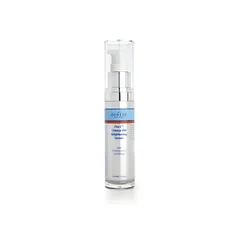
Works for:
based on ingredients and %- Anti-aging
- Evens skin tone
- Moisturizing
- Anti-oxidation
Can it cause trouble?
- Irritation risk: high
- Comedogenic risk ingredients: 0
Key actives
Product Summary
"Dr. Denese - Pro C Clinical PM Brightening Serum" is effective for: Moisturizing and Anti-aging
This product could be helpful for: Evens skin tone, but its actives are not the most effective or are not well-studied.
Ingredient callouts
- Peptides (caprooyl tetrapeptide-3 0.30% - 0.60%, palmitoyl oligopeptide 0.45% - 0.70%, palmitoyl tetrapeptide-7 0.40% - 0.60% and oligopeptide-68 0.40% - 0.60%). There are many different kind of Peptides and they are naturally present in our skin. They all are a combination of aminoacids. Some of them work as natural antibiotics, promote wound-healing and production of collagen. The science is still not settled on how effective Peptides are in skincare, but it is very likely that they have a benefit. They might help restore the skin barrier and fight the signs of aging. At the very least, Peptides work as humectants: they attract water to the upper layer of the skin and improve its hydration.
- Adenosine 0.25% - 0.45%. It is a chemical present inside our skin cells. A clinical trial confirmed that topical application of Adenosine in a low concentration can reduce dynamic wrinkles (these are the wrinkles that appear with age in a places where our mimic is the most active, for example, in the corners of the eyes or on the forehead).
- Humectants (dextran 0.20% - 0.35%, urea 0.20% - 0.35%, sodium hyaluronate 0.20% - 0.35% and glycerin 4.00% - 4.90%). These ingredients help attract water to the upper layer of the skin and improve the skin hydration.
Anti-aging
What does the product description say?
If you have sun spots, age spots, freckles, uneven skin tone that make you look older than you deserve.
Source: Dr. Denese
This product can help reduce and prevent fine lines and wrinkles, improve skin elasticity and firmness because it contains adenosine.
These ingredients in the product can also be helpful, even though there is less evidence for their effectiveness: ascorbyl glucoside, caprooyl tetrapeptide-3, oligopeptide-68, palmitoyl oligopeptide, palmitoyl tetrapeptide-7.
Keep in mind that it typically takes at least 6 weeks to notice any results because the changes that are needed to improve fine lines and elasticity happen in the deeper layers of the skin. No topical anti-aging product can “erase” wrinkles or fully reverse signs of aging.
Might help improve cell turnover and reduce inflammation in skin. One study shows that the ingredients might be able to help reduce dynamic wrinkles (for example, in the corners of the eyes or on the forehead)
A type of peptide. Peptides are excellent moisturizers and might be able support collagen production reducing fine lines and wrinkles
A type of peptide. Peptides are excellent moisturizers and might be able support collagen production reducing fine lines and wrinkles
A type of peptide. Peptides are excellent moisturizers and might be able support collagen production reducing fine lines and wrinkles
A type of peptide. Peptides are excellent moisturizers and might be able support collagen production reducing fine lines and wrinkles
A vitamin C derivative that is more stable but less potent than pure form of vitamin C. Has a potential to boost collagen production, nutralise free radicals and reduce hyperpigmentation, but the required concentration is likely to be much higher than for the pure form of vitamin C, limiting the ingredient's effectiveness in products
Moisturizing
This product can help improve hydration of the skin with the two types of ingredients.
The first type is called “humectants”:
these ingredients help attract water.
When humectants are on the surface of the skin, they “pull in” the moisture from the outside environment, or from
within deeper layers of the skin. The following ingredients in this product do the job:
dextran, glycerin.
This product also contains ingredients called “occlusives”. They help reduce the speed with which our skin loses moisture to the outside environment. These ingredients also help soften the upper layer of the skin, so it feels less tight and nicer to the touch. The following ingredients in this product do the job: dimethicone, dimethiconol.
The following ingredients in this product are especially good for supporting the skin barrier and helping with the hydration level: caprooyl tetrapeptide-3, oligopeptide-68, palmitoyl oligopeptide, palmitoyl tetrapeptide-7, urea
One of the best moisturizing ingredients. Attracts water into the upper layer of the skin
Naturally present in skin (urea makes up about 7% of natural moisturizing factors in skin). Attracts water to the upper layer of the skin. Also has a positive effect on the skin barrier beyond the humectant action. Can enhance penetration of other ingredients. Is an exfoliating ingredient when used in high concentrations
A type of peptide. Peptides are excellent moisturizers and might be able support collagen production reducing fine lines and wrinkles
A silicone that makes products more spreadable and keeps skin smooth. Helps to add gloss to skin and may visually fill in fine lines/wrinkles for short time
One of the best moisturizing ingredients. Naturally present in skin. It attracts water to the upper layer of the skin working as a humectant
A type of peptide. Peptides are excellent moisturizers and might be able support collagen production reducing fine lines and wrinkles
A type of peptide. Peptides are excellent moisturizers and might be able support collagen production reducing fine lines and wrinkles
A type of peptide. Peptides are excellent moisturizers and might be able support collagen production reducing fine lines and wrinkles
A silicone that works to soften the upper layer of the skin and reduce its water loss
A silicone that improves product texture and helps dissolve other ingredients. Can form a non-greasy film on the skin to prevent moisture loss
Helps attract water to the most upper layer of the skin. Derived from sugar
A silicone that helps to reduce water loss from the surface of the skin. Can temporarily "fill in" lines and wrinkles, absorb oil, and create a nice product finish
Might help improve cell turnover and reduce inflammation in skin. One study shows that the ingredients might be able to help reduce dynamic wrinkles (for example, in the corners of the eyes or on the forehead)
A silicone that helps improve the product texture and spreadability. Can absorb oil creating a short-term mattifying effect on the skin
A fatty acid derived from licorice. Works as an emollient and can help calm down inflammation
Helps preserve products and creates a nice product texture
A silicone that forms a light film on the skin surface helping to bind water and temporarily absorb oils creating a matt and powdery feel
Used to create a nice product texture and help delivery of other ingredients. Might be somewhat helpful in attracting water to the upper layer of the skin
Improves the texture of the product and helps soften the skin. Helps oil and water mix together and can be used as a cleansing agent
Helps calm down inflammation in skin and can help reduce itching. Helps to repair the skin barrier and keep skin hydrated
A salt derived from licorice. Works as an emollient to soften the upper layer of the skin and can help calm down inflammation. Might be helpful for skin lightening
Used mostly for creating emulsions - helping oil and water mix together. Helps soften the upper layer of the skin
Anti-oxidation
This product contains antioxidants (ascorbyl glucoside) that might be able to help neutralize free radicals in skin to lessen the damage it gets from the UV light (sun). There is not enough evidence to confirm their effectiveness in skin though.
A vitamin C derivative that is more stable but less potent than pure form of vitamin C. Has a potential to boost collagen production, nutralise free radicals and reduce hyperpigmentation, but the required concentration is likely to be much higher than for the pure form of vitamin C, limiting the ingredient's effectiveness in products
Plant extract that can help neutralize free radicals in skin. Can be used as a fragrance. Can be irritating
Might help improve cell turnover and reduce inflammation in skin. One study shows that the ingredients might be able to help reduce dynamic wrinkles (for example, in the corners of the eyes or on the forehead)
A plant extract that can help lighten the skin and calm down inflammation. Might be helpful in neutralizing free radicals
A plant extract that might help neutralize free radicals in skin. It might help reduce hyperpigmentation
A plant extract that has anti-inflammatory and anti-bacterial properties and might help neutralize free radicals in skin, but solid research is lacking
Evens skin tone
What does the product description say?
If you have sun spots, age spots, freckles, uneven skin tone that make you look older than you deserve.
Source: Dr. Denese
The following ingredient (ingredients) in this product might be helpful, but there is no evidence to confirm that it actually works: ascorbyl glucoside, glycyrrhiza glabra root extract, pancratium maritimum extract, stearyl glycyrrhetinate.
A fatty acid derived from licorice. Works as an emollient and can help calm down inflammation
A plant extract that might help neutralize free radicals in skin. It might help reduce hyperpigmentation
A vitamin C derivative that is more stable but less potent than pure form of vitamin C. Has a potential to boost collagen production, nutralise free radicals and reduce hyperpigmentation, but the required concentration is likely to be much higher than for the pure form of vitamin C, limiting the ingredient's effectiveness in products
A plant extract that can help lighten the skin and calm down inflammation. Might be helpful in neutralizing free radicals
A salt derived from licorice. Works as an emollient to soften the upper layer of the skin and can help calm down inflammation. Might be helpful for skin lightening
How honest is this product?
| Promise | Can it deliver? |
|---|---|
| Anti-aging | |
| Evens skin tone |
Total Promises Fulfilled score: 87/100.
We receive a small commission for purchases made through these links at no cost for you. Thank you for your support! Learn more
Affiliate link · supports WIMJ at no cost to you
Potential irritants
Comedogenic ingredients
No comedogenic ingredients detected
User reviews (0)
Averages from community submissions.
No reviews yet for this product.
Be the first to share your experience!
Tried this product?
Help capture what the ingredient list can't—texture, finish, pilling, scent, and more. Answer what you can, skip the rest.
Takes ~30 seconds.
Reviews are shown in aggregate. No personal details.
| Product | Similarity | Price | Irritancy |
|---|---|---|---|
 Dr. Denese Pro C Clinical PM Brightening Serum | Current | $52.00 | |
 3LAB Super Face Serum | 50% | $690.00 | |
 Elizabeth Arden Prevage Advanced Daily Serum | 47% | ≈ $113.40 | |
 Environ Vita-PeptideC-Quence Serum 1 | 46% | - | |
 Zirh Platinum PM Rescue Night Time Firming Serum | 45% | - | |
 M-61 Hydraboost HA Serum Pad | 44% | $17.97 |
Key Actives
Helps calm down inflammation in skin and can help reduce itching. Helps to repair the skin barrier and keep skin hydrated
A fatty acid derived from licorice. Works as an emollient and can help calm down inflammation
A vitamin C derivative that is more stable but less potent than pure form of vitamin C. Has a potential to boost collagen production, nutralise free radicals and reduce hyperpigmentation, but the required concentration is likely to be much higher than for the pure form of vitamin C, limiting the ingredient's effectiveness in products
A type of peptide. Peptides are excellent moisturizers and might be able support collagen production reducing fine lines and wrinkles
Might help improve cell turnover and reduce inflammation in skin. One study shows that the ingredients might be able to help reduce dynamic wrinkles (for example, in the corners of the eyes or on the forehead)
A salt derived from licorice. Works as an emollient to soften the upper layer of the skin and can help calm down inflammation. Might be helpful for skin lightening
A silicone that helps improve the product texture and spreadability. Can absorb oil creating a short-term mattifying effect on the skin
A silicone that forms a light film on the skin surface helping to bind water and temporarily absorb oils creating a matt and powdery feel
A silicone that helps to reduce water loss from the surface of the skin. Can temporarily "fill in" lines and wrinkles, absorb oil, and create a nice product finish
A type of peptide. Peptides are excellent moisturizers and might be able support collagen production reducing fine lines and wrinkles
A type of peptide. Peptides are excellent moisturizers and might be able support collagen production reducing fine lines and wrinkles
A type of peptide. Peptides are excellent moisturizers and might be able support collagen production reducing fine lines and wrinkles
A plant extract that might help neutralize free radicals in skin. It might help reduce hyperpigmentation
Naturally present in skin (urea makes up about 7% of natural moisturizing factors in skin). Attracts water to the upper layer of the skin. Also has a positive effect on the skin barrier beyond the humectant action. Can enhance penetration of other ingredients. Is an exfoliating ingredient when used in high concentrations
One of the best moisturizing ingredients. Naturally present in skin. It attracts water to the upper layer of the skin working as a humectant
A silicone that works to soften the upper layer of the skin and reduce its water loss
A silicone that improves product texture and helps dissolve other ingredients. Can form a non-greasy film on the skin to prevent moisture loss
One of the best moisturizing ingredients. Attracts water into the upper layer of the skin
A silicone that makes products more spreadable and keeps skin smooth. Helps to add gloss to skin and may visually fill in fine lines/wrinkles for short time
Helps attract water to the most upper layer of the skin. Derived from sugar
Potential irritants
Oil of a very fragrant pink rose used as fragrance in cosmetics. Extensive research has shown it has mixed benefits. In the pro column, inhaling this flower’s scent seems to have relaxing properties and the plant’s petals contain skin-soothing and antioxidant compounds that can benefit skin. On the flipside, the numerous chemicals that create this rose’s distinctive fragrance pose a risk of causing skin aggravation.
A plant extract that might help neutralize free radicals in skin. It might help reduce hyperpigmentation
Hops extract. Can contain common irritants and allergens geraniol, limonene, linalool
A plant extract that is added for its fragrance. Can be irritating
Plant extract that can have healing and anti-inflammatory properties. It is a potential allergen and can be irritating
Plant extract that can help neutralize free radicals in skin. Can be used as a fragrance. Can be irritating
A vitamin C derivative that is more stable but less potent than pure form of vitamin C. Has a potential to boost collagen production, nutralise free radicals and reduce hyperpigmentation, but the required concentration is likely to be much higher than for the pure form of vitamin C, limiting the ingredient's effectiveness in products
A plant extract that can help lighten the skin and calm down inflammation. Might be helpful in neutralizing free radicals
A fatty acid derived from licorice. Works as an emollient and can help calm down inflammation
A plant extract that has anti-inflammatory and anti-bacterial properties and might help neutralize free radicals in skin, but solid research is lacking
Helps oil and water mix together and create a thicker product consistency
Helps preserve products and creates a nice product texture
Comedogenic ingredients
We couldn't find any comedogenic ingredients in this product
All ingredients
A silicone that helps improve the product texture and spreadability. Can absorb oil creating a short-term mattifying effect on the skin
One of the best moisturizing ingredients. Naturally present in skin. It attracts water to the upper layer of the skin working as a humectant
A vitamin C derivative that is more stable but less potent than pure form of vitamin C. Has a potential to boost collagen production, nutralise free radicals and reduce hyperpigmentation, but the required concentration is likely to be much higher than for the pure form of vitamin C, limiting the ingredient's effectiveness in products
Used to create a nice product texture and help delivery of other ingredients. Might be somewhat helpful in attracting water to the upper layer of the skin
A silicone that works to soften the upper layer of the skin and reduce its water loss
A silicone that improves product texture and helps dissolve other ingredients. Can form a non-greasy film on the skin to prevent moisture loss
A silicone that forms a light film on the skin surface helping to bind water and temporarily absorb oils creating a matt and powdery feel
A silicone that helps to reduce water loss from the surface of the skin. Can temporarily "fill in" lines and wrinkles, absorb oil, and create a nice product finish
A plant extract that can help lighten the skin and calm down inflammation. Might be helpful in neutralizing free radicals
Oil of a very fragrant pink rose used as fragrance in cosmetics. Extensive research has shown it has mixed benefits. In the pro column, inhaling this flower’s scent seems to have relaxing properties and the plant’s petals contain skin-soothing and antioxidant compounds that can benefit skin. On the flipside, the numerous chemicals that create this rose’s distinctive fragrance pose a risk of causing skin aggravation.
A type of peptide. Peptides are excellent moisturizers and might be able support collagen production reducing fine lines and wrinkles
A type of peptide. Peptides are excellent moisturizers and might be able support collagen production reducing fine lines and wrinkles
A type of peptide. Peptides are excellent moisturizers and might be able support collagen production reducing fine lines and wrinkles
A type of peptide. Peptides are excellent moisturizers and might be able support collagen production reducing fine lines and wrinkles
Might help improve cell turnover and reduce inflammation in skin. One study shows that the ingredients might be able to help reduce dynamic wrinkles (for example, in the corners of the eyes or on the forehead)
A fatty acid derived from licorice. Works as an emollient and can help calm down inflammation
A salt derived from licorice. Works as an emollient to soften the upper layer of the skin and can help calm down inflammation. Might be helpful for skin lightening
A plant extract that might help neutralize free radicals in skin. It might help reduce hyperpigmentation
One of the best moisturizing ingredients. Attracts water into the upper layer of the skin
Hops extract. Can contain common irritants and allergens geraniol, limonene, linalool
A plant extract that is added for its fragrance. Can be irritating
A plant extract that has anti-inflammatory and anti-bacterial properties and might help neutralize free radicals in skin, but solid research is lacking
Plant extract that can have healing and anti-inflammatory properties. It is a potential allergen and can be irritating
Plant extract that can help neutralize free radicals in skin. Can be used as a fragrance. Can be irritating
Naturally present in skin (urea makes up about 7% of natural moisturizing factors in skin). Attracts water to the upper layer of the skin. Also has a positive effect on the skin barrier beyond the humectant action. Can enhance penetration of other ingredients. Is an exfoliating ingredient when used in high concentrations
Helps calm down inflammation in skin and can help reduce itching. Helps to repair the skin barrier and keep skin hydrated
Used mostly for creating emulsions - helping oil and water mix together. Helps soften the upper layer of the skin
Helps to retain moisture by creating a protective barrier on the skin. Rich in fatty acids. Improves product texture and helps with the penetration of other ingredients.
A silicone that makes products more spreadable and keeps skin smooth. Helps to add gloss to skin and may visually fill in fine lines/wrinkles for short time
Improves the texture of the product and helps soften the skin. Helps oil and water mix together and can be used as a cleansing agent
Helps attract water to the most upper layer of the skin. Derived from sugar
Helps water and oil mix together and create gel-like textures
Increases thickness of a product. Texture enhancer for oil-in-water emulsions
Helps create a thicker or gel-like product texture. It is not a surfactant but can be used in gentle cleansing formulations
Helps oil and water mix together and create a thicker product consistency
A preservative. It helps prevent bacterial growth in cosmetic products
Helps preserve products and creates a nice product texture
Ingredient list view
Water, Cyclopentasiloxane, Glycerin, Ascorbyl glucoside, Butylene glycol, Glycereth-26, Peg-10 dimethicone, Polymethylsilsesquioxane, Polysilicone-11, Dimethicone, Glycyrrhiza glabra root extract, Rosa damascena extract, Morus alba fruit extract, Oligopeptide-68, Palmitoyl tetrapeptide-7, Palmitoyl oligopeptide, Palmitoyl tripeptide-36, Caprooyl tetrapeptide-3, Adenosine, Algae, Dictyopteris membranacea extract, Stearyl glycyrrhetinate, Dipotassium glycyrrhizate, Unknown, Pancratium maritimum extract, Sodium hyaluronate, Foeniculum vulgare fruit extract, Humulus lupulus extract, Melissa officinalis leaf extract, Viscum album leaf extract, Chamomilla recutita flower extract, Achillea millefolium extract, Urea, Allantoin, Lecithin, Hydrogenated lecithin, Dimethiconol, Isohexadecane, Bis-peg/ppg-14/14 dimethicone, Trisiloxane, Dextran, Acrylamide/sodium acryloyldimethyltaurate copolymer, Ammonium acryloyldimethyltaurate/vp copolymer, Xanthan gum, Carbomer, Polysorbate 20, Sodium oleate, Polysorbate 80, Potassium hydroxide, Sodium metabisulfite, Disodium edta, Phenoxyethanol, Caprylyl glycol
- Glycerol and the skin: holistic approach to its origin and functions
- The Roles of Vitamin C in Skin Health
- Stability, transdermal penetration, and cutaneous effects of ascorbic acid and its derivatives
- Safety Assessment of Glycerin Ethoxylates as Used in Cosmetics
- Dimethicone as a protective ingredient in topical medications
- Final Report on the Safety Assessment of Dimethicone Copolyol
- Evaluation of anti-wrinkle efficacy of adenosine-containing products using the FOITS technique
- Ameliorating effect of dipotassium glycyrrhizinate on an IL-4- and IL-13-induced atopic dermatitis-like skin-equivalent model
- Final report on the safety assessment of Glycyrrhetinic Acid, Potassium Glycyrrhetinate, Disodium Succinoyl Glycyrrhetinate, Glyceryl Glycyrrhetinate, Glycyrrhetinyl Stearate, Stearyl Glycyrrhetinate, Glycyrrhizic Acid, Ammonium Glycyrrhizate, Dipotassium Glycyrrhizate, Disodium Glycyrrhizate, Trisodium Glycyrrhizate, Methyl Glycyrrhizate, and Potassium Glycyrrhizinate.
- Use of Pancratium maritimum extract as cosmetic antioxidizing agent and/or melanogenesis inhibitor in cosmetic composition e.g. to prevent/fight against the signs of skin aging, and for depigmenting of the skin, body hair and/or hair
- Hyaluronic acid: A key molecule in skin aging
- Hyaluronan (Hyaluronic Acid): a natural moisturizer for skin care
- Triterpenes from natural sources for parenteral and topical application
- Contact dermatitis as an adverse reaction to some topically used European herbal medicinal products – part 1: Achillea millefolium–Curcuma longa
- Topical urea in skincare: A review
- Profile of wound healing process induced by allantoin
- Final report on the safety assessment of sodium sulfite, potassium sulfite, ammonium sulfite, sodium bisulfite, ammonium bisulfite, sodium metabisulfite and potassium metabisulfite