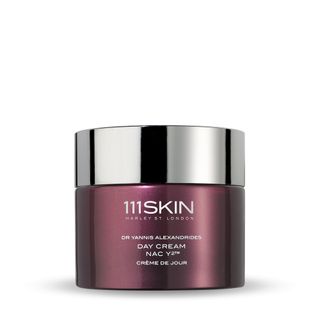
Works for
1 of 1 advertised claim delivered
Moisturizing15 ingredients credited for this claimGood support
“Repair Day Cream NAC Y²™”
This product can help improve hydration of the skin with the two types of ingredients.
The first type is called “humectants”:
these ingredients help attract water.
When humectants are on the surface of the skin, they “pull in” the moisture from the outside environment, or from
within deeper layers of the skin. The following ingredients in this product do the job:
glycerin, sodium hyaluronate.
This product also contains ingredients called “occlusives”. They help reduce the speed with which our skin loses moisture to the outside environment. These ingredients also help soften the upper layer of the skin, so it feels less tight and nicer to the touch. The following ingredients in this product do the job: caprylic/capric triglyceride, beta-sitosterol.
Can it cause trouble?
Irritancy1 strong irritant: ParfumMedium risk
Comedogenic1 ingredient rated 2 or more on the 0–5 pore-clogging scale1 flagged


User reviews
Be the first — your take helps the next person decide.
Ingredients
Filter by role to see what each ingredient is doing.
Water~45–55%
Isopropyl myristate~5.3–6.4%
- Irritation risk
- Low
- Comedogenicity
- 3/5
An emollient that helps soften the skin. Could be comedogenic
More about Isopropyl myristateCaprylic/capric triglyceride~4.2–5.2%
- Irritation risk
- Medium
A good mix of fatty acids that forms a protective layer on the skin. Improves the shelf life of products. Derived from coconut and glycerin
More about Caprylic/capric triglycerideGlycerin~3–3.7%
- Irritation risk
- Low
One of the best moisturizing ingredients. Naturally present in skin. It attracts water to the upper layer of the skin working as a humectant
More about GlycerinPeg-40 hydrogenated castor oil~2.3–2.8%
- Irritation risk
- Medium
Helps oil and water mix together
More about Peg-40 hydrogenated castor oilGlyceryl stearate~1.9–2.4%
- Irritation risk
- Low
An emollient that softens the skin and forms a protective layer on its surface. Helps water and oil mix together
More about Glyceryl stearatePeg-100 stearate~1.7–2.1%
- Irritation risk
- Low
Helps oil and water mix togehter and creates a nice product texture
More about Peg-100 stearateAcetyl cysteine~1.5–1.8%
- Irritation risk
- Low
Escin~1.1–1.3%
- Irritation risk
- High
A compound obtained from horse chestnut. It is claimed that this chemical can improve circulation, but there is no evidence available that it works in skin
More about EscinSodium ascorbyl phosphate~0.95–1.15%
- Irritation risk
- Medium
A stable derivative of vitamin C. It is oil-soluble which means it is more likely to penetrate the skin compared to the pure form of vitamin C (which is water-soluble), but it is less bio-available and is way less effective in stimulating collagen and reducing wrinkles compared to the pure form of vitamin C (L-ascorbic acid) and its other derivatives (for example, magnesium ascorbyl phosphate). At the same time, this vitamin C derivative has been shown in studies to be effective in reducing acne, blemishes and clogged pores. It is less irritating then the pure form of vitamin C
More about Sodium ascorbyl phosphateSodium hyaluronate~0.65–1%
- Irritation risk
- Low
One of the best moisturizing ingredients. Attracts water into the upper layer of the skin
More about Sodium hyaluronateCistus incanus flower/leaf/stem extract~0.55–0.8%
- Irritation risk
- Low
Yeast extract~0.5–0.75%
- Irritation risk
- Low
Helps attract water to the upper layer of the skin and might have some anti-oxidant and skin lightening properties. It can help calm down inflammation in skin
More about Yeast extractSoy isoflavones~0.45–0.65%
- Irritation risk
- Low
Beta-sitosterol~0.45–0.65%
- Irritation risk
- Low
A phytosterol that can support skin's barrier function and help the skin stay hydrated
More about Beta-sitosterolAesculus hippocastanum seed extract~0.4–0.6%
- Irritation risk
- High
Plant extract. Might have some anti-oxidant properties. Can be irritating
More about Aesculus hippocastanum seed extractAloe barbadensis leaf extract~0.45–0.7%
- Irritation risk
- Medium
Traditionally used to treat sunburns, dermatitis and inflammation, but evidence for its effectiveness is lacking. The extract can contain humectants that help attract water into the skin
More about Aloe barbadensis leaf extractCentella asiatica extract~0.4–0.65%
- Irritation risk
- Medium
A plant extract that has been shown to be able to reduce inflammation in skin, support restoration of skin barrier function, as well as support collagen production. Contains active compounds called centelloids: asiaticoside, madecasosside, asiatic acid and madecassic acid. Might be helpful in preventing stretch marks. It can be itself be irritating though.
More about Centella asiatica extractGlycosphingolipids~0.3–0.6%
- Irritation risk
- Low
A type of lipids naturally present in skin. They can be converted to ceramides in skin
More about GlycosphingolipidsCarbomer~0.25–0.5%
- Irritation risk
- Low
Helps create a thicker or gel-like product texture. It is not a surfactant but can be used in gentle cleansing formulations
More about CarbomerHydroxyacetophenone~0.25–0.45%
Olea europaea fruit oil~0.25–0.45%
- Irritation risk
- Medium
An emollient that helps soften the skin but is not effective for restoring its barrier function. Might be helpful to calm down inflammation
More about Olea europaea fruit oilOryza sativa bran oil~0.25–0.45%
- Irritation risk
- Low
Helps soften the upper layer of the skin and might have some anti-oxidant properties
More about Oryza sativa bran oilPhenoxyethanol~0.2–0.4%
- Irritation risk
- Low
A preservative. It helps prevent bacterial growth in cosmetic products
More about Phenoxyethanol1,2-hexanediol~0.2–0.35%
Caprylyl glycol~0.2–0.4%
- Irritation risk
- Medium
Helps preserve products and creates a nice product texture
More about Caprylyl glycolSodium hydroxide~0.2–0.35%
Polyglyceryl-6 laurate~0.2–0.35%
- Irritation risk
- Medium
Helps oil and water mix together
More about Polyglyceryl-6 lauratePolyglyceryl-10 oleate~0.15–0.3%
- Irritation risk
- Low
Helps soften the upper layer of the skin
More about Polyglyceryl-10 oleatePhenylpropanol~0.1–0.2%
- Irritation risk
- High
Helps mask the smell of other ingredients and helps preserve the product formulation
More about PhenylpropanolLecithin~0.15–0.25%
- Irritation risk
- Low
Used mostly for creating emulsions - helping oil and water mix together. Helps soften the upper layer of the skin
More about LecithinSorbitan palmitate~0.05–0.15%
- Irritation risk
- Medium
Helps water and oil mix together and stabilize the product formulation
More about Sorbitan palmitateParfum~0.05%
- Irritation risk
- High
An aromatic blend of unspecified and possibly irritating ingredients
More about ParfumIngredient list view
Water, Isopropyl myristate, Caprylic/capric triglyceride, Glycerin, Peg-40 hydrogenated castor oil, Glyceryl stearate, Peg-100 stearate, Acetyl cysteine, Escin, Sodium ascorbyl phosphate, Sodium hyaluronate, Cistus incanus flower/leaf/stem extract, Yeast extract, Soy isoflavones, Beta-sitosterol, Aesculus hippocastanum seed extract, Aloe barbadensis leaf extract, Centella asiatica extract, Glycosphingolipids, Carbomer, Hydroxyacetophenone, Olea europaea fruit oil, Oryza sativa bran oil, Phenoxyethanol, 1,2-hexanediol, Caprylyl glycol, Sodium hydroxide, Polyglyceryl-6 laurate, Polyglyceryl-10 oleate, Phenylpropanol, Lecithin, Sorbitan palmitate, Parfum
Compare prices
Retailers ranked by price — lowest first.

Worth comparing, line by line.
Match % combines shared ingredients, the first five ingredients, shared actives and hero ingredients, irritancy (lower counts in the alternative's favour), texture and body area. Only products in the same routine step are compared.
| 111SKINRepair Day Cream NAC Y²™YOUR PRODUCT | CULT51Day Cream | EucerinQ10 Active Day Cream for Dry Skin | E NatureBirch Juice Hydro Cream | |
|---|---|---|---|---|
| Match | — | 57% | 55% | 55% |
| Price | $210.00 | $42.67−$167.33 | $25.34−$184.66 | $32.49−$177.51 |
| Shared key ingredients | — | 6 of 10 | 2 of 10 | 2 of 10 |
| Key difference | — | Dipeptide Diaminobutyroyl Benzylamide Diacetate | Biosaccharide Gum-1 | Panthenol |
| Irritancy | Medium | Medium | Low | Low |
| Drying alcohol | — | — | — | — |
| View product | Shop | Shop | Shop |

Sources cited in this review
Every concentration estimate and effectiveness label is anchored to one of these 26 studies and safety reviews.
- 1
- 2
- 3
- 4Sodium ascorbyl phosphate in topical microemulsionssciencedirect.com
- 5
- 6

Affiliate links · As an Amazon Associate, WIMJ earns from qualifying purchases.