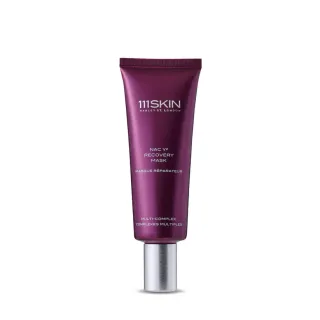
111SKIN NAC Y2 Recovery Mask

111SKIN NAC Y2 Recovery Mask

Efficacy58/100IrritancyMedium

Works for

Moisturizing
Panthenol, Ceramide np + 27 more
Works well
What the product description says
“Meanwhile, a powerfully moisturising Penta-Ceramide Complex rebuilds the skin’s protective barrier”
Source: 111skin

This product can help improve hydration of the skin with the two types of ingredients.

The first type is called “humectants”:
these ingredients help attract water. When humectants are on the surface of the skin, they “pull in” the moisture from the outside environment, or from within deeper layers of the skin. The following ingredients in this product do the job: glycerin, mannitol.

This product also contains ingredients called “occlusives”. They help reduce the speed with which our skin loses moisture to the outside environment. These ingredients also help soften the upper layer of the skin, so it feels less tight and nicer to the touch. The following ingredients in this product do the job: squalane, squalene.

The following ingredients in this product are especially good for supporting the skin barrier and helping with the hydration level: ceramide ap, ceramide as, ceramide eop, ceramide np, ceramide ns, panthenol

PanthenolHero· HumectantEffect: HighHelps attract water to the upper layer of the skin and can help improve skin barrier function~0.65–0.95%
Ceramide npHero· EmollientEffect: HighA type of lipid similar to ceramides naturally present in skin. Helps to soften the upper layer of the skin and supports the skin barrier function to keep it hydrated. Can help to prevent inflammation in skin~0.3–0.6%
Ceramide apHero· EmollientEffect: HighA type of lipid similar to ceramides naturally present in skin. Helps to soften the upper layer of the skin and supports the skin barrier function to keep it hydrated. Can help to prevent inflammation in skin~0.25–0.5%
Ceramide asHeroEffect: HighA type of lipid similar to ceramides naturally present in skin. Helps to soften the upper layer of the skin and supports the skin barrier function to keep it hydrated. Can help to prevent inflammation in skin~0.25–0.4%
Ceramide nsHero· EmollientEffect: HighA type of lipid similar to ceramides naturally present in skin. Helps to soften the upper layer of the skin and supports the skin barrier function to keep it hydrated. Can help to prevent inflammation in skin~0.25–0.5%
Ceramide eopHero· EmollientEffect: HighA type of lipid similar to ceramides naturally present in skin. Helps to soften the upper layer of the skin and supports the skin barrier function to keep it hydrated. Can help to prevent inflammation in skin~0.15–0.25%
SqualaneKey active· Emollient, OcclusiveEffect: HighAn oil naturally present in skin. Works as an emollient to soften the skin and form a protective layer on its surface without a greasy feeling.~3.3–4%
Cetyl palmitateKey active· EmollientEffect: MediumAn emollient that helps soften the skin and is used to improve product texture and stability~2.4–3%
TrehaloseKey active· HumectantEffect: HighA sugar that attracts water to the upper layer of the skin~1.4–1.7%
GlycerinKey active· HumectantEffect: HighOne of the best moisturizing ingredients. Naturally present in skin. It attracts water to the upper layer of the skin working as a humectant~0.45–0.65%
Jojoba estersKey active· EmollientEffect: HighAn emollient made of jojoba oil. Helps soften the skin and support its barrier function~0.4–0.65%
SqualeneKey active· Emollient, OcclusiveEffect: HighAn oil that is naturally part of skin sebum that helps to soften its upper layer, reduce water loss and neutralize free radicals. It might be comedogenic. Avoid applying large concentrations (or pure oil) before sun exposure as oxidized squalene can clog pores and lead to skin irritation. Today squalene is mostly derived from vegetable oils or synthetized by yeast~0.3–0.5%
PhytosterolsKey active· EmollientEffect: HighLipids that work as an emollient and can be helpful in repairing skin barrier function~0.3–0.55%
CholesterolKey active· EmollientEffect: HighAn emollient that is naturally found in skin~0.3–0.55%
Hydrogenated olive oil unsaponifiablesKey active· EmollientEffect: MediumHelp soften the upper layer of the skin~0.3–0.6%
EctoinKey activeEffect: HighSoftens the upper layer of the skin and can support skin barrier function~0.25–0.4%
Phytosteryl macadamiateKey active· EmollientEffect: HighHelps soften the upper layer of the skin~0.25–0.5%
MannitolKey active· HumectantEffect: HighHelps to attract water to the upper layer of the skin~0.25–0.4%
Silk amino acidsKey active· HumectantEffect: MediumMight help attract water to the upper layer of the skin~0.2–0.4%
Pentapeptide-59Key activeEffect: High~0.1–0.2%
Butylene glycol· HumectantEffect: LowUsed to create a nice product texture and help delivery of other ingredients. Might be somewhat helpful in attracting water to the upper layer of the skin~4.1–5%
Aloe barbadensis leaf extract· Humectant, EmollientEffect: LowTraditionally used to treat sunburns, dermatitis and inflammation, but evidence for its effectiveness is lacking. The extract can contain humectants that help attract water into the skin~1.2–1.5%
Glyceryl stearate· EmollientEffect: LowAn emollient that softens the skin and forms a protective layer on its surface. Helps water and oil mix together~0.3–0.55%
Caprylyl glycol· Humectant, EmollientEffect: LowHelps preserve products and creates a nice product texture~0.25–0.5%
TocopherolEffect: Low, below effective dosePure form of vitamin E. Can help moisturise and protect the skin from free radicals. Often used to help stabilise other ingredients or the formula itself~0.25–0.45%
Butyrospermum parkii butterUnder-dosedA great moisturising ingredient that softens the skin and reduces water loss from its upper layer. It also can be helpful in protecting skin from free radicals~0.3–0.5%
Dipotassium glycyrrhizateUnder-dosedA salt derived from licorice. Works as an emollient to soften the upper layer of the skin and can help calm down inflammation. Might be helpful for skin lightening~0.2–0.4%
Zinc gluconateUnder-dosedTypically used to stabilize the product formulations. It is a salt of a polyhydroxy acid (PHA) and in larger concentrations, can help shed the dead cells from the skin surface revealing smoother skin. It can help attract water to the upper layer of the skin. Might to be helpful against acne and clogged pores. Could be helpful in neutralizing free radicals, but solid research is missing. Due to the zinc content, might help calm down inflammation in skin~0.2–0.4%
AllantoinUnder-dosedHelps calm down inflammation in skin and can help reduce itching. Helps to repair the skin barrier and keep skin hydrated~0.2–0.4%
Anti-aging
Acetyl zingerone, Centella asiatica leaf extract + 6 more
May help
What the product description says
“A trifecta of antioxidant-rich actives, the advanced anti-ageing complex protects skin from environmental aggressors and promotes optimal glutathione, collagen and elastin synthesis in the skin.”
Source: Lookfantastic

This product contains acetyl zingerone, centella asiatica leaf extract, pentapeptide-59. These ingredients might be able to help reduce and prevent fine lines and wrinkles, improve skin elasticity and firmness, but there is not enough evidence that it actually works.

Acetyl zingeroneKey activeEffect: MediumAn active compound sourced from ginger root. It can help neutralize free radicals in skin. It might be able to help reduce fine lines and wrinkles and improve the skin tone. In small concentrations, used as a chelating agent and helps preserve stability of product formulations.~0.55–0.8%
Centella asiatica leaf extractKey activeEffect: MediumA plant extract that has been shown to be able to reduce inflammation in skin, support restoration of skin barrier function, as well as support collagen production. It can be irritating to sensitive skin. Might be helpful in preventing stretch marks. It could, however, itself be irritating.~0.2–0.4%
Pentapeptide-59Key activeEffect: Medium~0.1–0.2%
Butyrospermum parkii butterEffect: Low, below effective doseA great moisturising ingredient that softens the skin and reduces water loss from its upper layer. It also can be helpful in protecting skin from free radicals~0.3–0.5%
Sodium ascorbyl phosphateEffect: Low, below effective doseA stable derivative of vitamin C. It is oil-soluble which means it is more likely to penetrate the skin compared to the pure form of vitamin C (which is water-soluble), but it is less bio-available and is way less effective in stimulating collagen and reducing wrinkles compared to the pure form of vitamin C (L-ascorbic acid) and its other derivatives (for example, magnesium ascorbyl phosphate). At the same time, this vitamin C derivative has been shown in studies to be effective in reducing acne, blemishes and clogged pores. It is less irritating then the pure form of vitamin C~0.25–0.45%
Magnesium ascorbyl phosphateEffect: Low, below effective doseA derivative of vitamin C that is more stable, but less bioavailable than the pure form of vitamin C. It does not penetrate the skin well, but has been shown to convert to pure vitamin C once in skin. It can be helpful in stimulating collagen production and lightening the skin tone, but the required concentration is likely to be very high~0.25–0.45%
TocopherolEffect: Low, below effective dosePure form of vitamin E. Can help moisturise and protect the skin from free radicals. Often used to help stabilise other ingredients or the formula itself~0.25–0.45%
Zinc gluconateEffect: Low, below effective doseTypically used to stabilize the product formulations. It is a salt of a polyhydroxy acid (PHA) and in larger concentrations, can help shed the dead cells from the skin surface revealing smoother skin. It can help attract water to the upper layer of the skin. Might to be helpful against acne and clogged pores. Could be helpful in neutralizing free radicals, but solid research is missing. Due to the zinc content, might help calm down inflammation in skin~0.2–0.4%
Evens skin tone
Magnesium ascorbyl phosphate, Zinc gluconate + 1 more
Not delivered
What the product description says
“Featuring 111SKIN's signature complex NAC Y2, this rich mask works to help reduce oxidative stress, irritation and redness while strengthening the skin against all external aggressors. But it doesn't stop there, this hardworking hero also features silk amino peptides to rejuvenate the skin’s tone, reduce fine lines and wrinkles as well as a calming complex that works to calm redness, irritation too.”
Source: Cultbeauty

Effective ingredients missing or their concentration is too low

Magnesium ascorbyl phosphateEffect: Low, below effective doseA derivative of vitamin C that is more stable, but less bioavailable than the pure form of vitamin C. It does not penetrate the skin well, but has been shown to convert to pure vitamin C once in skin. It can be helpful in stimulating collagen production and lightening the skin tone, but the required concentration is likely to be very high~0.25–0.45%
Zinc gluconateEffect: Low, below effective doseTypically used to stabilize the product formulations. It is a salt of a polyhydroxy acid (PHA) and in larger concentrations, can help shed the dead cells from the skin surface revealing smoother skin. It can help attract water to the upper layer of the skin. Might to be helpful against acne and clogged pores. Could be helpful in neutralizing free radicals, but solid research is missing. Due to the zinc content, might help calm down inflammation in skin~0.2–0.4%
Dipotassium glycyrrhizateEffect: Low, below effective doseA salt derived from licorice. Works as an emollient to soften the upper layer of the skin and can help calm down inflammation. Might be helpful for skin lightening~0.2–0.4%
Anti-oxidation
Side benefit · Acetyl zingerone, Squalene + 8 more
Works well

This product contains antioxidants (acetyl zingerone) that can help neutralize free radicals in skin. By doing so, they can lessen the damage the skin gets from the UV light (sun).

The following ingredients - squalene also can have an antioxidant effect, but there is less evidence to confirm their effectiveness in skin.

Acetyl zingeroneKey activeEffect: HighAn active compound sourced from ginger root. It can help neutralize free radicals in skin. It might be able to help reduce fine lines and wrinkles and improve the skin tone. In small concentrations, used as a chelating agent and helps preserve stability of product formulations.~0.55–0.8%
SqualeneKey activeEffect: MediumAn oil that is naturally part of skin sebum that helps to soften its upper layer, reduce water loss and neutralize free radicals. It might be comedogenic. Avoid applying large concentrations (or pure oil) before sun exposure as oxidized squalene can clog pores and lead to skin irritation. Today squalene is mostly derived from vegetable oils or synthetized by yeast~0.3–0.5%
CaffeineEffect: LowMight be helpful in neutralizing free radicals. Can have a dehydration effect that might somewhat decrease the look of puffy eyes~0.2–0.4%
Aesculus hippocastanum seed extractEffect: LowPlant extract. Might have some anti-oxidant properties. Can be irritating~0.15–0.3%
Butyrospermum parkii butterEffect: Low, below effective doseA great moisturising ingredient that softens the skin and reduces water loss from its upper layer. It also can be helpful in protecting skin from free radicals~0.3–0.5%
Tocopheryl acetateEffect: Low, below effective doseA more stable but less bio-available form of vitamin E compared to Tocopherol. Might help moisturize and protect the skin from free radicals, but mostly used in low concentrations to stabilize other ingredients.~0.25–0.45%
Magnesium ascorbyl phosphateEffect: Low, below effective doseA derivative of vitamin C that is more stable, but less bioavailable than the pure form of vitamin C. It does not penetrate the skin well, but has been shown to convert to pure vitamin C once in skin. It can be helpful in stimulating collagen production and lightening the skin tone, but the required concentration is likely to be very high~0.25–0.45%
Zinc gluconateEffect: Low, below effective doseTypically used to stabilize the product formulations. It is a salt of a polyhydroxy acid (PHA) and in larger concentrations, can help shed the dead cells from the skin surface revealing smoother skin. It can help attract water to the upper layer of the skin. Might to be helpful against acne and clogged pores. Could be helpful in neutralizing free radicals, but solid research is missing. Due to the zinc content, might help calm down inflammation in skin~0.2–0.4%
TocopherolUnder-dosedPure form of vitamin E. Can help moisturise and protect the skin from free radicals. Often used to help stabilise other ingredients or the formula itself~0.25–0.45%
Sodium ascorbyl phosphateUnder-dosedA stable derivative of vitamin C. It is oil-soluble which means it is more likely to penetrate the skin compared to the pure form of vitamin C (which is water-soluble), but it is less bio-available and is way less effective in stimulating collagen and reducing wrinkles compared to the pure form of vitamin C (L-ascorbic acid) and its other derivatives (for example, magnesium ascorbyl phosphate). At the same time, this vitamin C derivative has been shown in studies to be effective in reducing acne, blemishes and clogged pores. It is less irritating then the pure form of vitamin C~0.25–0.45%

Can it cause trouble?

Irritancy
1 strong irritant: Alcohol
Medium risk
We flagged 23 ingredients with irritancy potential. Severity depends on your sensitivity threshold; the table lists the worst offenders first.
IngredientFunctionIrritationEst. amount
AlcoholCan be drying and contribute to skin irritation. Used in formulars to dissolve other ingredients, create a thinner product consistency or for its antibacterial propertiesHigh~0.5–0.7%est.
Phenethyl alcoholA fragrance. Can be irritatingHigh~0.2–0.4%est.
Benzyl alcoholA preservative. Can be used to mask unpleasant smell. Can be irritatingHigh~0.1–0.2%est.
Aesculus hippocastanum seed extractPlant extract. Might have some anti-oxidant properties. Can be irritatingHigh~0.15–0.3%est.
Hydroxyethyl acrylate/sodium acryloyldimethyl taurate copolymerA gelling agent that thickens the product consistency and leaves the skin with a velvety finishMedium~2–2.4%est.
1,2-hexanediolA preservativeMedium~0.8–1.2%est.
Aloe barbadensis leaf extractTraditionally used to treat sunburns, dermatitis and inflammation, but evidence for its effectiveness is lacking. The extract can contain humectants that help attract water into the skinMedium~1.2–1.5%est.
Acetyl zingeroneAn active compound sourced from ginger root. It can help neutralize free radicals in skin. It might be able to help reduce fine lines and wrinkles and improve the skin tone. In small concentrations, used as a chelating agent and helps preserve stability of product formulations.Medium~0.55–0.8%est.
Jojoba estersAn emollient made of jojoba oil. Helps soften the skin and support its barrier functionMedium~0.4–0.65%est.
HydroxyacetophenoneUsed to increase effectiveness of preservativesMedium~0.3–0.6%est.
Caprylyl glycolHelps preserve products and creates a nice product textureMedium~0.25–0.5%est.
Polysorbate 60Helps oil and water mix togetherMedium~0.25–0.5%est.
Sodium ascorbyl phosphateA stable derivative of vitamin C. It is oil-soluble which means it is more likely to penetrate the skin compared to the pure form of vitamin C (which is water-soluble), but it is less bio-available and is way less effective in stimulating collagen and reducing wrinkles compared to the pure form of vitamin C (L-ascorbic acid) and its other derivatives (for example, magnesium ascorbyl phosphate). At the same time, this vitamin C derivative has been shown in studies to be effective in reducing acne, blemishes and clogged pores. It is less irritating then the pure form of vitamin CMedium~0.25–0.45%est.
Tocopheryl acetateA more stable but less bio-available form of vitamin E compared to Tocopherol. Might help moisturize and protect the skin from free radicals, but mostly used in low concentrations to stabilize other ingredients.Medium~0.25–0.45%est.
Potassium hydroxideUsed to adjust the pH level of productsMedium~0.25–0.45%est.
EthylhexylglycerinA preservativeMedium~0.25–0.45%est.
Magnesium ascorbyl phosphateA derivative of vitamin C that is more stable, but less bioavailable than the pure form of vitamin C. It does not penetrate the skin well, but has been shown to convert to pure vitamin C once in skin. It can be helpful in stimulating collagen production and lightening the skin tone, but the required concentration is likely to be very highMedium~0.25–0.45%est.
PhytosterolsLipids that work as an emollient and can be helpful in repairing skin barrier functionMedium~0.3–0.55%est.
Centella asiatica leaf extractA plant extract that has been shown to be able to reduce inflammation in skin, support restoration of skin barrier function, as well as support collagen production. It can be irritating to sensitive skin. Might be helpful in preventing stretch marks. It could, however, itself be irritating.Medium~0.2–0.4%est.
CaffeineMight be helpful in neutralizing free radicals. Can have a dehydration effect that might somewhat decrease the look of puffy eyesMedium~0.2–0.4%est.
Zinc gluconateTypically used to stabilize the product formulations. It is a salt of a polyhydroxy acid (PHA) and in larger concentrations, can help shed the dead cells from the skin surface revealing smoother skin. It can help attract water to the upper layer of the skin. Might to be helpful against acne and clogged pores. Could be helpful in neutralizing free radicals, but solid research is missing. Due to the zinc content, might help calm down inflammation in skinMedium~0.2–0.4%est.
Potassium sorbateA preservativeMedium~0.15–0.25%est.
Comedogenic
2 ingredients rated 2 or more on the 0–5 pore-clogging scale
2 flagged
These ingredients have a comedogenic rating of 2 or more on a 0–5 scale; the table shows each one's rating. In leave-on products they can clog pores in acne-prone skin.
IngredientFunctionRatingEst. amount
Butyrospermum parkii butterA great moisturising ingredient that softens the skin and reduces water loss from its upper layer. It also can be helpful in protecting skin from free radicals3/5~0.3–0.5%est.
SqualeneAn oil that is naturally part of skin sebum that helps to soften its upper layer, reduce water loss and neutralize free radicals. It might be comedogenic. Avoid applying large concentrations (or pure oil) before sun exposure as oxidized squalene can clog pores and lead to skin irritation. Today squalene is mostly derived from vegetable oils or synthetized by yeast2/5~0.3–0.5%est.

User reviews

Would you recommend?
No community reviews yet.

Be the first — your take helps the next person decide.

Ingredients

Filter by role to see what each ingredient is doing.

Water~45–55%
Formula
Irritation risk
Low

Plain old water

More about Water
Dipropylene glycol~6.2–7.6%
Formula
Irritation risk
Low

Helps to dissolve other ingredients in a formulation. Slows down the rate of product drying

More about Dipropylene glycol
Butylene glycol~4.1–5%
Formula
Irritation risk
Low
Works for
Moisturizing

Used to create a nice product texture and help delivery of other ingredients. Might be somewhat helpful in attracting water to the upper layer of the skin

More about Butylene glycol
Squalane~3.3–4%
Key active
Irritation risk
Low
Works for
Moisturizing

An oil naturally present in skin. Works as an emollient to soften the skin and form a protective layer on its surface without a greasy feeling.

More about Squalane
Cetyl palmitate~2.4–3%
Key active
Irritation risk
Low
Works for
Moisturizing

An emollient that helps soften the skin and is used to improve product texture and stability

More about Cetyl palmitate
Hydroxyethyl acrylate/sodium acryloyldimethyl taurate copolymer~2–2.4%
Irritant · medium
Irritation risk
Medium

A gelling agent that thickens the product consistency and leaves the skin with a velvety finish

More about Hydroxyethyl acrylate/sodium acryloyldimethyl taurate copolymer
1,2-hexanediol~0.8–1.2%
Irritant · medium
Irritation risk
Medium

A preservative

More about 1,2-hexanediol
Trehalose~1.4–1.7%
Key active
Irritation risk
Low
Works for
Moisturizing

A sugar that attracts water to the upper layer of the skin

More about Trehalose
Aloe barbadensis leaf extract~1.2–1.5%
Irritant · medium
Irritation risk
Medium
Works for
Moisturizing

Traditionally used to treat sunburns, dermatitis and inflammation, but evidence for its effectiveness is lacking. The extract can contain humectants that help attract water into the skin

More about Aloe barbadensis leaf extract
Propanediol~0.9–1.1%
Formula
Irritation risk
Low

Acts as a solvent for other ingredients. Speeds up the absorption of other ingredients into the skin

More about Propanediol
Panthenol~0.65–0.95%
Hero · Moisturizing
Irritation risk
Low
Works for
Reduces rednessMoisturizingReduces irritation

Helps attract water to the upper layer of the skin and can help improve skin barrier function

More about Panthenol
Acetyl zingerone~0.55–0.8%
Key activeIrritant · medium
Irritation risk
Medium
Works for
Anti-oxidationAnti-aging

An active compound sourced from ginger root. It can help neutralize free radicals in skin. It might be able to help reduce fine lines and wrinkles and improve the skin tone. In small concentrations, used as a chelating agent and helps preserve stability of product formulations.

More about Acetyl zingerone
Alcohol~0.5–0.7%
Irritant · high
Irritation risk
High
Works for
Antibacterial

Can be drying and contribute to skin irritation. Used in formulars to dissolve other ingredients, create a thinner product consistency or for its antibacterial properties

More about Alcohol
C18-36 acid triglyceride~0.45–0.7%
Formula
Phenoxyethanol~0.4–0.6%
Formula
Irritation risk
Low

A preservative. It helps prevent bacterial growth in cosmetic products

More about Phenoxyethanol
Glycerin~0.45–0.65%
Key active
Irritation risk
Low
Works for
Moisturizing

One of the best moisturizing ingredients. Naturally present in skin. It attracts water to the upper layer of the skin working as a humectant

More about Glycerin
Jojoba esters~0.4–0.65%
Key activeIrritant · medium
Irritation risk
Medium
Works for
Moisturizing

An emollient made of jojoba oil. Helps soften the skin and support its barrier function

More about Jojoba esters
Hydroxyacetophenone~0.3–0.6%
Irritant · medium
Irritation risk
Medium

Used to increase effectiveness of preservatives

More about Hydroxyacetophenone
Hydrogenated olive oil unsaponifiables~0.3–0.6%
Key active
Irritation risk
Low
Works for
Moisturizing

Help soften the upper layer of the skin

More about Hydrogenated olive oil unsaponifiables
Ceramide np~0.3–0.6%
Hero · Moisturizing
Irritation risk
Low
Works for
MoisturizingAnti-inflammatoryReduces irritation

A type of lipid similar to ceramides naturally present in skin. Helps to soften the upper layer of the skin and supports the skin barrier function to keep it hydrated. Can help to prevent inflammation in skin

More about Ceramide np
Carbomer~0.25–0.5%
Formula
Irritation risk
Low
Works for
Cleansing

Helps create a thicker or gel-like product texture. It is not a surfactant but can be used in gentle cleansing formulations

More about Carbomer
C12-18 acid triglyceride~0.3–0.55%
Formula
Irritation risk
Low
Works for
Cleansing
More about C12-18 acid triglyceride
Caprylyl glycol~0.25–0.5%
Irritant · medium
Irritation risk
Medium
Works for
Moisturizing

Helps preserve products and creates a nice product texture

More about Caprylyl glycol
Squalene~0.3–0.5%
Key activeComedogenic 2/5
Irritation risk
Low
Comedogenicity
2/5
Works for
MoisturizingAnti-oxidation

An oil that is naturally part of skin sebum that helps to soften its upper layer, reduce water loss and neutralize free radicals. It might be comedogenic. Avoid applying large concentrations (or pure oil) before sun exposure as oxidized squalene can clog pores and lead to skin irritation. Today squalene is mostly derived from vegetable oils or synthetized by yeast

More about Squalene
Sorbitan isostearate~0.25–0.45%
Formula
Irritation risk
Low
Works for
Cleansing

Helps oil and water mix together

More about Sorbitan isostearate
Polysorbate 60~0.25–0.5%
Irritant · medium
Irritation risk
Medium
Works for
Cleansing

Helps oil and water mix together

More about Polysorbate 60
Sodium ascorbyl phosphate~0.25–0.45%
Under-dosedIrritant · medium
Irritation risk
Medium
Works for
Anti-blemishAnti-oxidationAnti-aging

A stable derivative of vitamin C. It is oil-soluble which means it is more likely to penetrate the skin compared to the pure form of vitamin C (which is water-soluble), but it is less bio-available and is way less effective in stimulating collagen and reducing wrinkles compared to the pure form of vitamin C (L-ascorbic acid) and its other derivatives (for example, magnesium ascorbyl phosphate). At the same time, this vitamin C derivative has been shown in studies to be effective in reducing acne, blemishes and clogged pores. It is less irritating then the pure form of vitamin C

More about Sodium ascorbyl phosphate
Tocopheryl acetate~0.25–0.45%
Irritant · medium
Irritation risk
Medium
Works for
Anti-oxidation

A more stable but less bio-available form of vitamin E compared to Tocopherol. Might help moisturize and protect the skin from free radicals, but mostly used in low concentrations to stabilize other ingredients.

More about Tocopheryl acetate
Potassium hydroxide~0.25–0.45%
Irritant · medium
Irritation risk
Medium

Used to adjust the pH level of products

More about Potassium hydroxide
Hydrogenated lecithin~0.25–0.45%
Formula
Irritation risk
Low
Works for
Cleansing

Helps to retain moisture by creating a protective barrier on the skin. Rich in fatty acids. Improves product texture and helps with the penetration of other ingredients.

More about Hydrogenated lecithin
Ethylhexylglycerin~0.25–0.45%
Irritant · medium
Irritation risk
Medium

A preservative

More about Ethylhexylglycerin
Magnesium ascorbyl phosphate~0.25–0.45%
Irritant · medium
Irritation risk
Medium
Works for
Anti-agingEvens skin toneAnti-oxidation

A derivative of vitamin C that is more stable, but less bioavailable than the pure form of vitamin C. It does not penetrate the skin well, but has been shown to convert to pure vitamin C once in skin. It can be helpful in stimulating collagen production and lightening the skin tone, but the required concentration is likely to be very high

More about Magnesium ascorbyl phosphate
Ectoin~0.25–0.4%
Key active
Irritation risk
Low
Works for
Moisturizing

Softens the upper layer of the skin and can support skin barrier function

More about Ectoin
Allantoin~0.2–0.4%
Under-dosed
Irritation risk
Low
Works for
Anti-inflammatoryMoisturizingReduces irritationReduces rednessAnti-blemishExfoliation

Helps calm down inflammation in skin and can help reduce itching. Helps to repair the skin barrier and keep skin hydrated

More about Allantoin
Mannitol~0.25–0.4%
Key active
Irritation risk
Low
Works for
Moisturizing

Helps to attract water to the upper layer of the skin

More about Mannitol
Glyceryl stearate~0.3–0.55%
Formula
Irritation risk
Low
Works for
CleansingMoisturizing

An emollient that softens the skin and forms a protective layer on its surface. Helps water and oil mix together

More about Glyceryl stearate
Phytosteryl macadamiate~0.25–0.5%
Key active
Irritation risk
Low
Works for
Moisturizing

Helps soften the upper layer of the skin

More about Phytosteryl macadamiate
Tasmannia lanceolata fruit/leaf extract~0.25–0.45%
Irritant · high
Silk amino acids~0.2–0.4%
Key active
Irritation risk
Low
Works for
Moisturizing

Might help attract water to the upper layer of the skin

More about Silk amino acids
Ammonium glycyrrhizate~0.25–0.4%
Formula
Butyrospermum parkii butter~0.3–0.5%
Under-dosedComedogenic 3/5
Irritation risk
Low
Comedogenicity
3/5
Works for
MoisturizingAnti-agingAnti-oxidation

A great moisturising ingredient that softens the skin and reduces water loss from its upper layer. It also can be helpful in protecting skin from free radicals

More about Butyrospermum parkii butter
Phytosterols~0.3–0.55%
Key activeIrritant · medium
Irritation risk
Medium
Works for
Moisturizing

Lipids that work as an emollient and can be helpful in repairing skin barrier function

More about Phytosterols
Cholesterol~0.3–0.55%
Key active
Irritation risk
Low
Works for
CleansingMoisturizing

An emollient that is naturally found in skin

More about Cholesterol
Ceramide ns~0.25–0.5%
Hero · Moisturizing
Irritation risk
Low
Works for
MoisturizingAnti-inflammatory

A type of lipid similar to ceramides naturally present in skin. Helps to soften the upper layer of the skin and supports the skin barrier function to keep it hydrated. Can help to prevent inflammation in skin

More about Ceramide ns
Ceramide as~0.25–0.4%
Hero · Moisturizing
Irritation risk
Low
Works for
MoisturizingReduces irritationAnti-inflammatory

A type of lipid similar to ceramides naturally present in skin. Helps to soften the upper layer of the skin and supports the skin barrier function to keep it hydrated. Can help to prevent inflammation in skin

More about Ceramide as
Ceramide ap~0.25–0.5%
Hero · Moisturizing
Irritation risk
Low
Works for
Reduces irritationMoisturizingAnti-inflammatory

A type of lipid similar to ceramides naturally present in skin. Helps to soften the upper layer of the skin and supports the skin barrier function to keep it hydrated. Can help to prevent inflammation in skin

More about Ceramide ap
Tocopherol~0.25–0.45%
Under-dosed
Irritation risk
Low
Works for
Anti-oxidationMoisturizingAnti-inflammatoryAnti-aging

Pure form of vitamin E. Can help moisturise and protect the skin from free radicals. Often used to help stabilise other ingredients or the formula itself

More about Tocopherol
Piperonyl glucoside~0.25–0.45%
Formula
Centella asiatica leaf extract~0.2–0.4%
Key activeIrritant · medium
Irritation risk
Medium
Works for
Reduces rednessAnti-inflammatoryReduces irritationAnti-agingAnti-blemish

A plant extract that has been shown to be able to reduce inflammation in skin, support restoration of skin barrier function, as well as support collagen production. It can be irritating to sensitive skin. Might be helpful in preventing stretch marks. It could, however, itself be irritating.

More about Centella asiatica leaf extract
Caffeine~0.2–0.4%
Irritant · medium
Irritation risk
Medium
Works for
De-puffingAnti-oxidation

Might be helpful in neutralizing free radicals. Can have a dehydration effect that might somewhat decrease the look of puffy eyes

More about Caffeine
Acetyl cysteine~0.2–0.4%
Formula
Zinc gluconate~0.2–0.4%
Under-dosedIrritant · medium
Irritation risk
Medium
Works for
MoisturizingAnti-oxidationExfoliationEvens skin toneAnti-inflammatoryAnti-agingAnti-blemish

Typically used to stabilize the product formulations. It is a salt of a polyhydroxy acid (PHA) and in larger concentrations, can help shed the dead cells from the skin surface revealing smoother skin. It can help attract water to the upper layer of the skin. Might to be helpful against acne and clogged pores. Could be helpful in neutralizing free radicals, but solid research is missing. Due to the zinc content, might help calm down inflammation in skin

More about Zinc gluconate
Dipotassium glycyrrhizate~0.2–0.4%
Under-dosed
Irritation risk
Low
Works for
MoisturizingAnti-inflammatoryEvens skin tone

A salt derived from licorice. Works as an emollient to soften the upper layer of the skin and can help calm down inflammation. Might be helpful for skin lightening

More about Dipotassium glycyrrhizate
Phenethyl alcohol~0.2–0.4%
Irritant · high
Irritation risk
High

A fragrance. Can be irritating

More about Phenethyl alcohol
Benzyl alcohol~0.1–0.2%
Irritant · high
Irritation risk
High

A preservative. Can be used to mask unpleasant smell. Can be irritating

More about Benzyl alcohol
Aesculus hippocastanum seed extract~0.15–0.3%
Irritant · high
Irritation risk
High
Works for
Anti-oxidation

Plant extract. Might have some anti-oxidant properties. Can be irritating

More about Aesculus hippocastanum seed extract
Sodium benzoate~0.1–0.2%
Formula
Irritation risk
Low

A preservative

More about Sodium benzoate
Potassium sorbate~0.15–0.25%
Irritant · medium
Irritation risk
Medium

A preservative

More about Potassium sorbate
Maltodextrin~0.15–0.25%
Formula
Irritation risk
Low
Works for
Mattifying

Used to stabilize the product formulation and can help absorb oil

More about Maltodextrin
Pentapeptide-59~0.1–0.2%
Key active
Irritation risk
Low
Works for
MoisturizingAnti-aging
More about Pentapeptide-59
Ceramide eop~0.15–0.25%
Hero · Moisturizing
Irritation risk
Low
Works for
MoisturizingReduces irritationAnti-inflammatory

A type of lipid similar to ceramides naturally present in skin. Helps to soften the upper layer of the skin and supports the skin barrier function to keep it hydrated. Can help to prevent inflammation in skin

More about Ceramide eop
Ingredient list view

Water, Dipropylene glycol, Butylene glycol, Squalane, Cetyl palmitate, Hydroxyethyl acrylate/sodium acryloyldimethyl taurate copolymer, 1,2-hexanediol, Trehalose, Aloe barbadensis leaf extract, Propanediol, Panthenol, Acetyl zingerone, Alcohol, C18-36 acid triglyceride, Phenoxyethanol, Glycerin, Jojoba esters, Hydroxyacetophenone, Hydrogenated olive oil unsaponifiables, Ceramide np, Carbomer, C12-18 acid triglyceride, Caprylyl glycol, Squalene, Sorbitan isostearate, Polysorbate 60, Sodium ascorbyl phosphate, Tocopheryl acetate, Potassium hydroxide, Hydrogenated lecithin, Ethylhexylglycerin, Magnesium ascorbyl phosphate, Ectoin, Allantoin, Mannitol, Glyceryl stearate, Phytosteryl macadamiate, Tasmannia lanceolata fruit/leaf extract, Silk amino acids, Ammonium glycyrrhizate, Butyrospermum parkii butter, Phytosterols, Cholesterol, Ceramide ns, Ceramide as, Ceramide ap, Tocopherol, Piperonyl glucoside, Centella asiatica leaf extract, Caffeine, Acetyl cysteine, Zinc gluconate, Dipotassium glycyrrhizate, Phenethyl alcohol, Benzyl alcohol, Aesculus hippocastanum seed extract, Sodium benzoate, Potassium sorbate, Maltodextrin, Pentapeptide-59, Ceramide eop

Compare prices

Retailers ranked by price — lowest first.

111skin75 ml
$160.00
Buy
SpaceNK US
$160.00
Buy
Amazon US
Price unavailable Out of stock
Check

Affiliate links · As an Amazon Associate, WIMJ earns from qualifying purchases.

Worth comparing, line by line.

Match % combines shared ingredients, the first five ingredients, shared actives and hero ingredients, irritancy (lower counts in the alternative's favour), texture and body area. Only products in the same routine step are compared.

Side-by-side comparison of this product against its closest alternatives
111SKINNAC Y2 Recovery MaskYOUR PRODUCTKlairsMoist Soothing Tencel Sheet MaskS. NatureAqua Squalane Cream Wrapping Sheet Mask for Hydration, Firming & Lifting, 4 SheetsGoodalHouttuynia Cordata Hyaluron Soothing Jelly Mask
Match—50%47%46%
Price$160.00—$24.00−$136.00$2.46−$157.54
Shared key ingredients—10 of 2510 of 2512 of 25
Key difference—PhytosphingosineAdenosinePhytosphingosine
Irritancy Medium Low Medium Medium
Drying alcohol Contains drying alcohol ———
View product Shop Shop Shop

More alternatives: Beekman 1802 Advanced Better Aging Sheet MaskBIODANCE Hydro Cera-nol Real Deep Mask

Cheaper alternatives? See how this stacks up against similar formulas.
We compare ingredient profiles across our catalog — pick the closest match for your budget.
Open dupe finder

Product summary

"111SKIN - NAC Y2 Recovery Mask" is effective for: Moisturizing

This product could be helpful for: Anti-aging, but its actives are not the most effective or are not well-studied.

Ingredient callouts

  • Ceramides (ceramide eop 0.15% - 0.25%, ceramide ns 0.25% - 0.50%, ceramide np 0.30% - 0.60%, ceramide as 0.25% - 0.40% and ceramide ap 0.25% - 0.40%). Ceramides are an important part of our natural skin barrier. The Ceramides used in skincare are synthetic or come from plants. They help soften the skin and can help "fill the gaps" in the skin barrier, keeping the skin hydrated and resilient for longer.
  • Panthenol (pro-vitamin B5) at about 0.65% - 0.95% concentration. In this concentration, Panthenol works effectively to improve the skin barrier and reduce inflammation.
  • Humectants (trehalose 1.40% - 1.70%, glycerin 0.45% - 0.65%, panthenol 0.65% - 0.95% and mannitol 0.25% - 0.40%). These ingredients help attract water to the upper layer of the skin and improve the skin hydration.

Price

The product retails from 150.00$ up to 160.00$ in the United States, from 74.75£ up to 2563.00£ in the United Kingdom and for 161.00CA$ in Canada.

For a detailed price comparison: click here.

Sources cited in this review

Every concentration estimate and effectiveness label is anchored to one of these 36 studies and safety reviews.

  1. 1
  2. 2
  3. 3
  4. 4
  5. 5
  6. 6
111SKIN NAC Y2 Recovery Mask
111SKINNAC Y2 Recovery Mask

Affiliate links · As an Amazon Associate, WIMJ earns from qualifying purchases.

As an Amazon Associate, WIMJ earns from qualifying purchases.