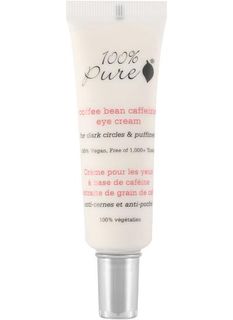
100% PURE Organic Coffee Bean Eye Cream
Works for
1 of 2 advertised claims delivered
Anti-agingTocopherol, Camellia sinensis leaf extract + 1 moreModerate evidence
“This 100% natural eye cream reduced the appearance of fine lines and wrinkles”
This product contains tocopherol. This ingredient help neutralize free radicals in skin. By doing so, they might be able to prevent early signs of aging (like fine lines and wrinkles), at least to some extent. These ingredients will not be able to "reverse" signs of aging.
MoisturizingEuphorbia cerifera cera, Aloe barbadensis leaf juice + 2 moreWeak evidence
“Improves skin hydration and moisturisation”
Does not contain good ingredients to help with moisturization.
Anti-oxidationNot advertised by the brand · Tocopherol, Camellia sinensis leaf extract + 1 moreStrong evidence
This product contains antioxidants (tocopherol) that can help neutralize free radicals in skin. By doing so, they can lessen the damage the skin gets from the UV light (sun).
The following ingredients - camellia sinensis leaf extract also can have an antioxidant effect, but there is less evidence to confirm their effectiveness in skin.
Can it cause trouble?
Irritancy3 strong irritants: Rosa centifolia flower water, Origanum vulgare leaf + 1 more — patch-test recommendedHigh risk
ComedogenicClean of flagged comedogenic ingredientsNone flagged
User reviews
Be the first — your take helps the next person decide.
Ingredients
Filter by role to see what each ingredient is doing.
Aloe barbadensis leaf juice~23–34%
- Irritation risk
- Medium
Traditionally used to treat sunburns, dermatitis and inflammation, but evidence for its effectiveness is lacking. The extract can contain humectants that help attract water into the skin
More about Aloe barbadensis leaf juiceRosa centifolia flower water~6.2–9.3%
- Irritation risk
- High
Rosa canina seed extract~4.3–6.4%
- Irritation risk
- Low
Coffea arabica seed extract~3.7–5.6%
- Irritation risk
- Low
Might be helpful in neutralizing free radicals in skin
More about Coffea arabica seed extractCamellia sinensis leaf extract~2.7–4%
- Irritation risk
- Low
Can contain potent anti-oxidant compounds (abbreviated ECG, GCG, EGC, and EGCG) that might help protect the skin from free radicals. Can help calm down inflammation and has some anti-bacterial properties. Unfortunately, these antioxidants are unstable and lose their effectiveness very quickly in products. The concentration of the antioxidant compounds in the extract also tends to be low to be effective in topical formulation
More about Camellia sinensis leaf extractTocopherol~1.8–2.7%
- Irritation risk
- Low
Pure form of vitamin E. Can help moisturise and protect the skin from free radicals. Often used to help stabilise other ingredients or the formula itself
More about TocopherolSodium ascorbate~1.4–2.1%
- Irritation risk
- Low
Coffea arabica seed extract~1.1–1.6%
- Irritation risk
- Low
Might be helpful in neutralizing free radicals in skin
More about Coffea arabica seed extractRosmarinus officinalis leaf~0.85–1.3%
- Irritation risk
- Low
Origanum vulgare leaf~0.55–1.25%
- Irritation risk
- High
Thymus vulgaris flower/leaf oil~0.4–0.9%
- Irritation risk
- High
Hydrastis canadensis extract~0.2–0.75%
- Irritation risk
- Low
Vanilla planifolia fruit~0.15–0.5%
- Irritation risk
- Low
Euphorbia cerifera cera~0.2–0.8%
- Irritation risk
- Medium
Helps soften the upper layer of the skin and thickens the product's texture
More about Euphorbia cerifera ceraIngredient list view
Aloe barbadensis leaf juice, Rosa centifolia flower water, Rosa canina seed extract, Coffea arabica seed extract, Camellia sinensis leaf extract, Tocopherol, Sodium ascorbate, Coffea arabica seed extract, Rosmarinus officinalis leaf, Origanum vulgare leaf, Thymus vulgaris flower/leaf oil, Hydrastis canadensis extract, Vanilla planifolia fruit, Euphorbia cerifera cera
Compare prices
Retailers ranked by price — lowest first.
Sources cited in this review
Every concentration estimate and effectiveness label is anchored to one of these 4 studies and safety reviews.
- 1
- 2Vitamin E in dermatologyncbi.nlm.nih.gov
- 3Vitamin E and Skin Healthlpi.oregonstate.edu
- 4

Affiliate links · As an Amazon Associate, WIMJ earns from qualifying purchases.