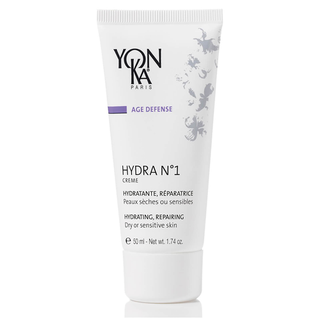
Yon-Ka Paris Skincare Yonka Paris Hydra No1 Creme
Works for
1 of 1 advertised claim delivered
Moisturizing20 ingredients credited for this claimStrong support
“Yonka Paris Hydra No 1 Creme”
This product can help improve hydration of the skin with the two types of ingredients.
The first type is called “humectants”:
these ingredients help attract water.
When humectants are on the surface of the skin, they “pull in” the moisture from the outside environment, or from
within deeper layers of the skin. The following ingredients in this product do the job:
glycerin, hyaluronic acid.
This product also contains ingredients called “occlusives”. They help reduce the speed with which our skin loses moisture to the outside environment. These ingredients also help soften the upper layer of the skin, so it feels less tight and nicer to the touch. The following ingredients in this product do the job: caprylic/capric triglyceride, squalane.
The following ingredients in this product are especially good for supporting the skin barrier and helping with the hydration level: panthenol
Anti-oxidationNot advertised by the brand · 8 ingredients credited for this claimModerate support
This product contains antioxidants (imperata cylindrica root extract) that might be able to help neutralize free radicals in skin to lessen the damage it gets from the UV light (sun). There is not enough evidence to confirm their effectiveness in skin though.
Anti-blemishNot advertised by the brand · 3 ingredients credited for this claimGood support
This product might be able to help reduce blemishes and clogged pores because it contains ethyl linoleate.
Can it cause trouble?
Irritancy10 strong irritants: Retinyl palmitate, Lavandula angustifolia extract + 8 more — patch-test recommendedHigh risk
Comedogenic2 ingredients rated 2 or more on the 0–5 pore-clogging scale2 flagged
User reviews
Be the first — your take helps the next person decide.
Ingredients
Filter by role to see what each ingredient is doing.
Water~45–55%
Glycerin~4.8–5.8%
- Irritation risk
- Low
One of the best moisturizing ingredients. Naturally present in skin. It attracts water to the upper layer of the skin working as a humectant
More about GlycerinVitis vinifera seed oil~4.2–5.2%
- Irritation risk
- Medium
A great emollient that can also have anti-oxidant properties
More about Vitis vinifera seed oilCaprylic/capric triglyceride~3.3–4%
- Irritation risk
- Medium
A good mix of fatty acids that forms a protective layer on the skin. Improves the shelf life of products. Derived from coconut and glycerin
More about Caprylic/capric triglyceridePropanediol~2.6–3.1%
- Irritation risk
- Low
Acts as a solvent for other ingredients. Speeds up the absorption of other ingredients into the skin
More about PropanediolHydrogenated coconut oil~2.1–2.6%
- Irritation risk
- Low
- Comedogenicity
- 3/5
Propylene glycol dicaprylate/dicaprate~1.7–2.1%
- Irritation risk
- Low
Corylus avellana seed oil~1.5–1.8%
- Irritation risk
- Low
Octyldodecyl myristate~1.3–1.6%
- Irritation risk
- Low
Helps soften the upper layer of the skin
More about Octyldodecyl myristateCetyl alcohol~1.2–1.4%
- Irritation risk
- Low
A non-drying alcohol that works to soften the skin and stabilize product formulations helping oil and water mix together
More about Cetyl alcoholGlyceryl stearate~0.95–1.15%
- Irritation risk
- Low
An emollient that softens the skin and forms a protective layer on its surface. Helps water and oil mix together
More about Glyceryl stearateSqualane~0.75–1.15%
- Irritation risk
- Low
An oil naturally present in skin. Works as an emollient to soften the skin and form a protective layer on its surface without a greasy feeling.
More about SqualaneButyrospermum parkii butter~0.7–1.05%
- Irritation risk
- Low
- Comedogenicity
- 3/5
A great moisturising ingredient that softens the skin and reduces water loss from its upper layer. It also can be helpful in protecting skin from free radicals
More about Butyrospermum parkii butterImperata cylindrica root extract~0.6–0.9%
- Irritation risk
- Medium
A plat extract that might help neutralize free radicals in skin and attract water to its upper layer
More about Imperata cylindrica root extractEthyl linoleate~0.6–0.9%
- Irritation risk
- Medium
Helps reduce acne and blemishes. Helps to soften the upper layer of the skin and reduce inflammation. Might be helpful in reducing hyperpigmentation and evening out the skin tone, but evidence of effectiveness in skin are lacking
More about Ethyl linoleateAloe barbadensis leaf juice~0.6–0.9%
- Irritation risk
- Medium
Traditionally used to treat sunburns, dermatitis and inflammation, but evidence for its effectiveness is lacking. The extract can contain humectants that help attract water into the skin
More about Aloe barbadensis leaf juiceEthyl oleate~0.55–0.85%
- Irritation risk
- Medium
Ethyl oleate is a long-chain fatty acid ethyl ester resulting from the formal condensation of the carboxy group of oleic acid with the hydroxy group of ethanol. It derives from an oleic acid. In skincare, it is used to soften the upper layer of the skin, improve the product texture and smell
More about Ethyl oleateAscorbyl tetraisopalmitate~0.55–0.8%
- Irritation risk
- Medium
A vitamin C derivative. Studies show that is might be effective in reducing hyperpigmentation, but there are no studies confirming that it is effectively converted into the bioavailable form of Vitamin C in skin. It is not clear how this derivative compares in effectiveness to the topical application of bioavailable form of vitamin C (L-ascorbic acid)
More about Ascorbyl tetraisopalmitateRetinyl palmitate~0.45–0.7%
- Irritation risk
- High
Three steps removed from the active form of vitamin A - retinoic acid. To have an effect in the skin, it first needs to be converted twice to become the retinoic acid. This means it is less potent than retinol, but could also be less irritating. Once converted to the retinoic acid in the skin, it helps against all signs of aging, improves skin cell turnover and helps fight blemishes and clogged pores. However, in many cosmetic formulations, it is used in a concentration that is too low to have the full effect
More about Retinyl palmitatePanthenol~0.45–0.65%
- Irritation risk
- Low
Helps attract water to the upper layer of the skin and can help improve skin barrier function
More about PanthenolTocopheryl acetate~0.45–0.65%
- Irritation risk
- Medium
A more stable but less bio-available form of vitamin E compared to Tocopherol. Might help moisturize and protect the skin from free radicals, but mostly used in low concentrations to stabilize other ingredients.
More about Tocopheryl acetateTocopherol~0.45–0.65%
- Irritation risk
- Low
Pure form of vitamin E. Can help moisturise and protect the skin from free radicals. Often used to help stabilise other ingredients or the formula itself
More about TocopherolPichia anomala extract~0.4–0.65%
- Irritation risk
- Low
Lavandula angustifolia extract~0.35–0.65%
- Irritation risk
- High
Used for fragrance and contains volatile compounds that can irritate the skin
More about Lavandula angustifolia extractRosmarinus officinalis leaf~0.35–0.65%
- Irritation risk
- Low
Sodium hyaluronate~0.4–0.6%
- Irritation risk
- Low
One of the best moisturizing ingredients. Attracts water into the upper layer of the skin
More about Sodium hyaluronateCaprylyl glycol~0.45–0.65%
- Irritation risk
- Medium
Helps preserve products and creates a nice product texture
More about Caprylyl glycolCupressus sempervirens oil~0.4–0.6%
- Irritation risk
- Low
Jasminum sambac flower extract~0.35–0.6%
- Irritation risk
- Low
Rosa damascena flower oil~0.35–0.65%
- Irritation risk
- High
Used as a fragrance. Can be irritating
More about Rosa damascena flower oilAnthemis nobilis flower oil~0.3–0.6%
- Irritation risk
- High
An essential oil that is used as a fragrance and can be irritating. It might have some anti-oxidant effect in skin
More about Anthemis nobilis flower oilChamomilla recutita flower oil~0.35–0.6%
- Irritation risk
- High
Plant oil that can have healing and anti-inflammatory properties. It contains volatile compouunds that are potential allergens and can be irritating
More about Chamomilla recutita flower oilHyaluronic acid~0.35–0.65%
- Irritation risk
- Low
One of the best moisturizing ingredients. Attracts water into the upper layer of the skin. Naturally present in skin. Typically has large molecule size unless advertised otherwise on the product label. Helps support skin's barrier function and may help to reduce inflammation
More about Hyaluronic acidSilanetriol~0.35–0.65%
- Irritation risk
- Low
Peg-75 stearate~0.4–0.6%
Steareth-20~0.45–0.65%
Ceteth-20~0.4–0.6%
Butylene glycol~0.25–0.45%
- Irritation risk
- Low
Used to create a nice product texture and help delivery of other ingredients. Might be somewhat helpful in attracting water to the upper layer of the skin
More about Butylene glycolAscorbic acid~0.25–0.45%
- Irritation risk
- High
The most well-researched antioxidant that works in skin. Helps neutralize free radicals supporting collagen production, helping to even out the skin tone and preventing early signs of aging
More about Ascorbic acidCitric acid~0.25–0.4%
- Irritation risk
- Medium
Can work as an exfoliant but is typically used to adjust the product pH
More about Citric acidPhenoxyethanol~0.25–0.45%
- Irritation risk
- Low
A preservative. It helps prevent bacterial growth in cosmetic products
More about PhenoxyethanolParfum~0.2–0.35%
- Irritation risk
- High
An aromatic blend of unspecified and possibly irritating ingredients
More about ParfumChlorphenesin~0.16–0.32%
Linalool~0.15–0.25%
Rna~0.1–0.2%
- Irritation risk
- Low
Citronellol~0.1–0.2%
Limonene~0.1–0.15%
- Irritation risk
- High
A common frangrance that can easily irritate skin, especially if exposed to air, light or heat
More about LimoneneCitral~0.05%
Farnesol~0.05%
Ingredient list view
Water, Glycerin, Vitis vinifera seed oil, Caprylic/capric triglyceride, Propanediol, Hydrogenated coconut oil, Propylene glycol dicaprylate/dicaprate, Corylus avellana seed oil, Octyldodecyl myristate, Cetyl alcohol, Glyceryl stearate, Squalane, Butyrospermum parkii butter, Imperata cylindrica root extract, Ethyl linoleate, Aloe barbadensis leaf juice, Ethyl oleate, Ascorbyl tetraisopalmitate, Retinyl palmitate, Panthenol, Tocopheryl acetate, Tocopherol, Pichia anomala extract, Lavandula angustifolia extract, Rosmarinus officinalis leaf, Sodium hyaluronate, Caprylyl glycol, Cupressus sempervirens oil, Jasminum sambac flower extract, Unknown, Rosa damascena flower oil, Anthemis nobilis flower oil, Chamomilla recutita flower oil, Hyaluronic acid, Silanetriol, Peg-75 stearate, Steareth-20, Ceteth-20, Butylene glycol, Ascorbic acid, Citric acid, Phenoxyethanol, Parfum, Chlorphenesin, Linalool, Rna, Citronellol, Limonene, Citral, Farnesol
Compare prices
Retailers ranked by price — lowest first.
Product summary
Based on the ingredient list, "Yon-Ka Paris Skincare - Yonka Paris Hydra No1 Creme" can work well for skin moisturization. To work well, any moisturizer needs to include a combination of water-binding and emollient ingredients. Yon-Ka Paris Skincare - Yonka Paris Hydra No1 Creme ticks this box. Panthenol, glycerin, hyaluronic acid, imperata cylindrica root extract and sodium hyaluronate in this product (humectants) attract water molecules to the upper layer of the skin (the water comes from the outside air or from the deeper layers of the skin if the air is dry). Emollients in this formulation (ethyl linoleate, vitis vinifera seed oil, caprylic/capric triglyceride, squalane and cetyl alcohol) help to reduce the moisture loss from the skin. They also soften the skin surface and relieve the feeling of dryness and tightness.
Ingredient callouts
- This product also contains Vitamin C (Ascorbic Acid). It can be an effective active for anti-aging and evening out the skin tone, but in this moisturizer it is used for stabilizing other ingredients in the formulation. In this concentration (0.25% - 0.45%) it cannot have a noticeable benefit for the skin.
- This moisturizer includes a form of Retinoids (vitamin A) - retinyl palmitate 0.45% - 0.70%, but this type of vitamin A is not very effective. It could in theory help with fine lines and wrinkles, but the effect is most likely minimal.
Irritation risk
There are quite a few common irritants in this product, including ingredients without particular skin benefits. We would not recommend it for sensitive skin. We assess the overall irritancy of this moisturizer to be high. For a detailed overview of all potential irritants: click here
You can see the detailed formula review with the breakdown of all actives in the product and the full ingredient list with estimated concentrations in the tables below.
Price
The product retails for 88.00$ in the United States and for 106.40CA$ in Canada.
For a detailed price comparison: click here.
Sources cited in this review
Every concentration estimate and effectiveness label is anchored to one of these 18 studies and safety reviews.
- 1
- 2Allergic contact dermatitis from grassespubmed.ncbi.nlm.nih.gov
- 3
- 4
- 5
- 6

Affiliate links · As an Amazon Associate, WIMJ earns from qualifying purchases.