Works for:
based on ingredients and %- Moisturizing
Can it cause trouble?
- Irritation risk: medium
- Comedogenic risk ingredients: 2
Key actives
Works for
Moisturizing
What does the product description say?
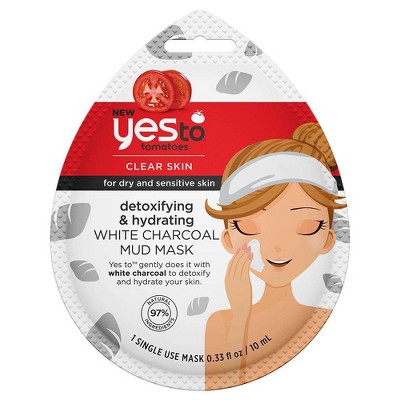
Tomatoes Detoxifying Hydrating White Charcoal Mud Mask
Source: From product name
This product can help improve hydration of the skin with the two types of ingredients.
The first type is called “humectants”:
these ingredients help attract water.
When humectants are on the surface of the skin, they “pull in” the moisture from the outside environment, or from
within deeper layers of the skin. The following ingredients in this product do the job:
glycerin.
This product also contains ingredients called “occlusives”. They help reduce the speed with which our skin loses moisture to the outside environment. These ingredients also help soften the upper layer of the skin, so it feels less tight and nicer to the touch. The following ingredients in this product do the job: myristyl myristate.
One of the best moisturizing ingredients. Naturally present in skin. It attracts water to the upper layer of the skin working as a humectant
An emollient. Is not recommended for acne-prone skin as it can be comedogenic
How honest is this product?
| Promise | Can it deliver? |
|---|---|
| Moisturizing |
Total Promises Fulfilled score: 75/100.
We receive a small commission for purchases made through these links at no cost for you. Thank you for your support! Learn more
Affiliate link · supports WIMJ at no cost to you
Potential irritants
Comedogenic ingredients
User reviews (0)
Averages from community submissions.
No reviews yet for this product.
Be the first to share your experience!
Tried this product?
Help capture what the ingredient list can't—texture, finish, pilling, scent, and more. Answer what you can, skip the rest.
Takes ~30 seconds.
Reviews are shown in aggregate. No personal details.
Key Actives
A type of clay that consists mainly of aluminum silicate. Helps absorb oil and creates a thicker product consistency. Can be used to add a white color
Works as a UV filter when used in high concentrations. It is photostable and is effective mostly against the UVB light, with some protection in the UVA range. In small concentrations, used for its ability to improve the color of cosmetic products. Is usually well tolerated by the skin
One of the best moisturizing ingredients. Naturally present in skin. It attracts water to the upper layer of the skin working as a humectant
An emollient. Is not recommended for acne-prone skin as it can be comedogenic
Potential irritants
A plant extract that might help neutralize free radicals in skin. Can be irritating
A plant extract that can help neutralize free radicals in skin. It contains a compound salicin that can theoretically be converted into salicylic acid that, in turn, helps reduce inflammation in skin, but the evidence of effectiveness in skin is lacking and the extract is usually not used in a concentration that would enable an exfoliating effect
An aromatic blend of unspecified and possibly irritating ingredients
An emollient. Is not recommended for acne-prone skin as it can be comedogenic
Helps oil and water mix together. Used as a cleansing agent
Can work as an exfoliant but is typically used to adjust the product pH
Comedogenic ingredients
An emollient. Is not recommended for acne-prone skin as it can be comedogenic
All ingredients
Works as a UV filter when used in high concentrations. It is photostable and is effective mostly against the UVB light, with some protection in the UVA range. In small concentrations, used for its ability to improve the color of cosmetic products. Is usually well tolerated by the skin
A type of clay that consists mainly of aluminum silicate. Helps absorb oil and creates a thicker product consistency. Can be used to add a white color
One of the best moisturizing ingredients. Naturally present in skin. It attracts water to the upper layer of the skin working as a humectant
A clay mineral. Can absorb oil from the surface of the skin
Acts as a solvent for other ingredients. Speeds up the absorption of other ingredients into the skin
An emollient. Is not recommended for acne-prone skin as it can be comedogenic
Helps oil and water mix together. Used as a cleansing agent
A plant extract that might help neutralize free radicals in skin. Can be irritating
A plant extract that can help neutralize free radicals in skin. It contains a compound salicin that can theoretically be converted into salicylic acid that, in turn, helps reduce inflammation in skin, but the evidence of effectiveness in skin is lacking and the extract is usually not used in a concentration that would enable an exfoliating effect
Used to stabilize mixtures of oil and water, and create thicker, gel-like product textures
Can work as an exfoliant but is typically used to adjust the product pH
A preservative. It helps prevent bacterial growth in cosmetic products
An aromatic blend of unspecified and possibly irritating ingredients
Ingredient list view
Water, Illite, Titanium dioxide, Ci 77891, Kaolin, Glycerin, Montmorillonite, Propanediol, Myristyl lactate, Myristyl myristate, Sorbitan stearate, Sorbityl laurate, Sorbitan oleate decylglucoside crosspolymer, Calcium carbonate, Solanum lycopersicum fruit/leaf/stem extract, Charcoal powder, Charcoal, Taraxacum officinale root extract, Salix alba bark extract, Potassium sorbate, Sodium gluconate, Ethylhexylglycerin, Sodium chloride, Xanthan gum, Citric acid, Phenoxyethanol, Parfum