Works for
2 of 3 advertised claims delivered
Moisturizing19 ingredients credited for this claimStrong support
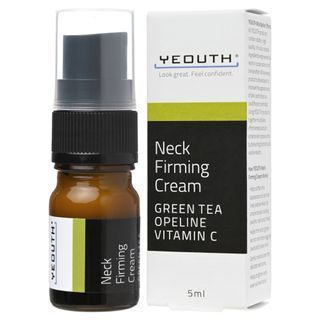
“Neck Firming Cream”
This product can help improve hydration of the skin with the two types of ingredients.
The first type is called “humectants”:
these ingredients help attract water.
When humectants are on the surface of the skin, they “pull in” the moisture from the outside environment, or from
within deeper layers of the skin. The following ingredients in this product do the job:
glycerin, hyaluronic acid.
This product also contains ingredients called “occlusives”. They help reduce the speed with which our skin loses moisture to the outside environment. These ingredients also help soften the upper layer of the skin, so it feels less tight and nicer to the touch. The following ingredients in this product do the job: beeswax, cocos nucifera oil.
The following ingredients in this product are especially good for supporting the skin barrier and helping with the hydration level: acetyl hexapeptide-8, dipeptide diaminobutyroyl benzylamide diacetate, panthenol
Anti-aging7 ingredients credited for this claimModerate support
“Formulated with Green Tea to help soothe the skin and Opeline to promote a firmer look, giving it a more youthful appearance.”
This product contains acetyl hexapeptide-8, dipeptide diaminobutyroyl benzylamide diacetate. These ingredients might be able to help reduce and prevent fine lines and wrinkles, improve skin elasticity and firmness, but there is not enough evidence that it actually works.
Evens skin tone3 ingredients credited for this claimLimited support
“Minimizes the look of lines, wrinkles and age spots. Safe for all skin types. Toxic twelve free.”
This product contains ingredients (glycyrrhiza glabra root extract) that could help reduce hyperpigmentation (for example, post-acne marks or age spots) in theory, but there is not enough evidence that they actually work.
Can it cause trouble?
Irritancy3 strong irritants: Citrus grandis peel oil, Citrus aurantium dulcis peel oil + 1 more — patch-test recommendedHigh risk
Comedogenic6 ingredients rated 2 or more on the 0–5 pore-clogging scale6 flagged
User reviews
Be the first — your take helps the next person decide.
Ingredients
Filter by role to see what each ingredient is doing.
Water~45–55%
Glycerin~4.7–5.7%
- Irritation risk
- Low
One of the best moisturizing ingredients. Naturally present in skin. It attracts water to the upper layer of the skin working as a humectant
More about GlycerinHelianthus annuus seed oil~4.2–5.1%
- Irritation risk
- Low
A great emollient due to its high linoleic acid content. One of the most effective plant oils in helping skin hydration and repairing skin barrier function
More about Helianthus annuus seed oilGlyceryl stearate~2.8–3.4%
- Irritation risk
- Low
An emollient that softens the skin and forms a protective layer on its surface. Helps water and oil mix together
More about Glyceryl stearateEthylhexyl palmitate~2.4–2.9%
- Irritation risk
- Low
- Comedogenicity
- 3/5
An emollient that helps soften the skin and create a nice product texture
More about Ethylhexyl palmitateCetyl alcohol~2–2.4%
- Irritation risk
- Low
A non-drying alcohol that works to soften the skin and stabilize product formulations helping oil and water mix together
More about Cetyl alcoholCetearyl alcohol~1.7–2%
- Irritation risk
- Low
- Comedogenicity
- 2/5
A non-drying alcohol. Works as an emollient. Helps water and oil mix together and creates a nice product texture
More about Cetearyl alcoholAcetyl hexapeptide-8~1.4–1.7%
- Irritation risk
- Low
A type of peptide. Peptides are excellent moisturizers and might be able support collagen production reducing fine lines and wrinkles
More about Acetyl hexapeptide-8Hyaluronic acid~1.2–1.5%
- Irritation risk
- Low
One of the best moisturizing ingredients. Attracts water into the upper layer of the skin. Naturally present in skin. Typically has large molecule size unless advertised otherwise on the product label. Helps support skin's barrier function and may help to reduce inflammation
More about Hyaluronic acidCocos nucifera oil~1–1.2%
- Irritation risk
- Low
- Comedogenicity
- 3/5
An emollient. Found to be as effective as a moisturizer for dry skin as mineral oil. Could be comedogenic
More about Cocos nucifera oilPhenoxyethanol~0.65–1%
- Irritation risk
- Low
A preservative. It helps prevent bacterial growth in cosmetic products
More about PhenoxyethanolButyrospermum parkii butter~0.65–0.95%
- Irritation risk
- Low
- Comedogenicity
- 3/5
A great moisturising ingredient that softens the skin and reduces water loss from its upper layer. It also can be helpful in protecting skin from free radicals
More about Butyrospermum parkii butterTheobroma cacao seed butter~0.55–0.8%
- Irritation risk
- Low
- Comedogenicity
- 3/5
Helps soften the upper layer of the skin and can be helpful in restoring the skin barrier function. Might have some anti-oxidant effect
More about Theobroma cacao seed butterDimethyl sulfone~0.5–0.7%
Caprylic/capric triglyceride~0.5–0.75%
- Irritation risk
- Medium
A good mix of fatty acids that forms a protective layer on the skin. Improves the shelf life of products. Derived from coconut and glycerin
More about Caprylic/capric triglycerideCetearyl glucoside~0.45–0.7%
- Irritation risk
- Medium
Helps water and oil in the product mix well together and improves product texture
More about Cetearyl glucosideSqualane~0.5–0.7%
- Irritation risk
- Low
An oil naturally present in skin. Works as an emollient to soften the skin and form a protective layer on its surface without a greasy feeling.
More about SqualanePanthenol~0.35–0.65%
- Irritation risk
- Low
Helps attract water to the upper layer of the skin and can help improve skin barrier function
More about PanthenolMagnesium ascorbyl phosphate~0.3–0.6%
- Irritation risk
- Medium
A derivative of vitamin C that is more stable, but less bioavailable than the pure form of vitamin C. It does not penetrate the skin well, but has been shown to convert to pure vitamin C once in skin. It can be helpful in stimulating collagen production and lightening the skin tone, but the required concentration is likely to be very high
More about Magnesium ascorbyl phosphateBeeswax~0.4–0.6%
- Irritation risk
- Low
Forms a protective barrier that holds water and keeps dry skin hydrated. Keeps an emulsion from separating into its oil and liquid components, and increases the thickness of a product. Can be an allergen
More about BeeswaxPentylene glycol~0.3–0.6%
- Irritation risk
- Medium
Used to preserve products, dissolve other ingredients and create a nice product texture
More about Pentylene glycolCarbomer~0.25–0.5%
- Irritation risk
- Low
Helps create a thicker or gel-like product texture. It is not a surfactant but can be used in gentle cleansing formulations
More about CarbomerCitrus grandis peel oil~0.2–0.4%
- Irritation risk
- High
A plant oil with high content of volatile compounds that, especially when exposed to air, can cause allergic reactions and irritate the skin
More about Citrus grandis peel oilXanthan gum~0.25–0.5%
- Irritation risk
- Low
Used to create a thicker product consistency
More about Xanthan gumCarrageenan~0.25–0.5%
- Irritation risk
- Medium
- Comedogenicity
- 3/5
Helps thicken the product formula and create a nice product formulation
More about CarrageenanSodium hydroxide~0.25–0.5%
Ethylhexylglycerin~0.25–0.5%
Tetrahexyldecyl ascorbate~0.25–0.5%
- Irritation risk
- Medium
Being a lipid soluble form of vitamin C, it is more stable than ascorbic acid, but still degrades quickly and needs to be stabilized in a formulation with another ingredient. It is claimed to penetrate skin better than pure vitamin C and have the the similar benefits, but solid studies of its effectiveness are lacking. Is likely to require a higher concentration in a product than pure vitamin C to be effective. It might be able to help reduce pore clogging.
More about Tetrahexyldecyl ascorbatePolyacrylamide~0.3–0.5%
- Irritation risk
- Medium
Used to improve product texture and help oil and water mix together
More about PolyacrylamideCitrus aurantium dulcis peel oil~0.25–0.45%
- Irritation risk
- High
An essentil oil from orange peel. Potential allergen and can be irritating
More about Citrus aurantium dulcis peel oilPolysorbate 20~0.3–0.5%
3-aminopropane sulfonic acid~0.25–0.45%
Calcium hydroxymethionine~0.25–0.45%
- Irritation risk
- Low
C13-14 isoparaffin~0.3–0.5%
- Irritation risk
- Low
Helps soften the upper layer of the skin, dissolve other ingredients and create a thicker product consistency
More about C13-14 isoparaffinHydroxyethylcellulose~0.25–0.45%
- Irritation risk
- Low
Used to thicken product formulations and create gel-like textures
More about HydroxyethylcelluloseTocopheryl acetate~0.25–0.45%
- Irritation risk
- Medium
A more stable but less bio-available form of vitamin E compared to Tocopherol. Might help moisturize and protect the skin from free radicals, but mostly used in low concentrations to stabilize other ingredients.
More about Tocopheryl acetateLaureth-7~0.25–0.45%
Dipeptide diaminobutyroyl benzylamide diacetate~0.2–0.4%
- Irritation risk
- Low
A type of peptide. Peptides are excellent moisturizers and might be able support collagen production reducing fine lines and wrinkles
More about Dipeptide diaminobutyroyl benzylamide diacetateChamomilla recutita flower extract~0.2–0.35%
- Irritation risk
- High
Plant extract that can have healing and anti-inflammatory properties. It is a potential allergen and can be irritating
More about Chamomilla recutita flower extractGlycyrrhiza glabra root extract~0.15–0.3%
- Irritation risk
- Medium
A plant extract that can help lighten the skin and calm down inflammation. Might be helpful in neutralizing free radicals
More about Glycyrrhiza glabra root extractAloe barbadensis leaf juice~0.15–0.3%
- Irritation risk
- Medium
Traditionally used to treat sunburns, dermatitis and inflammation, but evidence for its effectiveness is lacking. The extract can contain humectants that help attract water into the skin
More about Aloe barbadensis leaf juicePaullinia cupana seed extract~0.15–0.3%
- Irritation risk
- High
Camellia sinensis flower extract~0.15–0.25%
- Irritation risk
- Low
Calendula officinalis flower extract~0.1–0.15%
- Irritation risk
- High
A plant extract that has some anti-oxidant and anti-bacterial properties. Can be irritating
More about Calendula officinalis flower extractCitric acid~0.05–0.15%
- Irritation risk
- Medium
Can work as an exfoliant but is typically used to adjust the product pH
More about Citric acidIngredient list view
Water, Glycerin, Helianthus annuus seed oil, Glyceryl stearate, Ethylhexyl palmitate, Cetyl alcohol, Cetearyl alcohol, Acetyl hexapeptide-8, Hyaluronic acid, Cocos nucifera oil, Phenoxyethanol, Butyrospermum parkii butter, Theobroma cacao seed butter, Dimethyl sulfone, Caprylic/capric triglyceride, Cetearyl glucoside, Squalane, Panthenol, Magnesium ascorbyl phosphate, Beeswax, Pentylene glycol, Carbomer, Citrus grandis peel oil, Xanthan gum, Carrageenan, Sodium hydroxide, Ethylhexylglycerin, Tetrahexyldecyl ascorbate, Polyacrylamide, Citrus aurantium dulcis peel oil, Polysorbate 20, 3-aminopropane sulfonic acid, Calcium hydroxymethionine, C13-14 isoparaffin, Hydroxyethylcellulose, Tocopheryl acetate, Laureth-7, Dipeptide diaminobutyroyl benzylamide diacetate, Chamomilla recutita flower extract, Glycyrrhiza glabra root extract, Aloe barbadensis leaf juice, Paullinia cupana seed extract, Camellia sinensis flower extract, Calendula officinalis flower extract, Citric acid
Compare prices
Retailers ranked by price — lowest first.


Worth comparing, line by line.
Match % combines shared ingredients, the first five ingredients, shared actives and hero ingredients, irritancy (lower counts in the alternative's favour), texture and body area. Only products in the same routine step are compared.
| YEOUTHNeck Firming CreamYOUR PRODUCT | Eveline CosmeticsBio Hyaluron Expert | |
|---|---|---|
| Match | — | 51% |
| Price | $9.27 | — |
| Shared key ingredients | — | 7 of 12 |
| Key difference | — | Bakuchiol |
| Irritancy | High | Medium |
| Drying alcohol | — | — |
| View product | Shop |


Product summary
"YEOUTH - Neck Firming Cream" has a good moisturizing formula. To work well, any moisturizer needs to include a combination of water-binding and emollient ingredients. YEOUTH - Neck Firming Cream ticks this box. Humectants in this product (acetyl hexapeptide-8, panthenol, glycerin and hyaluronic acid) help to increase the water content in the upper layer of the skin. (These ingredients do so by "capturing" water molecules from the outside air or from within the deeper layers of the skin). Theobroma cacao seed butter, beeswax, cocos nucifera oil, helianthus annuus seed oil and squalane in this product help decrease the water evoporation from the skin, so that it stays hydrated for longer. These ingredients also soften the skin and take away the feeling of tightness and dryness.
Ingredient callouts
- This moisturizer also contains Peptides (dipeptide diaminobutyroyl benzylamide diacetate 0.20% - 0.40% and acetyl hexapeptide-8 1.40% - 1.70%). Peptides are a very big group of ingredients. They all consist of a different combination of aminoacids. Our skin produces Peptides naturally. Some of them work as natural antibiotics, promote wound-healing and production of collagen. The scientists are still studying how effective the topical application of Peptides is, but it is very likely that they are helpful. Peptides might be able to support skin barrier restoration and even have an anti-aging benefit. At the very least, they certainly help attract water to the skin and support the hydration in this way.
Irritation risk
We assess the overall irritancy of this moisturizer to be high. For a detailed overview of all potential irritants: click here
You can see the detailed formula review with the breakdown of all actives in the product and the full ingredient list with estimated concentrations in the tables below.
Price
The product retails from 15.00A$ up to 40.00A$ in Australia and from 9.27$ up to 28.49$ in the United States.
For a detailed price comparison: click here.
Sources cited in this review
Every concentration estimate and effectiveness label is anchored to one of these 19 studies and safety reviews.
- 1
- 2
- 3
- 4Effect of topically applied lipids on surfactant-irritated skinonlinelibrary.wiley.com
- 5
- 6Efficacy of a New Topical Nano-hyaluronic Acid in Humansncbi.nlm.nih.gov

Affiliate links · As an Amazon Associate, WIMJ earns from qualifying purchases.