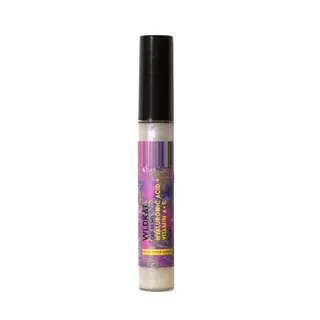
WLDKAT Hyaluronic Acid + Vitamin A + E Lip Gel
Works for
MoisturizingCannabidiol - derived from extract or tincture or resin of cannabis, Simmondsia chinensis seed oil + 12 moreWorks well
“Hyaluronic Acid + Vitamin A + E Lip Gel”
This product can help improve hydration of the skin with the two types of ingredients.
The first type is called “humectants”:
these ingredients help attract water.
When humectants are on the surface of the skin, they “pull in” the moisture from the outside environment, or from
within deeper layers of the skin. The following ingredients in this product do the job:
sodium hyaluronate.
This product also contains ingredients called “occlusives”. They help reduce the speed with which our skin loses moisture to the outside environment. These ingredients also help soften the upper layer of the skin, so it feels less tight and nicer to the touch. The following ingredients in this product do the job: ricinus communis seed oil, simmondsia chinensis seed oil.
The following ingredients in this product are especially good for supporting the skin barrier and helping with the hydration level: cannabidiol - derived from extract or tincture or resin of cannabis
Can it cause trouble?
Irritancy11 strong irritants: Citrus tangerina extract, Mentha piperita oil + 9 more — patch-test recommendedHigh risk
Comedogenic1 ingredient rated 2 or more on the 0–5 pore-clogging scale1 flagged

User reviews
Be the first — your take helps the next person decide.
Ingredients
Filter by role to see what each ingredient is doing.
Hydrogenated poly(c6-14 olefin)~26–31%
- Irritation risk
- Low
Helps soften the upper layer of the skin and create a nice product texture
More about Hydrogenated poly(c6-14 olefin)Hydrogenated polyisobutene~5.8–7.1%
- Irritation risk
- Low
Used to improve the product consistency and soften the upper layer of the skin
More about Hydrogenated polyisobuteneSimmondsia chinensis seed oil~5.9–7.2%
- Irritation risk
- Medium
Softens the upper layer of skin and helps restore the healthy skin barrier. Has shown to help calm down inflammation in skin. It is a stable oil, meaning that it retains its properties even when exposed to air.
More about Simmondsia chinensis seed oilEthylene/propylene/styrene copolymer~4.1–5%
- Irritation risk
- Low
Used to create a thicker product consistency
More about Ethylene/propylene/styrene copolymerSynthetic fluorphlogopite~3–3.7%
- Irritation risk
- Low
A mineral that is used as an optical filter (makes the skin looks nicer through light reflection) and to improve the texture of cosmetic products
More about Synthetic fluorphlogopiteCannabidiol - derived from extract or tincture or resin of cannabis~2.2–2.6%
- Irritation risk
- Medium
CBD. Can bind to skin cell receptors and can reduce inflammation, itching, and help support skin barrier function
More about Cannabidiol - derived from extract or tincture or resin of cannabisSodium hyaluronate~1.7–2.1%
- Irritation risk
- Low
One of the best moisturizing ingredients. Attracts water into the upper layer of the skin
More about Sodium hyaluronateTetrahexyldecyl ascorbate~1.4–1.7%
- Irritation risk
- Medium
Being a lipid soluble form of vitamin C, it is more stable than ascorbic acid, but still degrades quickly and needs to be stabilized in a formulation with another ingredient. It is claimed to penetrate skin better than pure vitamin C and have the the similar benefits, but solid studies of its effectiveness are lacking. Is likely to require a higher concentration in a product than pure vitamin C to be effective. It might be able to help reduce pore clogging.
More about Tetrahexyldecyl ascorbateSiraitia grosvenorii fruit extract~1.2–1.5%
- Irritation risk
- Low
Citrus tangerina extract~0.95–1.2%
- Irritation risk
- High
Mentha piperita oil~0.65–1%
Zingiber cassumunar root extract~0.6–0.95%
- Irritation risk
- Low
Persea gratissima oil~0.6–0.95%
- Irritation risk
- Medium
An emollient that helps soften the skin and could be helpful in repairing its barrier function
More about Persea gratissima oilVanilla planifolia fruit extract~0.5–0.75%
- Irritation risk
- High
A plant extract used as a fragrance. Can be irritating
More about Vanilla planifolia fruit extractCitrus grandis peel extract~0.4–0.6%
- Irritation risk
- High
An aromatic irritating plant extract that can cause photosensitivity in skin
More about Citrus grandis peel extractCitrus aurantium dulcis peel extract~0.45–0.65%
Citrus limon peel extract~0.4–0.65%
Citrus aurantifolia oil~0.45–0.65%
- Irritation risk
- High
Tocopherol~0.35–0.65%
- Irritation risk
- Low
Pure form of vitamin E. Can help moisturise and protect the skin from free radicals. Often used to help stabilise other ingredients or the formula itself
More about TocopherolRosmarinus officinalis leaf extract~0.3–0.55%
- Irritation risk
- High
Can be helpful in reducing inflammation in skin, including inflamed acne. It can be irritating
More about Rosmarinus officinalis leaf extractOryza sativa bran extract~0.3–0.55%
Ricinus communis seed oil~0.35–0.65%
- Irritation risk
- Medium
A plant oil that can help soften the skin. It might be helpful in calming down inflammation, but solid research is lacking. Is often used in lip products to create the needed product consistency
More about Ricinus communis seed oilHelianthus annuus extract~0.35–0.65%
- Irritation risk
- Low
Helps soften the upper layer of the skin
More about Helianthus annuus extractHydrogenated castor oil~0.4–0.6%
- Irritation risk
- Medium
A plant oil that can help soften the skin. It might be helpful in calming down inflammation, but solid research is lacking. Is often used in lip products to create the needed product consistency
More about Hydrogenated castor oilTocopheryl acetate~0.3–0.5%
- Irritation risk
- Medium
A more stable but less bio-available form of vitamin E compared to Tocopherol. Might help moisturize and protect the skin from free radicals, but mostly used in low concentrations to stabilize other ingredients.
More about Tocopheryl acetateCaprylic/capric triglyceride~0.4–0.6%
- Irritation risk
- Medium
A good mix of fatty acids that forms a protective layer on the skin. Improves the shelf life of products. Derived from coconut and glycerin
More about Caprylic/capric triglycerideButylene/ethylene/styrene copolymer~0.25–0.5%
- Irritation risk
- Low
Used to create a gel-like product texture
More about Butylene/ethylene/styrene copolymerDiethylhexyl syringylidenemalonate~0.25–0.5%
- Irritation risk
- Medium
Used to stabilize the product formulation
More about Diethylhexyl syringylidenemalonateEthylhexylglycerin~0.25–0.5%
Pentaerythrityl tetra-di-t-butyl hydroxyhydrocinnamate~0.3–0.55%
- Irritation risk
- Low
Used to increase stability of product formulations
More about Pentaerythrityl tetra-di-t-butyl hydroxyhydrocinnamateCaprylic/capric glycerides~0.35–0.65%
- Irritation risk
- Low
Help soften the upper layer of the skin
More about Caprylic/capric glyceridesTin oxide~0.45–0.7%
- Irritation risk
- Low
A colorant that can add a pearl-like appearance to the formulation
More about Tin oxidePolyamide-3~0.45–0.7%
- Irritation risk
- Low
Titanium dioxide~0.4–0.65%
- Irritation risk
- Low
Works as a UV filter when used in high concentrations. It is photostable and is effective mostly against the UVB light, with some protection in the UVA range. In small concentrations, used for its ability to improve the color of cosmetic products. Is usually well tolerated by the skin
More about Titanium dioxideCi 77891~0.25–0.5%
- Irritation risk
- Low
Phenoxyethanol~0.3–0.55%
- Irritation risk
- Low
A preservative. It helps prevent bacterial growth in cosmetic products
More about PhenoxyethanolHydrogenated poly(c6-14 olefin)~0.35–0.6%
- Irritation risk
- Low
Helps soften the upper layer of the skin and create a nice product texture
More about Hydrogenated poly(c6-14 olefin)Hydrogenated polyisobutene~0.35–0.6%
- Irritation risk
- Low
Used to improve the product consistency and soften the upper layer of the skin
More about Hydrogenated polyisobuteneSimmondsia chinensis seed oil~0.4–0.6%
- Irritation risk
- Medium
Softens the upper layer of skin and helps restore the healthy skin barrier. Has shown to help calm down inflammation in skin. It is a stable oil, meaning that it retains its properties even when exposed to air.
More about Simmondsia chinensis seed oilEthylene/propylene/styrene copolymer~0.25–0.5%
- Irritation risk
- Low
Used to create a thicker product consistency
More about Ethylene/propylene/styrene copolymerParfum~0.25–0.45%
- Irritation risk
- High
An aromatic blend of unspecified and possibly irritating ingredients
More about ParfumAroma~0.25–0.5%
Cannabidiol - derived from extract or tincture or resin of cannabis~0.25–0.5%
- Irritation risk
- Medium
CBD. Can bind to skin cell receptors and can reduce inflammation, itching, and help support skin barrier function
More about Cannabidiol - derived from extract or tincture or resin of cannabisSodium hyaluronate~0.25–0.5%
- Irritation risk
- Low
One of the best moisturizing ingredients. Attracts water into the upper layer of the skin
More about Sodium hyaluronateTetrahexyldecyl ascorbate~0.3–0.5%
- Irritation risk
- Medium
Being a lipid soluble form of vitamin C, it is more stable than ascorbic acid, but still degrades quickly and needs to be stabilized in a formulation with another ingredient. It is claimed to penetrate skin better than pure vitamin C and have the the similar benefits, but solid studies of its effectiveness are lacking. Is likely to require a higher concentration in a product than pure vitamin C to be effective. It might be able to help reduce pore clogging.
More about Tetrahexyldecyl ascorbateSiraitia grosvenorii fruit extract~0.25–0.5%
- Irritation risk
- Low
Persea gratissima oil~0.35–0.65%
- Irritation risk
- Medium
An emollient that helps soften the skin and could be helpful in repairing its barrier function
More about Persea gratissima oilOryza sativa bran extract~0.25–0.5%
Rosmarinus officinalis leaf extract~0.25–0.45%
- Irritation risk
- High
Can be helpful in reducing inflammation in skin, including inflamed acne. It can be irritating
More about Rosmarinus officinalis leaf extractRicinus communis seed oil~0.35–0.6%
- Irritation risk
- Medium
A plant oil that can help soften the skin. It might be helpful in calming down inflammation, but solid research is lacking. Is often used in lip products to create the needed product consistency
More about Ricinus communis seed oilHelianthus annuus extract~0.35–0.6%
- Irritation risk
- Low
Helps soften the upper layer of the skin
More about Helianthus annuus extractTocopherol~0.3–0.6%
- Irritation risk
- Low
Pure form of vitamin E. Can help moisturise and protect the skin from free radicals. Often used to help stabilise other ingredients or the formula itself
More about TocopherolHydrogenated castor oil~0.45–0.65%
- Irritation risk
- Medium
A plant oil that can help soften the skin. It might be helpful in calming down inflammation, but solid research is lacking. Is often used in lip products to create the needed product consistency
More about Hydrogenated castor oilTocopheryl acetate~0.3–0.6%
- Irritation risk
- Medium
A more stable but less bio-available form of vitamin E compared to Tocopherol. Might help moisturize and protect the skin from free radicals, but mostly used in low concentrations to stabilize other ingredients.
More about Tocopheryl acetateCaprylic/capric glycerides~0.45–0.65%
- Irritation risk
- Low
Help soften the upper layer of the skin
More about Caprylic/capric glyceridesOctyldodecanol~0.35–0.65%
- Irritation risk
- Low
An emollient that helps to soften the skin and create a pleasant product texture and stabilize the formulation
More about OctyldodecanolButylene/ethylene/styrene copolymer~0.3–0.55%
- Irritation risk
- Low
Used to create a gel-like product texture
More about Butylene/ethylene/styrene copolymerDiethylhexyl syringylidenemalonate~0.3–0.55%
- Irritation risk
- Medium
Used to stabilize the product formulation
More about Diethylhexyl syringylidenemalonateEthylhexylglycerin~0.3–0.55%
Pentaerythrityl tetra-di-t-butyl hydroxyhydrocinnamate~0.3–0.6%
- Irritation risk
- Low
Used to increase stability of product formulations
More about Pentaerythrityl tetra-di-t-butyl hydroxyhydrocinnamatePolyamide-3~0.5–0.75%
- Irritation risk
- Low
Ci 15850~0.3–0.55%
Blue 1 lake~0.3–0.55%
Ci 42090~0.3–0.55%
Phenoxyethanol~0.3–0.6%
- Irritation risk
- Low
A preservative. It helps prevent bacterial growth in cosmetic products
More about PhenoxyethanolGold~0.3–0.55%
Hydrogenated poly(c6-14 olefin)~0.4–0.65%
- Irritation risk
- Low
Helps soften the upper layer of the skin and create a nice product texture
More about Hydrogenated poly(c6-14 olefin)Hydrogenated polyisobutene~0.4–0.6%
- Irritation risk
- Low
Used to improve the product consistency and soften the upper layer of the skin
More about Hydrogenated polyisobuteneSimmondsia chinensis seed oil~0.45–0.65%
- Irritation risk
- Medium
Softens the upper layer of skin and helps restore the healthy skin barrier. Has shown to help calm down inflammation in skin. It is a stable oil, meaning that it retains its properties even when exposed to air.
More about Simmondsia chinensis seed oilEthylene/propylene/styrene copolymer~0.3–0.55%
- Irritation risk
- Low
Used to create a thicker product consistency
More about Ethylene/propylene/styrene copolymerCaprylic/capric triglyceride~0.45–0.65%
- Irritation risk
- Medium
A good mix of fatty acids that forms a protective layer on the skin. Improves the shelf life of products. Derived from coconut and glycerin
More about Caprylic/capric triglycerideCannabidiol - derived from extract or tincture or resin of cannabis~0.3–0.55%
- Irritation risk
- Medium
CBD. Can bind to skin cell receptors and can reduce inflammation, itching, and help support skin barrier function
More about Cannabidiol - derived from extract or tincture or resin of cannabisSodium hyaluronate~0.3–0.55%
- Irritation risk
- Low
One of the best moisturizing ingredients. Attracts water into the upper layer of the skin
More about Sodium hyaluronateTetrahexyldecyl ascorbate~0.3–0.6%
- Irritation risk
- Medium
Being a lipid soluble form of vitamin C, it is more stable than ascorbic acid, but still degrades quickly and needs to be stabilized in a formulation with another ingredient. It is claimed to penetrate skin better than pure vitamin C and have the the similar benefits, but solid studies of its effectiveness are lacking. Is likely to require a higher concentration in a product than pure vitamin C to be effective. It might be able to help reduce pore clogging.
More about Tetrahexyldecyl ascorbateSiraitia grosvenorii fruit extract~0.3–0.55%
- Irritation risk
- Low
Persea gratissima oil~0.45–0.65%
- Irritation risk
- Medium
An emollient that helps soften the skin and could be helpful in repairing its barrier function
More about Persea gratissima oilCocos nucifera fruit extract~0.4–0.65%
- Irritation risk
- Low
- Comedogenicity
- 3/5
An emollient. Found to be as effective as a moisturizer for dry skin as mineral oil. Could be comedogenic
More about Cocos nucifera fruit extractPrunus persica fruit extract~0.45–0.7%
- Irritation risk
- High
A fruit extact. Might have some anti-oxidant properties
More about Prunus persica fruit extractOryza sativa bran extract~0.3–0.55%
Citrus aurantifolia peel extract~0.35–0.6%
- Irritation risk
- High
Vanilla planifolia fruit extract~0.3–0.55%
- Irritation risk
- High
A plant extract used as a fragrance. Can be irritating
More about Vanilla planifolia fruit extractRicinus communis seed oil~0.4–0.6%
- Irritation risk
- Medium
A plant oil that can help soften the skin. It might be helpful in calming down inflammation, but solid research is lacking. Is often used in lip products to create the needed product consistency
More about Ricinus communis seed oilCitrus limon peel extract~0.3–0.55%
Helianthus annuus extract~0.4–0.65%
- Irritation risk
- Low
Helps soften the upper layer of the skin
More about Helianthus annuus extractRosmarinus officinalis leaf extract~0.3–0.5%
- Irritation risk
- High
Can be helpful in reducing inflammation in skin, including inflamed acne. It can be irritating
More about Rosmarinus officinalis leaf extractHydrogenated castor oil~0.45–0.7%
- Irritation risk
- Medium
A plant oil that can help soften the skin. It might be helpful in calming down inflammation, but solid research is lacking. Is often used in lip products to create the needed product consistency
More about Hydrogenated castor oilTocopherol~0.3–0.6%
- Irritation risk
- Low
Pure form of vitamin E. Can help moisturise and protect the skin from free radicals. Often used to help stabilise other ingredients or the formula itself
More about TocopherolDiethylhexyl syringylidenemalonate~0.3–0.55%
- Irritation risk
- Medium
Used to stabilize the product formulation
More about Diethylhexyl syringylidenemalonateTocopheryl acetate~0.3–0.6%
- Irritation risk
- Medium
A more stable but less bio-available form of vitamin E compared to Tocopherol. Might help moisturize and protect the skin from free radicals, but mostly used in low concentrations to stabilize other ingredients.
More about Tocopheryl acetateSilica~0.5–0.75%
Ethylhexylglycerin~0.3–0.55%
Pentaerythrityl tetra-di-t-butyl hydroxyhydrocinnamate~0.3–0.55%
- Irritation risk
- Low
Used to increase stability of product formulations
More about Pentaerythrityl tetra-di-t-butyl hydroxyhydrocinnamateOctyldodecanol~0.35–0.65%
- Irritation risk
- Low
An emollient that helps to soften the skin and create a pleasant product texture and stabilize the formulation
More about OctyldodecanolCaprylic/capric glycerides~0.45–0.65%
- Irritation risk
- Low
Help soften the upper layer of the skin
More about Caprylic/capric glyceridesButylene/ethylene/styrene copolymer~0.25–0.45%
- Irritation risk
- Low
Used to create a gel-like product texture
More about Butylene/ethylene/styrene copolymerPolyamide-3~0.35–0.65%
- Irritation risk
- Low
Synthetic fluorphlogopite~0.25–0.45%
- Irritation risk
- Low
A mineral that is used as an optical filter (makes the skin looks nicer through light reflection) and to improve the texture of cosmetic products
More about Synthetic fluorphlogopiteIron oxides~0.2–0.35%
- Irritation risk
- Low
An umbrella term for the following three colorants: CI 77491, CI 77492, CI 77499. They might be able to offer some protection against visible light, but the degree of the protection is not clear
More about Iron oxidesCi 15850~0.15–0.3%
Phenoxyethanol~0.2–0.35%
- Irritation risk
- Low
A preservative. It helps prevent bacterial growth in cosmetic products
More about PhenoxyethanolIngredient list view
Hydrogenated poly(c6-14 olefin), Hydrogenated polyisobutene, Simmondsia chinensis seed oil, Ethylene/propylene/styrene copolymer, Synthetic fluorphlogopite, Cannabidiol - derived from extract or tincture or resin of cannabis, Sodium hyaluronate, Tetrahexyldecyl ascorbate, Siraitia grosvenorii fruit extract, Citrus tangerina extract, Mentha piperita oil, Zingiber cassumunar root extract, Persea gratissima oil, Vanilla planifolia fruit extract, Citrus grandis peel extract, Citrus aurantium dulcis peel extract, Citrus limon peel extract, Citrus aurantifolia oil, Tocopherol, Rosmarinus officinalis leaf extract, Oryza sativa bran extract, Ricinus communis seed oil, Helianthus annuus extract, Hydrogenated castor oil, Tocopheryl acetate, Caprylic/capric triglyceride, Butylene/ethylene/styrene copolymer, Diethylhexyl syringylidenemalonate, Ethylhexylglycerin, Pentaerythrityl tetra-di-t-butyl hydroxyhydrocinnamate, Caprylic/capric glycerides, Tin oxide, Polyamide-3, Titanium dioxide, Ci 77891, Phenoxyethanol, Hydrogenated poly(c6-14 olefin), Hydrogenated polyisobutene, Simmondsia chinensis seed oil, Ethylene/propylene/styrene copolymer, Parfum, Aroma, Cannabidiol - derived from extract or tincture or resin of cannabis, Sodium hyaluronate, Tetrahexyldecyl ascorbate, Siraitia grosvenorii fruit extract, Persea gratissima oil, Oryza sativa bran extract, Rosmarinus officinalis leaf extract, Ricinus communis seed oil, Helianthus annuus extract, Tocopherol, Hydrogenated castor oil, Tocopheryl acetate, Caprylic/capric glycerides, Octyldodecanol, Butylene/ethylene/styrene copolymer, Diethylhexyl syringylidenemalonate, Ethylhexylglycerin, Pentaerythrityl tetra-di-t-butyl hydroxyhydrocinnamate, Polyamide-3, Ci 15850, Blue 1 lake, Ci 42090, Phenoxyethanol, Gold, Hydrogenated poly(c6-14 olefin), Hydrogenated polyisobutene, Simmondsia chinensis seed oil, Ethylene/propylene/styrene copolymer, Caprylic/capric triglyceride, Cannabidiol - derived from extract or tincture or resin of cannabis, Sodium hyaluronate, Tetrahexyldecyl ascorbate, Siraitia grosvenorii fruit extract, Persea gratissima oil, Cocos nucifera fruit extract, Prunus persica fruit extract, Oryza sativa bran extract, Citrus aurantifolia peel extract, Vanilla planifolia fruit extract, Ricinus communis seed oil, Citrus limon peel extract, Helianthus annuus extract, Rosmarinus officinalis leaf extract, Hydrogenated castor oil, Tocopherol, Diethylhexyl syringylidenemalonate, Tocopheryl acetate, Silica, Ethylhexylglycerin, Pentaerythrityl tetra-di-t-butyl hydroxyhydrocinnamate, Octyldodecanol, Caprylic/capric glycerides, Butylene/ethylene/styrene copolymer, Polyamide-3, Synthetic fluorphlogopite, Iron oxides, Ci 15850, Phenoxyethanol
Compare prices
Retailers ranked by price — lowest first.
Worth comparing, line by line.
Match % combines shared ingredients, the first five ingredients, shared actives and hero ingredients, irritancy (lower counts in the alternative's favour), texture and body area. Only products in the same routine step are compared.
| WLDKATHyaluronic Acid + Vitamin A + E Lip GelYOUR PRODUCT | Deborah LippmannLay Lady Lay Lip & Nail Duet | OTOCBD Lip Balm | TrulyPineapple Haze CBD Glossy Lip Butter | |
|---|---|---|---|---|
| Match | — | 67% | 65% | 61% |
| Price | — | — | $25.46 | — |
| Shared key ingredients | — | 5 of 12 | 2 of 12 | 3 of 12 |
| Key difference | — | A Type Of Green Tea Extract | Butyrospermum Parkii Butter | Cocos Nucifera Oil |
| Irritancy | High | Medium | High | High |
| Drying alcohol | — | Contains drying alcohol | — | — |
| View product | Shop | Shop | Shop |


More alternatives: Izé Hydrating Face OilCBII Nourishing CBD Face Oil
Product summary
Judging from the ingredient list, "WLDKAT - Hyaluronic Acid + Vitamin A + E Lip Gel" works well for improving skin hydration This moisturizer uses a good combo of humectants and emollients. These both types of ingredients are essentials for improving the skin hydration and keeping the skin barrier healthy. Sodium hyaluronate in this product (humectants) attract water molecules to the upper layer of the skin (the water comes from the outside air or from the deeper layers of the skin if the air is dry). Emollients in this formulation (cocos nucifera fruit extract, helianthus annuus extract, persea gratissima oil, ricinus communis seed oil and simmondsia chinensis seed oil) help to reduce the moisture loss from the skin. They also soften the skin surface and relieve the feeling of dryness and tightness.
Ingredient callouts
- What makes this product special is the inclusion of Cannabidiol, or CBD (0.30% - 0.55%). CBD is a new active in skincare, and the research about it is still ongoing. It is already clear though that CBD can bind to skin cell receptors. It can help reduce inflammation, itching, and help support skin barrier function. It also has a promise in reducing acne.
Irritation risk
This lip product contains a bunch of common irritants, including ingredients that do not provide any known benefit for the skin. It might not be the best choice if your skin is sensitive. We assess the overall irritancy of this lip sunscreen to be high. For a detailed overview of all potential irritants: click here
You can see the detailed formula review with the breakdown of all actives in the product and the full ingredient list with estimated concentrations in the tables below.
Sources cited in this review
Every concentration estimate and effectiveness label is anchored to one of these 18 studies and safety reviews.
- 1
- 2Hyaluronic acid: A key molecule in skin agingncbi.nlm.nih.gov
- 3
- 4
- 5
- 6

Affiliate links · As an Amazon Associate, WIMJ earns from qualifying purchases.