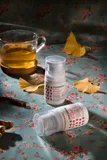
Wild Science Lab Root + Fruit Night Shift Renewal Eye Serum

Wild Science Lab Root + Fruit Night Shift Renewal Eye Serum

Efficacy91/100IrritancyHigh

Works for

Evens skin tone
Bakuchiol, Camellia sinensis leaf extract + 1 more
Works well
What the product description says
“Night Shift Renewal Eye Serum is an intensive, multi-action serum designed to target the classic signs of fatigue, dehydration and loss of skin tone by helping de-puff and counteract dark circles, while helping to smooth fine lines.”
Source: Feelunique

This product can help reduce hypepigmentation and even out the skin tone because it contains the following effective ingredients: bakuchiol

The following ingredient (ingredients) in this product might be helpful, but there is no evidence to confirm that it actually can help even out the skin tone: punica granatum extract.

Keep in mind that you would need to apply any topical skincare targetted at hypigmentation consistently for a couple of months to get a result. No topical skincare product can help get rid of hyperpigmentation (including post-acne marks and age spots) instantly.

BakuchiolKey activeEffect: HighA plant extract that is, though different in chemical structure, acts similar to retinoids. First studies show that it can help reduce fine lines and wrinkles, improve skin tone, reduce clogged pores and blemishes, and reduce inflammation. There is no conclusive evidence that bakuchiol is as effective as retinol however. The study that directly compared retinol with bakuchiol used bakuchiol applied twice daily compared to once per day for the retinol. According to this study, bakuchiol is less irritating than retinol. Bakuchiol is extracted from seeds of Babchi plant. Other parts of the plant contain coumarins that could cause allergic and irritant reactions. These compounds should be removed in the extraction process when bakuchiol is produced, but it is a good idea to be cautious and stay away from products that include the Babchi plant extracts other than purified bakuchiol to avoid irritation~0.75–1.1%
Camellia sinensis leaf extractEffect: LowCan contain potent anti-oxidant compounds (abbreviated ECG, GCG, EGC, and EGCG) that might help protect the skin from free radicals. Can help calm down inflammation and has some anti-bacterial properties. Unfortunately, these antioxidants are unstable and lose their effectiveness very quickly in products. The concentration of the antioxidant compounds in the extract also tends to be low to be effective in topical formulation~0.5–0.75%
Punica granatum extractEffect: LowA plant extract that can help neutralize free radicals in skin and even out the skin tone, but is typically used in products in a concentration that is too low to be effective~0.45–0.65%
Anti-aging
Bakuchiol, Camellia sinensis leaf extract + 3 more
Works well
What the product description says
“Skin may have signs of dehydration, dark circles, puffiness, signs of fine lines around the eyes which could have been triggered by an endless confrontation from lifestyle stress and fatigue.”
Source: Feelunique

This product can help reduce and prevent fine lines and wrinkles, improve skin elasticity and firmness because it contains bakuchiol.

Keep in mind that it typically takes at least 6 weeks to notice any results because the changes that are needed to improve fine lines and elasticity happen in the deeper layers of the skin. No topical anti-aging product can “erase” wrinkles or fully reverse signs of aging.

BakuchiolKey activeEffect: HighA plant extract that is, though different in chemical structure, acts similar to retinoids. First studies show that it can help reduce fine lines and wrinkles, improve skin tone, reduce clogged pores and blemishes, and reduce inflammation. There is no conclusive evidence that bakuchiol is as effective as retinol however. The study that directly compared retinol with bakuchiol used bakuchiol applied twice daily compared to once per day for the retinol. According to this study, bakuchiol is less irritating than retinol. Bakuchiol is extracted from seeds of Babchi plant. Other parts of the plant contain coumarins that could cause allergic and irritant reactions. These compounds should be removed in the extraction process when bakuchiol is produced, but it is a good idea to be cautious and stay away from products that include the Babchi plant extracts other than purified bakuchiol to avoid irritation~0.75–1.1%
Camellia sinensis leaf extractEffect: LowCan contain potent anti-oxidant compounds (abbreviated ECG, GCG, EGC, and EGCG) that might help protect the skin from free radicals. Can help calm down inflammation and has some anti-bacterial properties. Unfortunately, these antioxidants are unstable and lose their effectiveness very quickly in products. The concentration of the antioxidant compounds in the extract also tends to be low to be effective in topical formulation~0.5–0.75%
UbiquinoneEffect: LowCoenzyme Q10. It helps neutralize free radicals in skin, improves skin hydration and might be helpful agains fine lines and wrinkles. It can be an allergen~0.35–0.6%
Butyrospermum parkii butterEffect: Low, below effective doseA great moisturising ingredient that softens the skin and reduces water loss from its upper layer. It also can be helpful in protecting skin from free radicals~0.65–0.95%
TocopherolEffect: Low, below effective dosePure form of vitamin E. Can help moisturise and protect the skin from free radicals. Often used to help stabilise other ingredients or the formula itself~0.25–0.5%
Moisturizing
Cannabis sativa seed oil, Caprylic/capric triglyceride + 13 more
Works
What the product description says
“Skin may have signs of dehydration, dark circles, puffiness, signs of fine lines around the eyes which could have been triggered by an endless confrontation from lifestyle stress and fatigue.”
Source: Feelunique

This product can help improve hydration of the skin with the two types of ingredients.

The first type is called “humectants”:
these ingredients help attract water. When humectants are on the surface of the skin, they “pull in” the moisture from the outside environment, or from within deeper layers of the skin. The following ingredients in this product do the job: glycerin, lactobacillus ferment.

This product also contains ingredients called “occlusives”. They help reduce the speed with which our skin loses moisture to the outside environment. These ingredients also help soften the upper layer of the skin, so it feels less tight and nicer to the touch. The following ingredients in this product do the job: caprylic/capric triglyceride, cannabis sativa seed oil.

Cannabis sativa seed oilKey active· EmollientEffect: HighA plant oil that due to its high linoleic acid content can help strengthen skin's barrier function and soften its upper layer~4.9–6%
Caprylic/capric triglycerideKey active· Emollient, OcclusiveEffect: HighA good mix of fatty acids that forms a protective layer on the skin. Improves the shelf life of products. Derived from coconut and glycerin~4.6–5.6%
GlycerinKey active· HumectantEffect: HighOne of the best moisturizing ingredients. Naturally present in skin. It attracts water to the upper layer of the skin working as a humectant~3.2–3.9%
Cetearyl alcoholKey active· EmollientEffect: MediumA non-drying alcohol. Works as an emollient. Helps water and oil mix together and creates a nice product texture~2.1–2.5%
Glyceryl stearate seKey activeEffect: MediumUsed to stabilize the product formulations and works as an emollient~1.5–1.8%
Sodium hyaluronateKey active· HumectantEffect: HighOne of the best moisturizing ingredients. Attracts water into the upper layer of the skin~0.5–0.8%
Carthamus tinctorius seed oilKey active· EmollientEffect: HighAn emollient that helps soften the skin and might help calm down inflammation~0.45–0.7%
UbiquinoneKey activeEffect: HighCoenzyme Q10. It helps neutralize free radicals in skin, improves skin hydration and might be helpful agains fine lines and wrinkles. It can be an allergen~0.35–0.6%
Lactobacillus fermentKey active· HumectantEffect: HighA fermentation product created by bacteria Lactobacillus. The fermented product has anti-bacterial properties and might be helpful in calming down inflammation, but studies are lacking. Helps attract water to the upper layer of the skin. Can be used as a preservative~0.25–0.45%
Lactobacillus ferment lysateKey activeEffect: MediumA "broth" with parts of dead cells of lactobacteria. Might be helpful supporting diverse microbiome in skin, but evidence is lacking~0.25–0.45%
Camellia sinensis leaf extractEffect: LowCan contain potent anti-oxidant compounds (abbreviated ECG, GCG, EGC, and EGCG) that might help protect the skin from free radicals. Can help calm down inflammation and has some anti-bacterial properties. Unfortunately, these antioxidants are unstable and lose their effectiveness very quickly in products. The concentration of the antioxidant compounds in the extract also tends to be low to be effective in topical formulation~0.5–0.75%
Pentylene glycol· EmollientEffect: LowUsed to preserve products, dissolve other ingredients and create a nice product texture~0.3–0.55%
Cucumis sativus fruit extractEffect: Low, below effective doseMight be somewhat helpful in reducing hyperpigmentation and neutralizing free radicals but its typical concentration in a product is too low for having an effect~1.2–1.5%
TocopherolEffect: Low, below effective dosePure form of vitamin E. Can help moisturise and protect the skin from free radicals. Often used to help stabilise other ingredients or the formula itself~0.25–0.5%
Butyrospermum parkii butterUnder-dosedA great moisturising ingredient that softens the skin and reduces water loss from its upper layer. It also can be helpful in protecting skin from free radicals~0.65–0.95%
Anti-oxidation
Side benefit · Bakuchiol, Camellia sinensis leaf extract + 11 more
Works well

This product contains antioxidants (bakuchiol, ubiquinone) that can help neutralize free radicals in skin. By doing so, they can lessen the damage the skin gets from the UV light (sun).

The following ingredients - camellia sinensis leaf extract, punica granatum extract also can have an antioxidant effect, but there is less evidence to confirm their effectiveness in skin.

BakuchiolKey activeEffect: HighA plant extract that is, though different in chemical structure, acts similar to retinoids. First studies show that it can help reduce fine lines and wrinkles, improve skin tone, reduce clogged pores and blemishes, and reduce inflammation. There is no conclusive evidence that bakuchiol is as effective as retinol however. The study that directly compared retinol with bakuchiol used bakuchiol applied twice daily compared to once per day for the retinol. According to this study, bakuchiol is less irritating than retinol. Bakuchiol is extracted from seeds of Babchi plant. Other parts of the plant contain coumarins that could cause allergic and irritant reactions. These compounds should be removed in the extraction process when bakuchiol is produced, but it is a good idea to be cautious and stay away from products that include the Babchi plant extracts other than purified bakuchiol to avoid irritation~0.75–1.1%
Camellia sinensis leaf extractKey activeEffect: MediumCan contain potent anti-oxidant compounds (abbreviated ECG, GCG, EGC, and EGCG) that might help protect the skin from free radicals. Can help calm down inflammation and has some anti-bacterial properties. Unfortunately, these antioxidants are unstable and lose their effectiveness very quickly in products. The concentration of the antioxidant compounds in the extract also tends to be low to be effective in topical formulation~0.5–0.75%
Punica granatum extractKey activeEffect: MediumA plant extract that can help neutralize free radicals in skin and even out the skin tone, but is typically used in products in a concentration that is too low to be effective~0.45–0.65%
UbiquinoneKey activeEffect: HighCoenzyme Q10. It helps neutralize free radicals in skin, improves skin hydration and might be helpful agains fine lines and wrinkles. It can be an allergen~0.35–0.6%
Carthamus tinctorius seed oilEffect: LowAn emollient that helps soften the skin and might help calm down inflammation~0.45–0.7%
CaffeineEffect: LowMight be helpful in neutralizing free radicals. Can have a dehydration effect that might somewhat decrease the look of puffy eyes~0.3–0.55%
Achillea millefolium extractEffect: LowPlant extract that can help neutralize free radicals in skin. Can be used as a fragrance. Can be irritating~0.3–0.55%
Lactobacillus fermentEffect: LowA fermentation product created by bacteria Lactobacillus. The fermented product has anti-bacterial properties and might be helpful in calming down inflammation, but studies are lacking. Helps attract water to the upper layer of the skin. Can be used as a preservative~0.25–0.45%
Michelia alba flower oilEffect: LowA plant essential oil. Used as a fragrance. Can be irritating~0.25–0.5%
Cucumis sativus fruit extractEffect: Low, below effective doseMight be somewhat helpful in reducing hyperpigmentation and neutralizing free radicals but its typical concentration in a product is too low for having an effect~1.2–1.5%
Butyrospermum parkii butterEffect: Low, below effective doseA great moisturising ingredient that softens the skin and reduces water loss from its upper layer. It also can be helpful in protecting skin from free radicals~0.65–0.95%
Anthemis nobilis flower oilEffect: Low, below effective doseAn essential oil that is used as a fragrance and can be irritating. It might have some anti-oxidant effect in skin~0.25–0.4%
TocopherolUnder-dosedPure form of vitamin E. Can help moisturise and protect the skin from free radicals. Often used to help stabilise other ingredients or the formula itself~0.25–0.5%

Can it cause trouble?

Irritancy
13 strong irritants: Lavandula angustifolia flower oil, Cananga odorata flower oil + 11 more — patch-test recommended
High risk
We flagged 27 ingredients with irritancy potential. Severity depends on your sensitivity threshold; the table lists the worst offenders first.
IngredientFunctionIrritationEst. amount
Lavandula angustifolia flower oilA fragrant plant oil, can be irritatingHigh~0.3–0.55%est.
Cananga odorata flower oilAn essential oil. Can be irritatingHigh~0.25–0.5%est.
Tilia cordata flower extract—High~0.25–0.45%est.
Michelia alba flower oilA plant essential oil. Used as a fragrance. Can be irritatingHigh~0.25–0.5%est.
Achillea millefolium extractPlant extract that can help neutralize free radicals in skin. Can be used as a fragrance. Can be irritatingHigh~0.3–0.55%est.
Pelargonium graveolens leaf oilAn essential oil used as a fragrance. Can be irritatingHigh~0.3–0.5%est.
Anthemis nobilis flower oilAn essential oil that is used as a fragrance and can be irritating. It might have some anti-oxidant effect in skinHigh~0.25–0.4%est.
LimoneneA common frangrance that can easily irritate skin, especially if exposed to air, light or heatHigh~0.2–0.35%est.
LinaloolA fragrance. Can be irritatingHigh~0.2–0.35%est.
GeraniolA fragrance. Can be irritatingHigh~0.2–0.35%est.
CitronellolA fragrance. Can be irritatingHigh~0.15–0.3%est.
Benzyl benzoateFragrance with sweet balsamic smell. Help to preserve products and dissolve other ingredients. Could trigger allergic reactions and be irritatingHigh~0.15–0.25%est.
Benzyl alcoholA preservative. Can be used to mask unpleasant smell. Can be irritatingHigh~0.15–0.3%est.
FarnesolAdded to create a nice product smell. Can be irritatingHigh~0.15–0.25%est.
Benzyl salicylateA fragrance. Is a likely irritantHigh~0.1–0.2%est.
Cannabis sativa seed oilA plant oil that due to its high linoleic acid content can help strengthen skin's barrier function and soften its upper layerMedium~4.9–6%est.
Caprylic/capric triglycerideA good mix of fatty acids that forms a protective layer on the skin. Improves the shelf life of products. Derived from coconut and glycerinMedium~4.6–5.6%est.
Cucumis sativus fruit extractMight be somewhat helpful in reducing hyperpigmentation and neutralizing free radicals but its typical concentration in a product is too low for having an effectMedium~1.2–1.5%est.
BakuchiolA plant extract that is, though different in chemical structure, acts similar to retinoids. First studies show that it can help reduce fine lines and wrinkles, improve skin tone, reduce clogged pores and blemishes, and reduce inflammation. There is no conclusive evidence that bakuchiol is as effective as retinol however. The study that directly compared retinol with bakuchiol used bakuchiol applied twice daily compared to once per day for the retinol. According to this study, bakuchiol is less irritating than retinol. Bakuchiol is extracted from seeds of Babchi plant. Other parts of the plant contain coumarins that could cause allergic and irritant reactions. These compounds should be removed in the extraction process when bakuchiol is produced, but it is a good idea to be cautious and stay away from products that include the Babchi plant extracts other than purified bakuchiol to avoid irritationMedium~0.75–1.1%est.
Punica granatum extractA plant extract that can help neutralize free radicals in skin and even out the skin tone, but is typically used in products in a concentration that is too low to be effectiveMedium~0.45–0.65%est.
CaffeineMight be helpful in neutralizing free radicals. Can have a dehydration effect that might somewhat decrease the look of puffy eyesMedium~0.3–0.55%est.
Caprylyl/capryl glucosideHelps oil and water mix together. Can be used as a cleansing agentMedium~0.4–0.6%est.
HydroxyacetophenoneUsed to increase effectiveness of preservativesMedium~0.25–0.5%est.
EthylhexylglycerinA preservativeMedium~0.25–0.5%est.
Potassium sorbateA preservativeMedium~0.25–0.5%est.
Pentylene glycolUsed to preserve products, dissolve other ingredients and create a nice product textureMedium~0.3–0.55%est.
Citric acidCan work as an exfoliant but is typically used to adjust the product pHMedium~0.25–0.4%est.
Comedogenic
3 ingredients rated 2 or more on the 0–5 pore-clogging scale
3 flagged
These ingredients have a comedogenic rating of 2 or more on a 0–5 scale; the table shows each one's rating. In leave-on products they can clog pores in acne-prone skin.
IngredientFunctionRatingEst. amount
Butyrospermum parkii butterA great moisturising ingredient that softens the skin and reduces water loss from its upper layer. It also can be helpful in protecting skin from free radicals3/5~0.65–0.95%est.
Cetearyl alcoholA non-drying alcohol. Works as an emollient. Helps water and oil mix together and creates a nice product texture2/5~2.1–2.5%est.
Glyceryl stearate seUsed to stabilize the product formulations and works as an emollient2/5~1.5–1.8%est.

User reviews

Would you recommend?
No community reviews yet.

Be the first — your take helps the next person decide.

Ingredients

Filter by role to see what each ingredient is doing.

Water~45–55%
Formula
Irritation risk
Low

Plain old water

More about Water
Cannabis sativa seed oil~4.9–6%
Key activeIrritant · medium
Irritation risk
Medium
Works for
Moisturizing

A plant oil that due to its high linoleic acid content can help strengthen skin's barrier function and soften its upper layer

More about Cannabis sativa seed oil
Caprylic/capric triglyceride~4.6–5.6%
Key activeIrritant · medium
Irritation risk
Medium
Works for
Moisturizing

A good mix of fatty acids that forms a protective layer on the skin. Improves the shelf life of products. Derived from coconut and glycerin

More about Caprylic/capric triglyceride
Glycerin~3.2–3.9%
Key active
Irritation risk
Low
Works for
Moisturizing

One of the best moisturizing ingredients. Naturally present in skin. It attracts water to the upper layer of the skin working as a humectant

More about Glycerin
Mangifera indica seed oil~2.5–3%
Formula
Cetearyl alcohol~2.1–2.5%
Key activeComedogenic 2/5
Irritation risk
Low
Comedogenicity
2/5
Works for
CleansingMoisturizing

A non-drying alcohol. Works as an emollient. Helps water and oil mix together and creates a nice product texture

More about Cetearyl alcohol
Polyglyceryl-3 dicitrate/stearate~1.8–2.2%
Formula
Irritation risk
Low
Works for
Cleansing
More about Polyglyceryl-3 dicitrate/stearate
Glyceryl stearate se~1.5–1.8%
Key activeComedogenic 2/5
Irritation risk
Low
Comedogenicity
2/5
Works for
CleansingMoisturizing

Used to stabilize the product formulations and works as an emollient

More about Glyceryl stearate se
Cucumis sativus fruit extract~1.2–1.5%
Irritant · medium
Irritation risk
Medium
Works for
Anti-oxidationMoisturizing

Might be somewhat helpful in reducing hyperpigmentation and neutralizing free radicals but its typical concentration in a product is too low for having an effect

More about Cucumis sativus fruit extract
Polyglyceryl-4 hemp seedate~1–1.3%
Formula
Bakuchiol~0.75–1.1%
Key activeIrritant · medium
Irritation risk
Medium
Works for
Anti-oxidationAnti-inflammatoryAnti-blemishEvens skin toneAnti-aging

A plant extract that is, though different in chemical structure, acts similar to retinoids. First studies show that it can help reduce fine lines and wrinkles, improve skin tone, reduce clogged pores and blemishes, and reduce inflammation. There is no conclusive evidence that bakuchiol is as effective as retinol however. The study that directly compared retinol with bakuchiol used bakuchiol applied twice daily compared to once per day for the retinol. According to this study, bakuchiol is less irritating than retinol. Bakuchiol is extracted from seeds of Babchi plant. Other parts of the plant contain coumarins that could cause allergic and irritant reactions. These compounds should be removed in the extraction process when bakuchiol is produced, but it is a good idea to be cautious and stay away from products that include the Babchi plant extracts other than purified bakuchiol to avoid irritation

More about Bakuchiol
Butyrospermum parkii butter~0.65–0.95%
Under-dosedComedogenic 3/5
Irritation risk
Low
Comedogenicity
3/5
Works for
MoisturizingAnti-agingAnti-oxidation

A great moisturising ingredient that softens the skin and reduces water loss from its upper layer. It also can be helpful in protecting skin from free radicals

More about Butyrospermum parkii butter
Sodium hyaluronate~0.5–0.8%
Key active
Irritation risk
Low
Works for
Moisturizing

One of the best moisturizing ingredients. Attracts water into the upper layer of the skin

More about Sodium hyaluronate
Camellia sinensis leaf extract~0.5–0.75%
Key active
Irritation risk
Low
Works for
AntibacterialAnti-oxidationAnti-agingAnti-blemishEvens skin toneMoisturizing

Can contain potent anti-oxidant compounds (abbreviated ECG, GCG, EGC, and EGCG) that might help protect the skin from free radicals. Can help calm down inflammation and has some anti-bacterial properties. Unfortunately, these antioxidants are unstable and lose their effectiveness very quickly in products. The concentration of the antioxidant compounds in the extract also tends to be low to be effective in topical formulation

More about Camellia sinensis leaf extract
Punica granatum extract~0.45–0.65%
Key activeIrritant · medium
Irritation risk
Medium
Works for
Anti-oxidationEvens skin tone

A plant extract that can help neutralize free radicals in skin and even out the skin tone, but is typically used in products in a concentration that is too low to be effective

More about Punica granatum extract
Spilanthes acmella flower/leaf/stem extract~0.45–0.65%
Formula
Carthamus tinctorius seed oil~0.45–0.7%
Key active
Irritation risk
Low
Works for
MoisturizingAnti-oxidation

An emollient that helps soften the skin and might help calm down inflammation

More about Carthamus tinctorius seed oil
Astragalus membranaceus root extract~0.4–0.65%
Formula
Ubiquinone~0.35–0.6%
Key active
Irritation risk
Low
Works for
Anti-oxidationMoisturizingAnti-aging

Coenzyme Q10. It helps neutralize free radicals in skin, improves skin hydration and might be helpful agains fine lines and wrinkles. It can be an allergen

More about Ubiquinone
Caffeine~0.3–0.55%
Irritant · medium
Irritation risk
Medium
Works for
De-puffingAnti-oxidation

Might be helpful in neutralizing free radicals. Can have a dehydration effect that might somewhat decrease the look of puffy eyes

More about Caffeine
Lavandula angustifolia flower oil~0.3–0.55%
Irritant · high
Irritation risk
High

A fragrant plant oil, can be irritating

More about Lavandula angustifolia flower oil
Cananga odorata flower oil~0.25–0.5%
Irritant · high
Irritation risk
High

An essential oil. Can be irritating

More about Cananga odorata flower oil
Tilia cordata flower extract~0.25–0.45%
Irritant · high
Michelia alba flower oil~0.25–0.5%
Irritant · high
Irritation risk
High
Works for
Anti-oxidation

A plant essential oil. Used as a fragrance. Can be irritating

More about Michelia alba flower oil
Achillea millefolium extract~0.3–0.55%
Irritant · high
Irritation risk
High
Works for
Anti-oxidation

Plant extract that can help neutralize free radicals in skin. Can be used as a fragrance. Can be irritating

More about Achillea millefolium extract
(yarrow) flower/leaf/stem oil
Not recognized
Pelargonium graveolens leaf oil~0.3–0.5%
Irritant · high
Irritation risk
High

An essential oil used as a fragrance. Can be irritating

More about Pelargonium graveolens leaf oil
Anthemis nobilis flower oil~0.25–0.4%
Irritant · high
Irritation risk
High
Works for
Anti-inflammatoryAnti-oxidation

An essential oil that is used as a fragrance and can be irritating. It might have some anti-oxidant effect in skin

More about Anthemis nobilis flower oil
Styrax tonkinensis resin extract~0.25–0.4%
Formula
Sphingomonas ferment extract~0.25–0.45%
Formula
Lactobacillus ferment lysate~0.25–0.45%
Key active
Irritation risk
Low
Works for
Moisturizing

A "broth" with parts of dead cells of lactobacteria. Might be helpful supporting diverse microbiome in skin, but evidence is lacking

More about Lactobacillus ferment lysate
Lactobacillus ferment~0.25–0.45%
Key active
Irritation risk
Low
Works for
MoisturizingAnti-inflammatoryAnti-oxidationReduces irritation

A fermentation product created by bacteria Lactobacillus. The fermented product has anti-bacterial properties and might be helpful in calming down inflammation, but studies are lacking. Helps attract water to the upper layer of the skin. Can be used as a preservative

More about Lactobacillus ferment
Tocopherol~0.25–0.5%
Under-dosed
Irritation risk
Low
Works for
Anti-oxidationAnti-inflammatoryAnti-agingMoisturizing

Pure form of vitamin E. Can help moisturise and protect the skin from free radicals. Often used to help stabilise other ingredients or the formula itself

More about Tocopherol
Caprylyl/capryl glucoside~0.4–0.6%
Irritant · medium
Irritation risk
Medium
Works for
Cleansing

Helps oil and water mix together. Can be used as a cleansing agent

More about Caprylyl/capryl glucoside
Hydroxyacetophenone~0.25–0.5%
Irritant · medium
Irritation risk
Medium

Used to increase effectiveness of preservatives

More about Hydroxyacetophenone
Ethylhexylglycerin~0.25–0.5%
Irritant · medium
Irritation risk
Medium

A preservative

More about Ethylhexylglycerin
Phenoxyethanol~0.25–0.5%
Formula
Irritation risk
Low

A preservative. It helps prevent bacterial growth in cosmetic products

More about Phenoxyethanol
Potassium sorbate~0.25–0.5%
Irritant · medium
Irritation risk
Medium

A preservative

More about Potassium sorbate
Pentylene glycol~0.3–0.55%
Irritant · medium
Irritation risk
Medium
Works for
Moisturizing

Used to preserve products, dissolve other ingredients and create a nice product texture

More about Pentylene glycol
Citric acid~0.25–0.4%
Irritant · medium
Irritation risk
Medium

Can work as an exfoliant but is typically used to adjust the product pH

More about Citric acid
Limonene~0.2–0.35%
Irritant · high
Irritation risk
High

A common frangrance that can easily irritate skin, especially if exposed to air, light or heat

More about Limonene
Linalool~0.2–0.35%
Irritant · high
Irritation risk
High

A fragrance. Can be irritating

More about Linalool
Geraniol~0.2–0.35%
Irritant · high
Irritation risk
High

A fragrance. Can be irritating

More about Geraniol
Citronellol~0.15–0.3%
Irritant · high
Irritation risk
High

A fragrance. Can be irritating

More about Citronellol
Benzyl benzoate~0.15–0.25%
Irritant · high
Irritation risk
High

Fragrance with sweet balsamic smell. Help to preserve products and dissolve other ingredients. Could trigger allergic reactions and be irritating

More about Benzyl benzoate
Benzyl alcohol~0.15–0.3%
Irritant · high
Irritation risk
High

A preservative. Can be used to mask unpleasant smell. Can be irritating

More about Benzyl alcohol
Farnesol~0.15–0.25%
Irritant · high
Irritation risk
High

Added to create a nice product smell. Can be irritating

More about Farnesol
Benzyl salicylate~0.1–0.2%
Irritant · high
Irritation risk
High

A fragrance. Is a likely irritant

More about Benzyl salicylate
Essential oil
Not recognized
Ingredient list view

Water, Cannabis sativa seed oil, Caprylic/capric triglyceride, Glycerin, Mangifera indica seed oil, Cetearyl alcohol, Polyglyceryl-3 dicitrate/stearate, Glyceryl stearate se, Cucumis sativus fruit extract, Polyglyceryl-4 hemp seedate, Bakuchiol, Butyrospermum parkii butter, Sodium hyaluronate, Camellia sinensis leaf extract, Punica granatum extract, Spilanthes acmella flower/leaf/stem extract, Carthamus tinctorius seed oil, Astragalus membranaceus root extract, Ubiquinone, Caffeine, Lavandula angustifolia flower oil, Cananga odorata flower oil, Tilia cordata flower extract, Michelia alba flower oil, Achillea millefolium extract, Unknown, Pelargonium graveolens leaf oil, Anthemis nobilis flower oil, Styrax tonkinensis resin extract, Sphingomonas ferment extract, Lactobacillus ferment lysate, Lactobacillus ferment, Tocopherol, Caprylyl/capryl glucoside, Hydroxyacetophenone, Ethylhexylglycerin, Phenoxyethanol, Potassium sorbate, Pentylene glycol, Citric acid, Limonene, Linalool, Geraniol, Citronellol, Benzyl benzoate, Benzyl alcohol, Farnesol, Benzyl salicylate, Unknown

Compare prices

Retailers ranked by price — lowest first.

No pricing data available yet for this product.

Worth comparing, line by line.

Match % combines shared ingredients, the first five ingredients, shared actives and hero ingredients, irritancy (lower counts in the alternative's favour), texture and body area. Only products in the same routine step are compared.

Side-by-side comparison of this product against its closest alternatives
Wild Science LabRoot + Fruit Night Shift Renewal Eye SerumYOUR PRODUCTDr Dennis GrossAdvanced Retinol + Ferulic Triple Correction Eye SerumMAXCLINICPro Hyaluron Eye SerumCosmetocriticoLift & Bright AOX
Match—86%86%85%
Price—$64.38$12.98$48.02
Shared key ingredients—7 of 134 of 135 of 13
Key difference—Salicylic AcidAdenosineNiacinamide
Irritancy High Medium Medium Medium
Drying alcohol————
View product Shop Shop Shop

More alternatives: Wishful Eye Lift & Contour 1% Bakuchiol & Peptide SerumBalea Bakuchiol eye serum Clean Beauty

Cheaper alternatives? Browse formulas in the same category.
We compare ingredient profiles across our catalog — pick the closest match for your budget.
Open dupe finder

Product summary

"Wild Science Lab - Root + Fruit Night Shift Renewal Eye Serum" is effective for: Evens skin tone and Anti-aging

This product could be helpful for: Moisturizing, but its actives are not the most effective or are not well-studied.

Ingredient callouts

  • this product contains Bakuchiol (0.75% - 1.10%). It is a plant extract that is has a similar effect to that of Retinoids but with less irritation. Bakuchiol can help reduce fine lines and wrinkles, improve skin tone, reduce clogged pores and blemishes, and reduce inflammation.
  • Humectants (lactobacillus ferment 0.25% - 0.45%, sodium hyaluronate 0.50% - 0.80% and glycerin 3.20% - 3.90%). These ingredients help attract water to the upper layer of the skin and improve the skin hydration.

Price

The product retails for 30.00£ in the United Kingdom.

For a detailed price comparison: click here.

Sources cited in this review

Every concentration estimate and effectiveness label is anchored to one of these 19 studies and safety reviews.

  1. 1
  2. 2
  3. 3
  4. 4
  5. 5
  6. 6
Wild Science Lab Root + Fruit Night Shift Renewal Eye Serum
Wild Science LabRoot + Fruit Night Shift Renewal Eye Serum

Affiliate links · As an Amazon Associate, WIMJ earns from qualifying purchases.

As an Amazon Associate, WIMJ earns from qualifying purchases.