Works for
MoisturizingGlycerin, Gluconolactone + 7 moreWorks
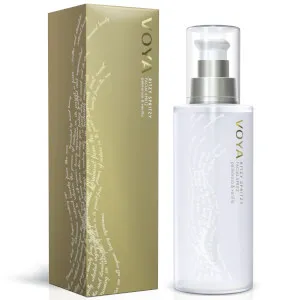
“The VOYA Ritzy Spritzy Facial Spritz is a toner that helps to hydrate, nourish and illuminate the complexion.”
This product can help improve hydration of the skin with the two types of ingredients.
The first type is called “humectants”:
these ingredients help attract water.
When humectants are on the surface of the skin, they “pull in” the moisture from the outside environment, or from
within deeper layers of the skin. The following ingredients in this product do the job:
betaine, glycerin.
This product also contains ingredients called “occlusives”. They help reduce the speed with which our skin loses moisture to the outside environment. These ingredients also help soften the upper layer of the skin, so it feels less tight and nicer to the touch. The following ingredients in this product do the job: helianthus annuus seed oil, prunus amygdalus dulcis oil.
ExfoliationSide benefit · GluconolactoneWorks well
This product can help exfoliate the skin. In other words, it helps break down the bonds between dead cells on the surface of the skin and speed up the skin turnover. Skin often appears softer and brighter after exfoliation, but overdoing it can result in disrupted skin barrier. The following ingredient is doing the exfoliating job in this product: gluconolactone.
Evens skin toneSide benefit · GluconolactoneWorks well
This product can help reduce hypepigmentation and even out the skin tone because it contains the following effective ingredients: gluconolactone
Keep in mind that you would need to apply any topical skincare targetted at hypigmentation consistently for a couple of months to get a result. No topical skincare product can help get rid of hyperpigmentation (including post-acne marks and age spots) instantly.
Anti-agingSide benefit · Gluconolactone, Prunus amygdalus dulcis oil + 1 moreWorks well
This product can help reduce and prevent fine lines and wrinkles, improve skin elasticity and firmness because it contains gluconolactone.
Keep in mind that it typically takes at least 6 weeks to notice any results because the changes that are needed to improve fine lines and elasticity happen in the deeper layers of the skin. No topical anti-aging product can “erase” wrinkles or fully reverse signs of aging.
Anti-oxidationSide benefit · Gluconolactone, Prunus cerasus fruit extract + 5 moreMay help
This product contains antioxidants (gluconolactone) that can help neutralize free radicals in skin to lessen the damage it gets from the UV light (sun). There is some human evidence for this effect in skin, though it is smaller or less consistent than the evidence for the best antioxidants.
Can it cause trouble?
Irritancy13 strong irritants: Alcohol denat., Cananga odorata flower oil + 11 more — patch-test recommendedHigh risk
ComedogenicClean of flagged comedogenic ingredientsNone flagged


User reviews
Be the first — your take helps the next person decide.
Ingredients
Filter by role to see what each ingredient is doing.
Water~45–55%
Alcohol denat.~8.2–10.1%
- Irritation risk
- High
Produces temporary toning effect. Can help dissolve other ingredients or preserve products
More about Alcohol denat.Glycerin~4.1–5%
- Irritation risk
- Low
One of the best moisturizing ingredients. Naturally present in skin. It attracts water to the upper layer of the skin working as a humectant
More about GlycerinPolyglyceryl-4 caprate~2.7–3.3%
Gluconolactone~2.2–2.7%
- Irritation risk
- Medium
A polyhydroxy acid (PHA) that helps shed the dead cells from the skin surface revealing smoother skin. Is believed to be genter than AHAs. It helps attract water to the upper layer of the skin and can stimulate production of skin's own hyaluronic acid resulting in improved hydration levels. It has been shown to be helpful against acne and clogged pores if used consistently (e.g over a period of 12 weeks) in high enough concentration. It can help reduce fine lines and wrinkles and improve skin tone with long-term application. Can help neutralize free radicals
More about GluconolactonePrunus cerasus fruit extract~1.8–2.2%
- Irritation risk
- Medium
A fruit extract that might have some anti-oxidant properties but evidence of effectiveness in skin is lacking
More about Prunus cerasus fruit extractAloe barbadensis leaf juice powder~1.5–1.9%
- Irritation risk
- Medium
Traditionally used to treat sunburns, dermatitis and inflammation, but evidence for its effectiveness is lacking. The extract can contain humectants that help attract water into the skin
More about Aloe barbadensis leaf juice powderSodium benzoate~0.25–0.5%
Betaine~1.1–1.3%
- Irritation risk
- Low
Helps attract water to the upper layer of the skin and improves the product texture
More about BetainePrunus amygdalus dulcis oil~0.9–1.1%
- Irritation risk
- Low
An emollient that softens the skin
More about Prunus amygdalus dulcis oilFucus serratus extract~0.65–0.95%
- Irritation risk
- Low
Cystoseira amentacea/caespitosa/branchycarpa extract~0.5–0.8%
- Irritation risk
- Low
Phytic acid~0.5–0.75%
- Irritation risk
- Medium
An alpha-hydroxy acid (AHA), but is mostly used to stabilize product formulations in cosmetics
More about Phytic acidCalcium gluconate~0.45–0.7%
- Irritation risk
- Low
Helps attract water to the upper layer of the skin and helps to improve appearance of the product
More about Calcium gluconateOlea europaea leaf extract~0.3–0.6%
- Irritation risk
- Medium
A plant extract that might have some anti-oxidant and anti-inflammatory properties but evidence for effectiveness in skin is missing
More about Olea europaea leaf extractSymphytum officinale leaf extract~0.35–0.65%
- Irritation risk
- High
A plant extract that has an anti-bacterial effect
More about Symphytum officinale leaf extractEpilobium fleischeri extract~0.35–0.6%
- Irritation risk
- Low
Cananga odorata flower oil~0.3–0.55%
Calendula officinalis extract~0.25–0.5%
- Irritation risk
- High
A plant extract that might help neutralize free radicals in skin
More about Calendula officinalis extractCitrus bergamia peel oil expressed~0.25–0.45%
- Irritation risk
- High
Helianthus annuus seed oil~0.25–0.5%
- Irritation risk
- Low
A great emollient due to its high linoleic acid content. One of the most effective plant oils in helping skin hydration and repairing skin barrier function
More about Helianthus annuus seed oilEugenia caryophyllus bud oil~0.2–0.4%
Lavandula angustifolia herb oil~0.2–0.35%
- Irritation risk
- High
A fragrance. Is a common allergen and irritant
More about Lavandula angustifolia herb oilPelargonium graveolens flower oil~0.25–0.45%
- Irritation risk
- High
An essential oil. Can be irritating. Can become an allergen with oxidation
More about Pelargonium graveolens flower oilSodium hyaluronate~0.2–0.4%
- Irritation risk
- Low
One of the best moisturizing ingredients. Attracts water into the upper layer of the skin
More about Sodium hyaluronateCymbopogon martini oil~0.2–0.4%
- Irritation risk
- High
Aromatic plant oil used in cosmetics as a fragrance. A likely irritant
More about Cymbopogon martini oilVetiveria zizanoides root oil~0.2–0.35%
- Irritation risk
- Low
Citric acid~0.2–0.4%
- Irritation risk
- Medium
Can work as an exfoliant but is typically used to adjust the product pH
More about Citric acidCoriandrum sativum fruit oil~0.2–0.35%
- Irritation risk
- High
A plant oil that is used as a fragrance. Can be irritating
More about Coriandrum sativum fruit oilVanilla planifolia fruit extract~0.2–0.4%
- Irritation risk
- High
A plant extract used as a fragrance. Can be irritating
More about Vanilla planifolia fruit extractPotassium sorbate~0.2–0.35%
Tocopherol~0.15–0.3%
- Irritation risk
- Low
Pure form of vitamin E. Can help moisturise and protect the skin from free radicals. Often used to help stabilise other ingredients or the formula itself
More about TocopherolEugenol~0.1–0.2%
Linalool~0.1–0.2%
Limonene~0.1–0.15%
- Irritation risk
- High
A common frangrance that can easily irritate skin, especially if exposed to air, light or heat
More about LimoneneGeraniol~0.05–0.1%
Ingredient list view
Water, Alcohol denat., Glycerin, Polyglyceryl-4 caprate, Gluconolactone, Prunus cerasus fruit extract, Aloe barbadensis leaf juice powder, Sodium benzoate, Betaine, Prunus amygdalus dulcis oil, Fucus serratus extract, Cystoseira amentacea/caespitosa/branchycarpa extract, Phytic acid, Calcium gluconate, Olea europaea leaf extract, Symphytum officinale leaf extract, Epilobium fleischeri extract, Cananga odorata flower oil, Calendula officinalis extract, Citrus bergamia peel oil expressed, Helianthus annuus seed oil, Eugenia caryophyllus bud oil, Lavandula angustifolia herb oil, Pelargonium graveolens flower oil, Sodium hyaluronate, Cymbopogon martini oil, Vetiveria zizanoides root oil, Citric acid, Coriandrum sativum fruit oil, Vanilla planifolia fruit extract, Potassium sorbate, Tocopherol, Eugenol, Linalool, Limonene, Geraniol
Compare prices
Retailers ranked by price — lowest first.
Affiliate links · As an Amazon Associate, WIMJ earns from qualifying purchases.
Worth comparing, line by line.
Match % combines shared ingredients, the first five ingredients, shared actives and hero ingredients, irritancy (lower counts in the alternative's favour), texture and body area. Only products in the same routine step are compared.
| VOYARitzy Spritzy Facial SpritzYOUR PRODUCT | MyChelle DermaceuticalsUltra Hyaluronic Beauty Mist | SkinfixBarrier+ Nutrient Water Misting Tonic | Cinema SecretsMoisture Spray+ Hydrating Mist | |
|---|---|---|---|---|
| Match | — | 62% | 60% | 59% |
| Price | $65.00 | $16.00−$49.00 | — | $20.94−$44.06 |
| Shared key ingredients | — | 3 of 5 | 3 of 5 | 3 of 5 |
| Key difference | — | Tripeptide-29 | Panthenol | Camellia Sinensis Leaf Extract |
| Irritancy | High | Medium | Medium | Low |
| Drying alcohol | Contains drying alcohol | — | — | — |
| View product | Shop | Shop | Shop |


More alternatives: Cirem Skincare Mending Moon Moonglow Hydrating Face Pillow MistSkin Regimen Recharging Mist
Product summary
"VOYA - Ritzy Spritzy Facial Spritz" is effective for: Evens skin tone, Exfoliation and Anti-aging
This product could be helpful for: Moisturizing, but its actives are not the most effective or are not well-studied.
Ingredient callouts
- This product contains acids (gluconolactone 2.20% - 2.70%). Their concentration is low, and they will not have a strong exfoliating effect. Instead, they work to support the skin natural acid mantle and to attract water (as humectants). PHAs (gluconolactone) especially are great for improving skin hydration. They might be even able to stimulate the production of skin's natural humectants and support the healthy skin microbiome.
- Humectants (sodium hyaluronate 0.25% - 0.40%, betaine 1.10% - 1.30% and glycerin 4.10% - 5.00%). These ingredients help attract water to the upper layer of the skin and improve the skin hydration.
Price
The product retails for 35.90$ in the United States and for 47.00£ in the United Kingdom.
For a detailed price comparison: click here.
Sources cited in this review
Every concentration estimate and effectiveness label is anchored to one of these 29 studies and safety reviews.
- 1
- 2
- 3
- 4
- 5
- 6

Affiliate links · As an Amazon Associate, WIMJ earns from qualifying purchases.