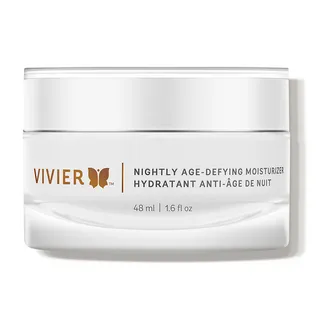
Vivier Nightly Age-Defying Moisturizer

Vivier Nightly Age-Defying Moisturizer

Efficacy37/100IrritancyHigh

Works for

Moisturizing
Cetyl alcohol, Squalane + 17 more
Works
What the product description says
“Nightly Age-Defying Moisturizer”
Source: Vivier

This product can help improve hydration of the skin with the two types of ingredients.

The first type is called “humectants”:
these ingredients help attract water. When humectants are on the surface of the skin, they “pull in” the moisture from the outside environment, or from within deeper layers of the skin. The following ingredients in this product do the job: glycerin, hydrolyzed glycosaminoglycans.

This product also contains ingredients called “occlusives”. They help reduce the speed with which our skin loses moisture to the outside environment. These ingredients also help soften the upper layer of the skin, so it feels less tight and nicer to the touch. The following ingredients in this product do the job: helianthus annuus seed oil, squalane.

Cetyl alcoholKey active· EmollientEffect: MediumA non-drying alcohol that works to soften the skin and stabilize product formulations helping oil and water mix together~4.7–5.8%
SqualaneKey active· Emollient, OcclusiveEffect: HighAn oil naturally present in skin. Works as an emollient to soften the skin and form a protective layer on its surface without a greasy feeling.~1.8–2.2%
GlucoseKey active· HumectantEffect: MediumHelps attract water to the upper layer of the skin. Could be helpful in restoring the skin barrier function~0.5–0.75%
Glycine soja oilKey active· EmollientEffect: HighA good emollient that helps soften the skin and helps repair its barrier function. It can clog pores if used in high concentrations.~0.45–0.65%
Persea gratissima oilKey active· EmollientEffect: HighAn emollient that helps soften the skin and could be helpful in repairing its barrier function~0.3–0.5%
GlycerinKey active· HumectantEffect: HighOne of the best moisturizing ingredients. Naturally present in skin. It attracts water to the upper layer of the skin working as a humectant~0.3–0.6%
Hydrolyzed rice proteinKey active· HumectantEffect: MediumHelps attract water to the upper layer of the skin. Might have some anti-oxidant properties~0.3–0.55%
Hydrolyzed glycosaminoglycansKey active· HumectantEffect: HighLong sugars that help attract water to the upper layer of the skin~0.2–0.4%
Sodium hyaluronateKey active· HumectantEffect: HighOne of the best moisturizing ingredients. Attracts water into the upper layer of the skin~0.2–0.4%
Helianthus annuus seed oilKey active· Emollient, OcclusiveEffect: HighA great emollient due to its high linoleic acid content. One of the most effective plant oils in helping skin hydration and repairing skin barrier function~0.1–0.25%
Glyceryl stearate· EmollientEffect: LowAn emollient that softens the skin and forms a protective layer on its surface. Helps water and oil mix together~3.6–4.4%
Dicaprylyl carbonate· EmollientEffect: LowHelps products spread more easily and works as an emollient to soften skin~1.5–1.8%
Caprylyl glycol· Humectant, EmollientEffect: LowHelps preserve products and creates a nice product texture~1–1.2%
Pentylene glycol· EmollientEffect: LowUsed to preserve products, dissolve other ingredients and create a nice product texture~0.3–0.6%
Propylene glycol· HumectantEffect: LowHelps oil and water mix together and can enhance the penetration of other ingredients into the skin. It can be irritating~0.2–0.4%
TocopherolEffect: Low, below effective dosePure form of vitamin E. Can help moisturise and protect the skin from free radicals. Often used to help stabilise other ingredients or the formula itself~0.4–0.65%
Paraffinum liquidumUnder-dosedMineral oil. One of the most effective and well studied occlusive and emollient moisturizing ingredients. Helps reduce moisture loss in skin and repair skin barrier function~0.2–0.4%
AllantoinUnder-dosedHelps calm down inflammation in skin and can help reduce itching. Helps to repair the skin barrier and keep skin hydrated~0.15–0.3%
Caprylic/capric triglycerideUnder-dosedA good mix of fatty acids that forms a protective layer on the skin. Improves the shelf life of products. Derived from coconut and glycerin~0.15–0.3%
Anti-aging
Tocopherol, Sodium ascorbyl phosphate
Not delivered
What the product description says
“Nightly Age-Defying Moisturizer”
Source: Vivier

Effective ingredients missing or their concentration is too low.

TocopherolEffect: Low, below effective dosePure form of vitamin E. Can help moisturise and protect the skin from free radicals. Often used to help stabilise other ingredients or the formula itself~0.4–0.65%
Sodium ascorbyl phosphateEffect: Low, below effective doseA stable derivative of vitamin C. It is oil-soluble which means it is more likely to penetrate the skin compared to the pure form of vitamin C (which is water-soluble), but it is less bio-available and is way less effective in stimulating collagen and reducing wrinkles compared to the pure form of vitamin C (L-ascorbic acid) and its other derivatives (for example, magnesium ascorbyl phosphate). At the same time, this vitamin C derivative has been shown in studies to be effective in reducing acne, blemishes and clogged pores. It is less irritating then the pure form of vitamin C~0.15–0.25%

Can it cause trouble?

Irritancy
4 strong irritants: Calendula officinalis flower extract, Diazolidinyl urea + 2 more — patch-test recommended
High risk
We flagged 19 ingredients with irritancy potential. Severity depends on your sensitivity threshold; the table lists the worst offenders first.
IngredientFunctionIrritationEst. amount
Calendula officinalis flower extractA plant extract that has some anti-oxidant and anti-bacterial properties. Can be irritatingHigh~0.35–0.65%est.
Propylene glycolHelps oil and water mix together and can enhance the penetration of other ingredients into the skin. It can be irritatingHigh~0.2–0.4%est.
Diazolidinyl ureaA preservative. Works by releasing formaldehyde. Can be irritatingHigh~0.2–0.4%est.
Iodopropynyl butylcarbamateA preservative. Can be irritatingHigh~0.01–0.02%est.
Rosmarinus officinalis leaf extractCan be helpful in reducing inflammation in skin, including inflamed acne. It can be irritatingHigh~0.1–0.2%est.
Peg-75 stearateHelps water and oil mix togetherMedium~3.1–3.8%est.
Ceteth-20Helps water and oil mix togetherMedium~2.4–3%est.
Steareth-20Helps oil and water mix togetherMedium~2–2.5%est.
Caprylyl glycolHelps preserve products and creates a nice product textureMedium~1–1.2%est.
CarrageenanHelps thicken the product formula and create a nice product formulationMedium~0.65–0.95%est.
EthylhexylglycerinA preservativeMedium~0.45–0.7%est.
Glycine soja oilA good emollient that helps soften the skin and helps repair its barrier function. It can clog pores if used in high concentrations.Medium~0.45–0.65%est.
Pentylene glycolUsed to preserve products, dissolve other ingredients and create a nice product textureMedium~0.3–0.6%est.
Persea gratissima oilAn emollient that helps soften the skin and could be helpful in repairing its barrier functionMedium~0.3–0.5%est.
Hexylene glycolHelps create a more spreadable product textureMedium~0.2–0.4%est.
Tocopheryl acetateA more stable but less bio-available form of vitamin E compared to Tocopherol. Might help moisturize and protect the skin from free radicals, but mostly used in low concentrations to stabilize other ingredients.Medium~0.2–0.4%est.
Tetrasodium edtaHelps to stabilize the product formulationMedium~0.2–0.35%est.
Sodium ascorbyl phosphateA stable derivative of vitamin C. It is oil-soluble which means it is more likely to penetrate the skin compared to the pure form of vitamin C (which is water-soluble), but it is less bio-available and is way less effective in stimulating collagen and reducing wrinkles compared to the pure form of vitamin C (L-ascorbic acid) and its other derivatives (for example, magnesium ascorbyl phosphate). At the same time, this vitamin C derivative has been shown in studies to be effective in reducing acne, blemishes and clogged pores. It is less irritating then the pure form of vitamin CMedium~0.15–0.25%est.
Caprylic/capric triglycerideA good mix of fatty acids that forms a protective layer on the skin. Improves the shelf life of products. Derived from coconut and glycerinMedium~0.15–0.3%est.
Comedogenic
2 ingredients rated 2 or more on the 0–5 pore-clogging scale
2 flagged
These ingredients have a comedogenic rating of 2 or more on a 0–5 scale; the table shows each one's rating. In leave-on products they can clog pores in acne-prone skin.
IngredientFunctionRatingEst. amount
CarrageenanHelps thicken the product formula and create a nice product formulation3/5~0.65–0.95%est.
Glycine soja oilA good emollient that helps soften the skin and helps repair its barrier function. It can clog pores if used in high concentrations.2/5~0.45–0.65%est.
Did this help you decide?

User reviews

Would you recommend?
No community reviews yet.

Be the first — your take helps the next person decide.

Ingredients

Filter by role to see what each ingredient is doing.

Water~45–55%
Formula
Irritation risk
Low

Plain old water

More about Water
Cetyl alcohol~4.7–5.8%
Key active
Irritation risk
Low
Works for
CleansingMoisturizing

A non-drying alcohol that works to soften the skin and stabilize product formulations helping oil and water mix together

More about Cetyl alcohol
Glyceryl stearate~3.6–4.4%
Formula
Irritation risk
Low
Works for
CleansingMoisturizing

An emollient that softens the skin and forms a protective layer on its surface. Helps water and oil mix together

More about Glyceryl stearate
Peg-75 stearate~3.1–3.8%
Irritant · medium
Irritation risk
Medium
Works for
Cleansing

Helps water and oil mix together

More about Peg-75 stearate
Ceteth-20~2.4–3%
Irritant · medium
Irritation risk
Medium
Works for
Cleansing

Helps water and oil mix together

More about Ceteth-20
Steareth-20~2–2.5%
Irritant · medium
Irritation risk
Medium
Works for
Cleansing

Helps oil and water mix together

More about Steareth-20
Squalane~1.8–2.2%
Key active
Irritation risk
Low
Works for
Moisturizing

An oil naturally present in skin. Works as an emollient to soften the skin and form a protective layer on its surface without a greasy feeling.

More about Squalane
Dicaprylyl carbonate~1.5–1.8%
Formula
Irritation risk
Low
Works for
Moisturizing

Helps products spread more easily and works as an emollient to soften skin

More about Dicaprylyl carbonate
Xanthan gum~1.2–1.4%
Formula
Irritation risk
Low
Works for
Cleansing

Used to create a thicker product consistency

More about Xanthan gum
Caprylyl glycol~1–1.2%
Irritant · medium
Irritation risk
Medium
Works for
Moisturizing

Helps preserve products and creates a nice product texture

More about Caprylyl glycol
Phenoxyethanol~0.65–0.95%
Formula
Irritation risk
Low

A preservative. It helps prevent bacterial growth in cosmetic products

More about Phenoxyethanol
Carrageenan~0.65–0.95%
Comedogenic 3/5Irritant · medium
Irritation risk
Medium
Comedogenicity
3/5

Helps thicken the product formula and create a nice product formulation

More about Carrageenan
Glucose~0.5–0.75%
Key active
Irritation risk
Low
Works for
Moisturizing

Helps attract water to the upper layer of the skin. Could be helpful in restoring the skin barrier function

More about Glucose
Ethylhexylglycerin~0.45–0.7%
Irritant · medium
Irritation risk
Medium

A preservative

More about Ethylhexylglycerin
Glycine soja oil~0.45–0.65%
Key activeComedogenic 2/5Irritant · medium
Irritation risk
Medium
Comedogenicity
2/5
Works for
Moisturizing

A good emollient that helps soften the skin and helps repair its barrier function. It can clog pores if used in high concentrations.

More about Glycine soja oil
Calendula officinalis flower extract~0.35–0.65%
Irritant · high
Irritation risk
High
Works for
Anti-oxidation

A plant extract that has some anti-oxidant and anti-bacterial properties. Can be irritating

More about Calendula officinalis flower extract
Tocopherol~0.4–0.65%
Formula
Irritation risk
Low
Works for
Anti-oxidationMoisturizingAnti-inflammatoryAnti-aging

Pure form of vitamin E. Can help moisturise and protect the skin from free radicals. Often used to help stabilise other ingredients or the formula itself

More about Tocopherol
Trimethylolpropane tricaprylate/tricaprate~0.4–0.6%
Formula
Hydrolyzed rice protein~0.3–0.55%
Key active
Irritation risk
Low
Works for
MoisturizingAnti-oxidation

Helps attract water to the upper layer of the skin. Might have some anti-oxidant properties

More about Hydrolyzed rice protein
Glycerin~0.3–0.6%
Key active
Irritation risk
Low
Works for
Moisturizing

One of the best moisturizing ingredients. Naturally present in skin. It attracts water to the upper layer of the skin working as a humectant

More about Glycerin
Pentylene glycol~0.3–0.6%
Irritant · medium
Irritation risk
Medium
Works for
Moisturizing

Used to preserve products, dissolve other ingredients and create a nice product texture

More about Pentylene glycol
Sodium benzoate~0.25–0.5%
Formula
Irritation risk
Low

A preservative

More about Sodium benzoate
Persea gratissima oil~0.3–0.5%
Key activeIrritant · medium
Irritation risk
Medium
Works for
Moisturizing

An emollient that helps soften the skin and could be helpful in repairing its barrier function

More about Persea gratissima oil
Propylene glycol~0.2–0.4%
Irritant · high
Irritation risk
High
Works for
Moisturizing

Helps oil and water mix together and can enhance the penetration of other ingredients into the skin. It can be irritating

More about Propylene glycol
Hydrolyzed glycosaminoglycans~0.2–0.4%
Key active
Irritation risk
Low
Works for
Moisturizing

Long sugars that help attract water to the upper layer of the skin

More about Hydrolyzed glycosaminoglycans
Hydroxyethylcellulose~0.25–0.45%
Formula
Irritation risk
Low

Used to thicken product formulations and create gel-like textures

More about Hydroxyethylcellulose
Hexylene glycol~0.2–0.4%
Irritant · medium
Irritation risk
Medium
Works for
Cleansing

Helps create a more spreadable product texture

More about Hexylene glycol
Polydextrose~0.25–0.5%
Formula
Irritation risk
Low
More about Polydextrose
Sodium hyaluronate~0.2–0.4%
Key active
Irritation risk
Low
Works for
Moisturizing

One of the best moisturizing ingredients. Attracts water into the upper layer of the skin

More about Sodium hyaluronate
Diazolidinyl urea~0.2–0.4%
Irritant · high
Irritation risk
High

A preservative. Works by releasing formaldehyde. Can be irritating

More about Diazolidinyl urea
Iodopropynyl butylcarbamate~0.01–0.02%
Irritant · high
Irritation risk
High

A preservative. Can be irritating

More about Iodopropynyl butylcarbamate
Tocopheryl acetate~0.2–0.4%
Irritant · medium
Irritation risk
Medium
Works for
Anti-oxidation

A more stable but less bio-available form of vitamin E compared to Tocopherol. Might help moisturize and protect the skin from free radicals, but mostly used in low concentrations to stabilize other ingredients.

More about Tocopheryl acetate
Allantoin~0.15–0.3%
Under-dosed
Irritation risk
Low
Works for
MoisturizingAnti-inflammatoryReduces irritationReduces rednessAnti-blemishExfoliation

Helps calm down inflammation in skin and can help reduce itching. Helps to repair the skin barrier and keep skin hydrated

More about Allantoin
Tetrasodium edta~0.2–0.35%
Irritant · medium
Irritation risk
Medium

Helps to stabilize the product formulation

More about Tetrasodium edta
Acrylates/acrylamide copolymer~0.2–0.35%
Formula
Paraffinum liquidum~0.2–0.4%
Under-dosed
Irritation risk
Low
Works for
Moisturizing

Mineral oil. One of the most effective and well studied occlusive and emollient moisturizing ingredients. Helps reduce moisture loss in skin and repair skin barrier function

More about Paraffinum liquidum
Polysorbate 85~0.15–0.3%
Formula
Irritation risk
Low
Works for
Cleansing
More about Polysorbate 85
Sodium ascorbyl phosphate~0.15–0.25%
Irritant · medium
Irritation risk
Medium
Works for
Anti-blemishAnti-oxidationAnti-aging

A stable derivative of vitamin C. It is oil-soluble which means it is more likely to penetrate the skin compared to the pure form of vitamin C (which is water-soluble), but it is less bio-available and is way less effective in stimulating collagen and reducing wrinkles compared to the pure form of vitamin C (L-ascorbic acid) and its other derivatives (for example, magnesium ascorbyl phosphate). At the same time, this vitamin C derivative has been shown in studies to be effective in reducing acne, blemishes and clogged pores. It is less irritating then the pure form of vitamin C

More about Sodium ascorbyl phosphate
Rosmarinus officinalis leaf extract~0.1–0.2%
Irritant · high
Irritation risk
High
Works for
Anti-blemishAnti-oxidationAntibacterial

Can be helpful in reducing inflammation in skin, including inflamed acne. It can be irritating

More about Rosmarinus officinalis leaf extract
Helianthus annuus seed oil~0.1–0.25%
Key active
Irritation risk
Low
Works for
Moisturizing

A great emollient due to its high linoleic acid content. One of the most effective plant oils in helping skin hydration and repairing skin barrier function

More about Helianthus annuus seed oil
Caprylic/capric triglyceride~0.15–0.3%
Under-dosedIrritant · medium
Irritation risk
Medium
Works for
Moisturizing

A good mix of fatty acids that forms a protective layer on the skin. Improves the shelf life of products. Derived from coconut and glycerin

More about Caprylic/capric triglyceride
Ingredient list view

Water, Cetyl alcohol, Glyceryl stearate, Peg-75 stearate, Ceteth-20, Steareth-20, Squalane, Dicaprylyl carbonate, Xanthan gum, Caprylyl glycol, Phenoxyethanol, Carrageenan, Glucose, Ethylhexylglycerin, Glycine soja oil, Calendula officinalis flower extract, Tocopherol, Trimethylolpropane tricaprylate/tricaprate, Hydrolyzed rice protein, Glycerin, Pentylene glycol, Sodium benzoate, Persea gratissima oil, Propylene glycol, Hydrolyzed glycosaminoglycans, Hydroxyethylcellulose, Hexylene glycol, Polydextrose, Sodium hyaluronate, Diazolidinyl urea, Iodopropynyl butylcarbamate, Tocopheryl acetate, Allantoin, Tetrasodium edta, Acrylates/acrylamide copolymer, Paraffinum liquidum, Polysorbate 85, Sodium ascorbyl phosphate, Rosmarinus officinalis leaf extract, Helianthus annuus seed oil, Caprylic/capric triglyceride

Compare prices

Retailers ranked by price — lowest first.

Amazon USPrice as of 11/18 21:04 GMT
$98.47
Buy
Vivier
$116.00
Buy

Affiliate links · As an Amazon Associate, WIMJ earns from qualifying purchases.

Worth comparing, line by line.

Match % combines shared ingredients, the first five ingredients, shared actives and hero ingredients, irritancy (lower counts in the alternative's favour), texture and body area. Only products in the same routine step are compared.

Side-by-side comparison of this product against its closest alternatives
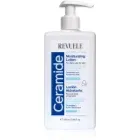
VivierNightly Age-Defying MoisturizerYOUR PRODUCTRevueleCeramide Moisturizing Lotion3W ClinicCollagen White Brightening EmulsionKaneboFreshel Moisture Emulsion N
Match—56%55%55%
Price$116.00$3.87−$112.13$22.90−$93.10$27.90−$88.10
Shared key ingredients—4 of 114 of 113 of 11
Key difference—Chondrus Crispus ExtractNiacinamideNiacinamide
Irritancy High Low Medium Medium
Drying alcohol——— Contains drying alcohol
View product Shop Shop Shop

More alternatives: Macro Natural Vitamin E CreamMEDI-PEEL Derma Maison Collagen Firming Massage Cream

Cheaper alternatives? See how this stacks up against similar formulas.
We compare ingredient profiles across our catalog — pick the closest match for your budget.
Open dupe finder

Sources cited in this review

Every concentration estimate and effectiveness label is anchored to one of these 32 studies and safety reviews.

  1. 1
  2. 2
  3. 3
  4. 4
  5. 5
  6. 6
    Vitamin E in dermatologyncbi.nlm.nih.gov
Vivier Nightly Age-Defying Moisturizer
VivierNightly Age-Defying Moisturizer

Affiliate links · As an Amazon Associate, WIMJ earns from qualifying purchases.

As an Amazon Associate, WIMJ earns from qualifying purchases.