Works for
2 of 2 advertised claims delivered
Anti-aging3 ingredients credited for this claimStrong support
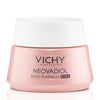
“Targeting post-menopausal concerns, the rosy eye cream improves firmness, minimises dark circles, smooths wrinkles and fine lines, and reduces eye bags.”
This product can help reduce and prevent fine lines and wrinkles, improve skin elasticity and firmness because it contains adenosine.
Keep in mind that it typically takes at least 6 weeks to notice any results because the changes that are needed to improve fine lines and elasticity happen in the deeper layers of the skin. No topical anti-aging product can “erase” wrinkles or fully reverse signs of aging.
Moisturizing16 ingredients credited for this claimGood support
“Targeting post-menopausal concerns, the rosy eye cream improves firmness, minimises dark circles, smooths wrinkles and fine lines, and reduces eye bags.”
This product can help improve hydration of the skin with the two types of ingredients.
The first type is called “humectants”:
these ingredients help attract water.
When humectants are on the surface of the skin, they “pull in” the moisture from the outside environment, or from
within deeper layers of the skin. The following ingredients in this product do the job:
calcium pca, glycerin.
This product also contains ingredients called “occlusives”. They help reduce the speed with which our skin loses moisture to the outside environment. These ingredients also help soften the upper layer of the skin, so it feels less tight and nicer to the touch. The following ingredients in this product do the job: beeswax, butyrospermum parkii butter.
Can it cause trouble?
Irritancy1 strong irritant: Rosa gallica flower extractMedium risk
Comedogenic2 ingredients rated 2 or more on the 0–5 pore-clogging scale2 flagged


User reviews
Be the first — your take helps the next person decide.
Ingredients
Filter by role to see what each ingredient is doing.
Water~45–55%
Dimethicone~6.5–7.9%
- Irritation risk
- Low
A silicone that helps to reduce water loss from the surface of the skin. Can temporarily "fill in" lines and wrinkles, absorb oil, and create a nice product finish
More about DimethiconeHydrogenated polyisobutene~4.3–5.3%
- Irritation risk
- Low
Used to improve the product consistency and soften the upper layer of the skin
More about Hydrogenated polyisobuteneGlycerin~3.1–3.8%
- Irritation risk
- Low
One of the best moisturizing ingredients. Naturally present in skin. It attracts water to the upper layer of the skin working as a humectant
More about GlycerinCetyl alcohol~2.4–2.9%
- Irritation risk
- Low
A non-drying alcohol that works to soften the skin and stabilize product formulations helping oil and water mix together
More about Cetyl alcoholSilica~2.2–2.7%
Glyceryl stearate~1.7–2.1%
- Irritation risk
- Low
An emollient that softens the skin and forms a protective layer on its surface. Helps water and oil mix together
More about Glyceryl stearatePentylene glycol~1.5–1.9%
- Irritation risk
- Medium
Used to preserve products, dissolve other ingredients and create a nice product texture
More about Pentylene glycolPeg-40 stearate~1.2–1.5%
Butyrospermum parkii butter~1–1.3%
- Irritation risk
- Low
- Comedogenicity
- 3/5
A great moisturising ingredient that softens the skin and reduces water loss from its upper layer. It also can be helpful in protecting skin from free radicals
More about Butyrospermum parkii butterCera alba~0.95–1.2%
- Irritation risk
- Medium
Forms a protective barrier that holds water and keeps dry skin hydrated. Keeps an emulsion from separating into its oil and liquid components, and increases the thickness of a product. Can be an allergen
More about Cera albaBeeswax~0.65–1%
- Irritation risk
- Low
Forms a protective barrier that holds water and keeps dry skin hydrated. Keeps an emulsion from separating into its oil and liquid components, and increases the thickness of a product. Can be an allergen
More about BeeswaxRosa gallica flower extract~0.5–0.75%
- Irritation risk
- High
Tin oxide~0.75–1.15%
- Irritation risk
- Low
A colorant that can add a pearl-like appearance to the formulation
More about Tin oxideStearic acid~0.6–0.85%
- Irritation risk
- Low
Helps oil and water mix together and works as an emollient
More about Stearic acidSorbitan tristearate~0.45–0.7%
- Irritation risk
- Medium
Helps oil and water mix together
More about Sorbitan tristearateSorbitol~0.45–0.65%
- Irritation risk
- Low
Helps attract water to the upper layer of the skin and improves the product texture
More about SorbitolCalcium pca~0.35–0.65%
- Irritation risk
- Low
Helps attract water to the upper layer of the skin
More about Calcium pcaCaffeine~0.3–0.6%
- Irritation risk
- Medium
Might be helpful in neutralizing free radicals. Can have a dehydration effect that might somewhat decrease the look of puffy eyes
More about CaffeineEscin~0.3–0.55%
- Irritation risk
- High
A compound obtained from horse chestnut. It is claimed that this chemical can improve circulation, but there is no evidence available that it works in skin
More about EscinSodium dextran sulfate~0.3–0.55%
- Irritation risk
- Low
Myristic acid~0.3–0.6%
- Irritation risk
- Medium
- Comedogenicity
- 3/5
Helps oil and water mix together. Could be comedogenic
More about Myristic acidPalmitic acid~0.3–0.55%
- Irritation risk
- Low
An emollient that is naturally present in skin and helps soften it
More about Palmitic acidAdenosine~0.25–0.45%
- Irritation risk
- Low
Might help improve cell turnover and reduce inflammation in skin. One study shows that the ingredients might be able to help reduce dynamic wrinkles (for example, in the corners of the eyes or on the forehead)
More about AdenosinePoloxamer 338~0.25–0.5%
Propylene glycol~0.25–0.45%
- Irritation risk
- High
Helps oil and water mix together and can enhance the penetration of other ingredients into the skin. It can be irritating
More about Propylene glycolCaprylyl glycol~0.25–0.5%
- Irritation risk
- Medium
Helps preserve products and creates a nice product texture
More about Caprylyl glycolCitric acid~0.2–0.4%
- Irritation risk
- Medium
Can work as an exfoliant but is typically used to adjust the product pH
More about Citric acidSynthetic fluorphlogopite~0.25–0.45%
- Irritation risk
- Low
A mineral that is used as an optical filter (makes the skin looks nicer through light reflection) and to improve the texture of cosmetic products
More about Synthetic fluorphlogopiteTocopherol~0.2–0.4%
- Irritation risk
- Low
Pure form of vitamin E. Can help moisturise and protect the skin from free radicals. Often used to help stabilise other ingredients or the formula itself
More about TocopherolTocopheryl acetate~0.2–0.4%
- Irritation risk
- Medium
A more stable but less bio-available form of vitamin E compared to Tocopherol. Might help moisturize and protect the skin from free radicals, but mostly used in low concentrations to stabilize other ingredients.
More about Tocopheryl acetatePhenoxyethanol~0.15–0.3%
- Irritation risk
- Low
A preservative. It helps prevent bacterial growth in cosmetic products
More about PhenoxyethanolCi 77491~0.15–0.3%
- Irritation risk
- Low
A red colorant made of iron oxide. Typically is not irritating
More about Ci 77491Iron oxides~0.1–0.2%
- Irritation risk
- Low
An umbrella term for the following three colorants: CI 77491, CI 77492, CI 77499. They might be able to offer some protection against visible light, but the degree of the protection is not clear
More about Iron oxidesCi 77891~0.1–0.2%
- Irritation risk
- Low
Titanium dioxide~0.1–0.2%
- Irritation risk
- Low
Works as a UV filter when used in high concentrations. It is photostable and is effective mostly against the UVB light, with some protection in the UVA range. In small concentrations, used for its ability to improve the color of cosmetic products. Is usually well tolerated by the skin
More about Titanium dioxideIngredient list view
Water, Dimethicone, Hydrogenated polyisobutene, Glycerin, Cetyl alcohol, Silica, Glyceryl stearate, Pentylene glycol, Peg-40 stearate, Butyrospermum parkii butter, Cera alba, Beeswax, Rosa gallica flower extract, Tin oxide, Stearic acid, Sorbitan tristearate, Sorbitol, Calcium pca, Caffeine, Escin, Sodium dextran sulfate, Myristic acid, Palmitic acid, Adenosine, Poloxamer 338, Propylene glycol, Caprylyl glycol, Citric acid, Synthetic fluorphlogopite, Tocopherol, Tocopheryl acetate, Phenoxyethanol, Ci 77491, Iron oxides, Ci 77891, Titanium dioxide
Compare prices
Retailers ranked by price — lowest first.

Worth comparing, line by line.
Match % combines shared ingredients, the first five ingredients, shared actives and hero ingredients, irritancy (lower counts in the alternative's favour), texture and body area. Only products in the same routine step are compared.
| VichyNeovadiol Rose Platinium EyesYOUR PRODUCT | Kiehl'sPowerful Wrinkle Reducing Eye Cream | L'Oréal ParisL'Oréal Paris Revitalift Cicacrem Anti-Wrinkle Eye Cream | DECLEORPeony Anti-Ageing Eye Cream Absolute | |
|---|---|---|---|---|
| Match | — | 61% | 56% | 53% |
| Price | $37.02 | $39.99+$2.97 | $17.17−$19.85 | $93.86+$56.84 |
| Shared key ingredients | — | 6 of 9 | 7 of 9 | 7 of 9 |
| Key difference | — | Hydroxypalmitoyl Sphinganine | Retinyl Palmitate | Capryloyl Salicylic Acid |
| Irritancy | Medium | Low | Medium | Medium |
| Drying alcohol | — | — | — | Contains drying alcohol |
| View product | Shop | Shop | Shop |


Sources cited in this review
Every concentration estimate and effectiveness label is anchored to one of these 14 studies and safety reviews.
- 1
- 2Final Report on the Safety Assessment of Dimethicone Copolyoljournals.sagepub.com
- 3
- 4
- 5
- 6Safety Assessment of Tin(IV) Oxide as Used in Cosmeticscir-safety.org

Affiliate links · As an Amazon Associate, WIMJ earns from qualifying purchases.