Works for
2 of 2 advertised claims delivered
Anti-aging4 ingredients credited for this claimStrong support
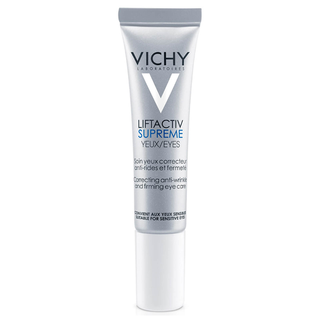
“This fragrance-free eye cream is designed to correct the look of multiple signs of aging around the eyes, where the skin is thinnest and most sensitive.”
This product can help reduce and prevent fine lines and wrinkles, improve skin elasticity and firmness because it contains adenosine.
Keep in mind that it typically takes at least 6 weeks to notice any results because the changes that are needed to improve fine lines and elasticity happen in the deeper layers of the skin. No topical anti-aging product can “erase” wrinkles or fully reverse signs of aging.
Moisturizing13 ingredients credited for this claimGood support
“Leaves skin feeling firmer, hydrated and smoothed.”
This product can help improve hydration of the skin with the two types of ingredients.
The first type is called “humectants”:
these ingredients help attract water.
When humectants are on the surface of the skin, they “pull in” the moisture from the outside environment, or from
within deeper layers of the skin. The following ingredients in this product do the job:
glycerin, rhamnose.
This product also contains ingredients called “occlusives”. They help reduce the speed with which our skin loses moisture to the outside environment. These ingredients also help soften the upper layer of the skin, so it feels less tight and nicer to the touch. The following ingredients in this product do the job: cera alba, dimethicone.
Can it cause trouble?
Irritancy11 flagged ingredientsLow risk
ComedogenicClean of flagged comedogenic ingredientsNone flagged

User reviews
Be the first — your take helps the next person decide.
Ingredients
Filter by role to see what each ingredient is doing.
Water~45–55%
Dimethicone~6.5–7.9%
- Irritation risk
- Low
A silicone that helps to reduce water loss from the surface of the skin. Can temporarily "fill in" lines and wrinkles, absorb oil, and create a nice product finish
More about DimethiconeHydrogenated polyisobutene~4.5–5.5%
- Irritation risk
- Low
Used to improve the product consistency and soften the upper layer of the skin
More about Hydrogenated polyisobuteneGlycerin~3.1–3.8%
- Irritation risk
- Low
One of the best moisturizing ingredients. Naturally present in skin. It attracts water to the upper layer of the skin working as a humectant
More about GlycerinRhamnose~2.3–2.9%
- Irritation risk
- Low
Helps oil and water mix together. It also helps attract water to the upper layer of the skin
More about RhamnoseCetyl alcohol~2–2.4%
- Irritation risk
- Low
A non-drying alcohol that works to soften the skin and stabilize product formulations helping oil and water mix together
More about Cetyl alcoholGlyceryl stearate~1.7–2.1%
- Irritation risk
- Low
An emollient that softens the skin and forms a protective layer on its surface. Helps water and oil mix together
More about Glyceryl stearatePolymethyl methacrylate~1.5–1.9%
- Irritation risk
- Low
Is used to enhance product texture and can help to optically mask skin imperfections
More about Polymethyl methacrylatePeg-40 stearate~1.2–1.5%
Cera alba~1.1–1.4%
- Irritation risk
- Medium
Forms a protective barrier that holds water and keeps dry skin hydrated. Keeps an emulsion from separating into its oil and liquid components, and increases the thickness of a product. Can be an allergen
More about Cera albaPentylene glycol~0.75–1.15%
- Irritation risk
- Medium
Used to preserve products, dissolve other ingredients and create a nice product texture
More about Pentylene glycolStearic acid~0.7–1.05%
- Irritation risk
- Low
Helps oil and water mix together and works as an emollient
More about Stearic acidStearyl alcohol~0.6–0.9%
- Irritation risk
- Low
An emollient that helps soften the skin
More about Stearyl alcoholSorbitan tristearate~0.5–0.75%
- Irritation risk
- Medium
Helps oil and water mix together
More about Sorbitan tristearateTriethanolamine~0.45–0.65%
- Irritation risk
- Medium
Used to adjust pH of the product and can help improve the product's smell
More about TriethanolamineCaffeine~0.4–0.65%
- Irritation risk
- Medium
Might be helpful in neutralizing free radicals. Can have a dehydration effect that might somewhat decrease the look of puffy eyes
More about CaffeineSodium dextran sulfate~0.35–0.65%
- Irritation risk
- Low
Myristyl alcohol~0.3–0.6%
- Irritation risk
- High
Helps to stabilize the product formulation while softening the upper layer of the skin. Can be irritating
More about Myristyl alcoholEscin~0.25–0.45%
- Irritation risk
- High
A compound obtained from horse chestnut. It is claimed that this chemical can improve circulation, but there is no evidence available that it works in skin
More about EscinPalmitic acid~0.3–0.55%
- Irritation risk
- Low
An emollient that is naturally present in skin and helps soften it
More about Palmitic acidPhenoxyethanol~0.2–0.35%
- Irritation risk
- Low
A preservative. It helps prevent bacterial growth in cosmetic products
More about PhenoxyethanolAdenosine~0.2–0.35%
- Irritation risk
- Low
Might help improve cell turnover and reduce inflammation in skin. One study shows that the ingredients might be able to help reduce dynamic wrinkles (for example, in the corners of the eyes or on the forehead)
More about AdenosineMagnesium ascorbyl phosphate~0.15–0.3%
- Irritation risk
- Medium
A derivative of vitamin C that is more stable, but less bioavailable than the pure form of vitamin C. It does not penetrate the skin well, but has been shown to convert to pure vitamin C once in skin. It can be helpful in stimulating collagen production and lightening the skin tone, but the required concentration is likely to be very high
More about Magnesium ascorbyl phosphateTocopheryl acetate~0.15–0.3%
- Irritation risk
- Medium
A more stable but less bio-available form of vitamin E compared to Tocopherol. Might help moisturize and protect the skin from free radicals, but mostly used in low concentrations to stabilize other ingredients.
More about Tocopheryl acetatePoloxamer 338~0.15–0.25%
Ascorbyl glucoside~0.1–0.15%
- Irritation risk
- Medium
A vitamin C derivative that is more stable but less potent than pure form of vitamin C. Has a potential to boost collagen production, nutralise free radicals and reduce hyperpigmentation, but the required concentration is likely to be much higher than for the pure form of vitamin C, limiting the ingredient's effectiveness in products
More about Ascorbyl glucosideCaprylyl glycol~0.1–0.2%
- Irritation risk
- Medium
Helps preserve products and creates a nice product texture
More about Caprylyl glycolIngredient list view
Water, Dimethicone, Hydrogenated polyisobutene, Glycerin, Rhamnose, Cetyl alcohol, Glyceryl stearate, Polymethyl methacrylate, Peg-40 stearate, Cera alba, Pentylene glycol, Stearic acid, Stearyl alcohol, Sorbitan tristearate, Triethanolamine, Caffeine, Sodium dextran sulfate, Myristyl alcohol, Escin, Palmitic acid, Phenoxyethanol, Adenosine, Magnesium ascorbyl phosphate, Tocopheryl acetate, Poloxamer 338, Ascorbyl glucoside, Caprylyl glycol
Compare prices
Retailers ranked by price — lowest first.

Worth comparing, line by line.
Match % combines shared ingredients, the first five ingredients, shared actives and hero ingredients, irritancy (lower counts in the alternative's favour), texture and body area. Only products in the same routine step are compared.
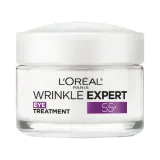
| VichyLiftActiv EyesYOUR PRODUCT | L'Oréal Paris55+ Anti-Wrinkle Eye Treatment | Kiehl'sPowerful Wrinkle Reducing Eye Cream | Baxter of CaliforniaUnder Eye Complex | |
|---|---|---|---|---|
| Match | — | 61% | 60% | 60% |
| Price | $27.00 | $9.99−$17.01 | $39.99+$12.99 | $28.00+$1.00 |
| Shared key ingredients | — | 3 of 5 | 4 of 5 | 4 of 5 |
| Key difference | — | Capryloyl Salicylic Acid | Hydroxypalmitoyl Sphinganine | Hydroxypalmitoyl Sphinganine |
| Irritancy | Low | Low | Low | Low |
| Drying alcohol | — | — | — | — |
| View product | Shop | Shop | Shop |


Sources cited in this review
Every concentration estimate and effectiveness label is anchored to one of these 14 studies and safety reviews.
- 1
- 2Final Report on the Safety Assessment of Dimethicone Copolyoljournals.sagepub.com
- 3
- 4
- 5Potentially beneficial effects of rhamnose on skin ageing: an in vitro and in vivo studypubmed.ncbi.nlm.nih.gov
- 6

Affiliate links · As an Amazon Associate, WIMJ earns from qualifying purchases.