Works for:
based on ingredients and %- Moisturizing
- Anti-aging
Can it cause trouble?
- Irritation risk: medium
- Comedogenic risk ingredients: 0
Key actives


Works for
Anti-aging
This product can help reduce and prevent fine lines and wrinkles, improve skin elasticity and firmness because it contains adenosine.
Keep in mind that it typically takes at least 6 weeks to notice any results because the changes that are needed to improve fine lines and elasticity happen in the deeper layers of the skin. No topical anti-aging product can “erase” wrinkles or fully reverse signs of aging.
Might help improve cell turnover and reduce inflammation in skin. One study shows that the ingredients might be able to help reduce dynamic wrinkles (for example, in the corners of the eyes or on the forehead)
Is proven to be effective in reducing blemishes, evening out skin tone and helping to improve lines and wrinkles. It helps the skin to repair sun damage, calm down inflammation and keep maintain good levels of moisture. The concentration of about 2% is effective for supporting the skin barrier and evening out the skin tone. Concentration of 4-6% is better for helping with acne and balancing the sebum production
A vitamin C derivative. Studies show that is might be effective in reducing hyperpigmentation, but there are no studies confirming that it is effectively converted into the bioavailable form of Vitamin C in skin. It is not clear how this derivative compares in effectiveness to the topical application of bioavailable form of vitamin C (L-ascorbic acid)
Moisturizing
What does the product description say?
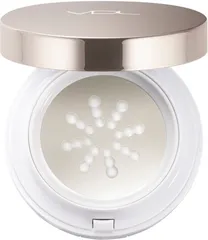
Lumilayer Metal Cushion Primer, with VDL's patented "metal release technology" that disperses the freshest primer that hydrates and smoothes skin for the perfect canvas.
Source: Ulta
This product can help improve hydration of the skin with the two types of ingredients.
The first type is called “humectants”:
these ingredients help attract water.
When humectants are on the surface of the skin, they “pull in” the moisture from the outside environment, or from
within deeper layers of the skin. The following ingredients in this product do the job:
glycerin, butylene glycol.
This product also contains ingredients called “occlusives”. They help reduce the speed with which our skin loses moisture to the outside environment. These ingredients also help soften the upper layer of the skin, so it feels less tight and nicer to the touch. The following ingredients in this product do the job: peg-10 dimethicone, cyclopentasiloxane.
The following ingredients in this product are especially good for supporting the skin barrier and helping with the hydration level: panthenol
One of the best moisturizing ingredients. Naturally present in skin. It attracts water to the upper layer of the skin working as a humectant
A silicone that works to soften the upper layer of the skin and reduce its water loss
Helps attract water to the upper layer of the skin and can help improve skin barrier function
Might help improve cell turnover and reduce inflammation in skin. One study shows that the ingredients might be able to help reduce dynamic wrinkles (for example, in the corners of the eyes or on the forehead)
A silicone that helps improve the product texture and spreadability. Can absorb oil creating a short-term mattifying effect on the skin
Used to create a thicker product texture. Helps soften the upper layer of the skin and might be able to prevent moisture loss from its surface
A silicone that serves as an emollient. Helps create a nice non-greasy feels
Used to create a nice product texture and help delivery of other ingredients. Might be somewhat helpful in attracting water to the upper layer of the skin
Consists of 95% calcium carbonate that does not have any effect on the skin. The remaining 5% can include compounds that can help neutralize free radicals and support skin barrier function
Is proven to be effective in reducing blemishes, evening out skin tone and helping to improve lines and wrinkles. It helps the skin to repair sun damage, calm down inflammation and keep maintain good levels of moisture. The concentration of about 2% is effective for supporting the skin barrier and evening out the skin tone. Concentration of 4-6% is better for helping with acne and balancing the sebum production
A vitamin C derivative. Studies show that is might be effective in reducing hyperpigmentation, but there are no studies confirming that it is effectively converted into the bioavailable form of Vitamin C in skin. It is not clear how this derivative compares in effectiveness to the topical application of bioavailable form of vitamin C (L-ascorbic acid)
Helps oil and water mix together and works as an emollient
How honest is this product?
| Promise | Can it deliver? |
|---|---|
| Moisturizing |
Total Promises Fulfilled score: 100/100.
We receive a small commission for purchases made through these links at no cost for you. Thank you for your support! Learn more
Potential irritants
Comedogenic ingredients
No comedogenic ingredients detected
User reviews (0)
Averages from community submissions.
No reviews yet for this product.
Be the first to share your experience!
Tried this product?
Help capture what the ingredient list can't—texture, finish, pilling, scent, and more. Answer what you can, skip the rest.
Takes ~30 seconds.
Reviews are shown in aggregate. No personal details.
| Product | Similarity | Price | Irritancy |
|---|---|---|---|
 VDL Lumilayer Metal Cushion Primer | Current | - | |
Peter Thomas Roth Skin To Die For Redness-Reducing Treatment Primer | 79% | - | |
Elizavecca Skin Liar Primer | 77% | ≈ $7.68 | |
 I Heart Revolution Tasty Watermelon Serum Primer | 72% | ≈ $13.35 | |
REVOLUTION SKINCARE I Heart Revolution Tasty Watermelon Serum Primer | 72% | ≈ $13.35 | |
 NEOGEN X SUR.MEDIC Surmedic Azulene Mild UV Tone-Up Sun Primer | 70% | $19.82 |
Key Actives
Is proven to be effective in reducing blemishes, evening out skin tone and helping to improve lines and wrinkles. It helps the skin to repair sun damage, calm down inflammation and keep maintain good levels of moisture. The concentration of about 2% is effective for supporting the skin barrier and evening out the skin tone. Concentration of 4-6% is better for helping with acne and balancing the sebum production
Helps attract water to the upper layer of the skin and can help improve skin barrier function
Might help improve cell turnover and reduce inflammation in skin. One study shows that the ingredients might be able to help reduce dynamic wrinkles (for example, in the corners of the eyes or on the forehead)
A silicone that helps improve the product texture and spreadability. Can absorb oil creating a short-term mattifying effect on the skin
A silicone that works to soften the upper layer of the skin and reduce its water loss
Works as a UV filter when used in high concentrations. It is photostable and is effective mostly against the UVB light, with some protection in the UVA range. In small concentrations, used for its ability to improve the color of cosmetic products. Is usually well tolerated by the skin
One of the best moisturizing ingredients. Naturally present in skin. It attracts water to the upper layer of the skin working as a humectant
Potential irritants
An aromatic blend of unspecified and possibly irritating ingredients
A more stable but less bio-available form of vitamin E compared to Tocopherol. Might help moisturize and protect the skin from free radicals, but mostly used in low concentrations to stabilize other ingredients.
A vitamin C derivative. Studies show that is might be effective in reducing hyperpigmentation, but there are no studies confirming that it is effectively converted into the bioavailable form of Vitamin C in skin. It is not clear how this derivative compares in effectiveness to the topical application of bioavailable form of vitamin C (L-ascorbic acid)
Comedogenic ingredients
We couldn't find any comedogenic ingredients in this product
All ingredients
A silicone that helps improve the product texture and spreadability. Can absorb oil creating a short-term mattifying effect on the skin
A silicone that serves as an emollient. Helps create a nice non-greasy feels
Used to create a nice product texture and help delivery of other ingredients. Might be somewhat helpful in attracting water to the upper layer of the skin
A mineral that is used as an optical filter (makes the skin looks nicer through light reflection) and to improve the texture of cosmetic products
A silicone that works to soften the upper layer of the skin and reduce its water loss
Works as a UV filter when used in high concentrations. It is photostable and is effective mostly against the UVB light, with some protection in the UVA range. In small concentrations, used for its ability to improve the color of cosmetic products. Is usually well tolerated by the skin
Is proven to be effective in reducing blemishes, evening out skin tone and helping to improve lines and wrinkles. It helps the skin to repair sun damage, calm down inflammation and keep maintain good levels of moisture. The concentration of about 2% is effective for supporting the skin barrier and evening out the skin tone. Concentration of 4-6% is better for helping with acne and balancing the sebum production
One of the best moisturizing ingredients. Naturally present in skin. It attracts water to the upper layer of the skin working as a humectant
Helps to dissolve other ingredients in a formulation. Slows down the rate of product drying
Used to create a thicker product texture. Helps soften the upper layer of the skin and might be able to prevent moisture loss from its surface
Helps attract water to the upper layer of the skin and can help improve skin barrier function
A type of clay that is used to thicken the product consistency
A preservative. It helps prevent bacterial growth in cosmetic products
An aromatic blend of unspecified and possibly irritating ingredients
A more stable but less bio-available form of vitamin E compared to Tocopherol. Might help moisturize and protect the skin from free radicals, but mostly used in low concentrations to stabilize other ingredients.
Might help improve cell turnover and reduce inflammation in skin. One study shows that the ingredients might be able to help reduce dynamic wrinkles (for example, in the corners of the eyes or on the forehead)
A colorant that can add a pearl-like appearance to the formulation
A vitamin C derivative. Studies show that is might be effective in reducing hyperpigmentation, but there are no studies confirming that it is effectively converted into the bioavailable form of Vitamin C in skin. It is not clear how this derivative compares in effectiveness to the topical application of bioavailable form of vitamin C (L-ascorbic acid)
Consists of 95% calcium carbonate that does not have any effect on the skin. The remaining 5% can include compounds that can help neutralize free radicals and support skin barrier function
Ingredient list view
Water, Cyclopentasiloxane, Cyclohexasiloxane, Neopentyl glycol diethylhexanoate, Butylene glycol, Synthetic fluorphlogopite, Peg-10 dimethicone, Titanium dioxide, Ci 77891, Niacinamide, Glycerin, Dipropylene glycol, Magnesium sulfate, Dimethicone crosspolymer, Sorbitan sesquiisostearate, Panthenol, 2-hexanol, Disteardimonium hectorite, Phenoxyethanol, Distearyldimonium chloride, Parfum, Stearic acid, Tocopheryl acetate, Adenosine, Tin oxide, Ascorbyl tetraisopalmitate, Pearl powder
- Niacinamide - mechanisms of action and its topical use in dermatology
- Gehring, W. (2004). Nicotinic acid/niacinamide and the skin. Journal of Cosmetic Dermatology, 3(2), 88–93. doi:10.1111/j.1473-2130.2004.00115.x
- Glycerol and the skin: holistic approach to its origin and functions
- Safety Assessment of Magnesium Sulfate as Used in Cosmetics
- Skin moisturizing effects of panthenol-based formulations
- Safety Assessment of Panthenol, Pantothenic Acid, and Derivatives as Used in Cosmetics
- Evaluation of anti-wrinkle efficacy of adenosine-containing products using the FOITS technique
- Safety Assessment of Tin(IV) Oxide as Used in Cosmetics
- Assessment of penetration of Ascorbyl Tetraisopalmitate into biological membranes by molecular dynamics
- Stability evaluation of tocopheryl acetate and ascorbyl tetraisopalmitate in isolation and incorporated in cosmetic formulations using thermal analysis
- A new lipophilic pro-vitamin C, tetra-isopalmitoyl ascorbic acid (VC-IP), prevents UV-induced skin pigmentation through its anti-oxidative properties
- New lipophilic pro-vitamin C, tetra-isopalmitoyl ascorbic acid (VC-IP), suppresses senile lentigo through controlling of melanocytes-keratinocytes interaction
- Mother of pearl: The power of pearl powder