Works for
1 of 1 advertised claim delivered
Moisturizing10 ingredients credited for this claimStrong support
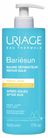
“Its formula Soothes immediately glycyrrhetinate and Uriage Thermal Water intensely soothe after sun exposure.Intensely hydrated enriched with hydroprotective aquaspongins, the balm provides intense protection against drying.Prolongs the tan the tan is prolonged and sublimated thanks to a restructured skin.Its creamy and melting texture, pleasantly scented, guarantees a renewed pleasure of use with each application.Tested under dermatological control.Made in France.”
This product can help improve hydration of the skin with the two types of ingredients.
The first type is called “humectants”:
these ingredients help attract water.
When humectants are on the surface of the skin, they “pull in” the moisture from the outside environment, or from
within deeper layers of the skin. The following ingredients in this product do the job:
glycerin, glucose.
This product also contains ingredients called “occlusives”. They help reduce the speed with which our skin loses moisture to the outside environment. These ingredients also help soften the upper layer of the skin, so it feels less tight and nicer to the touch. The following ingredients in this product do the job: butyrospermum parkii butter, dimethicone.
The following ingredients in this product are especially good for supporting the skin barrier and helping with the hydration level: paraffinum liquidum
Anti-oxidationNot advertised by the brand · 4 ingredients credited for this claimStrong support
This product contains antioxidants (glycyrrhetinic acid) that can help neutralize free radicals in skin. By doing so, they can lessen the damage the skin gets from the UV light (sun).
Evens skin toneNot advertised by the brand · 2 ingredients credited for this claimModerate support
The following ingredient (ingredients) in this product might be helpful, but there is no evidence to confirm that it actually works: glycyrrhetinic acid.
Anti-agingNot advertised by the brand · 2 ingredients credited for this claimModerate support
This product contains glycyrrhetinic acid. This ingredient help neutralize free radicals in skin. By doing so, they might be able to prevent early signs of aging (like fine lines and wrinkles), at least to some extent. These ingredients will not be able to "reverse" signs of aging.
Can it cause trouble?
Irritancy1 strong irritant: ParfumMedium risk
Comedogenic1 ingredient rated 2 or more on the 0–5 pore-clogging scale1 flagged


User reviews
Be the first — your take helps the next person decide.
Ingredients
Filter by role to see what each ingredient is doing.
Water~40–60%
Paraffinum liquidum~6.2–9.3%
- Irritation risk
- Low
Mineral oil. One of the most effective and well studied occlusive and emollient moisturizing ingredients. Helps reduce moisture loss in skin and repair skin barrier function
More about Paraffinum liquidumButyrospermum parkii butter~3.8–5.7%
- Irritation risk
- Low
- Comedogenicity
- 3/5
A great moisturising ingredient that softens the skin and reduces water loss from its upper layer. It also can be helpful in protecting skin from free radicals
More about Butyrospermum parkii butterGlycerin~2.7–4%
- Irritation risk
- Low
One of the best moisturizing ingredients. Naturally present in skin. It attracts water to the upper layer of the skin working as a humectant
More about GlycerinPolysorbate 60~2–3.1%
Sorbitan stearate~1.7–2.5%
Cetyl palmitate~1.4–2.2%
- Irritation risk
- Low
An emollient that helps soften the skin and is used to improve product texture and stability
More about Cetyl palmitateGlyceryl stearate~1.2–1.8%
- Irritation risk
- Low
An emollient that softens the skin and forms a protective layer on its surface. Helps water and oil mix together
More about Glyceryl stearateHydrogenated polydecene~1–1.45%
- Irritation risk
- Low
Helps to soften the upper layer of the skin and create a nice product texture
More about Hydrogenated polydecenePeg-100 stearate~0.9–1.35%
- Irritation risk
- Low
Helps oil and water mix togehter and creates a nice product texture
More about Peg-100 stearatePhenoxyethanol~0.5–1%
- Irritation risk
- Low
A preservative. It helps prevent bacterial growth in cosmetic products
More about PhenoxyethanolAcrylates/c10-30 alkyl acrylate crosspolymer~0.45–1%
- Irritation risk
- Medium
Maintains the texture of skincare products. Allows the product to spread evenly. Helps oil and water mix together
More about Acrylates/c10-30 alkyl acrylate crosspolymerGlucose~0.35–0.85%
- Irritation risk
- Low
Helps attract water to the upper layer of the skin. Could be helpful in restoring the skin barrier function
More about GlucoseParfum~0.2–0.75%
- Irritation risk
- High
An aromatic blend of unspecified and possibly irritating ingredients
More about ParfumTriethanolamine~0.15–0.7%
- Irritation risk
- Medium
Used to adjust pH of the product and can help improve the product's smell
More about TriethanolamineGlycyrrhetinic acid~0.15–0.5%
- Irritation risk
- Medium
Active compound of licorice root. Works to calm down inflammation, as an anti-oxidant, and might be helpful in lightening the skin and reducing hyperpigmentation
More about Glycyrrhetinic acidDimethicone~0.15–0.6%
- Irritation risk
- Low
A silicone that helps to reduce water loss from the surface of the skin. Can temporarily "fill in" lines and wrinkles, absorb oil, and create a nice product finish
More about DimethiconeTocopheryl acetate~0.1–0.35%
- Irritation risk
- Medium
A more stable but less bio-available form of vitamin E compared to Tocopherol. Might help moisturize and protect the skin from free radicals, but mostly used in low concentrations to stabilize other ingredients.
More about Tocopheryl acetateO-cymen-5-ol~0.05–0.1%
Trehalose~0.05–0.15%
- Irritation risk
- Low
A sugar that attracts water to the upper layer of the skin
More about TrehaloseAscorbyl tetraisopalmitate~0.05–0.25%
- Irritation risk
- Medium
A vitamin C derivative. Studies show that is might be effective in reducing hyperpigmentation, but there are no studies confirming that it is effectively converted into the bioavailable form of Vitamin C in skin. It is not clear how this derivative compares in effectiveness to the topical application of bioavailable form of vitamin C (L-ascorbic acid)
More about Ascorbyl tetraisopalmitateIngredient list view
Water, Paraffinum liquidum, Butyrospermum parkii butter, Glycerin, Polysorbate 60, Sorbitan stearate, Cetyl palmitate, Glyceryl stearate, Hydrogenated polydecene, Peg-100 stearate, Phenoxyethanol, Acrylates/c10-30 alkyl acrylate crosspolymer, Glucose, Parfum, Triethanolamine, Glycyrrhetinic acid, Dimethicone, Tocopheryl acetate, O-cymen-5-ol, Trehalose, Ascorbyl tetraisopalmitate
Compare prices
Retailers ranked by price — lowest first.

.png)
Affiliate links · prices updated regularly · As an Amazon Associate, WIMJ earns from qualifying purchases.
Worth comparing, line by line.
Match % combines shared ingredients, the first five ingredients, shared actives and hero ingredients, irritancy (lower counts in the alternative's favour), texture and body area. Only products in the same routine step are compared.
| UriageBariésun After-Sun Repair BalmYOUR PRODUCT | CicaBiafineAnti-Irritations Moisturising Cream | BootsSkin Clear Lotion with niacinamide | BiodermaAtoderm Nutritive | |
|---|---|---|---|---|
| Match | — | 62% | 60% | 60% |
| Price | $9.45 | $17.72+$8.27 | $5.29−$4.16 | $18.99+$9.54 |
| Shared key ingredients | — | 4 of 6 | 4 of 6 | 3 of 6 |
| Key difference | — | Petrolatum | Niacinamide | Caprylic/Capric Triglyceride |
| Irritancy | Medium | Low | Low | Low |
| Drying alcohol | — | — | — | — |
| View product | Shop | Shop | Shop |


Product summary
Judging from the ingredient list, "Uriage - Bariésun After-Sun Repair Balm" works well for improving skin hydration The formulation is based on a combination of good humectants and emollients. Both are needed to increase the skin hydration level. Glycerin and glucose in this product (humectants) attract water molecules to the upper layer of the skin (the water comes from the outside air or from the deeper layers of the skin if the air is dry). Paraffinum liquidum, butyrospermum parkii butter, dimethicone, cetyl palmitate and glyceryl stearate in this product help decrease the water evoporation from the skin, so that it stays hydrated for longer. These ingredients also soften the skin and take away the feeling of tightness and dryness.
This product contains ingredients that could be beneficial, but their concentrations are too low in this formulation: ascorbyl tetraisopalmitateIrritation risk
There are some common irritants in this product, including ingredients that do not have benefits for the skin. We assess the overall irritancy of this moisturizer to be medium. For a detailed overview of all potential irritants: click here
You can see the detailed formula review with the breakdown of all actives in the product and the full ingredient list with estimated concentrations in the tables below.
Price
The product retails from 7.15£ up to 19.16£ in the United Kingdom and for 18.32A$ in Australia.
For a detailed price comparison: click here.
Sources cited in this review
Every concentration estimate and effectiveness label is anchored to one of these 15 studies and safety reviews.
- 1A review on the extensive skin benefits of mineral oilncbi.nlm.nih.gov
- 2
- 3Safety Assessment of Polyene Group as Used in Cosmeticscir-safety.org
- 4
- 5
- 6

Affiliate links · As an Amazon Associate, WIMJ earns from qualifying purchases.