Works for
Anti-agingRetinyl palmitate, Adenosine + 1 moreWorks well
“Anti-aging face serum”
This product can help reduce and prevent fine lines and wrinkles, improve skin elasticity and firmness because it contains adenosine.
These ingredients in the product can also be helpful, even though there is less evidence for their effectiveness: retinyl palmitate.
Keep in mind that it typically takes at least 6 weeks to notice any results because the changes that are needed to improve fine lines and elasticity happen in the deeper layers of the skin. No topical anti-aging product can “erase” wrinkles or fully reverse signs of aging.
MoisturizingGlycerin, Sodium hyaluronate + 9 moreWorks
“• Hyaluronic acid, known for its wide range of benefits, including hydration, regeneration, and plumping effect.”
This product contains good ingredients to attract water to the upper layer of the skin. These ingredients are called "humectants": biosaccharide gum-1, glycerin.
When humectants are on the surface of the skin, they “pull in” the moisture from the outside environment, or from within deeper layers of the skin. If the air is dry, humectants can speed up the moisture loss from the skin. This is why it is a good idea to use another product on top of this one to help "seal in" the moisture (look for ingredients like dimethicone, squalane, oils and butters).
Evens skin toneNot advertised by the brand · Retinyl palmitate, Albizia julibrissin bark extractMay help
The following ingredient (ingredients) in this product might be helpful, but there is no evidence to confirm that it actually works: albizia julibrissin bark extract, retinyl palmitate.
Can it cause trouble?
Irritancy7 strong irritants: Alcohol denat., Retinyl palmitate + 5 more — patch-test recommendedHigh risk
Comedogenic1 ingredient rated 2 or more on the 0–5 pore-clogging scale1 flagged

User reviews
Be the first — your take helps the next person decide.
Ingredients
Filter by role to see what each ingredient is doing.
Water~40–60%
Glycerin~4.3–6.4%
- Irritation risk
- Low
One of the best moisturizing ingredients. Naturally present in skin. It attracts water to the upper layer of the skin working as a humectant
More about GlycerinAlcohol denat.~3.7–5.6%
- Irritation risk
- High
Produces temporary toning effect. Can help dissolve other ingredients or preserve products
More about Alcohol denat.Retinyl palmitate~2.7–4%
- Irritation risk
- High
Three steps removed from the active form of vitamin A - retinoic acid. To have an effect in the skin, it first needs to be converted twice to become the retinoic acid. This means it is less potent than retinol, but could also be less irritating. Once converted to the retinoic acid in the skin, it helps against all signs of aging, improves skin cell turnover and helps fight blemishes and clogged pores. However, in many cosmetic formulations, it is used in a concentration that is too low to have the full effect
More about Retinyl palmitateSodium hyaluronate~2–3%
- Irritation risk
- Low
One of the best moisturizing ingredients. Attracts water into the upper layer of the skin
More about Sodium hyaluronateAlbizia julibrissin bark extract~1.6–2.5%
- Irritation risk
- High
A plant extract that might help to neutralize free radicals in skin. Is claimed to help reduce hyperpigmentation but evidence is missing
More about Albizia julibrissin bark extractCaffeine~1.4–2%
- Irritation risk
- Medium
Might be helpful in neutralizing free radicals. Can have a dehydration effect that might somewhat decrease the look of puffy eyes
More about CaffeineSpirulina platensis extract~1.2–1.8%
- Irritation risk
- Low
- Comedogenicity
- 3/5
An algae extract. Might help to attract water to the upper layer of the skin and have an anti-oxidant effect
More about Spirulina platensis extractDiamond powder~1.2–1.7%
- Irritation risk
- Low
Does not have known skin benefits. Might help create an optical illusion of smoother skin
More about Diamond powderHydrolyzed pearl~0.6–1.4%
- Irritation risk
- Low
Biotin~0.45–1.1%
- Irritation risk
- Low
Might have some moisturising properties. Is not effective when applied topically beyond some moisturizing effect
More about BiotinAdenosine~0.4–0.9%
- Irritation risk
- Low
Might help improve cell turnover and reduce inflammation in skin. One study shows that the ingredients might be able to help reduce dynamic wrinkles (for example, in the corners of the eyes or on the forehead)
More about AdenosineMalic acid~0.35–0.85%
Sodium anisate~0.35–0.75%
Soluble collagen~0.3–0.7%
- Irritation risk
- Low
A typically plant-derived compound that is supposed mimic human collagen. Cannot penetrate the skin barrier so is not particularly useful in skincare products beyond attracting water to the upper layer of the skin
More about Soluble collagenSodium levulinate~0.2–0.8%
Sodium benzoate~0.25–0.5%
Lecithin~0.2–0.8%
- Irritation risk
- Low
Used mostly for creating emulsions - helping oil and water mix together. Helps soften the upper layer of the skin
More about LecithinDarutoside~0.15–0.65%
- Irritation risk
- Low
Glyceryl caprylate~0.2–0.7%
- Irritation risk
- Low
An emollient that can also help water and oil mix together, as well as prevent bacteria growth in products
More about Glyceryl caprylateCyclodextrin~0.15–0.6%
- Irritation risk
- Low
A type of sugar that is used to support delivery of active ingredients and can enhance their penetration into the skin without disrupting the skin's barrier
More about Cyclodextrin1,2-hexanediol~0.15–0.55%
Citric acid~0.15–0.55%
- Irritation risk
- Medium
Can work as an exfoliant but is typically used to adjust the product pH
More about Citric acidLeuconostoc/radish root ferment filtrate~0.15–0.55%
- Irritation risk
- Medium
A preservative that comes from radishes fermented by a bacteria. New research suggests that the preservation properties in the ingredient come from an ammonium salt that is not present naturally in radish root but used in its cultivation. Is problematic because the exact amount of the preservative agents is difficult to determine
More about Leuconostoc/radish root ferment filtrateTocopherol~0.15–0.5%
- Irritation risk
- Low
Pure form of vitamin E. Can help moisturise and protect the skin from free radicals. Often used to help stabilise other ingredients or the formula itself
More about TocopherolBiosaccharide gum-1~0.1–0.5%
- Irritation risk
- Low
Helps attract water to the upper layer of the skin and is claimed to provide a longer-lasting hydration because of its ability to create a water-binding film on the surface of the skin
More about Biosaccharide gum-1Sodium citrate~0.1–0.45%
- Irritation risk
- Medium
Helps to control the skin's pH level. Maintains the skin's natural film of amino-lactic acids and oils. Helps to preserve products
More about Sodium citrateButylene glycol~0.1–0.45%
- Irritation risk
- Low
Used to create a nice product texture and help delivery of other ingredients. Might be somewhat helpful in attracting water to the upper layer of the skin
More about Butylene glycolSodium hydroxide~0.1–0.45%
Sodium polyacrylate starch~0.1–0.4%
- Irritation risk
- Low
Used to create a thicker product consistency
More about Sodium polyacrylate starchChlorphenesin~0.05–0.2%
Hexyl cinnamal~0.05–0.2%
Linalool~0.05–0.15%
Benzyl salicylate~0.05–0.1%
Parfum~0.01–0.05%
- Irritation risk
- High
An aromatic blend of unspecified and possibly irritating ingredients
More about ParfumIngredient list view
Water, Glycerin, Alcohol denat., Retinyl palmitate, Sodium hyaluronate, Albizia julibrissin bark extract, Caffeine, Spirulina platensis extract, Diamond powder, Hydrolyzed pearl, Biotin, Adenosine, Malic acid, Sodium anisate, Soluble collagen, Sodium levulinate, Sodium benzoate, Lecithin, Darutoside, Glyceryl caprylate, Cyclodextrin, 1,2-hexanediol, Citric acid, Leuconostoc/radish root ferment filtrate, Tocopherol, Biosaccharide gum-1, Sodium citrate, Butylene glycol, Sodium hydroxide, Sodium polyacrylate starch, Chlorphenesin, Hexyl cinnamal, Linalool, Benzyl salicylate, Parfum
Compare prices
Retailers ranked by price — lowest first.

Worth comparing, line by line.
Match % combines shared ingredients, the first five ingredients, shared actives and hero ingredients, irritancy (lower counts in the alternative's favour), texture and body area. Only products in the same routine step are compared.
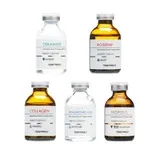
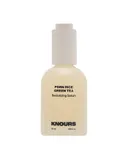
| UltralabAnti-aging face serumYOUR PRODUCT | TONYMOLYInkey Library Ampoule - 6 Types | Thank You FarmerMiracle Age Repair Serum | KnoursPDRN Rice & Green Tea Revitalizing Serum | |
|---|---|---|---|---|
| Match | — | 65% | 64% | 62% |
| Price | — | $15.60 | $43.49 | $26.00 |
| Shared key ingredients | — | 5 of 7 | 5 of 7 | 5 of 7 |
| Key difference | — | Niacinamide | Niacinamide | Niacinamide |
| Irritancy | High | Medium | Medium | Medium |
| Drying alcohol | Contains drying alcohol | — | — | — |
| View product | Shop | Shop | Shop |

More alternatives: AESTURA Ato Barrier 365 Hydro Cera-HA SerumMedicube Glutathione Glow Serum
Product summary
"Ultralab - Anti-aging face serum" is effective for: Anti-aging
This product could be helpful for: Evens skin tone and Moisturizing, but its actives are not the most effective or are not well-studied.
Ingredient callouts
- this product includes a form of Retinoids (vitamin A) - retinyl palmitate 2.70% - 4.00%, but this type of vitamin A is not very effective. It could in theory help with fine lines and wrinkles, but the effect is most likely minimal.
- Adenosine 0.40% - 0.90%. It is a compound that in involved in many biological processes inside the skin cells. According one high-quality clinical trial, topical Adenosine in low concentrations can somewhat help improve "deep wrinkles" - the wrinkles that appear with age in places where our faces are most dynamic (for example, on the forehead or in the corners of the eyes).
- Humectants (biosaccharide gum-1 0.10% - 0.50%, soluble collagen 0.30% - 0.70%, sodium hyaluronate 2.00% - 3.00% and glycerin 4.30% - 6.40%). These ingredients help attract water to the upper layer of the skin and improve the skin hydration.
Sources cited in this review
Every concentration estimate and effectiveness label is anchored to one of these 10 studies and safety reviews.
- 1
- 2Hyaluronic acid: A key molecule in skin agingncbi.nlm.nih.gov
- 3
- 4Phytopharmacological properties of Albizia species: A reviewresearchgate.net
- 5
- 6

Affiliate links · As an Amazon Associate, WIMJ earns from qualifying purchases.