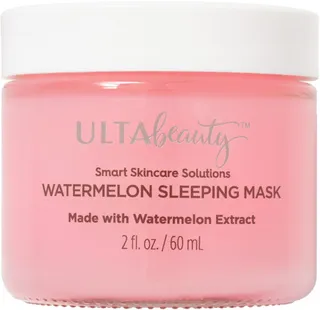
Works for
MoisturizingPanthenol, Glycerin + 13 moreWorks well
“Features Dermatologist Tested Cruelty-free Key Ingredients Watermelon Fruit Extract helps hydrate and revitalize the appearance of skin Aloe Leaf Extract helps keep skin hydrated and visibly plump Vitamin E & Provitamin B5 helps moisturize skin Formulated Without Parabens Sulfates”
This product can help improve hydration of the skin with the two types of ingredients.
The first type is called “humectants”:
these ingredients help attract water.
When humectants are on the surface of the skin, they “pull in” the moisture from the outside environment, or from
within deeper layers of the skin. The following ingredients in this product do the job:
anhydroxylitol, glycerin.
This product also contains ingredients called “occlusives”. They help reduce the speed with which our skin loses moisture to the outside environment. These ingredients also help soften the upper layer of the skin, so it feels less tight and nicer to the touch. The following ingredients in this product do the job: caprylic/capric triglyceride, dimethicone.
The following ingredients in this product are especially good for supporting the skin barrier and helping with the hydration level: panthenol
Can it cause trouble?
Irritancy3 strong irritants: Menthyl lactate, Sclareolide + 1 more — patch-test recommendedHigh risk
Comedogenic1 ingredient rated 2 or more on the 0–5 pore-clogging scale1 flagged

User reviews
Be the first — your take helps the next person decide.
Ingredients
Filter by role to see what each ingredient is doing.
Water~40–60%
Glycerin~4–6%
- Irritation risk
- Low
One of the best moisturizing ingredients. Naturally present in skin. It attracts water to the upper layer of the skin working as a humectant
More about GlycerinCaprylyl methicone~3.7–5.5%
- Irritation risk
- Low
A type of silicone that helps to soften the upper layer of the skin and create a nice product finish on the skin
More about Caprylyl methiconeCyclopentasiloxane~2.8–4.2%
- Irritation risk
- Low
A silicone that helps improve the product texture and spreadability. Can absorb oil creating a short-term mattifying effect on the skin
More about CyclopentasiloxaneCaprylic/capric triglyceride~2.2–3.2%
- Irritation risk
- Medium
A good mix of fatty acids that forms a protective layer on the skin. Improves the shelf life of products. Derived from coconut and glycerin
More about Caprylic/capric triglycerideXylitylglucoside~1.7–2.5%
- Irritation risk
- Low
Helps attract water to the upper layer of the skin and repair the skin barrier function
More about XylitylglucosideButylene glycol~1.5–2.2%
- Irritation risk
- Low
Used to create a nice product texture and help delivery of other ingredients. Might be somewhat helpful in attracting water to the upper layer of the skin
More about Butylene glycolCitrullus lanatus fruit extract~1.3–1.9%
- Irritation risk
- Medium
A plant extract that can contain an antioxidant compound
More about Citrullus lanatus fruit extractAloe barbadensis leaf juice~1.1–1.6%
- Irritation risk
- Medium
Traditionally used to treat sunburns, dermatitis and inflammation, but evidence for its effectiveness is lacking. The extract can contain humectants that help attract water into the skin
More about Aloe barbadensis leaf juiceGlyceryl polyacrylate~0.9–1.4%
- Irritation risk
- Low
Helps to create a nice product texture and spread the product more easily on the skin
More about Glyceryl polyacrylateAnhydroxylitol~0.5–1.2%
- Irritation risk
- Low
Helps attract water to the upper layer of the skin and repair the skin barrir function
More about AnhydroxylitolXylitol~0.4–1%
- Irritation risk
- Low
Helps attract water to the upper layer of the skin and repair the skin barrier function
More about XylitolDimethicone~0.45–1.05%
- Irritation risk
- Low
A silicone that helps to reduce water loss from the surface of the skin. Can temporarily "fill in" lines and wrinkles, absorb oil, and create a nice product finish
More about DimethiconePeg-12 dimethicone/ppg-20 crosspolymer~0.35–0.85%
- Irritation risk
- Low
Helps water and oil mix together
More about Peg-12 dimethicone/ppg-20 crosspolymerSodium hyaluronate~0.35–0.75%
- Irritation risk
- Low
One of the best moisturizing ingredients. Attracts water into the upper layer of the skin
More about Sodium hyaluronateTocopheryl acetate~0.35–0.8%
- Irritation risk
- Medium
A more stable but less bio-available form of vitamin E compared to Tocopherol. Might help moisturize and protect the skin from free radicals, but mostly used in low concentrations to stabilize other ingredients.
More about Tocopheryl acetatePanthenol~0.3–0.75%
- Irritation risk
- Low
Helps attract water to the upper layer of the skin and can help improve skin barrier function
More about PanthenolSodium ascorbyl phosphate~0.2–0.8%
- Irritation risk
- Medium
A stable derivative of vitamin C. It is oil-soluble which means it is more likely to penetrate the skin compared to the pure form of vitamin C (which is water-soluble), but it is less bio-available and is way less effective in stimulating collagen and reducing wrinkles compared to the pure form of vitamin C (L-ascorbic acid) and its other derivatives (for example, magnesium ascorbyl phosphate). At the same time, this vitamin C derivative has been shown in studies to be effective in reducing acne, blemishes and clogged pores. It is less irritating then the pure form of vitamin C
More about Sodium ascorbyl phosphateMenthyl lactate~0.15–0.7%
Hydroxyethyl acrylate/sodium acryloyldimethyl taurate copolymer~0.15–0.65%
- Irritation risk
- Medium
A gelling agent that thickens the product consistency and leaves the skin with a velvety finish
More about Hydroxyethyl acrylate/sodium acryloyldimethyl taurate copolymerGlyceryl stearate~0.15–0.7%
- Irritation risk
- Low
An emollient that softens the skin and forms a protective layer on its surface. Helps water and oil mix together
More about Glyceryl stearateCetearyl alcohol~0.15–0.65%
- Irritation risk
- Low
- Comedogenicity
- 2/5
A non-drying alcohol. Works as an emollient. Helps water and oil mix together and creates a nice product texture
More about Cetearyl alcoholStearic acid~0.2–0.7%
- Irritation risk
- Low
Helps oil and water mix together and works as an emollient
More about Stearic acidSclareolide~0.1–0.35%
- Irritation risk
- High
Derived from clary sage. Used as a fragrance. Can be irritating
More about SclareolideCaprylyl glycol~0.1–0.45%
- Irritation risk
- Medium
Helps preserve products and creates a nice product texture
More about Caprylyl glycolSodium polyacrylate~0.1–0.5%
- Irritation risk
- Low
Used to create a gel-like product texture, as well as to stabilize emulsions
More about Sodium polyacrylatePhenoxyethanol~0.1–0.3%
- Irritation risk
- Low
A preservative. It helps prevent bacterial growth in cosmetic products
More about PhenoxyethanolEthylhexylglycerin~0.05–0.3%
Parfum~0.05–0.2%
- Irritation risk
- High
An aromatic blend of unspecified and possibly irritating ingredients
More about ParfumCi 17200~0.05–0.2%
Ci 19140~0.05–0.15%
Ingredient list view
Water, Glycerin, Caprylyl methicone, Cyclopentasiloxane, Caprylic/capric triglyceride, Xylitylglucoside, Butylene glycol, Citrullus lanatus fruit extract, Aloe barbadensis leaf juice, Glyceryl polyacrylate, Anhydroxylitol, Xylitol, Dimethicone, Peg-12 dimethicone/ppg-20 crosspolymer, Sodium hyaluronate, Tocopheryl acetate, Panthenol, Sodium ascorbyl phosphate, Menthyl lactate, Hydroxyethyl acrylate/sodium acryloyldimethyl taurate copolymer, Glyceryl stearate, Cetearyl alcohol, Stearic acid, Sclareolide, Caprylyl glycol, Sodium polyacrylate, Phenoxyethanol, Ethylhexylglycerin, Parfum, Ci 17200, Ci 19140
Compare prices
Retailers ranked by price — lowest first.
Worth comparing, line by line.
Match % combines shared ingredients, the first five ingredients, shared actives and hero ingredients, irritancy (lower counts in the alternative's favour), texture and body area. Only products in the same routine step are compared.
| ULTAWatermelon Sleeping MaskYOUR PRODUCT | MEDIHEALD.N.A Hydrating Protein Sheet Mask | FOREOUFO Bulgarian Rose Mask | VT CosmeticsPro Cica Centella Asiatica Tiger Cream Mask | |
|---|---|---|---|---|
| Match | — | 70% | 65% | 65% |
| Price | — | — | $13.30 | $36.48 |
| Shared key ingredients | — | 6 of 9 | 6 of 9 | 6 of 9 |
| Key difference | — | Copper Tripeptide-1 | Dipotassium Glycyrrhizate | Madecassoside |
| Irritancy | High | Medium | High | Medium |
| Drying alcohol | — | — | — | — |
| View product | Shop | Shop | Shop |


More alternatives: RéVive Volumizing Anti-Wrinkle Face MaskSome By Mi Beta Panthenol Repair Daily Mask - 30pcs
Sources cited in this review
Every concentration estimate and effectiveness label is anchored to one of these 16 studies and safety reviews.
- 1
- 2Analyzing Lycopene Content in Fruitssciencedirect.com
- 3
- 4Final Report on the Safety Assessment of Dimethicone Copolyoljournals.sagepub.com
- 5Hyaluronic acid: A key molecule in skin agingncbi.nlm.nih.gov
- 6

Affiliate links · As an Amazon Associate, WIMJ earns from qualifying purchases.