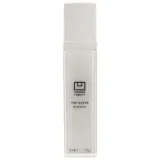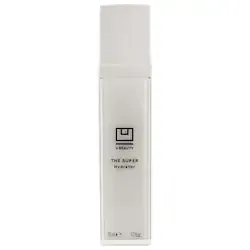
U Beauty The SUPER Hydrator Face Moisturizer with Vitamin E + Antioxidants

U Beauty The SUPER Hydrator Face Moisturizer with Vitamin E + Antioxidants

Efficacy100/100IrritancyMedium

Works for

Moisturizing
Panthenol, Linoleic acid + 37 more
Works well
What the product description says
“The SUPER Hydrator Face Moisturizer with Vitamin E + Antioxidants”
Source: Sephora

This product can help improve hydration of the skin with the two types of ingredients.

The first type is called “humectants”:
these ingredients help attract water. When humectants are on the surface of the skin, they “pull in” the moisture from the outside environment, or from within deeper layers of the skin. The following ingredients in this product do the job: dextran, glycerin.

This product also contains ingredients called “occlusives”. They help reduce the speed with which our skin loses moisture to the outside environment. These ingredients also help soften the upper layer of the skin, so it feels less tight and nicer to the touch. The following ingredients in this product do the job: butyrospermum parkii butter, cera alba.

The following ingredients in this product are especially good for supporting the skin barrier and helping with the hydration level: acetyl hexapeptide-37, lactobionic acid, linoleic acid, n-prolyl palmitoyl tripeptide-56 acetate, palmitoyl tripeptide-8, panthenol

PanthenolHero· HumectantEffect: HighHelps attract water to the upper layer of the skin and can help improve skin barrier function~0.45–0.65%
Linoleic acidHero· EmollientEffect: HighAn excellent emollient. Helps soften the skin, restore its barrier function, and can help to calm down inflammation. It can be helpful to prevent blemishes and clogged pores~0.35–0.65%
Lactobionic acidHeroEffect: HighA polyhydroxy acid (PHA) that helps shed dead cells from the surface of the skin revealing a smoother, more even skin. PHAs tend to be gentler on the skin compared to AHAs (for example, glycolic acid). It also has hydrating properties and helps attract water to the upper layer of the skin. It can help calm down inflammation in skin and support restoration of the barrier function. It has an anti-oxidant effect as well. It can help reduce fine line, wrinkles and improve skin elasticity~0.25–0.45%
N-prolyl palmitoyl tripeptide-56 acetateHeroEffect: HighA type of peptide. Peptides are excellent moisturizers and might be able support collagen production reducing fine lines and wrinkles~0.25–0.45%
Palmitoyl tripeptide-8HeroEffect: High~0.2–0.35%
Acetyl hexapeptide-37HeroEffect: HighA type of peptide. Peptides are excellent moisturizers and might be able support collagen production reducing fine lines and wrinkles~0.2–0.4%
SqualaneKey active· Emollient, OcclusiveEffect: HighAn oil naturally present in skin. Works as an emollient to soften the skin and form a protective layer on its surface without a greasy feeling.~4.9–5.9%
Butyrospermum parkii butterKey active· Emollient, OcclusiveEffect: HighA great moisturising ingredient that softens the skin and reduces water loss from its upper layer. It also can be helpful in protecting skin from free radicals~2.4–2.9%
Argania spinosa kernel oilKey active· EmollientEffect: HighAn emollient that helps soften the upper layer of the skin. Might have some weak anti-oxidant properties~1.9–2.3%
Persea gratissima oilKey active· EmollientEffect: HighAn emollient that helps soften the skin and could be helpful in repairing its barrier function~1.6–1.9%
Vitis vinifera seed oilKey active· EmollientEffect: HighA great emollient that can also have anti-oxidant properties~1.4–1.7%
Prunus amygdalus dulcis oilKey active· EmollientEffect: MediumAn emollient that softens the skin~1.2–1.4%
Cera albaKey active· Emollient, OcclusiveEffect: HighForms a protective barrier that holds water and keeps dry skin hydrated. Keeps an emulsion from separating into its oil and liquid components, and increases the thickness of a product. Can be an allergen~0.35–0.65%
Linolenic acidKey active· EmollientEffect: HighAn emollient that helps soften the skin and calm down inflammation~0.3–0.55%
Sodium hyaluronate crosspolymerKey active· HumectantEffect: HighAttracts water into the upper layer of the skin~0.25–0.45%
Jojoba estersKey active· EmollientEffect: HighAn emollient made of jojoba oil. Helps soften the skin and support its barrier function~0.25–0.5%
Polyglycerin-3Key active· HumectantEffect: HighHelps to attract water to the upper layer of the skin~0.25–0.5%
Sodium hyaluronateKey active· HumectantEffect: HighOne of the best moisturizing ingredients. Attracts water into the upper layer of the skin~0.25–0.45%
Superoxide dismutaseKey activeEffect: HighAn antioxidant enzyme that is naturally present in skin. It can help support skin barrier function and reduce inflammation in skin. It is used in topical medications for inflammatory skin conditions including atopic dermatitis (eczema) and psoriasis. There are three types of natural Superoxide Dismutase in human skin. The compound used in topical treatments and cosmetics are mimics of typically one of these natural variants~0.25–0.45%
Beta-glucanKey activeEffect: HighHelps attract water to the upper layer of the skin, calm down inflammation and irritation, restore the barrier function and support wound healing. It can be helpful in reducing fine lines and wrinkles~0.25–0.45%
GlutathioneKey activeEffect: HighA peptide that can help neutralize free radicals in skin and reduce melanin production resulting in skin lightening effect and reduction in hyperpigmentation. It can also help attract moisture to the upper layer of the skin~0.25–0.45%
GlycerinKey active· HumectantEffect: HighOne of the best moisturizing ingredients. Naturally present in skin. It attracts water to the upper layer of the skin working as a humectant~0.25–0.5%
Helianthus annuus seed oilKey active· Emollient, OcclusiveEffect: HighA great emollient due to its high linoleic acid content. One of the most effective plant oils in helping skin hydration and repairing skin barrier function~0.25–0.5%
Helianthus annuus seed waxKey active· EmollientEffect: HighHelps soften the upper layer of the skin and support skin's barrier function while creating a thicker product consistency~0.25–0.45%
Hydrolyzed sodium hyaluronateKey activeEffect: HighAttracts water into the upper layer of the skin~0.25–0.45%
Hydrolyzed hyaluronic acidKey active· HumectantEffect: HighOne of the best moisturizing ingredients. Attracts water into the upper layer of the skin. A version of it is naturally present in skin~0.2–0.35%
Sodium acetylated hyaluronateKey active· HumectantEffect: HighA type of hyaluronic acid that works as an excellent moisturizer by attracting water into the upper layer of the skin. Is typically feels less sticky on the skin compared to the usual hyaluronic acid~0.15–0.3%
DextranKey active· HumectantEffect: HighHelps attract water to the most upper layer of the skin. Derived from sugar~0.1–0.2%
Pentylene glycol· EmollientEffect: LowUsed to preserve products, dissolve other ingredients and create a nice product texture~4.3–5.3%
Octyldodecanol· EmollientEffect: LowAn emollient that helps to soften the skin and create a pleasant product texture and stabilize the formulation~3.1–3.7%
Ethylhexyl stearate· EmollientEffect: LowHelps soften the upper layer of the skin~0.95–1.15%
Cetyl peg/ppg-10/1 dimethiconeEffect: LowA type of silicone that helps water and oil mix together. Can help to soften upper layer of the skin~0.65–0.95%
Sorbitol· HumectantEffect: LowHelps attract water to the upper layer of the skin and improves the product texture~0.55–0.8%
Butylene glycol· HumectantEffect: LowUsed to create a nice product texture and help delivery of other ingredients. Might be somewhat helpful in attracting water to the upper layer of the skin~0.35–0.6%
Passiflora incarnata seed oilEffect: LowA plant oil that can help soften the upper layer of the skin. Contains essential oil that can be irritating~0.25–0.45%
Caprylyl glycol· Humectant, EmollientEffect: LowHelps preserve products and creates a nice product texture~0.25–0.5%
Propylene carbonateEffect: LowIs used to dissolve other ingredients and create nice product texture~0.25–0.5%
TocopherolEffect: Low, below effective dosePure form of vitamin E. Can help moisturise and protect the skin from free radicals. Often used to help stabilise other ingredients or the formula itself~0.25–0.45%
Caprylic/capric triglycerideUnder-dosedA good mix of fatty acids that forms a protective layer on the skin. Improves the shelf life of products. Derived from coconut and glycerin~0.4–0.65%
Exfoliation
Side benefit · Mandelic acid, Lactobionic acid + 1 more
Works well

This product can help exfoliate the skin. In other words, it helps break down the bonds between dead cells on the surface of the skin and speed up the skin turnover. Skin often appears softer and brighter after exfoliation, but overdoing it can result in disrupted skin barrier. The following ingredient is doing the exfoliating job in this product: glycolic acid, lactobionic acid, mandelic acid.

Mandelic acidKey activeEffect: HighHelps shed the upper layer of dead cells from the surface of the skin revealing smoother, brighter skin. It can help to reduce hyperpigmentation. It has anti-bacterial properties, and might help to reduce blemishes, as well as fine lines and wrinkles. It is considered to be gentler than glycolic acid~0.25–0.45%
Lactobionic acidKey activeEffect: HighA polyhydroxy acid (PHA) that helps shed dead cells from the surface of the skin revealing a smoother, more even skin. PHAs tend to be gentler on the skin compared to AHAs (for example, glycolic acid). It also has hydrating properties and helps attract water to the upper layer of the skin. It can help calm down inflammation in skin and support restoration of the barrier function. It has an anti-oxidant effect as well. It can help reduce fine line, wrinkles and improve skin elasticity~0.25–0.45%
Glycolic acidKey activeEffect: HighAn alpha-hydroxy acid (AHA) that helps to remove the dead skin cells on the surface of the skin reveling a more even, smoother complexation. It is also able to stimulate collagen production with long-term use. Could help to reduce pore congestion. It can be irritating to the skin. Apply sunscreen daily if using products with glycolic acid~0.25–0.45%
Anti-aging
Side benefit · Glycolic acid, Lactobionic acid + 9 more
Works well

This product can help reduce and prevent fine lines and wrinkles, improve skin elasticity and firmness because it contains glycolic acid, lactobionic acid.

These ingredients in the product can also be helpful, even though there is less evidence for their effectiveness: acetyl hexapeptide-37, n-prolyl palmitoyl tripeptide-56 acetate, palmitoyl tripeptide-8.

Keep in mind that it typically takes at least 6 weeks to notice any results because the changes that are needed to improve fine lines and elasticity happen in the deeper layers of the skin. No topical anti-aging product can “erase” wrinkles or fully reverse signs of aging.

Glycolic acidKey activeEffect: HighAn alpha-hydroxy acid (AHA) that helps to remove the dead skin cells on the surface of the skin reveling a more even, smoother complexation. It is also able to stimulate collagen production with long-term use. Could help to reduce pore congestion. It can be irritating to the skin. Apply sunscreen daily if using products with glycolic acid~0.25–0.45%
Lactobionic acidKey activeEffect: HighA polyhydroxy acid (PHA) that helps shed dead cells from the surface of the skin revealing a smoother, more even skin. PHAs tend to be gentler on the skin compared to AHAs (for example, glycolic acid). It also has hydrating properties and helps attract water to the upper layer of the skin. It can help calm down inflammation in skin and support restoration of the barrier function. It has an anti-oxidant effect as well. It can help reduce fine line, wrinkles and improve skin elasticity~0.25–0.45%
N-prolyl palmitoyl tripeptide-56 acetateKey activeEffect: MediumA type of peptide. Peptides are excellent moisturizers and might be able support collagen production reducing fine lines and wrinkles~0.25–0.45%
Palmitoyl tripeptide-8Key activeEffect: Medium~0.2–0.35%
Acetyl hexapeptide-37Key activeEffect: MediumA type of peptide. Peptides are excellent moisturizers and might be able support collagen production reducing fine lines and wrinkles~0.2–0.4%
Butyrospermum parkii butterEffect: LowA great moisturising ingredient that softens the skin and reduces water loss from its upper layer. It also can be helpful in protecting skin from free radicals~2.4–2.9%
Prunus amygdalus dulcis oilEffect: LowAn emollient that softens the skin~1.2–1.4%
Beta-glucanEffect: LowHelps attract water to the upper layer of the skin, calm down inflammation and irritation, restore the barrier function and support wound healing. It can be helpful in reducing fine lines and wrinkles~0.25–0.45%
Sodium ascorbyl phosphateEffect: Low, below effective doseA stable derivative of vitamin C. It is oil-soluble which means it is more likely to penetrate the skin compared to the pure form of vitamin C (which is water-soluble), but it is less bio-available and is way less effective in stimulating collagen and reducing wrinkles compared to the pure form of vitamin C (L-ascorbic acid) and its other derivatives (for example, magnesium ascorbyl phosphate). At the same time, this vitamin C derivative has been shown in studies to be effective in reducing acne, blemishes and clogged pores. It is less irritating then the pure form of vitamin C~0.25–0.45%
TocopherolEffect: Low, below effective dosePure form of vitamin E. Can help moisturise and protect the skin from free radicals. Often used to help stabilise other ingredients or the formula itself~0.25–0.45%
Ascorbyl palmitateEffect: Low, below effective doseBeing a lipid soluble form of vitamin C, it is more stable and can penetrate the skin better than L-Ascorbic acid. It is effective in protecting the skin from free radicals, as well as evening the skin tone, but is less effective in stimulating collagen production compared to L-Ascorbic acid.~0.2–0.4%
Anti-oxidation
Side benefit · Lactobionic acid, Glutathione + 10 more
Works well

This product contains antioxidants (glutathione, lactobionic acid, superoxide dismutase) that can help neutralize free radicals in skin. By doing so, they can lessen the damage the skin gets from the UV light (sun).

Lactobionic acidKey activeEffect: HighA polyhydroxy acid (PHA) that helps shed dead cells from the surface of the skin revealing a smoother, more even skin. PHAs tend to be gentler on the skin compared to AHAs (for example, glycolic acid). It also has hydrating properties and helps attract water to the upper layer of the skin. It can help calm down inflammation in skin and support restoration of the barrier function. It has an anti-oxidant effect as well. It can help reduce fine line, wrinkles and improve skin elasticity~0.25–0.45%
GlutathioneKey activeEffect: HighA peptide that can help neutralize free radicals in skin and reduce melanin production resulting in skin lightening effect and reduction in hyperpigmentation. It can also help attract moisture to the upper layer of the skin~0.25–0.45%
Superoxide dismutaseKey activeEffect: HighAn antioxidant enzyme that is naturally present in skin. It can help support skin barrier function and reduce inflammation in skin. It is used in topical medications for inflammatory skin conditions including atopic dermatitis (eczema) and psoriasis. There are three types of natural Superoxide Dismutase in human skin. The compound used in topical treatments and cosmetics are mimics of typically one of these natural variants~0.25–0.45%
Butyrospermum parkii butterEffect: LowA great moisturising ingredient that softens the skin and reduces water loss from its upper layer. It also can be helpful in protecting skin from free radicals~2.4–2.9%
Argania spinosa kernel oilEffect: LowAn emollient that helps soften the upper layer of the skin. Might have some weak anti-oxidant properties~1.9–2.3%
Vitis vinifera seed oilEffect: LowA great emollient that can also have anti-oxidant properties~1.4–1.7%
Prunus amygdalus dulcis oilEffect: LowAn emollient that softens the skin~1.2–1.4%
Beta-glucanEffect: LowHelps attract water to the upper layer of the skin, calm down inflammation and irritation, restore the barrier function and support wound healing. It can be helpful in reducing fine lines and wrinkles~0.25–0.45%
Tocopheryl acetateEffect: Low, below effective doseA more stable but less bio-available form of vitamin E compared to Tocopherol. Might help moisturize and protect the skin from free radicals, but mostly used in low concentrations to stabilize other ingredients.~0.25–0.5%
Ascorbyl palmitateEffect: Low, below effective doseBeing a lipid soluble form of vitamin C, it is more stable and can penetrate the skin better than L-Ascorbic acid. It is effective in protecting the skin from free radicals, as well as evening the skin tone, but is less effective in stimulating collagen production compared to L-Ascorbic acid.~0.2–0.4%
TocopherolUnder-dosedPure form of vitamin E. Can help moisturise and protect the skin from free radicals. Often used to help stabilise other ingredients or the formula itself~0.25–0.45%
Sodium ascorbyl phosphateUnder-dosedA stable derivative of vitamin C. It is oil-soluble which means it is more likely to penetrate the skin compared to the pure form of vitamin C (which is water-soluble), but it is less bio-available and is way less effective in stimulating collagen and reducing wrinkles compared to the pure form of vitamin C (L-ascorbic acid) and its other derivatives (for example, magnesium ascorbyl phosphate). At the same time, this vitamin C derivative has been shown in studies to be effective in reducing acne, blemishes and clogged pores. It is less irritating then the pure form of vitamin C~0.25–0.45%
Evens skin tone
Side benefit · Glycolic acid, Lactobionic acid + 2 more
Works well

This product can help reduce hypepigmentation and even out the skin tone because it contains the following effective ingredients: glutathione, glycolic acid, lactobionic acid, mandelic acid

Keep in mind that you would need to apply any topical skincare targetted at hypigmentation consistently for a couple of months to get a result. No topical skincare product can help get rid of hyperpigmentation (including post-acne marks and age spots) instantly.

Glycolic acidKey activeEffect: HighAn alpha-hydroxy acid (AHA) that helps to remove the dead skin cells on the surface of the skin reveling a more even, smoother complexation. It is also able to stimulate collagen production with long-term use. Could help to reduce pore congestion. It can be irritating to the skin. Apply sunscreen daily if using products with glycolic acid~0.25–0.45%
Lactobionic acidKey activeEffect: HighA polyhydroxy acid (PHA) that helps shed dead cells from the surface of the skin revealing a smoother, more even skin. PHAs tend to be gentler on the skin compared to AHAs (for example, glycolic acid). It also has hydrating properties and helps attract water to the upper layer of the skin. It can help calm down inflammation in skin and support restoration of the barrier function. It has an anti-oxidant effect as well. It can help reduce fine line, wrinkles and improve skin elasticity~0.25–0.45%
Mandelic acidKey activeEffect: HighHelps shed the upper layer of dead cells from the surface of the skin revealing smoother, brighter skin. It can help to reduce hyperpigmentation. It has anti-bacterial properties, and might help to reduce blemishes, as well as fine lines and wrinkles. It is considered to be gentler than glycolic acid~0.25–0.45%
GlutathioneKey activeEffect: HighA peptide that can help neutralize free radicals in skin and reduce melanin production resulting in skin lightening effect and reduction in hyperpigmentation. It can also help attract moisture to the upper layer of the skin~0.25–0.45%

Can it cause trouble?

Irritancy
1 strong irritant: Passiflora incarnata seed oil
Medium risk
We flagged 28 ingredients with irritancy potential. Severity depends on your sensitivity threshold; the table lists the worst offenders first.
IngredientFunctionIrritationEst. amount
MethyldihydrojasmonateUsed as a fragrance. Smells similar to jasmineHigh~0.45–0.7%est.
Decyl glucosideHelps oil and water mix together. Can be irritatingHigh~0.3–0.6%est.
Phenethyl alcoholA fragrance. Can be irritatingHigh~0.25–0.5%est.
Passiflora incarnata seed oilA plant oil that can help soften the upper layer of the skin. Contains essential oil that can be irritatingHigh~0.25–0.45%est.
Mandelic acidHelps shed the upper layer of dead cells from the surface of the skin revealing smoother, brighter skin. It can help to reduce hyperpigmentation. It has anti-bacterial properties, and might help to reduce blemishes, as well as fine lines and wrinkles. It is considered to be gentler than glycolic acidHigh~0.25–0.45%est.
Glycolic acidAn alpha-hydroxy acid (AHA) that helps to remove the dead skin cells on the surface of the skin reveling a more even, smoother complexation. It is also able to stimulate collagen production with long-term use. Could help to reduce pore congestion. It can be irritating to the skin. Apply sunscreen daily if using products with glycolic acidHigh~0.25–0.45%est.
Acacia decurrens flower waxUsed as a fragrance. Can be irritatingHigh~0.25–0.45%est.
Benzyl alcoholA preservative. Can be used to mask unpleasant smell. Can be irritatingHigh~0.05–0.1%est.
Pentylene glycolUsed to preserve products, dissolve other ingredients and create a nice product textureMedium~4.3–5.3%est.
Argania spinosa kernel oilAn emollient that helps soften the upper layer of the skin. Might have some weak anti-oxidant propertiesMedium~1.9–2.3%est.
Persea gratissima oilAn emollient that helps soften the skin and could be helpful in repairing its barrier functionMedium~1.6–1.9%est.
Vitis vinifera seed oilA great emollient that can also have anti-oxidant propertiesMedium~1.4–1.7%est.
Polyglyceryl-4 diisostearate/polyhydroxystearate/sebacateHelps water and oil mix togetherMedium~0.45–0.65%est.
Caprylic/capric triglycerideA good mix of fatty acids that forms a protective layer on the skin. Improves the shelf life of products. Derived from coconut and glycerinMedium~0.4–0.65%est.
Tocopheryl acetateA more stable but less bio-available form of vitamin E compared to Tocopherol. Might help moisturize and protect the skin from free radicals, but mostly used in low concentrations to stabilize other ingredients.Medium~0.25–0.5%est.
Cera albaForms a protective barrier that holds water and keeps dry skin hydrated. Keeps an emulsion from separating into its oil and liquid components, and increases the thickness of a product. Can be an allergenMedium~0.35–0.65%est.
Jojoba estersAn emollient made of jojoba oil. Helps soften the skin and support its barrier functionMedium~0.25–0.5%est.
Polyglyceryl-3 oleateHelps oil and water mix togetherMedium~0.25–0.45%est.
GlutathioneA peptide that can help neutralize free radicals in skin and reduce melanin production resulting in skin lightening effect and reduction in hyperpigmentation. It can also help attract moisture to the upper layer of the skinMedium~0.25–0.45%est.
Lactobionic acidA polyhydroxy acid (PHA) that helps shed dead cells from the surface of the skin revealing a smoother, more even skin. PHAs tend to be gentler on the skin compared to AHAs (for example, glycolic acid). It also has hydrating properties and helps attract water to the upper layer of the skin. It can help calm down inflammation in skin and support restoration of the barrier function. It has an anti-oxidant effect as well. It can help reduce fine line, wrinkles and improve skin elasticityMedium~0.25–0.45%est.
Linolenic acidAn emollient that helps soften the skin and calm down inflammationMedium~0.3–0.55%est.
Sodium hyaluronate crosspolymerAttracts water into the upper layer of the skinMedium~0.25–0.45%est.
EthylhexylglycerinA preservativeMedium~0.25–0.45%est.
Caprylyl glycolHelps preserve products and creates a nice product textureMedium~0.25–0.5%est.
Sodium ascorbyl phosphateA stable derivative of vitamin C. It is oil-soluble which means it is more likely to penetrate the skin compared to the pure form of vitamin C (which is water-soluble), but it is less bio-available and is way less effective in stimulating collagen and reducing wrinkles compared to the pure form of vitamin C (L-ascorbic acid) and its other derivatives (for example, magnesium ascorbyl phosphate). At the same time, this vitamin C derivative has been shown in studies to be effective in reducing acne, blemishes and clogged pores. It is less irritating then the pure form of vitamin CMedium~0.25–0.45%est.
Ascorbyl palmitateBeing a lipid soluble form of vitamin C, it is more stable and can penetrate the skin better than L-Ascorbic acid. It is effective in protecting the skin from free radicals, as well as evening the skin tone, but is less effective in stimulating collagen production compared to L-Ascorbic acid.Medium~0.2–0.4%est.
Dehydroacetic acidA preservativeMedium~0.1–0.15%est.
Citric acidCan work as an exfoliant but is typically used to adjust the product pHMedium~0.01–0.05%est.
Comedogenic
1 ingredient rated 2 or more on the 0–5 pore-clogging scale
1 flagged
These ingredients have a comedogenic rating of 2 or more on a 0–5 scale; the table shows each one's rating. In leave-on products they can clog pores in acne-prone skin.
IngredientFunctionRatingEst. amount
Butyrospermum parkii butterA great moisturising ingredient that softens the skin and reduces water loss from its upper layer. It also can be helpful in protecting skin from free radicals3/5~2.4–2.9%est.
Did this help you decide?

User reviews

Would you recommend?
No community reviews yet.

Be the first — your take helps the next person decide.

Ingredients

Filter by role to see what each ingredient is doing.

Water~45–55%
Formula
Irritation risk
Low

Plain old water

More about Water
Squalane~4.9–5.9%
Key active
Irritation risk
Low
Works for
Moisturizing

An oil naturally present in skin. Works as an emollient to soften the skin and form a protective layer on its surface without a greasy feeling.

More about Squalane
Pentylene glycol~4.3–5.3%
Irritant · medium
Irritation risk
Medium
Works for
Moisturizing

Used to preserve products, dissolve other ingredients and create a nice product texture

More about Pentylene glycol
Octyldodecanol~3.1–3.7%
Formula
Irritation risk
Low
Works for
Moisturizing

An emollient that helps to soften the skin and create a pleasant product texture and stabilize the formulation

More about Octyldodecanol
Butyrospermum parkii butter~2.4–2.9%
Key activeComedogenic 3/5
Irritation risk
Low
Comedogenicity
3/5
Works for
MoisturizingAnti-agingAnti-oxidation

A great moisturising ingredient that softens the skin and reduces water loss from its upper layer. It also can be helpful in protecting skin from free radicals

More about Butyrospermum parkii butter
Argania spinosa kernel oil~1.9–2.3%
Key activeIrritant · medium
Irritation risk
Medium
Works for
MoisturizingAnti-oxidation

An emollient that helps soften the upper layer of the skin. Might have some weak anti-oxidant properties

More about Argania spinosa kernel oil
Persea gratissima oil~1.6–1.9%
Key activeIrritant · medium
Irritation risk
Medium
Works for
Moisturizing

An emollient that helps soften the skin and could be helpful in repairing its barrier function

More about Persea gratissima oil
Vitis vinifera seed oil~1.4–1.7%
Key activeIrritant · medium
Irritation risk
Medium
Works for
MoisturizingAnti-oxidation

A great emollient that can also have anti-oxidant properties

More about Vitis vinifera seed oil
Prunus amygdalus dulcis oil~1.2–1.4%
Key active
Irritation risk
Low
Works for
MoisturizingAnti-oxidationAnti-aging

An emollient that softens the skin

More about Prunus amygdalus dulcis oil
Ethylhexyl stearate~0.95–1.15%
Formula
Irritation risk
Low
Works for
Moisturizing

Helps soften the upper layer of the skin

More about Ethylhexyl stearate
Cetyl peg/ppg-10/1 dimethicone~0.65–0.95%
Formula
Irritation risk
Low
Works for
CleansingMoisturizing

A type of silicone that helps water and oil mix together. Can help to soften upper layer of the skin

More about Cetyl peg/ppg-10/1 dimethicone
Sorbitol~0.55–0.8%
Formula
Irritation risk
Low
Works for
Moisturizing

Helps attract water to the upper layer of the skin and improves the product texture

More about Sorbitol
Disteardimonium hectorite~0.5–0.75%
Formula
Irritation risk
Low

A type of clay that is used to thicken the product consistency

More about Disteardimonium hectorite
Methyldihydrojasmonate~0.45–0.7%
Irritant · high
Irritation risk
High

Used as a fragrance. Smells similar to jasmine

More about Methyldihydrojasmonate
Panthenol~0.45–0.65%
Hero · Moisturizing
Irritation risk
Low
Works for
MoisturizingReduces rednessReduces irritation

Helps attract water to the upper layer of the skin and can help improve skin barrier function

More about Panthenol
Magnesium sulfate~0.45–0.7%
Formula
Irritation risk
Low

Used to create a thicker product consistency

More about Magnesium sulfate
Polyglyceryl-4 diisostearate/polyhydroxystearate/sebacate~0.45–0.65%
Irritant · medium
Irritation risk
Medium
Works for
Cleansing

Helps water and oil mix together

More about Polyglyceryl-4 diisostearate/polyhydroxystearate/sebacate
Butylene glycol~0.35–0.6%
Formula
Irritation risk
Low
Works for
Moisturizing

Used to create a nice product texture and help delivery of other ingredients. Might be somewhat helpful in attracting water to the upper layer of the skin

More about Butylene glycol
Caprylic/capric triglyceride~0.4–0.65%
Under-dosedIrritant · medium
Irritation risk
Medium
Works for
Moisturizing

A good mix of fatty acids that forms a protective layer on the skin. Improves the shelf life of products. Derived from coconut and glycerin

More about Caprylic/capric triglyceride
Mica~0.3–0.6%
Formula
Irritation risk
Low

Creates an illusion of smoother and more radiant skin tone. Adds shimmer to the skin by reflecting light

More about Mica
Tocopheryl acetate~0.25–0.5%
Irritant · medium
Irritation risk
Medium
Works for
Anti-oxidation

A more stable but less bio-available form of vitamin E compared to Tocopherol. Might help moisturize and protect the skin from free radicals, but mostly used in low concentrations to stabilize other ingredients.

More about Tocopheryl acetate
Cera alba~0.35–0.65%
Key activeIrritant · medium
Irritation risk
Medium
Works for
MoisturizingCleansing

Forms a protective barrier that holds water and keeps dry skin hydrated. Keeps an emulsion from separating into its oil and liquid components, and increases the thickness of a product. Can be an allergen

More about Cera alba
Jojoba esters~0.25–0.5%
Key activeIrritant · medium
Irritation risk
Medium
Works for
Moisturizing

An emollient made of jojoba oil. Helps soften the skin and support its barrier function

More about Jojoba esters
Polyglyceryl-3 oleate~0.25–0.45%
Irritant · medium
Irritation risk
Medium
Works for
Cleansing

Helps oil and water mix together

More about Polyglyceryl-3 oleate
Titanium dioxide~0.3–0.55%
Formula
Irritation risk
Low
Works for
Sun protection

Works as a UV filter when used in high concentrations. It is photostable and is effective mostly against the UVB light, with some protection in the UVA range. In small concentrations, used for its ability to improve the color of cosmetic products. Is usually well tolerated by the skin

More about Titanium dioxide
Helianthus annuus seed wax~0.25–0.45%
Key active
Irritation risk
Low
Works for
Moisturizing

Helps soften the upper layer of the skin and support skin's barrier function while creating a thicker product consistency

More about Helianthus annuus seed wax
Diisostearoyl polyglyceryl-3 dimer dilinoleate~0.25–0.45%
Formula
Propylene carbonate~0.25–0.5%
Formula
Irritation risk
Low
Works for
Moisturizing

Is used to dissolve other ingredients and create nice product texture

More about Propylene carbonate
Acetyl hexapeptide-37~0.2–0.4%
Hero · Moisturizing
Irritation risk
Low
Works for
MoisturizingAnti-aging

A type of peptide. Peptides are excellent moisturizers and might be able support collagen production reducing fine lines and wrinkles

More about Acetyl hexapeptide-37
Superoxide dismutase~0.25–0.45%
Key active
Irritation risk
Low
Works for
Anti-inflammatoryMoisturizingAnti-oxidation

An antioxidant enzyme that is naturally present in skin. It can help support skin barrier function and reduce inflammation in skin. It is used in topical medications for inflammatory skin conditions including atopic dermatitis (eczema) and psoriasis. There are three types of natural Superoxide Dismutase in human skin. The compound used in topical treatments and cosmetics are mimics of typically one of these natural variants

More about Superoxide dismutase
Glutathione~0.25–0.45%
Key activeIrritant · medium
Irritation risk
Medium
Works for
Anti-oxidationMoisturizingEvens skin tone

A peptide that can help neutralize free radicals in skin and reduce melanin production resulting in skin lightening effect and reduction in hyperpigmentation. It can also help attract moisture to the upper layer of the skin

More about Glutathione
Lactobionic acid~0.25–0.45%
Hero · MoisturizingIrritant · medium
Irritation risk
Medium
Works for
MoisturizingAnti-oxidationAnti-agingExfoliationEvens skin toneAnti-blemishAnti-inflammatory

A polyhydroxy acid (PHA) that helps shed dead cells from the surface of the skin revealing a smoother, more even skin. PHAs tend to be gentler on the skin compared to AHAs (for example, glycolic acid). It also has hydrating properties and helps attract water to the upper layer of the skin. It can help calm down inflammation in skin and support restoration of the barrier function. It has an anti-oxidant effect as well. It can help reduce fine line, wrinkles and improve skin elasticity

More about Lactobionic acid
Linoleic acid~0.35–0.65%
Hero · Moisturizing
Irritation risk
Low
Works for
MoisturizingCleansingAnti-blemish

An excellent emollient. Helps soften the skin, restore its barrier function, and can help to calm down inflammation. It can be helpful to prevent blemishes and clogged pores

More about Linoleic acid
Linolenic acid~0.3–0.55%
Key activeIrritant · medium
Irritation risk
Medium
Works for
MoisturizingCleansingReduces irritationAnti-inflammatory

An emollient that helps soften the skin and calm down inflammation

More about Linolenic acid
Decyl glucoside~0.3–0.6%
Irritant · high
Irritation risk
High
Works for
Cleansing

Helps oil and water mix together. Can be irritating

More about Decyl glucoside
Hydrolyzed sodium hyaluronate~0.25–0.45%
Key active
Irritation risk
Low
Works for
Moisturizing

Attracts water into the upper layer of the skin

More about Hydrolyzed sodium hyaluronate
Phenethyl alcohol~0.25–0.5%
Irritant · high
Irritation risk
High

A fragrance. Can be irritating

More about Phenethyl alcohol
Tocopherol~0.25–0.45%
Under-dosed
Irritation risk
Low
Works for
Anti-oxidationAnti-agingAnti-inflammatoryMoisturizing

Pure form of vitamin E. Can help moisturise and protect the skin from free radicals. Often used to help stabilise other ingredients or the formula itself

More about Tocopherol
Passiflora incarnata seed oil~0.25–0.45%
Irritant · high
Irritation risk
High
Works for
Moisturizing

A plant oil that can help soften the upper layer of the skin. Contains essential oil that can be irritating

More about Passiflora incarnata seed oil
Helianthus annuus seed oil~0.25–0.5%
Key active
Irritation risk
Low
Works for
Moisturizing

A great emollient due to its high linoleic acid content. One of the most effective plant oils in helping skin hydration and repairing skin barrier function

More about Helianthus annuus seed oil
Mandelic acid~0.25–0.45%
Key activeIrritant · high
Irritation risk
High
Works for
Evens skin toneExfoliationAnti-blemishAntibacterial

Helps shed the upper layer of dead cells from the surface of the skin revealing smoother, brighter skin. It can help to reduce hyperpigmentation. It has anti-bacterial properties, and might help to reduce blemishes, as well as fine lines and wrinkles. It is considered to be gentler than glycolic acid

More about Mandelic acid
Glycolic acid~0.25–0.45%
Key activeIrritant · high
Irritation risk
High
Works for
ExfoliationEvens skin toneAnti-agingAnti-blemish

An alpha-hydroxy acid (AHA) that helps to remove the dead skin cells on the surface of the skin reveling a more even, smoother complexation. It is also able to stimulate collagen production with long-term use. Could help to reduce pore congestion. It can be irritating to the skin. Apply sunscreen daily if using products with glycolic acid

More about Glycolic acid
N-prolyl palmitoyl tripeptide-56 acetate~0.25–0.45%
Hero · Moisturizing
Irritation risk
Low
Works for
MoisturizingAnti-aging

A type of peptide. Peptides are excellent moisturizers and might be able support collagen production reducing fine lines and wrinkles

More about N-prolyl palmitoyl tripeptide-56 acetate
Sodium hyaluronate~0.25–0.45%
Key active
Irritation risk
Low
Works for
Moisturizing

One of the best moisturizing ingredients. Attracts water into the upper layer of the skin

More about Sodium hyaluronate
Sodium hyaluronate crosspolymer~0.25–0.45%
Key activeIrritant · medium
Irritation risk
Medium
Works for
Moisturizing

Attracts water into the upper layer of the skin

More about Sodium hyaluronate crosspolymer
Hydroxyphenyl propamidobenzoic acid~0.25–0.45%
Formula
Irritation risk
Low
Works for
Anti-inflammatory

Might help to reduce inflammation in skin, but solid research is lacking

More about Hydroxyphenyl propamidobenzoic acid
Beta-glucan~0.25–0.45%
Key active
Irritation risk
Low
Works for
MoisturizingAnti-inflammatoryReduces irritationAnti-agingAnti-blemishAnti-oxidation

Helps attract water to the upper layer of the skin, calm down inflammation and irritation, restore the barrier function and support wound healing. It can be helpful in reducing fine lines and wrinkles

More about Beta-glucan
Ethylhexylglycerin~0.25–0.45%
Irritant · medium
Irritation risk
Medium

A preservative

More about Ethylhexylglycerin
Acacia decurrens flower wax~0.25–0.45%
Irritant · high
Irritation risk
High

Used as a fragrance. Can be irritating

More about Acacia decurrens flower wax
Polyglycerin-3~0.25–0.5%
Key active
Irritation risk
Low
Works for
Moisturizing

Helps to attract water to the upper layer of the skin

More about Polyglycerin-3
Caprylyl glycol~0.25–0.5%
Irritant · medium
Irritation risk
Medium
Works for
Moisturizing

Helps preserve products and creates a nice product texture

More about Caprylyl glycol
Sodium ascorbyl phosphate~0.25–0.45%
Under-dosedIrritant · medium
Irritation risk
Medium
Works for
Anti-blemishAnti-oxidationAnti-aging

A stable derivative of vitamin C. It is oil-soluble which means it is more likely to penetrate the skin compared to the pure form of vitamin C (which is water-soluble), but it is less bio-available and is way less effective in stimulating collagen and reducing wrinkles compared to the pure form of vitamin C (L-ascorbic acid) and its other derivatives (for example, magnesium ascorbyl phosphate). At the same time, this vitamin C derivative has been shown in studies to be effective in reducing acne, blemishes and clogged pores. It is less irritating then the pure form of vitamin C

More about Sodium ascorbyl phosphate
Glycerin~0.25–0.5%
Key active
Irritation risk
Low
Works for
Moisturizing

One of the best moisturizing ingredients. Naturally present in skin. It attracts water to the upper layer of the skin working as a humectant

More about Glycerin
Ascorbyl palmitate~0.2–0.4%
Irritant · medium
Irritation risk
Medium
Works for
Anti-oxidationAnti-aging

Being a lipid soluble form of vitamin C, it is more stable and can penetrate the skin better than L-Ascorbic acid. It is effective in protecting the skin from free radicals, as well as evening the skin tone, but is less effective in stimulating collagen production compared to L-Ascorbic acid.

More about Ascorbyl palmitate
Palmitoyl tripeptide-8~0.2–0.35%
Hero · Moisturizing
Irritation risk
Low
Works for
MoisturizingAnti-aging
More about Palmitoyl tripeptide-8
Hydrolyzed hyaluronic acid~0.2–0.35%
Key active
Irritation risk
Low
Works for
Moisturizing

One of the best moisturizing ingredients. Attracts water into the upper layer of the skin. A version of it is naturally present in skin

More about Hydrolyzed hyaluronic acid
Sodium acetylated hyaluronate~0.15–0.3%
Key active
Irritation risk
Low
Works for
Moisturizing

A type of hyaluronic acid that works as an excellent moisturizer by attracting water into the upper layer of the skin. Is typically feels less sticky on the skin compared to the usual hyaluronic acid

More about Sodium acetylated hyaluronate
Benzyl alcohol~0.05–0.1%
Irritant · high
Irritation risk
High

A preservative. Can be used to mask unpleasant smell. Can be irritating

More about Benzyl alcohol
Xanthan gum~0.1–0.2%
Formula
Irritation risk
Low
Works for
Cleansing

Used to create a thicker product consistency

More about Xanthan gum
Dextran~0.1–0.2%
Key active
Irritation risk
Low
Works for
Moisturizing

Helps attract water to the most upper layer of the skin. Derived from sugar

More about Dextran
Polysorbate 20~0.1–0.25%
Formula
Irritation risk
Low
Works for
Cleansing

Helps oil and water mix together

More about Polysorbate 20
Dehydroacetic acid~0.1–0.15%
Irritant · medium
Irritation risk
Medium

A preservative

More about Dehydroacetic acid
Citric acid~0.01–0.05%
Irritant · medium
Irritation risk
Medium

Can work as an exfoliant but is typically used to adjust the product pH

More about Citric acid
Ingredient list view

Water, Squalane, Pentylene glycol, Octyldodecanol, Butyrospermum parkii butter, Argania spinosa kernel oil, Persea gratissima oil, Vitis vinifera seed oil, Prunus amygdalus dulcis oil, Ethylhexyl stearate, Cetyl peg/ppg-10/1 dimethicone, Sorbitol, Disteardimonium hectorite, Methyldihydrojasmonate, Panthenol, Magnesium sulfate, Polyglyceryl-4 diisostearate/polyhydroxystearate/sebacate, Butylene glycol, Caprylic/capric triglyceride, Mica, Tocopheryl acetate, Cera alba, Jojoba esters, Polyglyceryl-3 oleate, Titanium dioxide, Helianthus annuus seed wax, Diisostearoyl polyglyceryl-3 dimer dilinoleate, Propylene carbonate, Acetyl hexapeptide-37, Superoxide dismutase, Glutathione, Lactobionic acid, Linoleic acid, Linolenic acid, Decyl glucoside, Hydrolyzed sodium hyaluronate, Phenethyl alcohol, Tocopherol, Passiflora incarnata seed oil, Helianthus annuus seed oil, Mandelic acid, Glycolic acid, N-prolyl palmitoyl tripeptide-56 acetate, Sodium hyaluronate, Sodium hyaluronate crosspolymer, Hydroxyphenyl propamidobenzoic acid, Beta-glucan, Ethylhexylglycerin, Acacia decurrens flower wax, Polyglycerin-3, Caprylyl glycol, Sodium ascorbyl phosphate, Glycerin, Ascorbyl palmitate, Palmitoyl tripeptide-8, Hydrolyzed hyaluronic acid, Sodium acetylated hyaluronate, Benzyl alcohol, Xanthan gum, Dextran, Polysorbate 20, Dehydroacetic acid, Citric acid

Compare prices

Retailers ranked by price — lowest first.

Sephora
$68.00
Buy
Sephora
$168.00
Buy

Affiliate links · As an Amazon Associate, WIMJ earns from qualifying purchases.

Worth comparing, line by line.

Match % combines shared ingredients, the first five ingredients, shared actives and hero ingredients, irritancy (lower counts in the alternative's favour), texture and body area. Only products in the same routine step are compared.

Side-by-side comparison of this product against its closest alternatives
U BeautyThe SUPER Hydrator Face Moisturizer with Vitamin E + AntioxidantsYOUR PRODUCTMISSHANear Skin Moist Lab CreamIt CosmeticsConfidence in a Cream Barrier Boost Skin Barrier Repair MoisturizerBiossanceSqualane + Omega Repair Cream
Match—40%39%39%
Price$68.00—$18.18−$49.82$13.78−$54.22
Shared key ingredients—5 of 327 of 328 of 32
Key difference—Ceramide NpAcetyl Dipeptide-1 Cetyl EsterCeramide Np
Irritancy Medium Low Low Low
Drying alcohol————
View product Shop Shop Shop

More alternatives: Uriage CICA DAILY REPAIRING CREAM CONCENTRATEAugustinus Bader The Hydration Heros with The Rich Cream

Cheaper alternatives? See how this stacks up against similar formulas.
We compare ingredient profiles across our catalog — pick the closest match for your budget.
Open dupe finder

Sources cited in this review

Every concentration estimate and effectiveness label is anchored to one of these 59 studies and safety reviews.

  1. 1
  2. 2
  3. 3
  4. 4
  5. 5
  6. 6
U Beauty The SUPER Hydrator Face Moisturizer with Vitamin E + Antioxidants
U BeautyThe SUPER Hydrator Face Moisturizer with Vitamin E + Antioxidants

Affiliate links · As an Amazon Associate, WIMJ earns from qualifying purchases.

As an Amazon Associate, WIMJ earns from qualifying purchases.