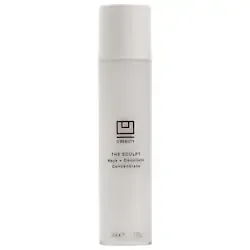
U Beauty The SCULPT Neck + Décolleté Concentrate Serum with Peptides + Vitamin B5
Works for
MoisturizingPanthenol, Linoleic acid + 29 moreWorks well
“4D Hyaluronic Acid: A combination of four unique types of Hyaluronic Acid works to provide lasting hydration and blurring effects.”
This product can help improve hydration of the skin with the two types of ingredients.
The first type is called “humectants”:
these ingredients help attract water.
When humectants are on the surface of the skin, they “pull in” the moisture from the outside environment, or from
within deeper layers of the skin. The following ingredients in this product do the job:
glycerin, polyglycerin-3.
This product also contains ingredients called “occlusives”. They help reduce the speed with which our skin loses moisture to the outside environment. These ingredients also help soften the upper layer of the skin, so it feels less tight and nicer to the touch. The following ingredients in this product do the job: caprylic/capric triglyceride, dimethicone.
The following ingredients in this product are especially good for supporting the skin barrier and helping with the hydration level: acetyl hexapeptide-8, ceramide np, linoleic acid, panthenol
Anti-agingAcetyl hexapeptide-8, Sodium ascorbyl phosphate + 2 moreMay help
“What it is: A targeted serum to visibly lift and smooth skin on the neck, chest, and jawline, for visible firming, anti-aging results.”
This product contains acetyl hexapeptide-8. There is some human evidence that this ingredient helps reduce and prevent fine lines and wrinkles and improve skin elasticity and firmness, though it is smaller or less consistent than the evidence for the best anti-aging ingredients.
Evens skin toneSide benefit · GlutathioneWorks well
This product can help reduce hypepigmentation and even out the skin tone because it contains the following effective ingredients: glutathione
Keep in mind that you would need to apply any topical skincare targetted at hypigmentation consistently for a couple of months to get a result. No topical skincare product can help get rid of hyperpigmentation (including post-acne marks and age spots) instantly.
Anti-oxidationSide benefit · Glutathione, Superoxide dismutase + 5 moreWorks well
This product contains antioxidants (glutathione, superoxide dismutase) that can help neutralize free radicals in skin. By doing so, they can lessen the damage the skin gets from the UV light (sun).
Can it cause trouble?
Irritancy26 flagged ingredientsMedium risk
Comedogenic1 ingredient rated 2 or more on the 0–5 pore-clogging scale1 flagged
User reviews
Be the first — your take helps the next person decide.
Ingredients
Filter by role to see what each ingredient is doing.
Water~45–55%
Glycerin~4.5–5.5%
- Irritation risk
- Low
One of the best moisturizing ingredients. Naturally present in skin. It attracts water to the upper layer of the skin working as a humectant
More about GlycerinC10-18 triglycerides~4.1–5%
- Irritation risk
- Low
Helps soften the skin and attract water to its upper layer. Helps create nice product texture
More about C10-18 triglyceridesGlyceryl isostearate~2.8–3.4%
Dimethicone~2.4–2.9%
- Irritation risk
- Low
A silicone that helps to reduce water loss from the surface of the skin. Can temporarily "fill in" lines and wrinkles, absorb oil, and create a nice product finish
More about DimethiconePolymethylsilsesquioxane~1.9–2.3%
- Irritation risk
- Low
A silicone that improves product texture and helps dissolve other ingredients. Can form a non-greasy film on the skin to prevent moisture loss
More about PolymethylsilsesquioxanePanthenol~1.5–1.9%
- Irritation risk
- Low
Helps attract water to the upper layer of the skin and can help improve skin barrier function
More about PanthenolTriisostearin~1.4–1.7%
- Irritation risk
- Low
Glyceryl behenate~1.2–1.5%
- Irritation risk
- Medium
Used to create a thicker product consistency and help soften the upper layer of the skin
More about Glyceryl behenateSimmondsia chinensis seed oil~1–1.3%
- Irritation risk
- Medium
Softens the upper layer of skin and helps restore the healthy skin barrier. Has shown to help calm down inflammation in skin. It is a stable oil, meaning that it retains its properties even when exposed to air.
More about Simmondsia chinensis seed oilCaprylic/capric triglyceride~0.75–1.15%
- Irritation risk
- Medium
A good mix of fatty acids that forms a protective layer on the skin. Improves the shelf life of products. Derived from coconut and glycerin
More about Caprylic/capric triglycerideGlyceryl stearate~0.6–0.95%
- Irritation risk
- Low
An emollient that softens the skin and forms a protective layer on its surface. Helps water and oil mix together
More about Glyceryl stearateCetyl alcohol~0.6–0.9%
- Irritation risk
- Low
A non-drying alcohol that works to soften the skin and stabilize product formulations helping oil and water mix together
More about Cetyl alcoholIsohexadecane~0.55–0.85%
- Irritation risk
- Low
Improves the texture of the product and helps soften the skin. Helps oil and water mix together and can be used as a cleansing agent
More about IsohexadecaneSqualane~0.5–0.75%
- Irritation risk
- Low
An oil naturally present in skin. Works as an emollient to soften the skin and form a protective layer on its surface without a greasy feeling.
More about SqualaneMethyldihydrojasmonate~0.45–0.65%
Peg-75 stearate~0.45–0.65%
Phenoxyethanol~0.35–0.65%
- Irritation risk
- Low
A preservative. It helps prevent bacterial growth in cosmetic products
More about PhenoxyethanolHydroxypropyl methylcellulose~0.35–0.6%
- Irritation risk
- Medium
Used to create a thicker product consistency and stabilize the formulation
More about Hydroxypropyl methylcelluloseTapioca starch~0.3–0.55%
Ceteth-20~0.45–0.65%
Steareth-20~0.35–0.65%
Pullulan~0.25–0.5%
- Irritation risk
- High
Creates a thin drying film on the skin resulting in a short-term tightening effect
More about PullulanCaprylyl glycol~0.3–0.5%
- Irritation risk
- Medium
Helps preserve products and creates a nice product texture
More about Caprylyl glycolEthylhexylglycerin~0.25–0.45%
1,2-hexanediol~0.25–0.45%
Tetrasodium glutamate diacetate~0.25–0.45%
- Irritation risk
- Low
Helps stabilize the product formulation
More about Tetrasodium glutamate diacetatePeg-40 stearate~0.25–0.5%
Steareth-2~0.25–0.5%
Steareth-21~0.35–0.6%
Cetearyl methicone~0.25–0.45%
- Irritation risk
- Low
Tocopherol~0.25–0.45%
- Irritation risk
- Low
Pure form of vitamin E. Can help moisturise and protect the skin from free radicals. Often used to help stabilise other ingredients or the formula itself
More about TocopherolCarbomer~0.25–0.45%
- Irritation risk
- Low
Helps create a thicker or gel-like product texture. It is not a surfactant but can be used in gentle cleansing formulations
More about CarbomerCeramide np~0.3–0.55%
- Irritation risk
- Low
A type of lipid similar to ceramides naturally present in skin. Helps to soften the upper layer of the skin and supports the skin barrier function to keep it hydrated. Can help to prevent inflammation in skin
More about Ceramide npSpilanthes acmella flower extract~0.25–0.45%
- Irritation risk
- High
Plant extract that might hep calm down inflammation in skin
More about Spilanthes acmella flower extractLecithin~0.3–0.55%
- Irritation risk
- Low
Used mostly for creating emulsions - helping oil and water mix together. Helps soften the upper layer of the skin
More about LecithinHelianthus annuus seed oil~0.3–0.5%
- Irritation risk
- Low
A great emollient due to its high linoleic acid content. One of the most effective plant oils in helping skin hydration and repairing skin barrier function
More about Helianthus annuus seed oilPorphyridium cruentum extract~0.25–0.45%
- Irritation risk
- Low
- Comedogenicity
- 3/5
A red algae extract. Can help attract water to the upper layer of the skin and might have an antioxidant effect
More about Porphyridium cruentum extractSodium hydroxide~0.25–0.45%
Ascorbyl palmitate~0.25–0.45%
- Irritation risk
- Medium
Being a lipid soluble form of vitamin C, it is more stable and can penetrate the skin better than L-Ascorbic acid. It is effective in protecting the skin from free radicals, as well as evening the skin tone, but is less effective in stimulating collagen production compared to L-Ascorbic acid.
More about Ascorbyl palmitateSodium ascorbyl phosphate~0.25–0.45%
- Irritation risk
- Medium
A stable derivative of vitamin C. It is oil-soluble which means it is more likely to penetrate the skin compared to the pure form of vitamin C (which is water-soluble), but it is less bio-available and is way less effective in stimulating collagen and reducing wrinkles compared to the pure form of vitamin C (L-ascorbic acid) and its other derivatives (for example, magnesium ascorbyl phosphate). At the same time, this vitamin C derivative has been shown in studies to be effective in reducing acne, blemishes and clogged pores. It is less irritating then the pure form of vitamin C
More about Sodium ascorbyl phosphateAcetyl hexapeptide-8~0.25–0.45%
- Irritation risk
- Low
A type of peptide. Peptides are excellent moisturizers and might be able support collagen production reducing fine lines and wrinkles
More about Acetyl hexapeptide-8Jojoba esters~0.3–0.5%
- Irritation risk
- Medium
An emollient made of jojoba oil. Helps soften the skin and support its barrier function
More about Jojoba estersCitric acid~0.25–0.45%
- Irritation risk
- Medium
Can work as an exfoliant but is typically used to adjust the product pH
More about Citric acidHelianthus annuus seed wax~0.25–0.5%
- Irritation risk
- Low
Helps soften the upper layer of the skin and support skin's barrier function while creating a thicker product consistency
More about Helianthus annuus seed waxPolysorbate 20~0.25–0.5%
Linolenic acid~0.3–0.6%
- Irritation risk
- Medium
An emollient that helps soften the skin and calm down inflammation
More about Linolenic acidLinoleic acid~0.35–0.65%
- Irritation risk
- Low
An excellent emollient. Helps soften the skin, restore its barrier function, and can help to calm down inflammation. It can be helpful to prevent blemishes and clogged pores
More about Linoleic acidPolyglycerin-3~0.25–0.45%
- Irritation risk
- Low
Helps to attract water to the upper layer of the skin
More about Polyglycerin-3Acacia decurrens flower wax~0.25–0.45%
Ectoin~0.2–0.4%
- Irritation risk
- Low
Softens the upper layer of the skin and can support skin barrier function
More about EctoinXanthan gum~0.25–0.4%
- Irritation risk
- Low
Used to create a thicker product consistency
More about Xanthan gumGlutathione~0.2–0.4%
- Irritation risk
- Medium
A peptide that can help neutralize free radicals in skin and reduce melanin production resulting in skin lightening effect and reduction in hyperpigmentation. It can also help attract moisture to the upper layer of the skin
More about GlutathioneSuperoxide dismutase~0.2–0.4%
- Irritation risk
- Low
An antioxidant enzyme that is naturally present in skin. It can help support skin barrier function and reduce inflammation in skin. It is used in topical medications for inflammatory skin conditions including atopic dermatitis (eczema) and psoriasis. There are three types of natural Superoxide Dismutase in human skin. The compound used in topical treatments and cosmetics are mimics of typically one of these natural variants
More about Superoxide dismutaseAesculus hippocastanum seed extract~0.15–0.3%
- Irritation risk
- High
Plant extract. Might have some anti-oxidant properties. Can be irritating
More about Aesculus hippocastanum seed extractPentylene glycol~0.2–0.4%
- Irritation risk
- Medium
Used to preserve products, dissolve other ingredients and create a nice product texture
More about Pentylene glycolSodium acetylated hyaluronate~0.15–0.3%
- Irritation risk
- Low
A type of hyaluronic acid that works as an excellent moisturizer by attracting water into the upper layer of the skin. Is typically feels less sticky on the skin compared to the usual hyaluronic acid
More about Sodium acetylated hyaluronateSodium hyaluronate~0.15–0.25%
- Irritation risk
- Low
One of the best moisturizing ingredients. Attracts water into the upper layer of the skin
More about Sodium hyaluronateSodium hyaluronate crosspolymer~0.1–0.2%
- Irritation risk
- Medium
Attracts water into the upper layer of the skin
More about Sodium hyaluronate crosspolymerHydrolyzed sodium hyaluronate~0.1–0.15%
- Irritation risk
- Low
Attracts water into the upper layer of the skin
More about Hydrolyzed sodium hyaluronateIngredient list view
Water, Glycerin, C10-18 triglycerides, Glyceryl isostearate, Dimethicone, Polymethylsilsesquioxane, Panthenol, Triisostearin, Glyceryl behenate, Simmondsia chinensis seed oil, Caprylic/capric triglyceride, Glyceryl stearate, Cetyl alcohol, Isohexadecane, Squalane, Methyldihydrojasmonate, Peg-75 stearate, Phenoxyethanol, Hydroxypropyl methylcellulose, Tapioca starch, Ceteth-20, Steareth-20, Pullulan, Caprylyl glycol, Ethylhexylglycerin, 1,2-hexanediol, Tetrasodium glutamate diacetate, Peg-40 stearate, Steareth-2, Steareth-21, Cetearyl methicone, Tocopherol, Carbomer, Ceramide np, Spilanthes acmella flower extract, Lecithin, Helianthus annuus seed oil, Porphyridium cruentum extract, Sodium hydroxide, Ascorbyl palmitate, Sodium ascorbyl phosphate, Acetyl hexapeptide-8, Jojoba esters, Citric acid, Helianthus annuus seed wax, Polysorbate 20, Linolenic acid, Linoleic acid, Polyglycerin-3, Acacia decurrens flower wax, Ectoin, Xanthan gum, Glutathione, Superoxide dismutase, Aesculus hippocastanum seed extract, Pentylene glycol, Sodium acetylated hyaluronate, Sodium hyaluronate, Sodium hyaluronate crosspolymer, Hydrolyzed sodium hyaluronate
Compare prices
Retailers ranked by price — lowest first.

Worth comparing, line by line.
Match % combines shared ingredients, the first five ingredients, shared actives and hero ingredients, irritancy (lower counts in the alternative's favour), texture and body area. Only products in the same routine step are compared.
| U BeautyThe SCULPT Neck + Décolleté Concentrate Serum with Peptides + Vitamin B5YOUR PRODUCT | colibri skincareBarrier Booster | HanskinCollagen Peptide Hydra Ampoule | MEDIHEALBaobab Soothing Moisture Serum | |
|---|---|---|---|---|
| Match | — | 40% | 39% | 37% |
| Price | $58.00 | $18.29−$39.71 | $20.94−$37.06 | — |
| Shared key ingredients | — | 10 of 25 | 8 of 25 | 8 of 25 |
| Key difference | — | Niacinamide | Pentapeptide-18 | Copper Tripeptide-1 |
| Irritancy | Medium | Low | Medium | Medium |
| Drying alcohol | — | — | — | — |
| View product | Shop | Shop | Shop |


More alternatives: Arencia Deep Water Surge SerumDr. Barbara Sturm The Good C Vitamin C Serum
Sources cited in this review
Every concentration estimate and effectiveness label is anchored to one of these 40 studies and safety reviews.
- 1
- 2
- 3Final Report on the Safety Assessment of Dimethicone Copolyoljournals.sagepub.com
- 4Skin moisturizing effects of panthenol-based formulationspdfs.semanticscholar.org
- 5
- 6

Affiliate links · As an Amazon Associate, WIMJ earns from qualifying purchases.