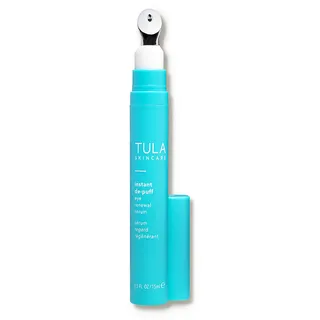
Tula Instant De-Puff Eye Renewal Serum

Tula Instant De-Puff Eye Renewal Serum

Efficacy87/100IrritancyMedium

Works for

Moisturizing
Acetyl hexapeptide-8, Caprylic/capric triglyceride + 19 more
Works well
What the product description says
“- Prebiotics: Nourish and balance skin.”
Source: Sephora CA

This product can help improve hydration of the skin with the two types of ingredients.

The first type is called “humectants”:
these ingredients help attract water. When humectants are on the surface of the skin, they “pull in” the moisture from the outside environment, or from within deeper layers of the skin. The following ingredients in this product do the job: algae extract, glycerin.

This product also contains ingredients called “occlusives”. They help reduce the speed with which our skin loses moisture to the outside environment. These ingredients also help soften the upper layer of the skin, so it feels less tight and nicer to the touch. The following ingredients in this product do the job: caprylic/capric triglyceride, algae extract.

The following ingredients in this product are especially good for supporting the skin barrier and helping with the hydration level: acetyl hexapeptide-8

Acetyl hexapeptide-8Hero· HumectantEffect: HighA type of peptide. Peptides are excellent moisturizers and might be able support collagen production reducing fine lines and wrinkles~0.2–0.35%
Caprylic/capric triglycerideKey active· Emollient, OcclusiveEffect: HighA good mix of fatty acids that forms a protective layer on the skin. Improves the shelf life of products. Derived from coconut and glycerin~5.7–7%
Hydrogenated ethylhexyl olivateKey active· EmollientEffect: MediumHelps soften the upper layer of the skin~4.2–5.2%
GlycerinKey active· HumectantEffect: HighOne of the best moisturizing ingredients. Naturally present in skin. It attracts water to the upper layer of the skin working as a humectant~3.1–3.8%
Cetearyl alcoholKey active· EmollientEffect: MediumA non-drying alcohol. Works as an emollient. Helps water and oil mix together and creates a nice product texture~2–2.4%
Lactococcus ferment lysateKey activeEffect: HighConsists of remains of dead bacteria cells. Is likely helpful in attracting water to the upper layer of the skin. Might be helpful in reducing inflammation and neutralizing free radicals in skin~1.6–2%
Carthamus tinctorius seed oilKey active· EmollientEffect: HighAn emollient that helps soften the skin and might help calm down inflammation~1.2–1.5%
Camelina sativa seed oilKey activeEffect: HighHelps soften the upper layer of the skin~0.9–1.1%
Algae extractKey active· Humectant, EmollientEffect: HighPlant extract that helps the skin to attract water and make it more smooth for touch. Also shows promise of anti-aging properties, but research is not extensive yet~0.35–0.6%
Bacillus fermentKey activeEffect: HighA product of bacterial fermentation. Can help attract water to the upper layer of the skin~0.25–0.45%
Hydrogenated olive oil unsaponifiablesKey active· EmollientEffect: MediumHelp soften the upper layer of the skin~0.25–0.45%
Sodium hyaluronateKey active· HumectantEffect: HighOne of the best moisturizing ingredients. Attracts water into the upper layer of the skin~0.2–0.35%
InulinKey activeEffect: HighHelps attract water to the upper layer of the skin. Is claimed to support the growth of "good" bacteria in skin (as a "prebiotic"), but the research is lacking~0.2–0.35%
Hydrolyzed rice proteinKey active· HumectantEffect: MediumHelps attract water to the upper layer of the skin. Might have some anti-oxidant properties~0.2–0.35%
Butylene glycol· HumectantEffect: LowUsed to create a nice product texture and help delivery of other ingredients. Might be somewhat helpful in attracting water to the upper layer of the skin~2.4–2.9%
Silybum marianum seed oilEffect: LowA plant oil that contains essential oils that can be irritating. Can help soften the upper layer of the skin. Might have some anti-oxidant activity but evidence is lacking~0.65–0.95%
Camellia sinensis leaf extractEffect: LowCan contain potent anti-oxidant compounds (abbreviated ECG, GCG, EGC, and EGCG) that might help protect the skin from free radicals. Can help calm down inflammation and has some anti-bacterial properties. Unfortunately, these antioxidants are unstable and lose their effectiveness very quickly in products. The concentration of the antioxidant compounds in the extract also tends to be low to be effective in topical formulation~0.4–0.6%
Olus oil· EmollientEffect: LowAn oil from a mixture of different vegetables. Helps soften the upper layer of the skin~0.25–0.5%
Pentylene glycol· EmollientEffect: LowUsed to preserve products, dissolve other ingredients and create a nice product texture~0.2–0.4%
Caprylyl glycol· Humectant, EmollientEffect: LowHelps preserve products and creates a nice product texture~0.2–0.4%
Lactic acidUnder-dosedAn exfoliating and moisturizing alpha-hydroxy acid (AHA). Typically causes less irritation than other AHAs, for example, glycolic acid. At high concentrations (about 15%), lactic acid can help reduce lines and wrinkles. Recent studies show that lactic acid can support the "good" bacteria living on skin's surface (healthy skin microbiome)~0.2–0.35%
Anti-aging
Acetyl hexapeptide-8, Lactococcus ferment lysate + 4 more
May help
What the product description says
“The formula is clinically proven to reduce the appearance of wrinkles and puffiness, while the unique metal applicator stays cold to instantly depuff and awaken eyes on contact.”
Source: Ulta

This product contains acetyl hexapeptide-8. This ingredient might be able to help reduce and prevent fine lines and wrinkles, improve skin elasticity and firmness, but there is not enough evidence that it actually works.

Acetyl hexapeptide-8Key activeEffect: MediumA type of peptide. Peptides are excellent moisturizers and might be able support collagen production reducing fine lines and wrinkles~0.2–0.35%
Lactococcus ferment lysateEffect: LowConsists of remains of dead bacteria cells. Is likely helpful in attracting water to the upper layer of the skin. Might be helpful in reducing inflammation and neutralizing free radicals in skin~1.6–2%
Camellia sinensis leaf extractEffect: LowCan contain potent anti-oxidant compounds (abbreviated ECG, GCG, EGC, and EGCG) that might help protect the skin from free radicals. Can help calm down inflammation and has some anti-bacterial properties. Unfortunately, these antioxidants are unstable and lose their effectiveness very quickly in products. The concentration of the antioxidant compounds in the extract also tends to be low to be effective in topical formulation~0.4–0.6%
Algae extractEffect: LowPlant extract that helps the skin to attract water and make it more smooth for touch. Also shows promise of anti-aging properties, but research is not extensive yet~0.35–0.6%
Ascorbyl palmitateEffect: Low, below effective doseBeing a lipid soluble form of vitamin C, it is more stable and can penetrate the skin better than L-Ascorbic acid. It is effective in protecting the skin from free radicals, as well as evening the skin tone, but is less effective in stimulating collagen production compared to L-Ascorbic acid.~0.2–0.35%
Lactic acidUnder-dosedAn exfoliating and moisturizing alpha-hydroxy acid (AHA). Typically causes less irritation than other AHAs, for example, glycolic acid. At high concentrations (about 15%), lactic acid can help reduce lines and wrinkles. Recent studies show that lactic acid can support the "good" bacteria living on skin's surface (healthy skin microbiome)~0.2–0.35%
Anti-oxidation
Not advertised by the brand · Camellia sinensis leaf extract, Lactococcus ferment lysate + 7 more
May help

This product contains antioxidants (camellia sinensis leaf extract) that might be able to help neutralize free radicals in skin to lessen the damage it gets from the UV light (sun). There is not enough evidence to confirm their effectiveness in skin though.

Camellia sinensis leaf extractKey activeEffect: MediumCan contain potent anti-oxidant compounds (abbreviated ECG, GCG, EGC, and EGCG) that might help protect the skin from free radicals. Can help calm down inflammation and has some anti-bacterial properties. Unfortunately, these antioxidants are unstable and lose their effectiveness very quickly in products. The concentration of the antioxidant compounds in the extract also tends to be low to be effective in topical formulation~0.4–0.6%
Lactococcus ferment lysateEffect: LowConsists of remains of dead bacteria cells. Is likely helpful in attracting water to the upper layer of the skin. Might be helpful in reducing inflammation and neutralizing free radicals in skin~1.6–2%
Carthamus tinctorius seed oilEffect: LowAn emollient that helps soften the skin and might help calm down inflammation~1.2–1.5%
Silybum marianum seed oilEffect: LowA plant oil that contains essential oils that can be irritating. Can help soften the upper layer of the skin. Might have some anti-oxidant activity but evidence is lacking~0.65–0.95%
Albizia julibrissin bark extractEffect: LowA plant extract that might help to neutralize free radicals in skin. Is claimed to help reduce hyperpigmentation but evidence is missing~0.4–0.6%
Vaccinium angustifolium fruit extractEffect: LowA plant extract tha can have anti-oxidant properties, but evidence of effectiveness in skin is lacking~0.3–0.55%
Hydrolyzed rice proteinEffect: LowHelps attract water to the upper layer of the skin. Might have some anti-oxidant properties~0.2–0.35%
Tocopheryl acetateEffect: Low, below effective doseA more stable but less bio-available form of vitamin E compared to Tocopherol. Might help moisturize and protect the skin from free radicals, but mostly used in low concentrations to stabilize other ingredients.~0.2–0.35%
Ascorbyl palmitateEffect: Low, below effective doseBeing a lipid soluble form of vitamin C, it is more stable and can penetrate the skin better than L-Ascorbic acid. It is effective in protecting the skin from free radicals, as well as evening the skin tone, but is less effective in stimulating collagen production compared to L-Ascorbic acid.~0.2–0.35%

Can it cause trouble?

Irritancy
2 strong irritants: Silybum marianum seed oil, Citrus aurantium dulcis peel extract
Medium risk
We flagged 18 ingredients with irritancy potential. Severity depends on your sensitivity threshold; the table lists the worst offenders first.
IngredientFunctionIrritationEst. amount
Silybum marianum seed oilA plant oil that contains essential oils that can be irritating. Can help soften the upper layer of the skin. Might have some anti-oxidant activity but evidence is lackingHigh~0.65–0.95%est.
Curcuma longa root extractA plant extract that can contain an active compound curcumin, that may have some anti-inflammatory properties when applied to the skin, but solid research is lacking and the typical concentration used in skincare products is too low. Can be an irritantHigh~0.5–0.75%est.
Citrus aurantium dulcis peel extractUsed as a fragranceHigh~0.4–0.6%est.
Albizia julibrissin bark extractA plant extract that might help to neutralize free radicals in skin. Is claimed to help reduce hyperpigmentation but evidence is missingHigh~0.4–0.6%est.
Caprylic/capric triglycerideA good mix of fatty acids that forms a protective layer on the skin. Improves the shelf life of products. Derived from coconut and glycerinMedium~5.7–7%est.
Avena sativa bran extract—Medium~0.55–0.8%est.
Vaccinium angustifolium fruit extractA plant extract tha can have anti-oxidant properties, but evidence of effectiveness in skin is lackingMedium~0.3–0.55%est.
Lactic acidAn exfoliating and moisturizing alpha-hydroxy acid (AHA). Typically causes less irritation than other AHAs, for example, glycolic acid. At high concentrations (about 15%), lactic acid can help reduce lines and wrinkles. Recent studies show that lactic acid can support the "good" bacteria living on skin's surface (healthy skin microbiome)Medium~0.2–0.35%est.
Tocopheryl acetateA more stable but less bio-available form of vitamin E compared to Tocopherol. Might help moisturize and protect the skin from free radicals, but mostly used in low concentrations to stabilize other ingredients.Medium~0.2–0.35%est.
Ascorbyl palmitateBeing a lipid soluble form of vitamin C, it is more stable and can penetrate the skin better than L-Ascorbic acid. It is effective in protecting the skin from free radicals, as well as evening the skin tone, but is less effective in stimulating collagen production compared to L-Ascorbic acid.Medium~0.2–0.35%est.
Acrylates/c10-30 alkyl acrylate crosspolymerMaintains the texture of skincare products. Allows the product to spread evenly. Helps oil and water mix togetherMedium~0.2–0.4%est.
Citric acidCan work as an exfoliant but is typically used to adjust the product pHMedium~0.2–0.35%est.
Sorbic acidA preservativeMedium~0.2–0.35%est.
Hexylene glycolHelps create a more spreadable product textureMedium~0.15–0.3%est.
Caprylyl glycolHelps preserve products and creates a nice product textureMedium~0.2–0.4%est.
EthylhexylglycerinA preservativeMedium~0.15–0.3%est.
Pentylene glycolUsed to preserve products, dissolve other ingredients and create a nice product textureMedium~0.2–0.4%est.
Potassium sorbateA preservativeMedium~0.2–0.35%est.
Comedogenic
2 ingredients rated 2 or more on the 0–5 pore-clogging scale
2 flagged
These ingredients have a comedogenic rating of 2 or more on a 0–5 scale; the table shows each one's rating. In leave-on products they can clog pores in acne-prone skin.
IngredientFunctionRatingEst. amount
Algae extractPlant extract that helps the skin to attract water and make it more smooth for touch. Also shows promise of anti-aging properties, but research is not extensive yet3/5~0.35–0.6%est.
Cetearyl alcoholA non-drying alcohol. Works as an emollient. Helps water and oil mix together and creates a nice product texture2/5~2–2.4%est.

User reviews

Would you recommend?
No community reviews yet.

Be the first — your take helps the next person decide.

Ingredients

Filter by role to see what each ingredient is doing.

Water~45–55%
Formula
Irritation risk
Low

Plain old water

More about Water
Caprylic/capric triglyceride~5.7–7%
Key activeIrritant · medium
Irritation risk
Medium
Works for
Moisturizing

A good mix of fatty acids that forms a protective layer on the skin. Improves the shelf life of products. Derived from coconut and glycerin

More about Caprylic/capric triglyceride
Hydrogenated ethylhexyl olivate~4.2–5.2%
Key active
Irritation risk
Low
Works for
Moisturizing

Helps soften the upper layer of the skin

More about Hydrogenated ethylhexyl olivate
Glycerin~3.1–3.8%
Key active
Irritation risk
Low
Works for
Moisturizing

One of the best moisturizing ingredients. Naturally present in skin. It attracts water to the upper layer of the skin working as a humectant

More about Glycerin
Butylene glycol~2.4–2.9%
Formula
Irritation risk
Low
Works for
Moisturizing

Used to create a nice product texture and help delivery of other ingredients. Might be somewhat helpful in attracting water to the upper layer of the skin

More about Butylene glycol
Cetearyl alcohol~2–2.4%
Key activeComedogenic 2/5
Irritation risk
Low
Comedogenicity
2/5
Works for
CleansingMoisturizing

A non-drying alcohol. Works as an emollient. Helps water and oil mix together and creates a nice product texture

More about Cetearyl alcohol
Lactococcus ferment lysate~1.6–2%
Key active
Irritation risk
Low
Works for
MoisturizingAnti-agingAnti-inflammatoryAnti-oxidation

Consists of remains of dead bacteria cells. Is likely helpful in attracting water to the upper layer of the skin. Might be helpful in reducing inflammation and neutralizing free radicals in skin

More about Lactococcus ferment lysate
Sodium potassium aluminum silicate~1.5–1.8%
Formula
Carthamus tinctorius seed oil~1.2–1.5%
Key active
Irritation risk
Low
Works for
MoisturizingAnti-oxidation

An emollient that helps soften the skin and might help calm down inflammation

More about Carthamus tinctorius seed oil
Camelina sativa seed oil~0.9–1.1%
Key active
Irritation risk
Low
Works for
Moisturizing

Helps soften the upper layer of the skin

More about Camelina sativa seed oil
Silybum marianum seed oil~0.65–0.95%
Irritant · high
Irritation risk
High
Works for
MoisturizingAnti-oxidation

A plant oil that contains essential oils that can be irritating. Can help soften the upper layer of the skin. Might have some anti-oxidant activity but evidence is lacking

More about Silybum marianum seed oil
Curcuma longa root extract~0.5–0.75%
Irritant · high
Irritation risk
High
Works for
Anti-inflammatory

A plant extract that can contain an active compound curcumin, that may have some anti-inflammatory properties when applied to the skin, but solid research is lacking and the typical concentration used in skincare products is too low. Can be an irritant

More about Curcuma longa root extract
Citrus aurantium dulcis peel extract~0.4–0.6%
Irritant · high
Irritation risk
High

Used as a fragrance

More about Citrus aurantium dulcis peel extract
Albizia julibrissin bark extract~0.4–0.6%
Irritant · high
Irritation risk
High
Works for
Anti-oxidationEvens skin toneAnti-inflammatory

A plant extract that might help to neutralize free radicals in skin. Is claimed to help reduce hyperpigmentation but evidence is missing

More about Albizia julibrissin bark extract
Avena sativa bran extract~0.55–0.8%
Irritant · medium
Camellia sinensis leaf extract~0.4–0.6%
Key active
Irritation risk
Low
Works for
AntibacterialAnti-oxidationAnti-agingAnti-blemishEvens skin toneMoisturizing

Can contain potent anti-oxidant compounds (abbreviated ECG, GCG, EGC, and EGCG) that might help protect the skin from free radicals. Can help calm down inflammation and has some anti-bacterial properties. Unfortunately, these antioxidants are unstable and lose their effectiveness very quickly in products. The concentration of the antioxidant compounds in the extract also tends to be low to be effective in topical formulation

More about Camellia sinensis leaf extract
Vaccinium angustifolium fruit extract~0.3–0.55%
Irritant · medium
Irritation risk
Medium
Works for
Anti-oxidation

A plant extract tha can have anti-oxidant properties, but evidence of effectiveness in skin is lacking

More about Vaccinium angustifolium fruit extract
Cichorium intybus root extract~0.3–0.55%
Formula
Algae extract~0.35–0.6%
Key activeComedogenic 3/5
Irritation risk
Low
Comedogenicity
3/5
Works for
MoisturizingAnti-aging

Plant extract that helps the skin to attract water and make it more smooth for touch. Also shows promise of anti-aging properties, but research is not extensive yet

More about Algae extract
Bacillus ferment~0.25–0.45%
Key active
Irritation risk
Low
Works for
Moisturizing

A product of bacterial fermentation. Can help attract water to the upper layer of the skin

More about Bacillus ferment
Olus oil~0.25–0.5%
Formula
Irritation risk
Low
Works for
Moisturizing

An oil from a mixture of different vegetables. Helps soften the upper layer of the skin

More about Olus oil
Hydrogenated olive oil unsaponifiables~0.25–0.45%
Key active
Irritation risk
Low
Works for
Moisturizing

Help soften the upper layer of the skin

More about Hydrogenated olive oil unsaponifiables
Acetyl hexapeptide-8~0.2–0.35%
Hero · Moisturizing
Irritation risk
Low
Works for
MoisturizingAnti-aging

A type of peptide. Peptides are excellent moisturizers and might be able support collagen production reducing fine lines and wrinkles

More about Acetyl hexapeptide-8
Lactic acid~0.2–0.35%
Under-dosedIrritant · medium
Irritation risk
Medium
Works for
Evens skin toneMoisturizingExfoliationAnti-aging

An exfoliating and moisturizing alpha-hydroxy acid (AHA). Typically causes less irritation than other AHAs, for example, glycolic acid. At high concentrations (about 15%), lactic acid can help reduce lines and wrinkles. Recent studies show that lactic acid can support the "good" bacteria living on skin's surface (healthy skin microbiome)

More about Lactic acid
Yogurt powder~0.2–0.35%
Formula
Irritation risk
Low
More about Yogurt powder
Hydrolyzed rice protein~0.2–0.35%
Key active
Irritation risk
Low
Works for
MoisturizingAnti-oxidation

Helps attract water to the upper layer of the skin. Might have some anti-oxidant properties

More about Hydrolyzed rice protein
Tocopheryl acetate~0.2–0.35%
Irritant · medium
Irritation risk
Medium
Works for
Anti-oxidation

A more stable but less bio-available form of vitamin E compared to Tocopherol. Might help moisturize and protect the skin from free radicals, but mostly used in low concentrations to stabilize other ingredients.

More about Tocopheryl acetate
Ascorbyl palmitate~0.2–0.35%
Irritant · medium
Irritation risk
Medium
Works for
Anti-oxidationAnti-aging

Being a lipid soluble form of vitamin C, it is more stable and can penetrate the skin better than L-Ascorbic acid. It is effective in protecting the skin from free radicals, as well as evening the skin tone, but is less effective in stimulating collagen production compared to L-Ascorbic acid.

More about Ascorbyl palmitate
Darutoside~0.15–0.3%
Formula
Irritation risk
Low
More about Darutoside
Ammonium acryloyldimethyltaurate/vp copolymer~0.2–0.35%
Formula
Irritation risk
Low

Increases thickness of a product. Texture enhancer for oil-in-water emulsions

More about Ammonium acryloyldimethyltaurate/vp copolymer
Silica~0.25–0.5%
Formula
Irritation risk
Low

Used to absorb oil and can temporarily mattify skin

More about Silica
Xanthan gum~0.2–0.35%
Formula
Irritation risk
Low
Works for
Cleansing

Used to create a thicker product consistency

More about Xanthan gum
Inulin~0.2–0.35%
Key active
Irritation risk
Low
Works for
MoisturizingAnti-blemish

Helps attract water to the upper layer of the skin. Is claimed to support the growth of "good" bacteria in skin (as a "prebiotic"), but the research is lacking

More about Inulin
Acrylates/c10-30 alkyl acrylate crosspolymer~0.2–0.4%
Irritant · medium
Irritation risk
Medium

Maintains the texture of skincare products. Allows the product to spread evenly. Helps oil and water mix together

More about Acrylates/c10-30 alkyl acrylate crosspolymer
Sodium hydroxide~0.2–0.35%
Formula
Irritation risk
Low

Used to adjust the product's pH

More about Sodium hydroxide
Citric acid~0.2–0.35%
Irritant · medium
Irritation risk
Medium

Can work as an exfoliant but is typically used to adjust the product pH

More about Citric acid
Sodium chloride~0.2–0.4%
Formula
Irritation risk
Low

Used to stabilize mixtures of oil and water, and create thicker, gel-like product textures

More about Sodium chloride
Sodium hyaluronate~0.2–0.35%
Key active
Irritation risk
Low
Works for
Moisturizing

One of the best moisturizing ingredients. Attracts water into the upper layer of the skin

More about Sodium hyaluronate
Sorbic acid~0.2–0.35%
Irritant · medium
Irritation risk
Medium

A preservative

More about Sorbic acid
Hexylene glycol~0.15–0.3%
Irritant · medium
Irritation risk
Medium
Works for
Cleansing

Helps create a more spreadable product texture

More about Hexylene glycol
Caprylyl glycol~0.2–0.4%
Irritant · medium
Irritation risk
Medium
Works for
Moisturizing

Helps preserve products and creates a nice product texture

More about Caprylyl glycol
Ethylhexylglycerin~0.15–0.3%
Irritant · medium
Irritation risk
Medium

A preservative

More about Ethylhexylglycerin
Pentylene glycol~0.2–0.4%
Irritant · medium
Irritation risk
Medium
Works for
Moisturizing

Used to preserve products, dissolve other ingredients and create a nice product texture

More about Pentylene glycol
Sodium benzoate~0.15–0.3%
Formula
Irritation risk
Low

A preservative

More about Sodium benzoate
Potassium sorbate~0.2–0.35%
Irritant · medium
Irritation risk
Medium

A preservative

More about Potassium sorbate
Phenoxyethanol~0.15–0.3%
Formula
Irritation risk
Low

A preservative. It helps prevent bacterial growth in cosmetic products

More about Phenoxyethanol
Titanium dioxide~0.1–0.2%
Formula
Irritation risk
Low
Works for
Sun protection

Works as a UV filter when used in high concentrations. It is photostable and is effective mostly against the UVB light, with some protection in the UVA range. In small concentrations, used for its ability to improve the color of cosmetic products. Is usually well tolerated by the skin

More about Titanium dioxide
Ingredient list view

Water, Caprylic/capric triglyceride, Hydrogenated ethylhexyl olivate, Glycerin, Butylene glycol, Cetearyl alcohol, Lactococcus ferment lysate, Sodium potassium aluminum silicate, Carthamus tinctorius seed oil, Camelina sativa seed oil, Silybum marianum seed oil, Curcuma longa root extract, Citrus aurantium dulcis peel extract, Albizia julibrissin bark extract, Avena sativa bran extract, Camellia sinensis leaf extract, Vaccinium angustifolium fruit extract, Cichorium intybus root extract, Algae extract, Bacillus ferment, Olus oil, Hydrogenated olive oil unsaponifiables, Acetyl hexapeptide-8, Lactic acid, Yogurt powder, Hydrolyzed rice protein, Tocopheryl acetate, Ascorbyl palmitate, Darutoside, Ammonium acryloyldimethyltaurate/vp copolymer, Silica, Xanthan gum, Inulin, Acrylates/c10-30 alkyl acrylate crosspolymer, Sodium hydroxide, Citric acid, Sodium chloride, Sodium hyaluronate, Sorbic acid, Hexylene glycol, Caprylyl glycol, Ethylhexylglycerin, Pentylene glycol, Sodium benzoate, Potassium sorbate, Phenoxyethanol, Titanium dioxide

Compare prices

Retailers ranked by price — lowest first.

Amazon USPrice as of 11/4 18:24 GMT
$58.00
Buy
Sephora
$58.00
Buy
Ulta0.5 oz
$58.00
Buy

Affiliate links · As an Amazon Associate, WIMJ earns from qualifying purchases.

Worth comparing, line by line.

Match % combines shared ingredients, the first five ingredients, shared actives and hero ingredients, irritancy (lower counts in the alternative's favour), texture and body area. Only products in the same routine step are compared.

Side-by-side comparison of this product against its closest alternatives
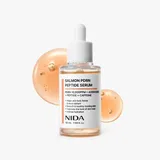
TulaInstant De-Puff Eye Renewal SerumYOUR PRODUCTFYI CosmeticsMulti-Effect Eye SerumCliniqueMoisture Surge Eye 96-Hour Hydro-Filler Concentrate Eyes All Skin TypesNIDASalmon PDRN Peptide Serum
Match—54%53%52%
Price$58.00—$45.90−$12.10$13.32−$44.68
Shared key ingredients—4 of 115 of 113 of 11
Key difference—NiacinamideNiacinamideCopper Tripeptide-1
Irritancy Medium Low Medium Low
Drying alcohol————
View product Shop Shop Shop

More alternatives: Derm Institute Youth Alchemy Eye SerumPacifica Beauty Future Youth Time Shift Eye Serum

Cheaper alternatives? See how this stacks up against similar formulas.
We compare ingredient profiles across our catalog — pick the closest match for your budget.
Open dupe finder

Product summary

"Tula - Instant De-Puff Eye Renewal Serum" is effective for: Moisturizing

This product could be helpful for: Anti-aging, but its actives are not the most effective or are not well-studied.

Ingredient callouts

  • Peptides (acetyl hexapeptide-8 0.20% - 0.35%). There are many different kind of Peptides and they are naturally present in our skin. They all are a combination of aminoacids. Some of them work as natural antibiotics, promote wound-healing and production of collagen. The science is still not settled on how effective Peptides are in skincare, but it is very likely that they have a benefit. They might help restore the skin barrier and fight the signs of aging. At the very least, Peptides work as humectants: they attract water to the upper layer of the skin and improve its hydration.
  • Humectants (glycerin 3.10% - 3.80%, algae extract 0.35% - 0.60%, acetyl hexapeptide-8 0.20% - 0.35% and sodium hyaluronate 0.20% - 0.35%). These ingredients help attract water to the upper layer of the skin and improve the skin hydration.

About the brand

According to Cruelty-Free Kitty "Tula" is cruelty free, but its parent company is not.

Price

The product retails for 58.00$ in the United States and for 76.00CA$ in Canada.

For a detailed price comparison: click here.

Sources cited in this review

Every concentration estimate and effectiveness label is anchored to one of these 14 studies and safety reviews.

  1. 1
  2. 2
  3. 3
  4. 4
  5. 5
  6. 6
Tula Instant De-Puff Eye Renewal Serum
TulaInstant De-Puff Eye Renewal Serum

Affiliate links · As an Amazon Associate, WIMJ earns from qualifying purchases.

As an Amazon Associate, WIMJ earns from qualifying purchases.