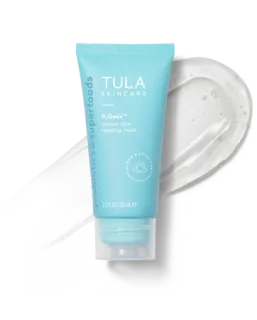
Works for
MoisturizingCeramide np, Glycerin + 20 moreWorks well
“This thirst-quenching treatment rapidly revives tired, dehydrated skin with instant hydration, cooling comfort & visible glow in just 10 minutes.”
This product can help improve hydration of the skin with the two types of ingredients.
The first type is called “humectants”:
these ingredients help attract water.
When humectants are on the surface of the skin, they “pull in” the moisture from the outside environment, or from
within deeper layers of the skin. The following ingredients in this product do the job:
glycerin, lactobacillus ferment.
This product also contains ingredients called “occlusives”. They help reduce the speed with which our skin loses moisture to the outside environment. These ingredients also help soften the upper layer of the skin, so it feels less tight and nicer to the touch. The following ingredients in this product do the job: ceramide np, caprylyl glycol.
The following ingredients in this product are especially good for supporting the skin barrier and helping with the hydration level: ceramide np
Evens skin toneSide benefit · Alpha-arbutin, Tetrahexyldecyl ascorbate + 1 moreWorks well
This product can help reduce hypepigmentation and even out the skin tone because it contains the following effective ingredients: alpha-arbutin
Keep in mind that you would need to apply any topical skincare targetted at hypigmentation consistently for a couple of months to get a result. No topical skincare product can help get rid of hyperpigmentation (including post-acne marks and age spots) instantly.
Can it cause trouble?
Irritancy2 strong irritants: Citrus glauca fruit extract, Santalum acuminatum fruit extractMedium risk
Comedogenic1 ingredient rated 2 or more on the 0–5 pore-clogging scale1 flagged
User reviews
Be the first — your take helps the next person decide.
Ingredients
Filter by role to see what each ingredient is doing.
Water~45–55%
Glycerin~4.4–5.4%
- Irritation risk
- Low
One of the best moisturizing ingredients. Naturally present in skin. It attracts water to the upper layer of the skin working as a humectant
More about GlycerinAlpha-arbutin~4.3–5.2%
- Irritation risk
- Medium
Might help reduce hyperpigmentation when used regularly over a long period of time. Is more effective than beta-arbutin
More about Alpha-arbutinPolysorbate 80~2.8–3.4%
Opuntia ficus-indica fruit extract~2.3–2.8%
- Irritation risk
- Low
Anastatica hierochuntica extract~1.9–2.3%
- Irritation risk
- Low
Sodium acetylated hyaluronate~1.6–1.9%
- Irritation risk
- Low
A type of hyaluronic acid that works as an excellent moisturizer by attracting water into the upper layer of the skin. Is typically feels less sticky on the skin compared to the usual hyaluronic acid
More about Sodium acetylated hyaluronateSodium hyaluronate~1.4–1.7%
- Irritation risk
- Low
One of the best moisturizing ingredients. Attracts water into the upper layer of the skin
More about Sodium hyaluronateSodium hyaluronate crosspolymer~1.1–1.4%
- Irritation risk
- Medium
Attracts water into the upper layer of the skin
More about Sodium hyaluronate crosspolymerHydrolyzed sodium hyaluronate~0.9–1.1%
- Irritation risk
- Low
Attracts water into the upper layer of the skin
More about Hydrolyzed sodium hyaluronateLactococcus ferment lysate~0.65–1%
- Irritation risk
- Low
Consists of remains of dead bacteria cells. Is likely helpful in attracting water to the upper layer of the skin. Might be helpful in reducing inflammation and neutralizing free radicals in skin
More about Lactococcus ferment lysateLactobacillus~0.55–0.8%
- Irritation risk
- Low
A non-living ingredient made by fermentation with the bacteria Lactobacillus. It can help attract water to the upper layer of the skin and might help reduce inflammation
More about LactobacillusLactobacillus ferment~0.5–0.75%
- Irritation risk
- Low
A fermentation product created by bacteria Lactobacillus. The fermented product has anti-bacterial properties and might be helpful in calming down inflammation, but studies are lacking. Helps attract water to the upper layer of the skin. Can be used as a preservative
More about Lactobacillus fermentCeramide np~0.5–0.75%
- Irritation risk
- Low
A type of lipid similar to ceramides naturally present in skin. Helps to soften the upper layer of the skin and supports the skin barrier function to keep it hydrated. Can help to prevent inflammation in skin
More about Ceramide npInulin~0.4–0.6%
- Irritation risk
- Low
Helps attract water to the upper layer of the skin. Is claimed to support the growth of "good" bacteria in skin (as a "prebiotic"), but the research is lacking
More about InulinCurcuma longa root extract~0.35–0.65%
- Irritation risk
- High
A plant extract that can contain an active compound curcumin, that may have some anti-inflammatory properties when applied to the skin, but solid research is lacking and the typical concentration used in skincare products is too low. Can be an irritant
More about Curcuma longa root extractAloe barbadensis leaf juice~0.4–0.6%
- Irritation risk
- Medium
Traditionally used to treat sunburns, dermatitis and inflammation, but evidence for its effectiveness is lacking. The extract can contain humectants that help attract water into the skin
More about Aloe barbadensis leaf juiceTetrahexyldecyl ascorbate~0.35–0.6%
- Irritation risk
- Medium
Being a lipid soluble form of vitamin C, it is more stable than ascorbic acid, but still degrades quickly and needs to be stabilized in a formulation with another ingredient. It is claimed to penetrate skin better than pure vitamin C and have the the similar benefits, but solid studies of its effectiveness are lacking. Is likely to require a higher concentration in a product than pure vitamin C to be effective. It might be able to help reduce pore clogging.
More about Tetrahexyldecyl ascorbateBeta vulgaris root extract~0.3–0.55%
- Irritation risk
- Medium
A plant extract that might have some antioxidant properties, but mostly used in cosmetics for its color
More about Beta vulgaris root extractAcacia victoriae fruit extract~0.25–0.5%
- Irritation risk
- Low
Citrus glauca fruit extract~0.25–0.5%
- Irritation risk
- High
Santalum acuminatum fruit extract~0.25–0.5%
- Irritation risk
- High
Used as a fragrance. Can be irritating
More about Santalum acuminatum fruit extractSaccharomyces cerevisiae extract~0.25–0.45%
- Irritation risk
- Medium
A moisturizing ingredient that works as a humectant to attract water to the upper layer of the skin.
More about Saccharomyces cerevisiae extractSpirulina platensis extract~0.25–0.45%
- Irritation risk
- Low
- Comedogenicity
- 3/5
An algae extract. Might help to attract water to the upper layer of the skin and have an anti-oxidant effect
More about Spirulina platensis extractButylene glycol~0.25–0.45%
- Irritation risk
- Low
Used to create a nice product texture and help delivery of other ingredients. Might be somewhat helpful in attracting water to the upper layer of the skin
More about Butylene glycolPolymnia sonchifolia root juice~0.25–0.45%
- Irritation risk
- High
A plant extract that helps attract water to the upper layer of the skin and might have some anti-oxidant properties
More about Polymnia sonchifolia root juiceGlyceryl dioleate~0.3–0.5%
- Irritation risk
- Low
Pentylene glycol~0.3–0.55%
- Irritation risk
- Medium
Used to preserve products, dissolve other ingredients and create a nice product texture
More about Pentylene glycolCarbomer~0.25–0.45%
- Irritation risk
- Low
Helps create a thicker or gel-like product texture. It is not a surfactant but can be used in gentle cleansing formulations
More about CarbomerPhenoxyethanol~0.25–0.45%
- Irritation risk
- Low
A preservative. It helps prevent bacterial growth in cosmetic products
More about PhenoxyethanolSodium hydroxide~0.25–0.45%
Ethylhexylglycerin~0.25–0.45%
Sodium citrate~0.25–0.45%
- Irritation risk
- Medium
Helps to control the skin's pH level. Maintains the skin's natural film of amino-lactic acids and oils. Helps to preserve products
More about Sodium citrateMaltodextrin~0.25–0.45%
- Irritation risk
- Low
Used to stabilize the product formulation and can help absorb oil
More about MaltodextrinCaprylyl glycol~0.25–0.5%
- Irritation risk
- Medium
Helps preserve products and creates a nice product texture
More about Caprylyl glycol1,2-hexanediol~0.25–0.45%
Hexylene glycol~0.25–0.45%
- Irritation risk
- Medium
Helps create a more spreadable product texture
More about Hexylene glycolSodium phytate~0.25–0.4%
Trehalose~0.25–0.45%
- Irritation risk
- Low
A sugar that attracts water to the upper layer of the skin
More about TrehaloseTriolein~0.2–0.4%
Mica~0.25–0.5%
- Irritation risk
- Low
Creates an illusion of smoother and more radiant skin tone. Adds shimmer to the skin by reflecting light
More about MicaAlpha-glucan oligosaccharide~0.3–0.55%
- Irritation risk
- Low
Helps attract water to the upper layer of the skin
More about Alpha-glucan oligosaccharideSodium benzoate~0.2–0.35%
Potassium sorbate~0.15–0.3%
Lactic acid~0.15–0.3%
- Irritation risk
- Medium
An exfoliating and moisturizing alpha-hydroxy acid (AHA). Typically causes less irritation than other AHAs, for example, glycolic acid. At high concentrations (about 15%), lactic acid can help reduce lines and wrinkles. Recent studies show that lactic acid can support the "good" bacteria living on skin's surface (healthy skin microbiome)
More about Lactic acidCitric acid~0.15–0.25%
- Irritation risk
- Medium
Can work as an exfoliant but is typically used to adjust the product pH
More about Citric acidSodium chloride~0.15–0.3%
- Irritation risk
- Low
Used to stabilize mixtures of oil and water, and create thicker, gel-like product textures
More about Sodium chlorideTocopherol~0.15–0.3%
- Irritation risk
- Low
Pure form of vitamin E. Can help moisturise and protect the skin from free radicals. Often used to help stabilise other ingredients or the formula itself
More about TocopherolTitanium dioxide~0.1–0.2%
- Irritation risk
- Low
Works as a UV filter when used in high concentrations. It is photostable and is effective mostly against the UVB light, with some protection in the UVA range. In small concentrations, used for its ability to improve the color of cosmetic products. Is usually well tolerated by the skin
More about Titanium dioxideCi 42090~0.1–0.15%
Ingredient list view
Water, Glycerin, Alpha-arbutin, Polysorbate 80, Opuntia ficus-indica fruit extract, Anastatica hierochuntica extract, Sodium acetylated hyaluronate, Sodium hyaluronate, Sodium hyaluronate crosspolymer, Hydrolyzed sodium hyaluronate, Lactococcus ferment lysate, Lactobacillus, Lactobacillus ferment, Ceramide np, Inulin, Curcuma longa root extract, Aloe barbadensis leaf juice, Tetrahexyldecyl ascorbate, Beta vulgaris root extract, Acacia victoriae fruit extract, Citrus glauca fruit extract, Santalum acuminatum fruit extract, Saccharomyces cerevisiae extract, Spirulina platensis extract, Butylene glycol, Polymnia sonchifolia root juice, Glyceryl dioleate, Pentylene glycol, Carbomer, Phenoxyethanol, Sodium hydroxide, Ethylhexylglycerin, Sodium citrate, Maltodextrin, Caprylyl glycol, 1,2-hexanediol, Hexylene glycol, Sodium phytate, Trehalose, Triolein, Mica, Alpha-glucan oligosaccharide, Sodium benzoate, Potassium sorbate, Lactic acid, Citric acid, Sodium chloride, Tocopherol, Titanium dioxide, Ci 42090
Compare prices
Retailers ranked by price — lowest first.

Worth comparing, line by line.
Match % combines shared ingredients, the first five ingredients, shared actives and hero ingredients, irritancy (lower counts in the alternative's favour), texture and body area. Only products in the same routine step are compared.
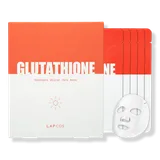
| TulaH₂OasisYOUR PRODUCT | COSRXThe Alpha-Arbutin Discoloration Care Hydrogel Mask 34g (1 Mask) | LapcosGlutathione Sheet Mask | APRIL SKINTXA Niacinamide Collagen 99 Capsule Gel Mask | |
|---|---|---|---|---|
| Match | — | 46% | 44% | 44% |
| Price | $34.00 | $3.33−$30.67 | $15.75−$18.25 | $4.04−$29.96 |
| Shared key ingredients | — | 6 of 15 | 3 of 15 | 3 of 15 |
| Key difference | — | Niacinamide | Acetyl Octapeptide-3 | Niacinamide |
| Irritancy | Medium | Medium | Medium | Medium |
| Drying alcohol | — | — | — | — |
| View product | Shop | Shop | Shop |


More alternatives: Anua Birch Moisture MaskFormal Bee Propolis Vita C Real Honeymoon Glow Mask
Product summary
"Tula - H₂Oasis" is effective for: Moisturizing and Evens skin tone
Ingredient callouts
- Ceramides (ceramide np 0.50% - 0.75%). Ceramides are a type of lipids that our skin produces itself. They are a building block of the skin's barrier. Ceramides used in skincare are synthetic or extracted from plants. They work well for softening the skin surface and "patch holes" in the skin's barrier.
- Humectants (trehalose 0.25% - 0.40%, yeast extract 0.25% - 0.45%, lactobacillus ferment 0.50% - 0.75%, sodium hyaluronate crosspolymer 1.10% - 1.40%, sodium hyaluronate 1.40% - 1.70%, sodium acetylated hyaluronate 1.60% - 1.90% and glycerin 4.40% - 5.40%). These ingredients help attract water to the upper layer of the skin and improve the skin hydration.
About the brand
According to Cruelty-Free Kitty "Tula" is cruelty free, but its parent company is not.
Price
The product retails for 34.00$ in the United States.
For a detailed price comparison: click here.
Sources cited in this review
Every concentration estimate and effectiveness label is anchored to one of these 19 studies and safety reviews.
- 1
- 2
- 3Hyaluronic acid: A key molecule in skin agingncbi.nlm.nih.gov
- 4
- 5
- 6

Affiliate links · As an Amazon Associate, WIMJ earns from qualifying purchases.