Works for:
based on ingredients and %- Moisturizing
Doesn't work for:
based on ingredients and %- Evens skin tone
- Exfoliation
Can it cause trouble?
- Irritation risk: high
- Comedogenic risk ingredients: 2
Key actives

Product Summary
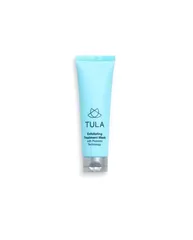
"Tula - Deluxe Exfoliating Treatment Mask - FREE with code HALLOWEEN18" could be helpful for: Moisturizing, but its actives are not the most effective or are not well-studied.
Ingredient callouts
- this product includes a form of Retinoids (vitamin A) - retinyl palmitate 0.20% - 0.40%, but this type of vitamin A is not very effective. It could in theory help with fine lines and wrinkles, but the effect is most likely minimal.
- Humectants (glycerin 4.50% - 5.50%). These ingredients help attract water to the upper layer of the skin and improve the skin hydration.
About the brand
According to Cruelty-Free Kitty "Tula" is cruelty free and so is its parent company.
Moisturizing
What does the product description say?
Detoxifying bentonite clay mask provides gentle exfoliation without stripping the skin of essential oils, making way for antioxidant-rich blueberry extract to hydrate and improve skin tone.
Source: Tula
This product can help improve hydration of the skin with the two types of ingredients.
The first type is called “humectants”:
these ingredients help attract water.
When humectants are on the surface of the skin, they “pull in” the moisture from the outside environment, or from
within deeper layers of the skin. The following ingredients in this product do the job:
glycerin, hydrolyzed rice protein.
This product also contains ingredients called “occlusives”. They help reduce the speed with which our skin loses moisture to the outside environment. These ingredients also help soften the upper layer of the skin, so it feels less tight and nicer to the touch. The following ingredients in this product do the job: butyrospermum parkii butter, carthamus tinctorius seed oil.
Helps soften the upper layer of the skin
An emollient that helps soften the skin and might help calm down inflammation
One of the best moisturizing ingredients. Naturally present in skin. It attracts water to the upper layer of the skin working as a humectant
An emollient that helps soften the skin. Often used to stabilize other ingredients, for example, sunscreen
A great moisturising ingredient that softens the skin and reduces water loss from its upper layer. It also can be helpful in protecting skin from free radicals
Helps attract water to the upper layer of the skin. Might have some anti-oxidant properties
Helps attract water to the upper layer of the skin
Helps attract water to the upper layer of the skin
An emollient that helps soften the skin but is not effective for restoring its barrier function. Might be helpful to calm down inflammation
An oil from a mixture of different vegetables. Helps soften the upper layer of the skin
Helps preserve products and creates a nice product texture
An emollient that helps to soften the skin and create a pleasant product texture and stabilize the formulation
Used to preserve products, dissolve other ingredients and create a nice product texture
Used to create a nice product texture and help delivery of other ingredients. Might be somewhat helpful in attracting water to the upper layer of the skin
An exfoliating and moisturizing alpha-hydroxy acid (AHA). Typically causes less irritation than other AHAs, for example, glycolic acid. At high concentrations (about 15%), lactic acid can help reduce lines and wrinkles. Recent studies show that lactic acid can support the "good" bacteria living on skin's surface (healthy skin microbiome)
Consists of remains of dead yeast bacteria cells. Helps to hydrate the skin and reduce irritation. Might has some anti-oxidant effect
Can contain potent anti-oxidant compounds (abbreviated ECG, GCG, EGC, and EGCG) that might help protect the skin from free radicals. Can help calm down inflammation and has some anti-bacterial properties. Unfortunately, these antioxidants are unstable and lose their effectiveness very quickly in products. The concentration of the antioxidant compounds in the extract also tends to be low to be effective in topical formulation
Evens skin tone
What does the product description say?
Detoxifying bentonite clay mask provides gentle exfoliation without stripping the skin of essential oils, making way for antioxidant-rich blueberry extract to hydrate and improve skin tone.
Source: Tula
Effective ingredients missing or their concentration is too low
An exfoliating and moisturizing alpha-hydroxy acid (AHA). Typically causes less irritation than other AHAs, for example, glycolic acid. At high concentrations (about 15%), lactic acid can help reduce lines and wrinkles. Recent studies show that lactic acid can support the "good" bacteria living on skin's surface (healthy skin microbiome)
Three steps removed from the active form of vitamin A - retinoic acid. To have an effect in the skin, it first needs to be converted twice to become the retinoic acid. This means it is less potent than retinol, but could also be less irritating. Once converted to the retinoic acid in the skin, it helps against all signs of aging, improves skin cell turnover and helps fight blemishes and clogged pores. However, in many cosmetic formulations, it is used in a concentration that is too low to have the full effect
Consists of remains of dead yeast bacteria cells. Helps to hydrate the skin and reduce irritation. Might has some anti-oxidant effect
Can contain potent anti-oxidant compounds (abbreviated ECG, GCG, EGC, and EGCG) that might help protect the skin from free radicals. Can help calm down inflammation and has some anti-bacterial properties. Unfortunately, these antioxidants are unstable and lose their effectiveness very quickly in products. The concentration of the antioxidant compounds in the extract also tends to be low to be effective in topical formulation
Exfoliation
What does the product description say?
Deluxe Exfoliating Treatment Mask .
Source: From product name
This product does not contain effective exfoliating ingredients. It might be able to deliver physical exfoliation, that is scrub off some of the dead cells on the surface of the skin. We do not recommend physical exfoliation, because it is not uniform (some bits of skin can get exfoliated too much while others not at all). It can also traumatize the skin and aggrevate acne and other skin conditions.
An exfoliating and moisturizing alpha-hydroxy acid (AHA). Typically causes less irritation than other AHAs, for example, glycolic acid. At high concentrations (about 15%), lactic acid can help reduce lines and wrinkles. Recent studies show that lactic acid can support the "good" bacteria living on skin's surface (healthy skin microbiome)
Three steps removed from the active form of vitamin A - retinoic acid. To have an effect in the skin, it first needs to be converted twice to become the retinoic acid. This means it is less potent than retinol, but could also be less irritating. Once converted to the retinoic acid in the skin, it helps against all signs of aging, improves skin cell turnover and helps fight blemishes and clogged pores. However, in many cosmetic formulations, it is used in a concentration that is too low to have the full effect
How honest is this product?
| Promise | Can it deliver? |
|---|---|
| Moisturizing | |
| Exfoliation | |
| Evens skin tone |
Total Promises Fulfilled score: 25/100.
Potential irritants
Comedogenic ingredients
User reviews (0)
Averages from community submissions.
No reviews yet for this product.
Be the first to share your experience!
Tried this product?
Help capture what the ingredient list can't—texture, finish, pilling, scent, and more. Answer what you can, skip the rest.
Takes ~30 seconds.
Reviews are shown in aggregate. No personal details.
| Product | Similarity | Price | Irritancy |
|---|---|---|---|
 Tula Deluxe Exfoliating Treatment Mask - FREE with code HALLOWEEN18 | Current | - | |
 ZO Skin Health Exfoliation Accelerator | 54% | $88.40 | |
Earth Therapeutics Calming Pink Clay Facial Sheet Mask | 54% | $9.00 | |
Kinship Mint Mud Deep Pore Detox Mask | 53% | $23.00 | |
 Naturium AHA Exfoliating Mask 10% | 52% | $15.99 | |
 Jan Marini Luminate Face Mask | 51% | ≈ $106.76 |
Key Actives
Can contain potent anti-oxidant compounds (abbreviated ECG, GCG, EGC, and EGCG) that might help protect the skin from free radicals. Can help calm down inflammation and has some anti-bacterial properties. Unfortunately, these antioxidants are unstable and lose their effectiveness very quickly in products. The concentration of the antioxidant compounds in the extract also tends to be low to be effective in topical formulation
Three steps removed from the active form of vitamin A - retinoic acid. To have an effect in the skin, it first needs to be converted twice to become the retinoic acid. This means it is less potent than retinol, but could also be less irritating. Once converted to the retinoic acid in the skin, it helps against all signs of aging, improves skin cell turnover and helps fight blemishes and clogged pores. However, in many cosmetic formulations, it is used in a concentration that is too low to have the full effect
An exfoliating and moisturizing alpha-hydroxy acid (AHA). Typically causes less irritation than other AHAs, for example, glycolic acid. At high concentrations (about 15%), lactic acid can help reduce lines and wrinkles. Recent studies show that lactic acid can support the "good" bacteria living on skin's surface (healthy skin microbiome)
A great moisturising ingredient that softens the skin and reduces water loss from its upper layer. It also can be helpful in protecting skin from free radicals
Consists of remains of dead yeast bacteria cells. Helps to hydrate the skin and reduce irritation. Might has some anti-oxidant effect
A type of clay that consists mainly of aluminum silicate. Helps absorb oil and creates a thicker product consistency. Can be used to add a white color
An emollient that helps soften the skin and might help calm down inflammation
One of the best moisturizing ingredients. Naturally present in skin. It attracts water to the upper layer of the skin working as a humectant
An emollient that helps soften the skin. Often used to stabilize other ingredients, for example, sunscreen
Helps soften the upper layer of the skin
Works as a UV filter when used in high concentrations. It is photostable and is effective mostly against the UVB light, with some protection in the UVA range. In small concentrations, used for its ability to improve the color of cosmetic products. Is usually well tolerated by the skin
Potential irritants
A plant extract that can contain an active compound curcumin, that may have some anti-inflammatory properties when applied to the skin, but solid research is lacking and the typical concentration used in skincare products is too low. Can be an irritant
Three steps removed from the active form of vitamin A - retinoic acid. To have an effect in the skin, it first needs to be converted twice to become the retinoic acid. This means it is less potent than retinol, but could also be less irritating. Once converted to the retinoic acid in the skin, it helps against all signs of aging, improves skin cell turnover and helps fight blemishes and clogged pores. However, in many cosmetic formulations, it is used in a concentration that is too low to have the full effect
Used as a fragrance. It can be irritating and cause photosensitivity
An aromatic blend of unspecified and possibly irritating ingredients
An emollient that helps soften the skin but is not effective for restoring its barrier function. Might be helpful to calm down inflammation
A plant extract tha can have anti-oxidant properties, but evidence of effectiveness in skin is lacking
A more stable but less bio-available form of vitamin E compared to Tocopherol. Might help moisturize and protect the skin from free radicals, but mostly used in low concentrations to stabilize other ingredients.
Being a lipid soluble form of vitamin C, it is more stable and can penetrate the skin better than L-Ascorbic acid. It is effective in protecting the skin from free radicals, as well as evening the skin tone, but is less effective in stimulating collagen production compared to L-Ascorbic acid.
An exfoliating and moisturizing alpha-hydroxy acid (AHA). Typically causes less irritation than other AHAs, for example, glycolic acid. At high concentrations (about 15%), lactic acid can help reduce lines and wrinkles. Recent studies show that lactic acid can support the "good" bacteria living on skin's surface (healthy skin microbiome)
Helps preserve products and creates a nice product texture
Used to preserve products, dissolve other ingredients and create a nice product texture
Can work as an exfoliant but is typically used to adjust the product pH
Comedogenic ingredients
A great moisturising ingredient that softens the skin and reduces water loss from its upper layer. It also can be helpful in protecting skin from free radicals
All ingredients
One of the best moisturizing ingredients. Naturally present in skin. It attracts water to the upper layer of the skin working as a humectant
A type of clay that consists mainly of aluminum silicate. Helps absorb oil and creates a thicker product consistency. Can be used to add a white color
An emollient that helps soften the skin. Often used to stabilize other ingredients, for example, sunscreen
A great moisturising ingredient that softens the skin and reduces water loss from its upper layer. It also can be helpful in protecting skin from free radicals
An emollient that helps soften the skin but is not effective for restoring its barrier function. Might be helpful to calm down inflammation
An emollient that helps soften the skin and might help calm down inflammation
Consists of remains of dead yeast bacteria cells. Helps to hydrate the skin and reduce irritation. Might has some anti-oxidant effect
Helps attract water to the upper layer of the skin. Might have some anti-oxidant properties
A plant extract tha can have anti-oxidant properties, but evidence of effectiveness in skin is lacking
An oil from a mixture of different vegetables. Helps soften the upper layer of the skin
Can contain potent anti-oxidant compounds (abbreviated ECG, GCG, EGC, and EGCG) that might help protect the skin from free radicals. Can help calm down inflammation and has some anti-bacterial properties. Unfortunately, these antioxidants are unstable and lose their effectiveness very quickly in products. The concentration of the antioxidant compounds in the extract also tends to be low to be effective in topical formulation
A plant extract that can contain an active compound curcumin, that may have some anti-inflammatory properties when applied to the skin, but solid research is lacking and the typical concentration used in skincare products is too low. Can be an irritant
A more stable but less bio-available form of vitamin E compared to Tocopherol. Might help moisturize and protect the skin from free radicals, but mostly used in low concentrations to stabilize other ingredients.
Three steps removed from the active form of vitamin A - retinoic acid. To have an effect in the skin, it first needs to be converted twice to become the retinoic acid. This means it is less potent than retinol, but could also be less irritating. Once converted to the retinoic acid in the skin, it helps against all signs of aging, improves skin cell turnover and helps fight blemishes and clogged pores. However, in many cosmetic formulations, it is used in a concentration that is too low to have the full effect
Being a lipid soluble form of vitamin C, it is more stable and can penetrate the skin better than L-Ascorbic acid. It is effective in protecting the skin from free radicals, as well as evening the skin tone, but is less effective in stimulating collagen production compared to L-Ascorbic acid.
An exfoliating and moisturizing alpha-hydroxy acid (AHA). Typically causes less irritation than other AHAs, for example, glycolic acid. At high concentrations (about 15%), lactic acid can help reduce lines and wrinkles. Recent studies show that lactic acid can support the "good" bacteria living on skin's surface (healthy skin microbiome)
Used to create a nice product texture and help delivery of other ingredients. Might be somewhat helpful in attracting water to the upper layer of the skin
Used to creat a nice product texture and support penetration of other ingredients
Helps preserve products and creates a nice product texture
Used to preserve products, dissolve other ingredients and create a nice product texture
An emollient that helps to soften the skin and create a pleasant product texture and stabilize the formulation
Used as a fragrance. It can be irritating and cause photosensitivity
An aromatic blend of unspecified and possibly irritating ingredients
Can work as an exfoliant but is typically used to adjust the product pH
A preservative. It helps prevent bacterial growth in cosmetic products
Works as a UV filter when used in high concentrations. It is photostable and is effective mostly against the UVB light, with some protection in the UVA range. In small concentrations, used for its ability to improve the color of cosmetic products. Is usually well tolerated by the skin
Ingredient list view
Water, Glycerin, Bentonite, Hydrogenated soybean oil, Kaolin, Octyldodecyl neopentanoate, Sorbitan stearate, Butyrospermum parkii butter, Olea europaea fruit oil, Carthamus tinctorius seed oil, Lactose, Milk protein, Bifida ferment lysate, Yogurt extract, Hydrolyzed rice protein, Cichorium intybus root extract, Vaccinium angustifolium fruit extract, Vegetable oil, Camelina sativa seed oil, Camellia sinensis leaf extract, Curcuma longa root extract, Tocopheryl acetate, Retinyl palmitate, Ascorbyl palmitate, Lactic acid, Microcrystalline cellulose, Butylene glycol, Volcanic sand, Xanthan gum, Decylene glycol, Caprylyl glycol, Pentylene glycol, Ethylhexylglycerin, Octyldodecanol, Bulnesia sarmientoi wood oil, Cananga odorata flower oil, Citrus aurantium dulcis oil, Citrus limon fruit oil, Juniperus mexicana oil, Parfum, Citric acid, Sorbic acid, 1,2-hexanediol, Phenoxyethanol, Disodium edta, Ci 77891, Titanium dioxide, Ci 77007, Ultramarines, Ci 77289, Chromium hydroxide green
- Glycerol and the skin: holistic approach to its origin and functions
- Amended Safety Assessment of Alkyl Esters as Used in Cosmetics
- Use of “natural” oils for moisturization: Review of olive, coconut, and sunflower seed oil
- Bifidobacterium longumlysate, a new ingredient forreactive skin
- Use of Probiotics for Dermal Applications
- Protection Against Free Radicals (UVB Irradiation) of a Water-Soluble Enzymatic Extract from Rice Bran. Study Using Human Keratinocyte Monolayer and Reconstructed Human Epidermis
- Amended final report on the safety assessment of Oryza Sativa (rice) Bran Oil, Oryza Sativa (rice) Germ Oil, Rice Bran Acid,Oryza Sativa (rice) Bran Wax, Hydrogenated Rice Bran Wax, Oryza Sativa (rice)Bran Extract, Oryza Sativa (rice) Extract, Oryza Sativa (rice) Germ Powder, Oryza Sativa (rice) Starch, Oryza Sativa (rice) Bran, Hydrolyzed Rice Bran Extract, Hydrolyzed Rice Bran Protein, Hydrolyzed Rice Extract, and Hydrolyzed Rice Protein
- Anti-Inflammatory and Neuroactive Properties of Selected Fruit Extracts
- Physical and chemical characteristics and fatty acids composition of seeds oil isolated from Camelina sativa (L) cultivated in Mongolia
- Vaughn, A. R., Branum, A., & Sivamani, R. K. (2016). Effects of Turmeric (Curcuma longa) on Skin Health: A Systematic Review of the Clinical Evidence. Phytotherapy Research, 30(8), 1243–1264. doi:10.1002/ptr.5640
- Epidermal and dermal effects of topical lactic acid
- Dual Effects of Alpha-Hydroxy Acids on the Skin
- Safety Assessment of Citrus-Derived Peel Oils as Used in Cosmetics
- Oxidized citrus oil (R-limonene): A frequent skin sensitizer in Europe
- Air oxidation increases skin irritation from fragrance terpenes
- The influence of alkane chain length on the skin irritation potential of 1,2-alkanediols