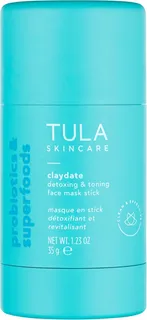
Works for
Anti-blemishKaolin, Salix alba bark extract + 1 moreNot delivered
“Working to unclog pores and fight breakouts, this mess-free stick glides on smoothly and will not dry out skin.”
Effective ingredients missing or their concentration is too low.
MoisturizingSide benefit the brand mentions · Glycerin, Lactobacillus ferment + 9 moreWorks
“proprietary Super Six blend of probiotics & prebiotics to help improve skin smoothness & maintain skin balance”
This product contains good ingredients to attract water to the upper layer of the skin. These ingredients are called "humectants": glycerin, lactobacillus ferment.
When humectants are on the surface of the skin, they “pull in” the moisture from the outside environment, or from within deeper layers of the skin. If the air is dry, humectants can speed up the moisture loss from the skin. This is why it is a good idea to use another product on top of this one to help "seal in" the moisture (look for ingredients like dimethicone, squalane, oils and butters).
Can it cause trouble?
Irritancy2 strong irritants: Hamamelis virginiana water, ParfumMedium risk
ComedogenicClean of flagged comedogenic ingredientsNone flagged
User reviews
Be the first — your take helps the next person decide.
Ingredients
Filter by role to see what each ingredient is doing.
Water~45–55%
Propanediol~5.4–6.7%
- Irritation risk
- Low
Acts as a solvent for other ingredients. Speeds up the absorption of other ingredients into the skin
More about PropanediolGlycerin~3.9–4.7%
- Irritation risk
- Low
One of the best moisturizing ingredients. Naturally present in skin. It attracts water to the upper layer of the skin working as a humectant
More about GlycerinKaolin~3.1–3.7%
- Irritation risk
- Low
A type of clay that consists mainly of aluminum silicate. Helps absorb oil and creates a thicker product consistency. Can be used to add a white color
More about KaolinSodium stearate~2.9–3.5%
Oleth-20~2–2.5%
Hamamelis virginiana water~1.6–1.9%
- Irritation risk
- High
A plant extract that can help calm down inflammation in skin. Can, however, itself be irritating
More about Hamamelis virginiana waterLactobacillus ferment~1.4–1.7%
- Irritation risk
- Low
A fermentation product created by bacteria Lactobacillus. The fermented product has anti-bacterial properties and might be helpful in calming down inflammation, but studies are lacking. Helps attract water to the upper layer of the skin. Can be used as a preservative
More about Lactobacillus fermentLactococcus ferment lysate~1.1–1.4%
- Irritation risk
- Low
Consists of remains of dead bacteria cells. Is likely helpful in attracting water to the upper layer of the skin. Might be helpful in reducing inflammation and neutralizing free radicals in skin
More about Lactococcus ferment lysateVinegar~0.95–1.15%
- Irritation risk
- Low
Salix alba bark extract~0.6–0.9%
- Irritation risk
- High
A plant extract that can help neutralize free radicals in skin. It contains a compound salicin that can theoretically be converted into salicylic acid that, in turn, helps reduce inflammation in skin, but the evidence of effectiveness in skin is lacking and the extract is usually not used in a concentration that would enable an exfoliating effect
More about Salix alba bark extractCurcuma longa root extract~0.55–0.85%
- Irritation risk
- High
A plant extract that can contain an active compound curcumin, that may have some anti-inflammatory properties when applied to the skin, but solid research is lacking and the typical concentration used in skincare products is too low. Can be an irritant
More about Curcuma longa root extractPolymnia sonchifolia root juice~0.55–0.8%
- Irritation risk
- High
A plant extract that helps attract water to the upper layer of the skin and might have some anti-oxidant properties
More about Polymnia sonchifolia root juiceInulin~0.5–0.75%
- Irritation risk
- Low
Helps attract water to the upper layer of the skin. Is claimed to support the growth of "good" bacteria in skin (as a "prebiotic"), but the research is lacking
More about InulinLactic acid~0.45–0.7%
- Irritation risk
- Medium
An exfoliating and moisturizing alpha-hydroxy acid (AHA). Typically causes less irritation than other AHAs, for example, glycolic acid. At high concentrations (about 15%), lactic acid can help reduce lines and wrinkles. Recent studies show that lactic acid can support the "good" bacteria living on skin's surface (healthy skin microbiome)
More about Lactic acidBacillus ferment~0.45–0.7%
- Irritation risk
- Low
A product of bacterial fermentation. Can help attract water to the upper layer of the skin
More about Bacillus fermentLactobacillus~0.45–0.7%
- Irritation risk
- Low
A non-living ingredient made by fermentation with the bacteria Lactobacillus. It can help attract water to the upper layer of the skin and might help reduce inflammation
More about LactobacillusHydroxyacetophenone~0.45–0.65%
Alpha-glucan oligosaccharide~0.45–0.7%
- Irritation risk
- Low
Helps attract water to the upper layer of the skin
More about Alpha-glucan oligosaccharideBeta vulgaris root extract~0.3–0.6%
- Irritation risk
- Medium
A plant extract that might have some antioxidant properties, but mostly used in cosmetics for its color
More about Beta vulgaris root extractSodium chloride~0.35–0.6%
- Irritation risk
- Low
Used to stabilize mixtures of oil and water, and create thicker, gel-like product textures
More about Sodium chlorideSilica~0.45–0.7%
Sodium hydroxide~0.3–0.55%
Gellan gum~0.3–0.55%
Citric acid~0.3–0.55%
- Irritation risk
- Medium
Can work as an exfoliant but is typically used to adjust the product pH
More about Citric acidSodium citrate~0.3–0.55%
- Irritation risk
- Medium
Helps to control the skin's pH level. Maintains the skin's natural film of amino-lactic acids and oils. Helps to preserve products
More about Sodium citrateXanthan gum~0.3–0.5%
- Irritation risk
- Low
Used to create a thicker product consistency
More about Xanthan gumMaltodextrin~0.25–0.5%
- Irritation risk
- Low
Used to stabilize the product formulation and can help absorb oil
More about MaltodextrinButylene glycol~0.25–0.5%
- Irritation risk
- Low
Used to create a nice product texture and help delivery of other ingredients. Might be somewhat helpful in attracting water to the upper layer of the skin
More about Butylene glycolBenzoic acid~0.25–0.45%
1,2-hexanediol~0.2–0.4%
Ethylhexylglycerin~0.2–0.4%
Sodium benzoate~0.15–0.3%
Tocopherol~0.15–0.3%
- Irritation risk
- Low
Pure form of vitamin E. Can help moisturise and protect the skin from free radicals. Often used to help stabilise other ingredients or the formula itself
More about TocopherolPhenoxyethanol~0.1–0.25%
- Irritation risk
- Low
A preservative. It helps prevent bacterial growth in cosmetic products
More about PhenoxyethanolParfum~0.1–0.2%
- Irritation risk
- High
An aromatic blend of unspecified and possibly irritating ingredients
More about ParfumIron oxides~0.05–0.15%
- Irritation risk
- Low
An umbrella term for the following three colorants: CI 77491, CI 77492, CI 77499. They might be able to offer some protection against visible light, but the degree of the protection is not clear
More about Iron oxidesIron oxides~0.05–0.1%
- Irritation risk
- Low
An umbrella term for the following three colorants: CI 77491, CI 77492, CI 77499. They might be able to offer some protection against visible light, but the degree of the protection is not clear
More about Iron oxidesTitanium dioxide~0.1–0.15%
- Irritation risk
- Low
Works as a UV filter when used in high concentrations. It is photostable and is effective mostly against the UVB light, with some protection in the UVA range. In small concentrations, used for its ability to improve the color of cosmetic products. Is usually well tolerated by the skin
More about Titanium dioxideIngredient list view
Water, Propanediol, Glycerin, Kaolin, Sodium stearate, Oleth-20, Hamamelis virginiana water, Lactobacillus ferment, Lactococcus ferment lysate, Vinegar, Salix alba bark extract, Curcuma longa root extract, Polymnia sonchifolia root juice, Inulin, Lactic acid, Bacillus ferment, Lactobacillus, Hydroxyacetophenone, Alpha-glucan oligosaccharide, Beta vulgaris root extract, Sodium chloride, Silica, Sodium hydroxide, Gellan gum, Citric acid, Sodium citrate, Xanthan gum, Maltodextrin, Butylene glycol, Benzoic acid, 1,2-hexanediol, Ethylhexylglycerin, Sodium benzoate, Tocopherol, Phenoxyethanol, Parfum, Iron oxides, Iron oxides, Titanium dioxide
Compare prices
Retailers ranked by price — lowest first.
Affiliate links · As an Amazon Associate, WIMJ earns from qualifying purchases.
Worth comparing, line by line.
Match % combines shared ingredients, the first five ingredients, shared actives and hero ingredients, irritancy (lower counts in the alternative's favour), texture and body area. Only products in the same routine step are compared.
| TulaClaydate Detoxing & Toning Face Mask StickYOUR PRODUCT | Earth TherapeuticsCalming Pink Clay Facial Sheet Mask | GallinéeCare Mask | Dr Dennis GrossVitamin C Lactic Biocellulose Brightening Treatment Mask | |
|---|---|---|---|---|
| Match | — | 48% | 45% | 45% |
| Price | — | $9.00 | $29.69 | $12.00 |
| Shared key ingredients | — | 3 of 9 | 3 of 9 | 2 of 9 |
| Key difference | — | Madecassoside | Panthenol | Vitamin C |
| Irritancy | Medium | Medium | Medium | Medium |
| Drying alcohol | — | Contains drying alcohol | — | — |
| View product | Shop | Shop | Shop |


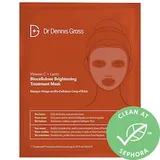
More alternatives: BIHAKU JOSHI White MaskNassifMD Dermaceuticals Overnight Illuminating Masque with Elasta-Derm C
Sources cited in this review
Every concentration estimate and effectiveness label is anchored to one of these 13 studies and safety reviews.
- 1
- 2
- 3
- 4Use of Probiotics for Dermal Applicationsresearchgate.net
- 5Efficacy and Safety of White Willow Bark (Salix alba) Extractonlinelibrary.wiley.com
- 6

Affiliate links · As an Amazon Associate, WIMJ earns from qualifying purchases.