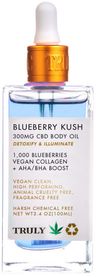
Works for
1 of 1 advertised claim delivered
Moisturizing8 ingredients credited for this claimGood support
“Thanks to its high fatty acid composition, it supports skin's barrier function, resulting in protected, hydrated, luminous skin.”
This product can help soften the skin and reduce its moisture loss with emollients and occlusives: caprylic/capric triglyceride, simmondsia chinensis seed oil.
Keep in mind that this product does not contain effective ingredients to attract water to the upper layer of the skin. This is why an additional product with humectants like glycerin or hyaluronic acid can be helpful (apply it before this product for the best results).
Can it cause trouble?
Irritancy2 strong irritants: Ocimum sanctum leaf extract, Ocimum basilicum flower/leaf extractMedium risk
Comedogenic1 ingredient rated 2 or more on the 0–5 pore-clogging scale1 flagged


User reviews
Be the first — your take helps the next person decide.
Ingredients
Filter by role to see what each ingredient is doing.
Caprylic/capric triglyceride~23–34%
- Irritation risk
- Medium
A good mix of fatty acids that forms a protective layer on the skin. Improves the shelf life of products. Derived from coconut and glycerin
More about Caprylic/capric triglycerideCannabis sativa seed oil~4.8–7.2%
- Irritation risk
- Medium
A plant oil that due to its high linoleic acid content can help strengthen skin's barrier function and soften its upper layer
More about Cannabis sativa seed oilSimmondsia chinensis seed oil~4.7–7.1%
- Irritation risk
- Medium
Softens the upper layer of skin and helps restore the healthy skin barrier. Has shown to help calm down inflammation in skin. It is a stable oil, meaning that it retains its properties even when exposed to air.
More about Simmondsia chinensis seed oilMelia azadirachta leaf extract~3.7–5.6%
- Irritation risk
- High
A plant extract that has anti-bacterial properties. Can be used to preserve the product. Can be irritating
More about Melia azadirachta leaf extractMelia azadirachta flower extract~2.7–4%
- Irritation risk
- Medium
A plant extract that might be helpful to neutralize free radicals in skin
More about Melia azadirachta flower extractCorallina officinalis extract~2–3%
- Irritation risk
- Low
- Comedogenicity
- 3/5
Red algae extract that helps attract water to the upper layer of the skin and might contain antioxidants
More about Corallina officinalis extractCoccinia indica fruit extract~1.5–2.3%
- Irritation risk
- Medium
A plant extract that might have some anti-oxidant effect helping neutralize free radicals in skin
More about Coccinia indica fruit extractSolanum melongena fruit extract~1.3–1.9%
- Irritation risk
- Medium
Eggplant fruit extract. Might have some anti-oxidant effect
More about Solanum melongena fruit extractOcimum sanctum leaf extract~1.1–1.6%
- Irritation risk
- High
A plant extract that is rich in a fragrance compound eugenol that is a frequent allergen and can be irritating. It might also contain anti-oxidants to help neutralize free radicals
More about Ocimum sanctum leaf extractOcimum basilicum flower/leaf extract~0.85–1.3%
- Irritation risk
- High
Used as a fragrance. Canbe irritating
More about Ocimum basilicum flower/leaf extractCurcuma longa root extract~0.5–1.2%
- Irritation risk
- High
A plant extract that can contain an active compound curcumin, that may have some anti-inflammatory properties when applied to the skin, but solid research is lacking and the typical concentration used in skincare products is too low. Can be an irritant
More about Curcuma longa root extractVaccinium myrtillus seed oil~0.45–1.1%
- Irritation risk
- Low
Tocopherol~0.4–0.95%
- Irritation risk
- Low
Pure form of vitamin E. Can help moisturise and protect the skin from free radicals. Often used to help stabilise other ingredients or the formula itself
More about TocopherolAscorbic acid~0.35–0.75%
- Irritation risk
- High
The most well-researched antioxidant that works in skin. Helps neutralize free radicals supporting collagen production, helping to even out the skin tone and preventing early signs of aging
More about Ascorbic acidCitric acid~0.2–0.75%
- Irritation risk
- Medium
Can work as an exfoliant but is typically used to adjust the product pH
More about Citric acidCollagen~0.15–0.55%
- Irritation risk
- Low
Cannot penetrate the skin barrier so is not particularly useful in skincare products
More about CollagenLactic acid~0.1–0.4%
- Irritation risk
- Medium
An exfoliating and moisturizing alpha-hydroxy acid (AHA). Typically causes less irritation than other AHAs, for example, glycolic acid. At high concentrations (about 15%), lactic acid can help reduce lines and wrinkles. Recent studies show that lactic acid can support the "good" bacteria living on skin's surface (healthy skin microbiome)
More about Lactic acidSalicylic acid~0.1–0.4%
- Irritation risk
- High
Used for skin exfoliation. It has an anti-inflammatory and anti-bacterial effect, helps to unclog pores, prevent blemishes and speed up healing of the existing ones. Sometimes referred to as a BHA (beta-hydroxy acid)
More about Salicylic acidCannabidiol - derived from extract or tincture or resin of cannabis~0.1–0.35%
- Irritation risk
- Medium
CBD. Can bind to skin cell receptors and can reduce inflammation, itching, and help support skin barrier function
More about Cannabidiol - derived from extract or tincture or resin of cannabisIngredient list view
Caprylic/capric triglyceride, Cannabis sativa seed oil, Simmondsia chinensis seed oil, Melia azadirachta leaf extract, Melia azadirachta flower extract, Corallina officinalis extract, Coccinia indica fruit extract, Solanum melongena fruit extract, Ocimum sanctum leaf extract, Ocimum basilicum flower/leaf extract, Curcuma longa root extract, Unknown, Vaccinium myrtillus seed oil, Unknown, Tocopherol, Ascorbic acid, Citric acid, Unknown, Collagen, Lactic acid, Salicylic acid, Cannabidiol - derived from extract or tincture or resin of cannabis
Compare prices
Retailers ranked by price — lowest first.

Affiliate links · prices updated regularly
Worth comparing, line by line.
Match % combines shared ingredients, the first five ingredients, shared actives and hero ingredients, irritancy (lower counts in the alternative's favour), texture and body area. Only products in the same routine step are compared.
| TrulyBlueberry Kush CBD Body OilYOUR PRODUCT | CBIINourishing CBD Face Oil | Paula's choiceUltra-Rich Soothing Body Butter | KYLIE SKINClarifying Facial Oil | |
|---|---|---|---|---|
| Match | — | 52% | 52% | 50% |
| Price | $43.00 | $40.40−$2.60 | $22.00−$21.00 | $16.00−$27.00 |
| Shared key ingredients | — | 5 of 8 | 2 of 8 | 2 of 8 |
| Key difference | — | Carthamus Tinctorius Seed Oil | Panthenol | Carthamus Tinctorius Seed Oil |
| Irritancy | Medium | Medium | Low | Low |
| Drying alcohol | — | — | — | — |
| View product | Shop | Shop | Shop |


Sources cited in this review
Every concentration estimate and effectiveness label is anchored to one of these 14 studies and safety reviews.
- 1
- 2Hemp (Cannabis sativa L.) as a Resource for Green Cosmeticstandfonline.com
- 3Melia azedarachmdedge.com
- 4
- 5
- 6

Affiliate links · As an Amazon Associate, WIMJ earns from qualifying purchases.