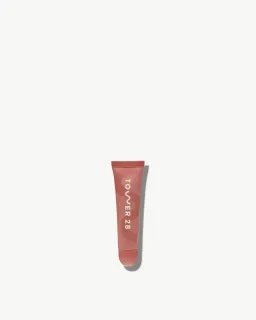
Tower 28 Beauty LipSoftie Hydrating Tinted Lip Treatment Balm
Works for
1 of 1 advertised claim delivered
MoisturizingButyrospermum parkii butter, Cocos nucifera oil + 11 moreGood evidence
“A clinically-proven + derm-approved vegan lip treatment that delivers the intense hydration of a lip mask to rescue + repair dry, chapped lips.”
This product can help soften the skin and reduce its moisture loss with emollients and occlusives: butyrospermum parkii butter, cocos nucifera oil.
Keep in mind that this product does not contain effective ingredients to attract water to the upper layer of the skin. This is why an additional product with humectants like glycerin or hyaluronic acid can be helpful (apply it before this product for the best results).
Can it cause trouble?
Irritancy6 strong irritants: Parfum, Benzyl benzoate + 4 more — patch-test recommendedHigh risk
Comedogenic22 ingredients rated 2 or more on the 0–5 pore-clogging scale22 flagged
User reviews
Be the first — your take helps the next person decide.
Ingredients
Filter by role to see what each ingredient is doing.
Hydrogenated polyisobutene~25–31%
- Irritation risk
- Low
Used to improve the product consistency and soften the upper layer of the skin
More about Hydrogenated polyisobutenePolybutene~4.1–5%
Diisostearyl malate~5.1–6.2%
- Irritation risk
- Medium
Helps to soften the upper layer of the skin
More about Diisostearyl malateHydrogenated soybean oil~3.9–4.8%
- Irritation risk
- Low
- Comedogenicity
- 2/5
Hydrogenated olive oil~3–3.7%
- Irritation risk
- Low
Polyhydroxystearic acid~2.3–2.8%
- Irritation risk
- Medium
Used to create a thicker product consistency and stabilize the formulation
More about Polyhydroxystearic acidHydrogenated jojoba oil~2–2.4%
- Irritation risk
- Low
Helps soften the upper layer of the skin
More about Hydrogenated jojoba oilEthylene/propylene/styrene copolymer~1.5–1.9%
- Irritation risk
- Low
Used to create a thicker product consistency
More about Ethylene/propylene/styrene copolymerCopernicia cerifera wax~1.5–1.9%
- Irritation risk
- Low
Helps to soften the upper layer of the skin and create a nice product consistency
More about Copernicia cerifera waxEuphorbia cerifera wax~1.3–1.6%
- Irritation risk
- Low
Lauroyl lysine~0.75–1.15%
- Irritation risk
- Low
Helps soften the upper layer of the skin and creates a nice product texture
More about Lauroyl lysineButyrospermum parkii butter~0.75–1.15%
- Irritation risk
- Low
- Comedogenicity
- 3/5
A great moisturising ingredient that softens the skin and reduces water loss from its upper layer. It also can be helpful in protecting skin from free radicals
More about Butyrospermum parkii butterParfum~0.6–0.9%
- Irritation risk
- High
An aromatic blend of unspecified and possibly irritating ingredients
More about ParfumVanillin~0.6–0.85%
- Irritation risk
- Low
Ricinus communis seed oil~0.6–0.9%
- Irritation risk
- Medium
A plant oil that can help soften the skin. It might be helpful in calming down inflammation, but solid research is lacking. Is often used in lip products to create the needed product consistency
More about Ricinus communis seed oilCaprylyl glycol~0.6–0.9%
- Irritation risk
- Medium
Helps preserve products and creates a nice product texture
More about Caprylyl glycolTocopherol~0.55–0.8%
- Irritation risk
- Low
Pure form of vitamin E. Can help moisturise and protect the skin from free radicals. Often used to help stabilise other ingredients or the formula itself
More about TocopherolEthylhexylglycerin~0.5–0.75%
Phytosterols~0.5–0.8%
- Irritation risk
- Medium
Lipids that work as an emollient and can be helpful in repairing skin barrier function
More about PhytosterolsTocopheryl acetate~0.4–0.65%
- Irritation risk
- Medium
A more stable but less bio-available form of vitamin E compared to Tocopherol. Might help moisturize and protect the skin from free radicals, but mostly used in low concentrations to stabilize other ingredients.
More about Tocopheryl acetateButylene/ethylene/styrene copolymer~0.35–0.65%
- Irritation risk
- Low
Used to create a gel-like product texture
More about Butylene/ethylene/styrene copolymerSimmondsia chinensis seed oil~0.5–0.7%
- Irritation risk
- Medium
Softens the upper layer of skin and helps restore the healthy skin barrier. Has shown to help calm down inflammation in skin. It is a stable oil, meaning that it retains its properties even when exposed to air.
More about Simmondsia chinensis seed oilGlycine soja oil~0.4–0.65%
- Irritation risk
- Medium
- Comedogenicity
- 2/5
A good emollient that helps soften the skin and helps repair its barrier function. It can clog pores if used in high concentrations.
More about Glycine soja oilCocos nucifera oil~0.35–0.65%
- Irritation risk
- Low
- Comedogenicity
- 3/5
An emollient. Found to be as effective as a moisturizer for dry skin as mineral oil. Could be comedogenic
More about Cocos nucifera oilPentaerythrityl tetra-di-t-butyl hydroxyhydrocinnamate~0.35–0.65%
- Irritation risk
- Low
Used to increase stability of product formulations
More about Pentaerythrityl tetra-di-t-butyl hydroxyhydrocinnamateTitanium dioxide~0.5–0.7%
- Irritation risk
- Low
Works as a UV filter when used in high concentrations. It is photostable and is effective mostly against the UVB light, with some protection in the UVA range. In small concentrations, used for its ability to improve the color of cosmetic products. Is usually well tolerated by the skin
More about Titanium dioxideIron oxides~0.3–0.55%
- Irritation risk
- Low
An umbrella term for the following three colorants: CI 77491, CI 77492, CI 77499. They might be able to offer some protection against visible light, but the degree of the protection is not clear
More about Iron oxidesHydrogenated polyisobutene~0.45–0.65%
- Irritation risk
- Low
Used to improve the product consistency and soften the upper layer of the skin
More about Hydrogenated polyisobutenePolybutene~0.35–0.6%
Diisostearyl malate~0.45–0.65%
- Irritation risk
- Medium
Helps to soften the upper layer of the skin
More about Diisostearyl malateHydrogenated soybean oil~0.4–0.65%
- Irritation risk
- Low
- Comedogenicity
- 2/5
Hydrogenated olive oil~0.3–0.6%
- Irritation risk
- Low
Polyhydroxystearic acid~0.35–0.65%
- Irritation risk
- Medium
Used to create a thicker product consistency and stabilize the formulation
More about Polyhydroxystearic acidHydrogenated jojoba oil~0.45–0.65%
- Irritation risk
- Low
Helps soften the upper layer of the skin
More about Hydrogenated jojoba oilEthylene/propylene/styrene copolymer~0.3–0.6%
- Irritation risk
- Low
Used to create a thicker product consistency
More about Ethylene/propylene/styrene copolymerCopernicia cerifera wax~0.5–0.75%
- Irritation risk
- Low
Helps to soften the upper layer of the skin and create a nice product consistency
More about Copernicia cerifera waxEuphorbia cerifera wax~0.5–0.7%
- Irritation risk
- Low
Lauroyl lysine~0.3–0.6%
- Irritation risk
- Low
Helps soften the upper layer of the skin and creates a nice product texture
More about Lauroyl lysineButyrospermum parkii butter~0.45–0.7%
- Irritation risk
- Low
- Comedogenicity
- 3/5
A great moisturising ingredient that softens the skin and reduces water loss from its upper layer. It also can be helpful in protecting skin from free radicals
More about Butyrospermum parkii butterRicinus communis seed oil~0.45–0.65%
- Irritation risk
- Medium
A plant oil that can help soften the skin. It might be helpful in calming down inflammation, but solid research is lacking. Is often used in lip products to create the needed product consistency
More about Ricinus communis seed oilCaprylyl glycol~0.45–0.65%
- Irritation risk
- Medium
Helps preserve products and creates a nice product texture
More about Caprylyl glycolTocopherol~0.35–0.6%
- Irritation risk
- Low
Pure form of vitamin E. Can help moisturise and protect the skin from free radicals. Often used to help stabilise other ingredients or the formula itself
More about TocopherolEthylhexylglycerin~0.3–0.6%
Phytosterols~0.45–0.7%
- Irritation risk
- Medium
Lipids that work as an emollient and can be helpful in repairing skin barrier function
More about PhytosterolsTocopheryl acetate~0.35–0.6%
- Irritation risk
- Medium
A more stable but less bio-available form of vitamin E compared to Tocopherol. Might help moisturize and protect the skin from free radicals, but mostly used in low concentrations to stabilize other ingredients.
More about Tocopheryl acetateButylene/ethylene/styrene copolymer~0.3–0.6%
- Irritation risk
- Low
Used to create a gel-like product texture
More about Butylene/ethylene/styrene copolymerSimmondsia chinensis seed oil~0.45–0.7%
- Irritation risk
- Medium
Softens the upper layer of skin and helps restore the healthy skin barrier. Has shown to help calm down inflammation in skin. It is a stable oil, meaning that it retains its properties even when exposed to air.
More about Simmondsia chinensis seed oilGlycine soja oil~0.4–0.65%
- Irritation risk
- Medium
- Comedogenicity
- 2/5
A good emollient that helps soften the skin and helps repair its barrier function. It can clog pores if used in high concentrations.
More about Glycine soja oilCocos nucifera oil~0.35–0.65%
- Irritation risk
- Low
- Comedogenicity
- 3/5
An emollient. Found to be as effective as a moisturizer for dry skin as mineral oil. Could be comedogenic
More about Cocos nucifera oilPentaerythrityl tetra-di-t-butyl hydroxyhydrocinnamate~0.35–0.65%
- Irritation risk
- Low
Used to increase stability of product formulations
More about Pentaerythrityl tetra-di-t-butyl hydroxyhydrocinnamateParfum~0.3–0.55%
- Irritation risk
- High
An aromatic blend of unspecified and possibly irritating ingredients
More about ParfumBenzyl alcohol~0.3–0.55%
- Irritation risk
- High
A preservative. Can be used to mask unpleasant smell. Can be irritating
More about Benzyl alcoholBenzyl benzoate~0.3–0.55%
- Irritation risk
- High
Fragrance with sweet balsamic smell. Help to preserve products and dissolve other ingredients. Could trigger allergic reactions and be irritating
More about Benzyl benzoateIron oxides~0.3–0.55%
- Irritation risk
- Low
An umbrella term for the following three colorants: CI 77491, CI 77492, CI 77499. They might be able to offer some protection against visible light, but the degree of the protection is not clear
More about Iron oxidesCi 15850~0.3–0.6%
Hydrogenated polyisobutene~0.45–0.65%
- Irritation risk
- Low
Used to improve the product consistency and soften the upper layer of the skin
More about Hydrogenated polyisobutenePolybutene~0.35–0.6%
Diisostearyl malate~0.45–0.65%
- Irritation risk
- Medium
Helps to soften the upper layer of the skin
More about Diisostearyl malateHydrogenated soybean oil~0.4–0.65%
- Irritation risk
- Low
- Comedogenicity
- 2/5
Hydrogenated olive oil~0.3–0.6%
- Irritation risk
- Low
Polyhydroxystearic acid~0.35–0.65%
- Irritation risk
- Medium
Used to create a thicker product consistency and stabilize the formulation
More about Polyhydroxystearic acidHydrogenated jojoba oil~0.45–0.65%
- Irritation risk
- Low
Helps soften the upper layer of the skin
More about Hydrogenated jojoba oilEthylene/propylene/styrene copolymer~0.3–0.6%
- Irritation risk
- Low
Used to create a thicker product consistency
More about Ethylene/propylene/styrene copolymerCopernicia cerifera wax~0.5–0.75%
- Irritation risk
- Low
Helps to soften the upper layer of the skin and create a nice product consistency
More about Copernicia cerifera waxEuphorbia cerifera wax~0.5–0.7%
- Irritation risk
- Low
Lauroyl lysine~0.3–0.6%
- Irritation risk
- Low
Helps soften the upper layer of the skin and creates a nice product texture
More about Lauroyl lysineButyrospermum parkii butter~0.45–0.7%
- Irritation risk
- Low
- Comedogenicity
- 3/5
A great moisturising ingredient that softens the skin and reduces water loss from its upper layer. It also can be helpful in protecting skin from free radicals
More about Butyrospermum parkii butterRicinus communis seed oil~0.45–0.65%
- Irritation risk
- Medium
A plant oil that can help soften the skin. It might be helpful in calming down inflammation, but solid research is lacking. Is often used in lip products to create the needed product consistency
More about Ricinus communis seed oilCaprylyl glycol~0.45–0.65%
- Irritation risk
- Medium
Helps preserve products and creates a nice product texture
More about Caprylyl glycolTocopherol~0.35–0.6%
- Irritation risk
- Low
Pure form of vitamin E. Can help moisturise and protect the skin from free radicals. Often used to help stabilise other ingredients or the formula itself
More about TocopherolEthylhexylglycerin~0.3–0.6%
Phytosterols~0.45–0.7%
- Irritation risk
- Medium
Lipids that work as an emollient and can be helpful in repairing skin barrier function
More about PhytosterolsTocopheryl acetate~0.35–0.6%
- Irritation risk
- Medium
A more stable but less bio-available form of vitamin E compared to Tocopherol. Might help moisturize and protect the skin from free radicals, but mostly used in low concentrations to stabilize other ingredients.
More about Tocopheryl acetateButylene/ethylene/styrene copolymer~0.3–0.6%
- Irritation risk
- Low
Used to create a gel-like product texture
More about Butylene/ethylene/styrene copolymerSimmondsia chinensis seed oil~0.45–0.7%
- Irritation risk
- Medium
Softens the upper layer of skin and helps restore the healthy skin barrier. Has shown to help calm down inflammation in skin. It is a stable oil, meaning that it retains its properties even when exposed to air.
More about Simmondsia chinensis seed oilGlycine soja oil~0.4–0.65%
- Irritation risk
- Medium
- Comedogenicity
- 2/5
A good emollient that helps soften the skin and helps repair its barrier function. It can clog pores if used in high concentrations.
More about Glycine soja oilCocos nucifera oil~0.35–0.65%
- Irritation risk
- Low
- Comedogenicity
- 3/5
An emollient. Found to be as effective as a moisturizer for dry skin as mineral oil. Could be comedogenic
More about Cocos nucifera oilPentaerythrityl tetra-di-t-butyl hydroxyhydrocinnamate~0.35–0.65%
- Irritation risk
- Low
Used to increase stability of product formulations
More about Pentaerythrityl tetra-di-t-butyl hydroxyhydrocinnamateParfum~0.3–0.55%
- Irritation risk
- High
An aromatic blend of unspecified and possibly irritating ingredients
More about ParfumLinalool~0.3–0.55%
Titanium dioxide~0.5–0.7%
- Irritation risk
- Low
Works as a UV filter when used in high concentrations. It is photostable and is effective mostly against the UVB light, with some protection in the UVA range. In small concentrations, used for its ability to improve the color of cosmetic products. Is usually well tolerated by the skin
More about Titanium dioxideIron oxides~0.3–0.55%
- Irritation risk
- Low
An umbrella term for the following three colorants: CI 77491, CI 77492, CI 77499. They might be able to offer some protection against visible light, but the degree of the protection is not clear
More about Iron oxidesCi 45410~0.3–0.6%
Hydrogenated polyisobutene~0.45–0.65%
- Irritation risk
- Low
Used to improve the product consistency and soften the upper layer of the skin
More about Hydrogenated polyisobutenePolybutene~0.35–0.6%
Diisostearyl malate~0.45–0.65%
- Irritation risk
- Medium
Helps to soften the upper layer of the skin
More about Diisostearyl malateHydrogenated soybean oil~0.4–0.65%
- Irritation risk
- Low
- Comedogenicity
- 2/5
Hydrogenated olive oil~0.3–0.6%
- Irritation risk
- Low
Polyhydroxystearic acid~0.35–0.65%
- Irritation risk
- Medium
Used to create a thicker product consistency and stabilize the formulation
More about Polyhydroxystearic acidHydrogenated jojoba oil~0.45–0.65%
- Irritation risk
- Low
Helps soften the upper layer of the skin
More about Hydrogenated jojoba oilEthylene/propylene/styrene copolymer~0.3–0.6%
- Irritation risk
- Low
Used to create a thicker product consistency
More about Ethylene/propylene/styrene copolymerCopernicia cerifera wax~0.5–0.75%
- Irritation risk
- Low
Helps to soften the upper layer of the skin and create a nice product consistency
More about Copernicia cerifera waxEuphorbia cerifera wax~0.5–0.7%
- Irritation risk
- Low
Lauroyl lysine~0.3–0.6%
- Irritation risk
- Low
Helps soften the upper layer of the skin and creates a nice product texture
More about Lauroyl lysineButyrospermum parkii butter~0.45–0.7%
- Irritation risk
- Low
- Comedogenicity
- 3/5
A great moisturising ingredient that softens the skin and reduces water loss from its upper layer. It also can be helpful in protecting skin from free radicals
More about Butyrospermum parkii butterVanillin~0.3–0.6%
- Irritation risk
- Low
Ricinus communis seed oil~0.45–0.65%
- Irritation risk
- Medium
A plant oil that can help soften the skin. It might be helpful in calming down inflammation, but solid research is lacking. Is often used in lip products to create the needed product consistency
More about Ricinus communis seed oilCaprylyl glycol~0.45–0.65%
- Irritation risk
- Medium
Helps preserve products and creates a nice product texture
More about Caprylyl glycolTocopherol~0.35–0.6%
- Irritation risk
- Low
Pure form of vitamin E. Can help moisturise and protect the skin from free radicals. Often used to help stabilise other ingredients or the formula itself
More about TocopherolEthylhexylglycerin~0.3–0.6%
Phytosterols~0.45–0.7%
- Irritation risk
- Medium
Lipids that work as an emollient and can be helpful in repairing skin barrier function
More about PhytosterolsTocopheryl acetate~0.35–0.6%
- Irritation risk
- Medium
A more stable but less bio-available form of vitamin E compared to Tocopherol. Might help moisturize and protect the skin from free radicals, but mostly used in low concentrations to stabilize other ingredients.
More about Tocopheryl acetateButylene/ethylene/styrene copolymer~0.3–0.6%
- Irritation risk
- Low
Used to create a gel-like product texture
More about Butylene/ethylene/styrene copolymerSimmondsia chinensis seed oil~0.45–0.7%
- Irritation risk
- Medium
Softens the upper layer of skin and helps restore the healthy skin barrier. Has shown to help calm down inflammation in skin. It is a stable oil, meaning that it retains its properties even when exposed to air.
More about Simmondsia chinensis seed oilGlycine soja oil~0.4–0.65%
- Irritation risk
- Medium
- Comedogenicity
- 2/5
A good emollient that helps soften the skin and helps repair its barrier function. It can clog pores if used in high concentrations.
More about Glycine soja oilCocos nucifera oil~0.35–0.65%
- Irritation risk
- Low
- Comedogenicity
- 3/5
An emollient. Found to be as effective as a moisturizer for dry skin as mineral oil. Could be comedogenic
More about Cocos nucifera oilPentaerythrityl tetra-di-t-butyl hydroxyhydrocinnamate~0.35–0.65%
- Irritation risk
- Low
Used to increase stability of product formulations
More about Pentaerythrityl tetra-di-t-butyl hydroxyhydrocinnamateParfum~0.3–0.55%
- Irritation risk
- High
An aromatic blend of unspecified and possibly irritating ingredients
More about ParfumLimonene~0.3–0.55%
- Irritation risk
- High
A common frangrance that can easily irritate skin, especially if exposed to air, light or heat
More about LimoneneLinalool~0.3–0.55%
Benzyl alcohol~0.3–0.55%
- Irritation risk
- High
A preservative. Can be used to mask unpleasant smell. Can be irritating
More about Benzyl alcoholCitral~0.3–0.55%
Citronellol~0.3–0.55%
Titanium dioxide~0.5–0.7%
- Irritation risk
- Low
Works as a UV filter when used in high concentrations. It is photostable and is effective mostly against the UVB light, with some protection in the UVA range. In small concentrations, used for its ability to improve the color of cosmetic products. Is usually well tolerated by the skin
More about Titanium dioxideIron oxides~0.3–0.55%
- Irritation risk
- Low
An umbrella term for the following three colorants: CI 77491, CI 77492, CI 77499. They might be able to offer some protection against visible light, but the degree of the protection is not clear
More about Iron oxidesCi 45410~0.3–0.6%
Hydrogenated polyisobutene~0.45–0.65%
- Irritation risk
- Low
Used to improve the product consistency and soften the upper layer of the skin
More about Hydrogenated polyisobutenePolybutene~0.35–0.6%
Diisostearyl malate~0.45–0.65%
- Irritation risk
- Medium
Helps to soften the upper layer of the skin
More about Diisostearyl malateHydrogenated soybean oil~0.4–0.65%
- Irritation risk
- Low
- Comedogenicity
- 2/5
Hydrogenated olive oil~0.3–0.6%
- Irritation risk
- Low
Polyhydroxystearic acid~0.35–0.65%
- Irritation risk
- Medium
Used to create a thicker product consistency and stabilize the formulation
More about Polyhydroxystearic acidHydrogenated jojoba oil~0.45–0.65%
- Irritation risk
- Low
Helps soften the upper layer of the skin
More about Hydrogenated jojoba oilEthylene/propylene/styrene copolymer~0.3–0.6%
- Irritation risk
- Low
Used to create a thicker product consistency
More about Ethylene/propylene/styrene copolymerCopernicia cerifera wax~0.5–0.75%
- Irritation risk
- Low
Helps to soften the upper layer of the skin and create a nice product consistency
More about Copernicia cerifera waxEuphorbia cerifera wax~0.5–0.7%
- Irritation risk
- Low
Lauroyl lysine~0.3–0.6%
- Irritation risk
- Low
Helps soften the upper layer of the skin and creates a nice product texture
More about Lauroyl lysineButyrospermum parkii butter~0.45–0.7%
- Irritation risk
- Low
- Comedogenicity
- 3/5
A great moisturising ingredient that softens the skin and reduces water loss from its upper layer. It also can be helpful in protecting skin from free radicals
More about Butyrospermum parkii butterVanillin~0.3–0.55%
- Irritation risk
- Low
Ricinus communis seed oil~0.4–0.6%
- Irritation risk
- Medium
A plant oil that can help soften the skin. It might be helpful in calming down inflammation, but solid research is lacking. Is often used in lip products to create the needed product consistency
More about Ricinus communis seed oilCaprylyl glycol~0.35–0.65%
- Irritation risk
- Medium
Helps preserve products and creates a nice product texture
More about Caprylyl glycolTocopherol~0.3–0.55%
- Irritation risk
- Low
Pure form of vitamin E. Can help moisturise and protect the skin from free radicals. Often used to help stabilise other ingredients or the formula itself
More about TocopherolEthylhexylglycerin~0.25–0.5%
Phytosterols~0.35–0.65%
- Irritation risk
- Medium
Lipids that work as an emollient and can be helpful in repairing skin barrier function
More about PhytosterolsTocopheryl acetate~0.25–0.45%
- Irritation risk
- Medium
A more stable but less bio-available form of vitamin E compared to Tocopherol. Might help moisturize and protect the skin from free radicals, but mostly used in low concentrations to stabilize other ingredients.
More about Tocopheryl acetateButylene/ethylene/styrene copolymer~0.2–0.35%
- Irritation risk
- Low
Used to create a gel-like product texture
More about Butylene/ethylene/styrene copolymerSimmondsia chinensis seed oil~0.3–0.5%
- Irritation risk
- Medium
Softens the upper layer of skin and helps restore the healthy skin barrier. Has shown to help calm down inflammation in skin. It is a stable oil, meaning that it retains its properties even when exposed to air.
More about Simmondsia chinensis seed oilGlycine soja oil~0.25–0.5%
- Irritation risk
- Medium
- Comedogenicity
- 2/5
A good emollient that helps soften the skin and helps repair its barrier function. It can clog pores if used in high concentrations.
More about Glycine soja oilCocos nucifera oil~0.25–0.5%
- Irritation risk
- Low
- Comedogenicity
- 3/5
An emollient. Found to be as effective as a moisturizer for dry skin as mineral oil. Could be comedogenic
More about Cocos nucifera oilPentaerythrityl tetra-di-t-butyl hydroxyhydrocinnamate~0.15–0.3%
- Irritation risk
- Low
Used to increase stability of product formulations
More about Pentaerythrityl tetra-di-t-butyl hydroxyhydrocinnamateTitanium dioxide~0.2–0.35%
- Irritation risk
- Low
Works as a UV filter when used in high concentrations. It is photostable and is effective mostly against the UVB light, with some protection in the UVA range. In small concentrations, used for its ability to improve the color of cosmetic products. Is usually well tolerated by the skin
More about Titanium dioxideIngredient list view
Hydrogenated polyisobutene, Polybutene, Diisostearyl malate, Hydrogenated soybean oil, Hydrogenated olive oil, Polyhydroxystearic acid, Hydrogenated jojoba oil, Ethylene/propylene/styrene copolymer, Copernicia cerifera wax, Euphorbia cerifera wax, Lauroyl lysine, Butyrospermum parkii butter, Parfum, Vanillin, Ricinus communis seed oil, Caprylyl glycol, Tocopherol, Ethylhexylglycerin, Phytosterols, Tocopheryl acetate, Butylene/ethylene/styrene copolymer, Simmondsia chinensis seed oil, Glycine soja oil, Cocos nucifera oil, Pentaerythrityl tetra-di-t-butyl hydroxyhydrocinnamate, Titanium dioxide, Iron oxides, Hydrogenated polyisobutene, Polybutene, Diisostearyl malate, Hydrogenated soybean oil, Hydrogenated olive oil, Polyhydroxystearic acid, Hydrogenated jojoba oil, Ethylene/propylene/styrene copolymer, Copernicia cerifera wax, Euphorbia cerifera wax, Lauroyl lysine, Butyrospermum parkii butter, Ricinus communis seed oil, Caprylyl glycol, Tocopherol, Ethylhexylglycerin, Phytosterols, Tocopheryl acetate, Butylene/ethylene/styrene copolymer, Simmondsia chinensis seed oil, Glycine soja oil, Cocos nucifera oil, Pentaerythrityl tetra-di-t-butyl hydroxyhydrocinnamate, Parfum, Benzyl alcohol, Benzyl benzoate, Iron oxides, Ci 15850, Hydrogenated polyisobutene, Polybutene, Diisostearyl malate, Hydrogenated soybean oil, Hydrogenated olive oil, Polyhydroxystearic acid, Hydrogenated jojoba oil, Ethylene/propylene/styrene copolymer, Copernicia cerifera wax, Euphorbia cerifera wax, Lauroyl lysine, Butyrospermum parkii butter, Ricinus communis seed oil, Caprylyl glycol, Tocopherol, Ethylhexylglycerin, Phytosterols, Tocopheryl acetate, Butylene/ethylene/styrene copolymer, Simmondsia chinensis seed oil, Glycine soja oil, Cocos nucifera oil, Pentaerythrityl tetra-di-t-butyl hydroxyhydrocinnamate, Parfum, Linalool, Titanium dioxide, Iron oxides, Ci 45410, Hydrogenated polyisobutene, Polybutene, Diisostearyl malate, Hydrogenated soybean oil, Hydrogenated olive oil, Polyhydroxystearic acid, Hydrogenated jojoba oil, Ethylene/propylene/styrene copolymer, Copernicia cerifera wax, Euphorbia cerifera wax, Lauroyl lysine, Butyrospermum parkii butter, Vanillin, Ricinus communis seed oil, Caprylyl glycol, Tocopherol, Ethylhexylglycerin, Phytosterols, Tocopheryl acetate, Butylene/ethylene/styrene copolymer, Simmondsia chinensis seed oil, Glycine soja oil, Cocos nucifera oil, Pentaerythrityl tetra-di-t-butyl hydroxyhydrocinnamate, Parfum, Limonene, Linalool, Benzyl alcohol, Citral, Citronellol, Titanium dioxide, Iron oxides, Ci 45410, Hydrogenated polyisobutene, Polybutene, Diisostearyl malate, Hydrogenated soybean oil, Hydrogenated olive oil, Polyhydroxystearic acid, Hydrogenated jojoba oil, Ethylene/propylene/styrene copolymer, Copernicia cerifera wax, Euphorbia cerifera wax, Lauroyl lysine, Butyrospermum parkii butter, Vanillin, Ricinus communis seed oil, Caprylyl glycol, Tocopherol, Ethylhexylglycerin, Phytosterols, Tocopheryl acetate, Butylene/ethylene/styrene copolymer, Simmondsia chinensis seed oil, Glycine soja oil, Cocos nucifera oil, Pentaerythrityl tetra-di-t-butyl hydroxyhydrocinnamate, Titanium dioxide
Compare prices
Retailers ranked by price — lowest first.

Affiliate links · prices updated regularly
Sources cited in this review
Every concentration estimate and effectiveness label is anchored to one of these 10 studies and safety reviews.
- 1
- 2
- 3
- 4
- 5
- 6Vitamin E in dermatologyncbi.nlm.nih.gov

Affiliate links · As an Amazon Associate, WIMJ earns from qualifying purchases.