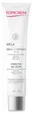
Topicrem MELA Corrective Day Cream SPF20
Works for
Sun protectionSPF 20 · 5 UV filters · Broad spectrumWeak protectionSPF under 30
This product offers broad spectrum sun protection, but it is weak. We recommend to use a broad spectrum sunscreen with at least SPF 30.
This product can be considered "reef safe" because it does not contain the UV filters (oxybenzone and octinoxate) that can be harmful to coral reefs when present in the water in high concentrations.
MoisturizingGlycerin, Cetearyl alcohol + 11 moreWorks
“Topicrem MELA Anti-Dark Spot Unifying Day Cream SPF50+ 40 ml is a cream that prevents and corrects pigmentation spots on sensitive skin.”
This product can help improve hydration of the skin with the two types of ingredients.
The first type is called “humectants”:
these ingredients help attract water.
When humectants are on the surface of the skin, they “pull in” the moisture from the outside environment, or from
within deeper layers of the skin. The following ingredients in this product do the job:
arginine, biosaccharide gum-1.
This product also contains ingredients called “occlusives”. They help reduce the speed with which our skin loses moisture to the outside environment. These ingredients also help soften the upper layer of the skin, so it feels less tight and nicer to the touch. The following ingredients in this product do the job: arginine, helianthus annuus seed oil.
Evens skin toneNiacinamideNot delivered
“It evens out and brightens the complexion, correcting all types of spots and preventing their appearance, while moisturizing the skin.”
This product contains ingredients () that could help reduce hyperpigmentation (for example, post-acne marks or age spots) in theory, but there is not enough evidence that they actually work.
The biggest effect for evening out skin tone in this product comes from sun protection. Sun damage is the main factor causing age spots, darkening of post-acne marks and other discolorations. This is why sun protection is the best strategy for maintaining an even skin tone. We, however, do not recommend using this product as a sunscreen because the protection it offers is not strong enough).
Anti-oxidationSide benefit · Carnosine, Bisabolol + 1 moreWorks well
This product contains antioxidants (carnosine) that can help neutralize free radicals in skin. By doing so, they can lessen the damage the skin gets from the UV light (sun).
Anti-agingSide benefit · Carnosine, Tocopherol + 1 moreMay help
This product contains carnosine. There is some human evidence that this ingredient helps reduce and prevent fine lines and wrinkles and improve skin elasticity and firmness, though it is smaller or less consistent than the evidence for the best anti-aging ingredients. The biggest anti-aging effect in this product comes from sun protection. Sun damage is the main factor causing early signs of skin aging. We, however, do not recommend using this product as a sunscreen because the protection it offers is not strong enough).
Can it cause trouble?
Irritancy1 strong irritant: ParfumMedium risk
Comedogenic1 ingredient rated 2 or more on the 0–5 pore-clogging scale1 flagged


User reviews
Be the first — your take helps the next person decide.
Ingredients
Filter by role to see what each ingredient is doing.
Water~45–55%
Dicaprylyl carbonate~5.2–6.4%
- Irritation risk
- Low
Helps products spread more easily and works as an emollient to soften skin
More about Dicaprylyl carbonateDiethylamino hydroxybenzoyl hexyl benzoate~4.7–5.7%
- Irritation risk
- Medium
Uvinul A Plus. A new generation broad spectrum sunscreen that offers an effective protection especially in the UVA range. It is stable in formulations. Unfortunately, is not approved by the FDA (US) yet
More about Diethylamino hydroxybenzoyl hexyl benzoateGlycerin~3.1–3.8%
- Irritation risk
- Low
One of the best moisturizing ingredients. Naturally present in skin. It attracts water to the upper layer of the skin working as a humectant
More about GlycerinEthylhexyl triazone~3.3–4%
- Irritation risk
- Medium
Uvinul T. A UV filter. Effective against UVB rays. It is photostable. Can increase water resistance properties of the sunscreen. Unfortunately, not approved by the FDA (US) yet
More about Ethylhexyl triazoneBis-ethylhexyloxyphenol methoxyphenyl triazine~2.6–3.1%
- Irritation risk
- Medium
Tinosorb S. One of the most effective broad spectrum sunscreen ingredients. Protects from both UVA and UVB rays. It is photostable. Approved by the US FDA in 2026 (listed as bemotrizinol on US labels).
More about Bis-ethylhexyloxyphenol methoxyphenyl triazineDiethylhexyl butamido triazone~2.2–2.7%
- Irritation risk
- Medium
Uvasorb HEB. A UV filter. Is effective against UVB and UVA II rays (but not UVA I). It is photostable. Unfortunately, is not approved by FDA (US) yet
More about Diethylhexyl butamido triazoneCetearyl alcohol~1.5–1.9%
- Irritation risk
- Low
- Comedogenicity
- 2/5
A non-drying alcohol. Works as an emollient. Helps water and oil mix together and creates a nice product texture
More about Cetearyl alcoholPentaerythrityl distearate~1.2–1.5%
Dibutyl adipate~1.1–1.3%
- Irritation risk
- Low
Helps soften the upper layer of the skin and create a nice product consistency
More about Dibutyl adipateDisodium cetearyl sulfosuccinate~0.8–1.15%
Lauroyl lysine~0.55–0.85%
- Irritation risk
- Low
Helps soften the upper layer of the skin and creates a nice product texture
More about Lauroyl lysineNiacinamide~0.55–0.8%
- Irritation risk
- Low
Is proven to be effective in reducing blemishes, evening out skin tone and helping to improve lines and wrinkles. It helps the skin to repair sun damage, calm down inflammation and keep maintain good levels of moisture. The concentration of about 2% is effective for supporting the skin barrier and evening out the skin tone. Concentration of 4-6% is better for helping with acne and balancing the sebum production
More about NiacinamidePhenylbenzimidazole sulfonic acid~0.7–1.05%
- Irritation risk
- Medium
Ensulizole. A UV filter that is effective against UVB rays. Does not protect against UVA light. It is photostable and can be used to help stabilize other sunscreen ingredients. It is water-soluble meaning that it can help create lighter sunscreen formulations
More about Phenylbenzimidazole sulfonic acidSilica~0.65–0.95%
Acrylates/c12-22 alkyl methacrylate copolymer~0.45–0.7%
- Irritation risk
- Low
Pentylene glycol~0.5–0.7%
- Irritation risk
- Medium
Used to preserve products, dissolve other ingredients and create a nice product texture
More about Pentylene glycolBisabolol~0.3–0.6%
- Irritation risk
- Low
An active component of chamomile plant that historically has been used to calm down irritated skin. A recent study shows that bisabolol indeed can have some anti-inflammatory effect on skin, even though conclusive data is lacking. Bisabolol has a sweet floral scent and can be added to products for its aromatic properties
More about BisabololHydroxyacetophenone~0.3–0.6%
Ammonium acryloyldimethyltaurate/vp copolymer~0.3–0.55%
- Irritation risk
- Low
Increases thickness of a product. Texture enhancer for oil-in-water emulsions
More about Ammonium acryloyldimethyltaurate/vp copolymerSodium hydroxide~0.3–0.55%
Chlorphenesin~0.16–0.32%
Maltodextrin~0.25–0.5%
- Irritation risk
- Low
Used to stabilize the product formulation and can help absorb oil
More about MaltodextrinParfum~0.25–0.4%
- Irritation risk
- High
An aromatic blend of unspecified and possibly irritating ingredients
More about ParfumArginine~0.25–0.45%
- Irritation risk
- Low
An amino acid that is naturally present in skin and helps keep it hydrated. When used together with AHAs, it can reduce their irritating effect on the skin
More about ArginineCaprylyl glycol~0.25–0.5%
- Irritation risk
- Medium
Helps preserve products and creates a nice product texture
More about Caprylyl glycolCarnosine~0.25–0.45%
- Irritation risk
- Low
A type of peptide. It attracts water to the upper layer of the skin. It can help neutralize free radicals in skin combatting the sun damage
More about CarnosineSodium gluconate~0.2–0.4%
Xanthan gum~0.25–0.45%
- Irritation risk
- Low
Used to create a thicker product consistency
More about Xanthan gumCoco-glucoside~0.3–0.6%
- Irritation risk
- High
Used as a cleansing agent (surfactant) in cleansers. Helps water and oil mix together in lotions. Can be irritating
More about Coco-glucosideTocopherol~0.2–0.35%
- Irritation risk
- Low
Pure form of vitamin E. Can help moisturise and protect the skin from free radicals. Often used to help stabilise other ingredients or the formula itself
More about TocopherolDisodium lauryl sulfosuccinate~0.25–0.5%
- Irritation risk
- Medium
Used as a cleansing agent. Helps water and oil mix together
More about Disodium lauryl sulfosuccinateCitric acid~0.15–0.25%
- Irritation risk
- Medium
Can work as an exfoliant but is typically used to adjust the product pH
More about Citric acidBiosaccharide gum-1~0.1–0.2%
- Irritation risk
- Low
Helps attract water to the upper layer of the skin and is claimed to provide a longer-lasting hydration because of its ability to create a water-binding film on the surface of the skin
More about Biosaccharide gum-1Helianthus annuus seed oil~0.15–0.25%
- Irritation risk
- Low
A great emollient due to its high linoleic acid content. One of the most effective plant oils in helping skin hydration and repairing skin barrier function
More about Helianthus annuus seed oilCystoseira tamariscifolia extract~0.1–0.15%
- Irritation risk
- Low
Ingredient list view
Water, Dicaprylyl carbonate, Diethylamino hydroxybenzoyl hexyl benzoate, Glycerin, Ethylhexyl triazone, Bis-ethylhexyloxyphenol methoxyphenyl triazine, Diethylhexyl butamido triazone, Cetearyl alcohol, Pentaerythrityl distearate, Dibutyl adipate, Disodium cetearyl sulfosuccinate, Lauroyl lysine, Niacinamide, Phenylbenzimidazole sulfonic acid, Silica, Acrylates/c12-22 alkyl methacrylate copolymer, Pentylene glycol, Bisabolol, Hydroxyacetophenone, Ammonium acryloyldimethyltaurate/vp copolymer, Sodium hydroxide, Chlorphenesin, Maltodextrin, Parfum, Arginine, Caprylyl glycol, Carnosine, Sodium gluconate, Xanthan gum, Coco-glucoside, Tocopherol, Disodium lauryl sulfosuccinate, Citric acid, Biosaccharide gum-1, Helianthus annuus seed oil, Cystoseira tamariscifolia extract
Compare prices
Retailers ranked by price — lowest first.

Worth comparing, line by line.
Match % combines shared ingredients, the first five ingredients, shared actives and hero ingredients, irritancy (lower counts in the alternative's favour), texture and body area. Only products in the same routine step are compared.
| TopicremMELA Corrective Day Cream SPF20YOUR PRODUCT | NIlens JordHydra Sun High Protection Face Cream SPF30 | SVRSEBIACLEAR Cream SPF50 | CeraVeInvisible Hydrating Fluid Sunscreen SPF 50 | |
|---|---|---|---|---|
| Match | — | 91% | 90% | 90% |
| Price | — | — | $12.57 | $13.97 |
| Shared key ingredients | — | 6 of 13 | 8 of 13 | 7 of 13 |
| Key difference | — | Saccharide Isomerate | Salicylic Acid | Ceramide Np |
| Irritancy | Medium | Low | Medium | Low |
| SPF | SPF 20 | SPF 30 | SPF 50 | SPF 50 |
| Drying alcohol | — | — | — | — |
| View product | Shop | Shop | Shop |


More alternatives: Ecooking Wake Up CreamBalea Niacinamide Tagescreme LSF30
Product summary
"Topicrem - MELA Corrective Day Cream SPF20" "is a broad spectrum sunscreen meaning that it protects both from UVB rays (" burning "- they cause sunburn) and UVA rays (" aging "- they don't cause sunburn but lead to premature aging and pigmentation issues). However, it does not offer enough sun protection. We recommend to use a sunscreen with at least SPF 30 daily.
It should also be hydrating enough to use without an additional moisturizer during the day.
Sunscreen filters
This sunscreen uses so-called" chemical ", or organic UV filters (organic simply means that their molecules contain atoms of carbon). These filters typically give good sun protection and rarely leave a white cast, but they can be irritating for sensitive skin. Here are the exact UV filters in this sunscreen: tinosorb s 2.60% - 3.10%, uvinul a plus 4.70% - 5.70%, uvasorb heb 2.20% - 2.70% and uvinul t 3.30% - 4.00%.
Irritation risk
This formulation includes some common irritants, including ingredients that do not provide a benefit for the skin. We assess the overall irritancy of this sunscreen to be medium. For a detailed overview of all potential irritants: click here
You can see the detailed formula review with the breakdown of all actives in the product and the full ingredient list with estimated concentrations in the tables below.
Price
The product retails from 19.11£ up to 27.76£ in the United Kingdom.
For a detailed price comparison: click here.
Sources cited in this review
Every concentration estimate and effectiveness label is anchored to one of these 13 studies and safety reviews.
- 1
- 2
- 3
- 4
- 5
- 6

Affiliate links · As an Amazon Associate, WIMJ earns from qualifying purchases.