Works for:
based on ingredients and %- Exfoliation
- Cleansing
Can it cause trouble?
- Irritation risk: medium
- Comedogenic risk ingredients: 0
Key actives
Works for
Cleansing
What does the product description say?
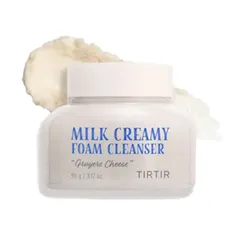
Buy Tirtir Milk Creamy Foam Cleanser in Australia , Korean Skincare Online
Source: From product name
This product works by removing dirt and oil from the surface of the skin. It uses a combination of mild cleansing agents (carbomer, coco-glucoside, disodium cocoamphodiacetate, hexylene glycol, lauryl betaine, sodium cocoyl glycinate, sodium lauroyl glutamate, sodium methyl cocoyl taurate) and should be able to cleanse the skin gently. Still keep in mind that any cleansing can disrupt the skin barrier, and most people do not need to cleanse their skin more than once per day.
Even though this formulation is mild, the following cleansing agents could trigger an irritation or allergy for some people: coco-glucoside, sodium methyl cocoyl taurate
Helps oil and water mix together. Can be used as cleansing agent
Helps oil and water mix together
Used as a cleansing agent. It creates foam
Helps create a thicker or gel-like product texture. It is not a surfactant but can be used in gentle cleansing formulations
Used as a cleansing agent (surfactant) in cleansers. Helps water and oil mix together in lotions. Can be irritating
Helps oil and water mix together and works as a cleansing agent
Helps create a more spreadable product texture
Helps water and oil mix together
Exfoliation
What does the product description say?
When mixed with water, the fluffy cream cheese texture transforms into a milky foam, gently lifting away impurities and dead skin cells for a smooth and nourished look.
Source: Lila Beauty
This product can help exfoliate the skin. In other words, it helps break down the bonds between dead cells on the surface of the skin and speed up the skin turnover. Skin often appears softer and brighter after exfoliation, but overdoing it can result in disrupted skin barrier. The following ingredient is doing the exfoliating job in this product: lactobionic acid.
A polyhydroxy acid (PHA) that helps shed dead cells from the surface of the skin revealing a smoother, more even skin. PHAs tend to be gentler on the skin compared to AHAs (for example, glycolic acid). It also has hydrating properties and helps attract water to the upper layer of the skin. It can help calm down inflammation in skin and support restoration of the barrier function. It has an anti-oxidant effect as well. It can help reduce fine line, wrinkles and improve skin elasticity
An exfoliating and moisturizing alpha-hydroxy acid (AHA). Typically causes less irritation than other AHAs, for example, glycolic acid. At high concentrations (about 15%), lactic acid can help reduce lines and wrinkles. Recent studies show that lactic acid can support the "good" bacteria living on skin's surface (healthy skin microbiome)
How honest is this product?
| Promise | Can it deliver? |
|---|---|
| Cleansing | |
| Exfoliation |
Total Promises Fulfilled score: 100/100.
We receive a small commission for purchases made through these links at no cost for you. Thank you for your support! Learn more
Affiliate link · supports WIMJ at no cost to you
Potential irritants
Comedogenic ingredients
No comedogenic ingredients detected
User reviews (0)
Averages from community submissions.
No reviews yet for this product.
Be the first to share your experience!
Tried this product?
Help capture what the ingredient list can't—texture, finish, pilling, scent, and more. Answer what you can, skip the rest.
Takes ~30 seconds.
Reviews are shown in aggregate. No personal details.
Key Actives
A polyhydroxy acid (PHA) that helps shed dead cells from the surface of the skin revealing a smoother, more even skin. PHAs tend to be gentler on the skin compared to AHAs (for example, glycolic acid). It also has hydrating properties and helps attract water to the upper layer of the skin. It can help calm down inflammation in skin and support restoration of the barrier function. It has an anti-oxidant effect as well. It can help reduce fine line, wrinkles and improve skin elasticity
Helps attract water to the upper layer of the skin, calm down inflammation and irritation, restore the barrier function and support wound healing. It can be helpful in reducing fine lines and wrinkles
A fermentation product created by bacteria Lactobacillus. The fermented product has anti-bacterial properties and might be helpful in calming down inflammation, but studies are lacking. Helps attract water to the upper layer of the skin. Can be used as a preservative
Consists of remains of dead bacteria cells. Is likely helpful in attracting water to the upper layer of the skin. Might be helpful in reducing inflammation and neutralizing free radicals in skin. It is claimed to be a "DNA repair enzyme"
A type of clay that consists mainly of aluminum silicate. Helps absorb oil and creates a thicker product consistency. Can be used to add a white color
Helps to softent the upper layer of the skin
One of the best moisturizing ingredients. Naturally present in skin. It attracts water to the upper layer of the skin working as a humectant
Helps oil and water mix together
Used as a cleansing agent. It creates foam
Helps oil and water mix together and works as a cleansing agent
Used as a cleansing agent (surfactant) in cleansers. Helps water and oil mix together in lotions. Can be irritating
Helps oil and water mix together. Can be used as cleansing agent
Helps to attract water to the upper layer of the skin
Helps create a more spreadable product texture
Helps attract water to the upper layer of the skin and improves the product texture
A plant extract that can help calm down inflammation in skin. Can, however, itself be irritating
Helps create a thicker or gel-like product texture. It is not a surfactant but can be used in gentle cleansing formulations
Helps soften the upper layer of the skin and might as well help to attract moisture to its upper layer
Helps soften the upper layer of the skin. Could be comedogenic due to the myrisic acid content
A product of bacterial fermentation. Can help attract water to the upper layer of the skin
A type of oatmeal extract. Helps restore skin barrier and has antioxidant properties
Potential irritants
Used as a cleansing agent (surfactant) in cleansers. Helps water and oil mix together in lotions. Can be irritating
Helps oil and water mix together. Can be used as cleansing agent
An aromatic blend of unspecified and possibly irritating ingredients
A plant extract that might have some anti-oxidant properties
A plant extract that one one hand, can contain compounds that can help calm down skin irritation, but, on the other hand, its other compounds (especially fragrant ones) can themselves be irritating
A plant extract that can help calm down inflammation in skin. Can, however, itself be irritating
Helps oil and water mix together and works as a cleansing agent
Maintains the texture of skincare products. Allows the product to spread evenly. Helps oil and water mix together
Can work as an exfoliant but is typically used to adjust the product pH
An exfoliating and moisturizing alpha-hydroxy acid (AHA). Typically causes less irritation than other AHAs, for example, glycolic acid. At high concentrations (about 15%), lactic acid can help reduce lines and wrinkles. Recent studies show that lactic acid can support the "good" bacteria living on skin's surface (healthy skin microbiome)
Helps oil and water mix together and used to stabilize product formulations
Helps soften the upper layer of the skin and might as well help to attract moisture to its upper layer
Helps soften the upper layer of the skin. Could be comedogenic due to the myrisic acid content
A polyhydroxy acid (PHA) that helps shed dead cells from the surface of the skin revealing a smoother, more even skin. PHAs tend to be gentler on the skin compared to AHAs (for example, glycolic acid). It also has hydrating properties and helps attract water to the upper layer of the skin. It can help calm down inflammation in skin and support restoration of the barrier function. It has an anti-oxidant effect as well. It can help reduce fine line, wrinkles and improve skin elasticity
Comedogenic ingredients
We couldn't find any comedogenic ingredients in this product
All ingredients
One of the best moisturizing ingredients. Naturally present in skin. It attracts water to the upper layer of the skin working as a humectant
Can be used to help absorb oil as well as add volume and imporve texture of products.
A type of clay that consists mainly of aluminum silicate. Helps absorb oil and creates a thicker product consistency. Can be used to add a white color
Helps oil and water mix together and works as a cleansing agent
Used to stabilize mixtures of oil and water, and create thicker, gel-like product textures
Used as a cleansing agent (surfactant) in cleansers. Helps water and oil mix together in lotions. Can be irritating
Helps oil and water mix together. Can be used as cleansing agent
An aromatic blend of unspecified and possibly irritating ingredients
Maintains the texture of skincare products. Allows the product to spread evenly. Helps oil and water mix together
Can work as an exfoliant but is typically used to adjust the product pH
Used to create a nice product texture and help delivery of other ingredients. Might be somewhat helpful in attracting water to the upper layer of the skin
A plant extract that might have some anti-oxidant properties
Helps attract water to the upper layer of the skin, calm down inflammation and irritation, restore the barrier function and support wound healing. It can be helpful in reducing fine lines and wrinkles
Helps attract water to the upper layer of the skin and improves the product texture
A plant extract that one one hand, can contain compounds that can help calm down skin irritation, but, on the other hand, its other compounds (especially fragrant ones) can themselves be irritating
A plant extract that can help calm down inflammation in skin. Can, however, itself be irritating
A fermentation product created by bacteria Lactobacillus. The fermented product has anti-bacterial properties and might be helpful in calming down inflammation, but studies are lacking. Helps attract water to the upper layer of the skin. Can be used as a preservative
An exfoliating and moisturizing alpha-hydroxy acid (AHA). Typically causes less irritation than other AHAs, for example, glycolic acid. At high concentrations (about 15%), lactic acid can help reduce lines and wrinkles. Recent studies show that lactic acid can support the "good" bacteria living on skin's surface (healthy skin microbiome)
Helps create a thicker or gel-like product texture. It is not a surfactant but can be used in gentle cleansing formulations
Helps oil and water mix together and used to stabilize product formulations
Helps soften the upper layer of the skin and might as well help to attract moisture to its upper layer
Helps soften the upper layer of the skin. Could be comedogenic due to the myrisic acid content
A product of bacterial fermentation. Can help attract water to the upper layer of the skin
A grain extract that helps to create a thicker product consistency. It might have some anti-oxidant properties and help attract water to the upper layer of the skin
A type of oatmeal extract. Helps restore skin barrier and has antioxidant properties
Consists of remains of dead bacteria cells. Is likely helpful in attracting water to the upper layer of the skin. Might be helpful in reducing inflammation and neutralizing free radicals in skin. It is claimed to be a "DNA repair enzyme"
Pure form of vitamin E. Can help moisturise and protect the skin from free radicals. Often used to help stabilise other ingredients or the formula itself
A polyhydroxy acid (PHA) that helps shed dead cells from the surface of the skin revealing a smoother, more even skin. PHAs tend to be gentler on the skin compared to AHAs (for example, glycolic acid). It also has hydrating properties and helps attract water to the upper layer of the skin. It can help calm down inflammation in skin and support restoration of the barrier function. It has an anti-oxidant effect as well. It can help reduce fine line, wrinkles and improve skin elasticity
Ingredient list view
Glycerin, Water, Cellulose, Sodium cocoyl glycinate, Sodium lauroyl glutamate, Kaolin, Disodium cocoamphodiacetate, 1,2-hexanediol, Silica, Lauryl betaine, Sodium chloride, Coco-glucoside, Polyquaternium-22, Sodium methyl cocoyl taurate, Parfum, Ethylhexylglycerin, Hydroxyacetophenone, Sodium lauryl glycol carboxylate, Acrylates/c10-30 alkyl acrylate crosspolymer, Citric acid, Polyglycerin-3, Butylene glycol, Coptis japonica root extract, Malt extract, Ppg-10 sorbitol, Hexylene glycol, Beta-glucan, Lactobacillus/milk ferment filtrate, Betaine, Milk protein extract, Anthemis nobilis flower extract, Hamamelis virginiana extract, Lactobacillus ferment, Lactic acid, Charcoal powder, Carbomer, Hydroxypropyl starch phosphate, Shorea robusta seed butter, Theobroma grandiflorum seed butter, Astrocaryum murumuru seed butter, Bacillus ferment, Oryza sativa extract, Avena sativa meal extract, Glycine max seed extract, Micrococcus lysate, Tocopherol, Lactobionic acid
- Glycerol and the skin: holistic approach to its origin and functions
- The influence of alkane chain length on the skin irritation potential of 1,2-alkanediols
- In Vitro Assessment of Skin Irritation Potential of Surfactant-based Formulations by Using a 3-D Skin Reconstructed Tissue Model and Cytokine Response
- Allergen of the Year—Alkyl Glucoside
- Safety Assessment of Alkyl Taurate Amides and Taurate Salts as Used in Cosmetics
- β-Glucans: Multi-Functional Modulator of Wound Healing
- Anti-Wrinkle Therapy: Significant New Findings in the Non-Invasive Cosmetic Treatment of Skin Wrinkles with Beta-Glucan
- Skin Health Promotion Effects of Natural Beta-Glucan Derived from Cereals and Microorganisms: A Review
- Anticancer properties of low molecular weight oat beta-glucan – An in vitro study
- A critical review on production and industrial applications 2 of beta-glucans
- Improving skin function with CM-glucan, a biological response modifier from yeast
- Preparation, characterization, and biological properties of β-glucans
- Characterization of a new beta(1-3)-glucan branching activity of Aspergillus fumigatus
- Anti-Inflammatory Efficacy of Topical Preparations with 10% Hamamelis Distillate in a UV Erythema Test
- Anti-inflammatory activity of hamamelis distillate applied topically to the skin
- ASSESSMENT REPORT ON HAMAMELIS VIRGINIANA L., CORTEX HAMAMELIS VIRGINIANA L., FOLIUM HAMAMELIS VIRGINIANA L., FOLIUM ET CORTEX AUT RAMUNCULUS DESTILLATUM
- The effect of probiotics on immune regulation, acne, and photoaging
- Comparison of clinical and histological effects between lactobacillus-fermented Chamaecyparis obtusa and tea tree oil for the treatment of acne: an eight-week double-blind randomized controlled split-face study
- Use of Probiotics for Dermal Applications
- Epidermal and dermal effects of topical lactic acid
- Dual Effects of Alpha-Hydroxy Acids on the Skin
- Advanced Skin Care – A Novel Ingredient
- AMAZON RAINFOREST COSMETICS: CHEMICAL APPROACH FOR QUALITY CONTROL
- Antioxidant and Anti-Inflammatory Properties of Anthocyanins Extracted from Oryza sativa L. in Primary Dermal Fibroblasts
- Rice antioxidants: phenolic acids, flavonoids, anthocyanins, proanthocyanidins, tocopherols, tocotrienols, c-oryzanol, and phytic acid
- Vitamin E in dermatology
- Vitamin E and Skin Health
- Lactobionic acid
- Effects of lactobionic acid peel, aluminum oxide crystal microdermabrasion, and both procedures on skin hydration, elasticity, and transepidermal water loss
- Comparative evaluation of skin moisture after topical application of 10% and 30% lactobionic acid
- The use of polyhydroxy acids (PHAs) in photoaged skin