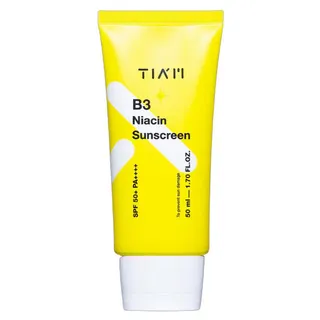
TIA'M B3 Niacin Sunscreen

TIA'M B3 Niacin Sunscreen

Efficacy100/100IrritancyHigh

Works for

Evens skin tone
Niacinamide, Alpha-arbutin + 2 more
Works well
What the product description says
“The Triple Brightening Solution with 2% Niacinamide, Alpha Arbutin and Tranexamic Acid helps reduce the appearance of dark spots and even the skin tone.”
Source: Lila Beauty

This product can help reduce hypepigmentation and even out the skin tone because it contains the following effective ingredients: alpha-arbutin, niacinamide, tranexamic acid

Keep in mind that you would need to apply any topical skincare targetted at hypigmentation consistently for a couple of months to get a result. No topical skincare product can help get rid of hyperpigmentation (including post-acne marks and age spots) instantly.

NiacinamideKey activeEffect: HighIs proven to be effective in reducing blemishes, evening out skin tone and helping to improve lines and wrinkles. It helps the skin to repair sun damage, calm down inflammation and keep maintain good levels of moisture. The concentration of about 2% is effective for supporting the skin barrier and evening out the skin tone. Concentration of 4-6% is better for helping with acne and balancing the sebum production~1.6–1.9%
Alpha-arbutinKey activeEffect: HighMight help reduce hyperpigmentation when used regularly over a long period of time. Is more effective than beta-arbutin~0.3–0.6%
Tranexamic acidKey activeEffect: HighAn amino acid that is effective in reducing hyperpigmentation and evening out the skin tone. It can also help in skin barrier recovery. It is used to treat melasma, especially with injections and when taken orally~0.3–0.6%
Retinyl palmitateUnder-dosedThree steps removed from the active form of vitamin A - retinoic acid. To have an effect in the skin, it first needs to be converted twice to become the retinoic acid. This means it is less potent than retinol, but could also be less irritating. Once converted to the retinoic acid in the skin, it helps against all signs of aging, improves skin cell turnover and helps fight blemishes and clogged pores. However, in many cosmetic formulations, it is used in a concentration that is too low to have the full effect~0.2–0.35%
Anti-aging
Side benefit · Niacinamide, Adenosine + 3 more
Works well

This product can help reduce and prevent fine lines and wrinkles, improve skin elasticity and firmness because it contains adenosine, niacinamide.

These ingredients in the product can also be helpful, even though there is less evidence for their effectiveness: folic acid.

Keep in mind that it typically takes at least 6 weeks to notice any results because the changes that are needed to improve fine lines and elasticity happen in the deeper layers of the skin. No topical anti-aging product can “erase” wrinkles or fully reverse signs of aging.

NiacinamideKey activeEffect: HighIs proven to be effective in reducing blemishes, evening out skin tone and helping to improve lines and wrinkles. It helps the skin to repair sun damage, calm down inflammation and keep maintain good levels of moisture. The concentration of about 2% is effective for supporting the skin barrier and evening out the skin tone. Concentration of 4-6% is better for helping with acne and balancing the sebum production~1.6–1.9%
AdenosineKey activeEffect: HighMight help improve cell turnover and reduce inflammation in skin. One study shows that the ingredients might be able to help reduce dynamic wrinkles (for example, in the corners of the eyes or on the forehead)~0.3–0.6%
Folic acidKey activeEffect: MediumCan help stimulate collagen production in skin. While available studies are promising, more research is needed to confirm the efficacy in skin~0.25–0.45%
Sodium ascorbyl phosphateEffect: Low, below effective doseA stable derivative of vitamin C. It is oil-soluble which means it is more likely to penetrate the skin compared to the pure form of vitamin C (which is water-soluble), but it is less bio-available and is way less effective in stimulating collagen and reducing wrinkles compared to the pure form of vitamin C (L-ascorbic acid) and its other derivatives (for example, magnesium ascorbyl phosphate). At the same time, this vitamin C derivative has been shown in studies to be effective in reducing acne, blemishes and clogged pores. It is less irritating then the pure form of vitamin C~0.3–0.6%
Retinyl palmitateUnder-dosedThree steps removed from the active form of vitamin A - retinoic acid. To have an effect in the skin, it first needs to be converted twice to become the retinoic acid. This means it is less potent than retinol, but could also be less irritating. Once converted to the retinoic acid in the skin, it helps against all signs of aging, improves skin cell turnover and helps fight blemishes and clogged pores. However, in many cosmetic formulations, it is used in a concentration that is too low to have the full effect~0.2–0.35%
Moisturizing
Side benefit · Niacinamide, Panthenol + 14 more
Works well

This product contains good ingredients to attract water to the upper layer of the skin. These ingredients are called "humectants": glycerin.

When humectants are on the surface of the skin, they “pull in” the moisture from the outside environment, or from within deeper layers of the skin. If the air is dry, humectants can speed up the moisture loss from the skin. This is why it is a good idea to use another product on top of this one to help "seal in" the moisture (look for ingredients like dimethicone, squalane, oils and butters).

The following ingredients in this product are especially good for supporting the skin barrier and helping with the hydration level: niacinamide, panthenol

NiacinamideHeroEffect: HighIs proven to be effective in reducing blemishes, evening out skin tone and helping to improve lines and wrinkles. It helps the skin to repair sun damage, calm down inflammation and keep maintain good levels of moisture. The concentration of about 2% is effective for supporting the skin barrier and evening out the skin tone. Concentration of 4-6% is better for helping with acne and balancing the sebum production~1.6–1.9%
PanthenolHero· HumectantEffect: HighHelps attract water to the upper layer of the skin and can help improve skin barrier function~0.3–0.6%
PolymethylsilsesquioxaneKey activeEffect: HighA silicone that improves product texture and helps dissolve other ingredients. Can form a non-greasy film on the skin to prevent moisture loss~1.4–1.7%
Cetearyl alcoholKey active· EmollientEffect: MediumA non-drying alcohol. Works as an emollient. Helps water and oil mix together and creates a nice product texture~0.65–0.95%
GlycerinKey active· HumectantEffect: HighOne of the best moisturizing ingredients. Naturally present in skin. It attracts water to the upper layer of the skin working as a humectant~0.4–0.6%
Dimethicone crosspolymerKey activeEffect: MediumUsed to create a thicker product texture. Helps soften the upper layer of the skin and might be able to prevent moisture loss from its surface~0.35–0.6%
Glyceryl linolenateKey active· EmollientEffect: MediumHelps soften the upper layer of the skin~0.35–0.6%
Tranexamic acidKey activeEffect: HighAn amino acid that is effective in reducing hyperpigmentation and evening out the skin tone. It can also help in skin barrier recovery. It is used to treat melasma, especially with injections and when taken orally~0.3–0.6%
AdenosineKey activeEffect: MediumMight help improve cell turnover and reduce inflammation in skin. One study shows that the ingredients might be able to help reduce dynamic wrinkles (for example, in the corners of the eyes or on the forehead)~0.3–0.6%
CyanocobalaminKey activeEffect: HighCan support skin barrier function and reduce inflammation in skin~0.15–0.3%
Dibutyl adipate· EmollientEffect: LowHelps soften the upper layer of the skin and create a nice product consistency~6.2–7.6%
Caprylyl methiconeEffect: LowA type of silicone that helps to soften the upper layer of the skin and create a nice product finish on the skin~0.6–0.85%
Glyceryl stearate· EmollientEffect: LowAn emollient that softens the skin and forms a protective layer on its surface. Helps water and oil mix together~0.5–0.75%
Glyceryl stearate citrate· EmollientEffect: LowHelps oil and water mix together while softening the upper layer of the skin~0.4–0.65%
Polyglyceryl-10 stearateEffect: LowHelps water and oil mix together and softens the upper layer of the skin~0.35–0.6%
BiotinEffect: LowMight have some moisturising properties. Is not effective when applied topically beyond some moisturizing effect~0.25–0.5%
Anti-blemish
Side benefit · Niacinamide, Sodium ascorbyl phosphate + 1 more
Works well

This product can help reduce breakouts and clogged pores because it contains the following ingredient: niacinamide. This ingredient is used for treating acne and can have a noticeable effect.

NiacinamideHeroEffect: HighIs proven to be effective in reducing blemishes, evening out skin tone and helping to improve lines and wrinkles. It helps the skin to repair sun damage, calm down inflammation and keep maintain good levels of moisture. The concentration of about 2% is effective for supporting the skin barrier and evening out the skin tone. Concentration of 4-6% is better for helping with acne and balancing the sebum production~1.6–1.9%
Sodium ascorbyl phosphateUnder-dosedA stable derivative of vitamin C. It is oil-soluble which means it is more likely to penetrate the skin compared to the pure form of vitamin C (which is water-soluble), but it is less bio-available and is way less effective in stimulating collagen and reducing wrinkles compared to the pure form of vitamin C (L-ascorbic acid) and its other derivatives (for example, magnesium ascorbyl phosphate). At the same time, this vitamin C derivative has been shown in studies to be effective in reducing acne, blemishes and clogged pores. It is less irritating then the pure form of vitamin C~0.3–0.6%
Retinyl palmitateUnder-dosedThree steps removed from the active form of vitamin A - retinoic acid. To have an effect in the skin, it first needs to be converted twice to become the retinoic acid. This means it is less potent than retinol, but could also be less irritating. Once converted to the retinoic acid in the skin, it helps against all signs of aging, improves skin cell turnover and helps fight blemishes and clogged pores. However, in many cosmetic formulations, it is used in a concentration that is too low to have the full effect~0.2–0.35%
Anti-oxidation
Side benefit · Pyridoxine, Pelargonium graveolens flower oil + 4 more
May help

This product contains antioxidants (pyridoxine) that might be able to help neutralize free radicals in skin to lessen the damage it gets from the UV light (sun). There is not enough evidence to confirm their effectiveness in skin though.

PyridoxineKey activeEffect: MediumMight help neutralize free radicals in skin, but evidence of effectiveness in skin is lacking. It might be irritating~0.25–0.45%
Pelargonium graveolens flower oilEffect: LowAn essential oil. Can be irritating. Can become an allergen with oxidation~0.35–0.65%
AdenosineEffect: LowMight help improve cell turnover and reduce inflammation in skin. One study shows that the ingredients might be able to help reduce dynamic wrinkles (for example, in the corners of the eyes or on the forehead)~0.3–0.6%
Rose flower oilEffect: LowFlower oil that is used as a fragrance~0.3–0.55%
Tocopheryl acetateEffect: Low, below effective doseA more stable but less bio-available form of vitamin E compared to Tocopherol. Might help moisturize and protect the skin from free radicals, but mostly used in low concentrations to stabilize other ingredients.~0.3–0.6%
Sodium ascorbyl phosphateUnder-dosedA stable derivative of vitamin C. It is oil-soluble which means it is more likely to penetrate the skin compared to the pure form of vitamin C (which is water-soluble), but it is less bio-available and is way less effective in stimulating collagen and reducing wrinkles compared to the pure form of vitamin C (L-ascorbic acid) and its other derivatives (for example, magnesium ascorbyl phosphate). At the same time, this vitamin C derivative has been shown in studies to be effective in reducing acne, blemishes and clogged pores. It is less irritating then the pure form of vitamin C~0.3–0.6%

Can it cause trouble?

Irritancy
8 strong irritants: Citrus aurantium bergamia fruit oil, Pelargonium graveolens flower oil + 6 more — patch-test recommended
High risk
We flagged 25 ingredients with irritancy potential. Severity depends on your sensitivity threshold; the table lists the worst offenders first.
IngredientFunctionIrritationEst. amount
Citrus aurantium bergamia fruit oilA plant oil with a high content of volatile compounds that can irritate the skin and lead to allergic reactions. Can lead to photosensitivityHigh~0.3–0.55%est.
Pelargonium graveolens flower oilAn essential oil. Can be irritating. Can become an allergen with oxidationHigh~0.35–0.65%est.
LimoneneA common frangrance that can easily irritate skin, especially if exposed to air, light or heatHigh~0.3–0.55%est.
CitronellolA fragrance. Can be irritatingHigh~0.3–0.55%est.
LinaloolA fragrance. Can be irritatingHigh~0.3–0.55%est.
GeraniolA fragrance. Can be irritatingHigh~0.3–0.55%est.
Rose flower oilFlower oil that is used as a fragranceHigh~0.3–0.55%est.
PyridoxineMight help neutralize free radicals in skin, but evidence of effectiveness in skin is lacking. It might be irritatingHigh~0.25–0.45%est.
Retinyl palmitateThree steps removed from the active form of vitamin A - retinoic acid. To have an effect in the skin, it first needs to be converted twice to become the retinoic acid. This means it is less potent than retinol, but could also be less irritating. Once converted to the retinoic acid in the skin, it helps against all signs of aging, improves skin cell turnover and helps fight blemishes and clogged pores. However, in many cosmetic formulations, it is used in a concentration that is too low to have the full effectHigh~0.2–0.35%est.
MethylpropanediolHelps dissolve other ingredients in a formulationMedium~3.5–4.3%est.
Terephthalylidene dicamphor sulfonic acidEcamsule, Mexoryl SX. A UV filter. Is effective mostly against the UVA rays. It is legally marketed in the US with the FDA approval since 2006, even though the ingredient is not on the official FDA list of the approved sunscreen active ingredients. It is photostableMedium~3.5–4.3%est.
1,2-hexanediolA preservativeMedium~1–1.2%est.
Ethylhexyl triazoneUvinul T. A UV filter. Effective against UVB rays. It is photostable. Can increase water resistance properties of the sunscreen. Unfortunately, not approved by the FDA (US) yetMedium~2.2–2.7%est.
Polysilicone-15A UV filter. Effective against UVB rays, but does not protect against the most aging UVA lightMedium~1.4–1.7%est.
Diethylamino hydroxybenzoyl hexyl benzoateUvinul A Plus. A new generation broad spectrum sunscreen that offers an effective protection especially in the UVA range. It is stable in formulations. Unfortunately, is not approved by the FDA (US) yetMedium~0.7–1.05%est.
Bis-ethylhexyloxyphenol methoxyphenyl triazineTinosorb S. One of the most effective broad spectrum sunscreen ingredients. Protects from both UVA and UVB rays. It is photostable. Approved by the US FDA in 2026 (listed as bemotrizinol on US labels).Medium~0.65–0.95%est.
Potassium cetyl phosphateHelps oil and water mix togetherMedium~0.45–0.7%est.
Acrylates/c10-30 alkyl acrylate crosspolymerMaintains the texture of skincare products. Allows the product to spread evenly. Helps oil and water mix togetherMedium~0.45–0.65%est.
Alpha-arbutinMight help reduce hyperpigmentation when used regularly over a long period of time. Is more effective than beta-arbutinMedium~0.3–0.6%est.
Disodium edtaStabilizes the product formulationMedium~0.35–0.6%est.
Polyglyceryl-10 stearateHelps water and oil mix together and softens the upper layer of the skinMedium~0.35–0.6%est.
Sodium ascorbyl phosphateA stable derivative of vitamin C. It is oil-soluble which means it is more likely to penetrate the skin compared to the pure form of vitamin C (which is water-soluble), but it is less bio-available and is way less effective in stimulating collagen and reducing wrinkles compared to the pure form of vitamin C (L-ascorbic acid) and its other derivatives (for example, magnesium ascorbyl phosphate). At the same time, this vitamin C derivative has been shown in studies to be effective in reducing acne, blemishes and clogged pores. It is less irritating then the pure form of vitamin CMedium~0.3–0.6%est.
Tocopheryl acetateA more stable but less bio-available form of vitamin E compared to Tocopherol. Might help moisturize and protect the skin from free radicals, but mostly used in low concentrations to stabilize other ingredients.Medium~0.3–0.6%est.
Glyceryl arachidonateHelps water and oil mix togetherMedium~0.4–0.6%est.
Thiamine hclCan help attract water to the upper layer of the skin. Is studied as a mosquito repellentMedium~0.15–0.3%est.
Comedogenic
1 ingredient rated 2 or more on the 0–5 pore-clogging scale
1 flagged
These ingredients have a comedogenic rating of 2 or more on a 0–5 scale; the table shows each one's rating. In leave-on products they can clog pores in acne-prone skin.
IngredientFunctionRatingEst. amount
Cetearyl alcoholA non-drying alcohol. Works as an emollient. Helps water and oil mix together and creates a nice product texture2/5~0.65–0.95%est.

User reviews

Would you recommend?
No community reviews yet.

Be the first — your take helps the next person decide.

Ingredients

Filter by role to see what each ingredient is doing.

Water~45–55%
Formula
Irritation risk
Low

Plain old water

More about Water
Dibutyl adipate~6.2–7.6%
Formula
Irritation risk
Low
Works for
Moisturizing

Helps soften the upper layer of the skin and create a nice product consistency

More about Dibutyl adipate
Propanediol~4.8–5.8%
Formula
Irritation risk
Low

Acts as a solvent for other ingredients. Speeds up the absorption of other ingredients into the skin

More about Propanediol
Methylpropanediol~3.5–4.3%
Irritant · medium
Irritation risk
Medium

Helps dissolve other ingredients in a formulation

More about Methylpropanediol
Terephthalylidene dicamphor sulfonic acid~3.5–4.3%
Irritant · medium
Irritation risk
Medium
Works for
Sun protection

Ecamsule, Mexoryl SX. A UV filter. Is effective mostly against the UVA rays. It is legally marketed in the US with the FDA approval since 2006, even though the ingredient is not on the official FDA list of the approved sunscreen active ingredients. It is photostable

More about Terephthalylidene dicamphor sulfonic acid
1,2-hexanediol~1–1.2%
Irritant · medium
Irritation risk
Medium

A preservative

More about 1,2-hexanediol
Ethylhexyl triazone~2.2–2.7%
Irritant · medium
Irritation risk
Medium
Works for
Sun protection

Uvinul T. A UV filter. Effective against UVB rays. It is photostable. Can increase water resistance properties of the sunscreen. Unfortunately, not approved by the FDA (US) yet

More about Ethylhexyl triazone
Niacinamide~1.6–1.9%
Hero · Moisturizing, Anti-blemish
Irritation risk
Low
Works for
Evens skin toneAnti-agingMoisturizingAnti-blemishReduces irritationAntibacterialAnti-inflammatoryReduces redness

Is proven to be effective in reducing blemishes, evening out skin tone and helping to improve lines and wrinkles. It helps the skin to repair sun damage, calm down inflammation and keep maintain good levels of moisture. The concentration of about 2% is effective for supporting the skin barrier and evening out the skin tone. Concentration of 4-6% is better for helping with acne and balancing the sebum production

More about Niacinamide
Polymethylsilsesquioxane~1.4–1.7%
Key active
Irritation risk
Low
Works for
Moisturizing

A silicone that improves product texture and helps dissolve other ingredients. Can form a non-greasy film on the skin to prevent moisture loss

More about Polymethylsilsesquioxane
Polysilicone-15~1.4–1.7%
Irritant · medium
Irritation risk
Medium
Works for
Sun protection

A UV filter. Effective against UVB rays, but does not protect against the most aging UVA light

More about Polysilicone-15
Trimethylpentanediol/adipic acid/glycerin crosspolymer~0.75–1.15%
Formula
Tromethamine~0.65–1%
Formula
Irritation risk
Low

Helps adjust pH in products

More about Tromethamine
Caprylyl methicone~0.6–0.85%
Formula
Irritation risk
Low
Works for
Moisturizing

A type of silicone that helps to soften the upper layer of the skin and create a nice product finish on the skin

More about Caprylyl methicone
Cetearyl alcohol~0.65–0.95%
Key activeComedogenic 2/5
Irritation risk
Low
Comedogenicity
2/5
Works for
CleansingMoisturizing

A non-drying alcohol. Works as an emollient. Helps water and oil mix together and creates a nice product texture

More about Cetearyl alcohol
Diethylamino hydroxybenzoyl hexyl benzoate~0.7–1.05%
Irritant · medium
Irritation risk
Medium
Works for
Sun protection

Uvinul A Plus. A new generation broad spectrum sunscreen that offers an effective protection especially in the UVA range. It is stable in formulations. Unfortunately, is not approved by the FDA (US) yet

More about Diethylamino hydroxybenzoyl hexyl benzoate
Polyglyceryl-3 distearate~0.55–0.85%
Formula
Irritation risk
Low
Works for
Cleansing
More about Polyglyceryl-3 distearate
Methyl trimethicone~0.5–0.75%
Formula
Irritation risk
Low

A type of silicone that helps create a silky product finish and dissolve other ingredients

More about Methyl trimethicone
Bis-ethylhexyloxyphenol methoxyphenyl triazine~0.65–0.95%
Irritant · medium
Irritation risk
Medium
Works for
Sun protection

Tinosorb S. One of the most effective broad spectrum sunscreen ingredients. Protects from both UVA and UVB rays. It is photostable. Approved by the US FDA in 2026 (listed as bemotrizinol on US labels).

More about Bis-ethylhexyloxyphenol methoxyphenyl triazine
Glyceryl stearate~0.5–0.75%
Formula
Irritation risk
Low
Works for
CleansingMoisturizing

An emollient that softens the skin and forms a protective layer on its surface. Helps water and oil mix together

More about Glyceryl stearate
Potassium cetyl phosphate~0.45–0.7%
Irritant · medium
Irritation risk
Medium
Works for
Cleansing

Helps oil and water mix together

More about Potassium cetyl phosphate
Acrylates/c10-30 alkyl acrylate crosspolymer~0.45–0.65%
Irritant · medium
Irritation risk
Medium

Maintains the texture of skincare products. Allows the product to spread evenly. Helps oil and water mix together

More about Acrylates/c10-30 alkyl acrylate crosspolymer
Vp/va copolymer~0.4–0.65%
Formula
Irritation risk
Low

Used to stabilize product formulation and create a nice product consistency

More about Vp/va copolymer
Polyether-1~0.35–0.65%
Formula
Irritation risk
Low
More about Polyether-1
Alpha-arbutin~0.3–0.6%
Key activeIrritant · medium
Irritation risk
Medium
Works for
Evens skin tone

Might help reduce hyperpigmentation when used regularly over a long period of time. Is more effective than beta-arbutin

More about Alpha-arbutin
Carbomer~0.35–0.6%
Formula
Irritation risk
Low
Works for
Cleansing

Helps create a thicker or gel-like product texture. It is not a surfactant but can be used in gentle cleansing formulations

More about Carbomer
Dimethicone/vinyl dimethicone crosspolymer~0.35–0.6%
Formula
Irritation risk
Low

Used to stabilize product formulations and create a nice product texture

More about Dimethicone/vinyl dimethicone crosspolymer
Glyceryl stearate citrate~0.4–0.65%
Formula
Irritation risk
Low
Works for
CleansingMoisturizing

Helps oil and water mix together while softening the upper layer of the skin

More about Glyceryl stearate citrate
Polyacrylate crosspolymer-6~0.35–0.65%
Formula
Dimethicone crosspolymer~0.35–0.6%
Key active
Irritation risk
Low
Works for
Moisturizing

Used to create a thicker product texture. Helps soften the upper layer of the skin and might be able to prevent moisture loss from its surface

More about Dimethicone crosspolymer
Glycerin~0.4–0.6%
Key active
Irritation risk
Low
Works for
Moisturizing

One of the best moisturizing ingredients. Naturally present in skin. It attracts water to the upper layer of the skin working as a humectant

More about Glycerin
Adenosine~0.3–0.6%
Key active
Irritation risk
Low
Works for
Anti-agingMoisturizingAnti-oxidation

Might help improve cell turnover and reduce inflammation in skin. One study shows that the ingredients might be able to help reduce dynamic wrinkles (for example, in the corners of the eyes or on the forehead)

More about Adenosine
Citrus aurantium bergamia fruit oil~0.3–0.55%
Irritant · high
Irritation risk
High

A plant oil with a high content of volatile compounds that can irritate the skin and lead to allergic reactions. Can lead to photosensitivity

More about Citrus aurantium bergamia fruit oil
Pelargonium graveolens flower oil~0.35–0.65%
Irritant · high
Irritation risk
High
Works for
Anti-oxidation

An essential oil. Can be irritating. Can become an allergen with oxidation

More about Pelargonium graveolens flower oil
Disodium edta~0.35–0.6%
Irritant · medium
Irritation risk
Medium

Stabilizes the product formulation

More about Disodium edta
Limonene~0.3–0.55%
Irritant · high
Irritation risk
High

A common frangrance that can easily irritate skin, especially if exposed to air, light or heat

More about Limonene
Citronellol~0.3–0.55%
Irritant · high
Irritation risk
High

A fragrance. Can be irritating

More about Citronellol
Linalool~0.3–0.55%
Irritant · high
Irritation risk
High

A fragrance. Can be irritating

More about Linalool
Tranexamic acid~0.3–0.6%
Key active
Irritation risk
Low
Works for
Evens skin toneMoisturizing

An amino acid that is effective in reducing hyperpigmentation and evening out the skin tone. It can also help in skin barrier recovery. It is used to treat melasma, especially with injections and when taken orally

More about Tranexamic acid
Geraniol~0.3–0.55%
Irritant · high
Irritation risk
High

A fragrance. Can be irritating

More about Geraniol
Hydrogenated lecithin~0.4–0.6%
Formula
Irritation risk
Low
Works for
Cleansing

Helps to retain moisture by creating a protective barrier on the skin. Rich in fatty acids. Improves product texture and helps with the penetration of other ingredients.

More about Hydrogenated lecithin
Polyglyceryl-10 stearate~0.35–0.6%
Irritant · medium
Irritation risk
Medium
Works for
Moisturizing

Helps water and oil mix together and softens the upper layer of the skin

More about Polyglyceryl-10 stearate
Panthenol~0.3–0.6%
Hero · Moisturizing
Irritation risk
Low
Works for
Reduces rednessMoisturizingReduces irritation

Helps attract water to the upper layer of the skin and can help improve skin barrier function

More about Panthenol
Sodium ascorbyl phosphate~0.3–0.6%
Under-dosedIrritant · medium
Irritation risk
Medium
Works for
Anti-blemishAnti-oxidationAnti-aging

A stable derivative of vitamin C. It is oil-soluble which means it is more likely to penetrate the skin compared to the pure form of vitamin C (which is water-soluble), but it is less bio-available and is way less effective in stimulating collagen and reducing wrinkles compared to the pure form of vitamin C (L-ascorbic acid) and its other derivatives (for example, magnesium ascorbyl phosphate). At the same time, this vitamin C derivative has been shown in studies to be effective in reducing acne, blemishes and clogged pores. It is less irritating then the pure form of vitamin C

More about Sodium ascorbyl phosphate
Tocopheryl acetate~0.3–0.6%
Irritant · medium
Irritation risk
Medium
Works for
Anti-oxidation

A more stable but less bio-available form of vitamin E compared to Tocopherol. Might help moisturize and protect the skin from free radicals, but mostly used in low concentrations to stabilize other ingredients.

More about Tocopheryl acetate
Rose flower oil~0.3–0.55%
Irritant · high
Irritation risk
High
Works for
Anti-oxidation

Flower oil that is used as a fragrance

More about Rose flower oil
Glyceryl arachidonate~0.4–0.6%
Irritant · medium
Irritation risk
Medium
Works for
Cleansing

Helps water and oil mix together

More about Glyceryl arachidonate
Glyceryl linolenate~0.35–0.6%
Key active
Irritation risk
Low
Works for
Moisturizing

Helps soften the upper layer of the skin

More about Glyceryl linolenate
Biotin~0.25–0.5%
Formula
Irritation risk
Low
Works for
Moisturizing

Might have some moisturising properties. Is not effective when applied topically beyond some moisturizing effect

More about Biotin
Folic acid~0.25–0.45%
Key active
Irritation risk
Low
Works for
Anti-aging

Can help stimulate collagen production in skin. While available studies are promising, more research is needed to confirm the efficacy in skin

More about Folic acid
Pyridoxine~0.25–0.45%
Key activeIrritant · high
Irritation risk
High
Works for
Anti-oxidation

Might help neutralize free radicals in skin, but evidence of effectiveness in skin is lacking. It might be irritating

More about Pyridoxine
Retinyl palmitate~0.2–0.35%
Under-dosedIrritant · high
Irritation risk
High
Works for
Anti-agingEvens skin toneAnti-blemishExfoliation

Three steps removed from the active form of vitamin A - retinoic acid. To have an effect in the skin, it first needs to be converted twice to become the retinoic acid. This means it is less potent than retinol, but could also be less irritating. Once converted to the retinoic acid in the skin, it helps against all signs of aging, improves skin cell turnover and helps fight blemishes and clogged pores. However, in many cosmetic formulations, it is used in a concentration that is too low to have the full effect

More about Retinyl palmitate
Thiamine hcl~0.15–0.3%
Irritant · medium
Irritation risk
Medium

Can help attract water to the upper layer of the skin. Is studied as a mosquito repellent

More about Thiamine hcl
Cyanocobalamin~0.15–0.3%
Key active
Irritation risk
Low
Works for
MoisturizingAnti-inflammatory

Can support skin barrier function and reduce inflammation in skin

More about Cyanocobalamin
Ingredient list view

Water, Dibutyl adipate, Propanediol, Methylpropanediol, Terephthalylidene dicamphor sulfonic acid, 1,2-hexanediol, Ethylhexyl triazone, Niacinamide, Polymethylsilsesquioxane, Polysilicone-15, Trimethylpentanediol/adipic acid/glycerin crosspolymer, Tromethamine, Caprylyl methicone, Cetearyl alcohol, Diethylamino hydroxybenzoyl hexyl benzoate, Polyglyceryl-3 distearate, Methyl trimethicone, Bis-ethylhexyloxyphenol methoxyphenyl triazine, Glyceryl stearate, Potassium cetyl phosphate, Acrylates/c10-30 alkyl acrylate crosspolymer, Vp/va copolymer, Polyether-1, Alpha-arbutin, Carbomer, Dimethicone/vinyl dimethicone crosspolymer, Glyceryl stearate citrate, Polyacrylate crosspolymer-6, Dimethicone crosspolymer, Glycerin, Adenosine, Citrus aurantium bergamia fruit oil, Pelargonium graveolens flower oil, Disodium edta, Limonene, Citronellol, Linalool, Tranexamic acid, Geraniol, Hydrogenated lecithin, Polyglyceryl-10 stearate, Panthenol, Sodium ascorbyl phosphate, Tocopheryl acetate, Rose flower oil, Glyceryl arachidonate, Glyceryl linolenate, Biotin, Folic acid, Pyridoxine, Retinyl palmitate, Thiamine hcl, Cyanocobalamin

Compare prices

Retailers ranked by price — lowest first.

🇦🇺 Lila Beauty (AU)50 ml
≈ $12.86
Buy

Affiliate links · As an Amazon Associate, WIMJ earns from qualifying purchases.

Worth comparing, line by line.

Match % combines shared ingredients, the first five ingredients, shared actives and hero ingredients, irritancy (lower counts in the alternative's favour), texture and body area. Only products in the same routine step are compared.

Side-by-side comparison of this product against its closest alternatives
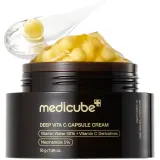
TIA'MB3 Niacin SunscreenYOUR PRODUCTROUND LAB1025 Dokdo SunscreenMedicubeDeep Vita C Capsule CreamP.CALMLight Active Cream
Match—86%85%84%
Price—$18.02$2.39$17.90
Shared key ingredients—9 of 168 of 169 of 16
Key difference—Biosaccharide Gum-13-O-Ethyl Ascorbic Acid3-O-Ethyl Ascorbic Acid
Irritancy High Medium Medium Medium
Drying alcohol————
View product Shop Shop Shop

More alternatives: ISNTREE Hyaluronic Acid Fresh Sun SerumAPRIL SKIN TXA Niacinamide Collagen 99 Capsule Gel Mask

Cheaper alternatives? See how this stacks up against similar formulas.
We compare ingredient profiles across our catalog — pick the closest match for your budget.
Open dupe finder

Product summary

"TIA'M - Buy B3 Niacin Sunscreen in Australia - Online Korean Skincare" is effective for: Anti-aging, Moisturizing, Evens skin tone and Anti-blemish

Ingredient callouts

  • this product includes a form of Retinoids (vitamin A) - retinyl palmitate 0.20% - 0.35%, but this type of vitamin A is not very effective. It could in theory help with fine lines and wrinkles, but the effect is most likely minimal.
  • Adenosine 0.30% - 0.60%. It is a compound that in involved in many biological processes inside the skin cells. According one high-quality clinical trial, topical Adenosine in low concentrations can somewhat help improve "deep wrinkles" - the wrinkles that appear with age in places where our faces are most dynamic (for example, on the forehead or in the corners of the eyes).
  • Humectants (panthenol 0.30% - 0.60% and glycerin 0.40% - 0.60%). These ingredients help attract water to the upper layer of the skin and improve the skin hydration.

Price

The product retails for 18.95A$ in Australia.

For a detailed price comparison: click here.

Sources cited in this review

Every concentration estimate and effectiveness label is anchored to one of these 29 studies and safety reviews.

  1. 1
  2. 2
  3. 3
  4. 4
  5. 5
  6. 6
TIA'M B3 Niacin Sunscreen
TIA'MB3 Niacin Sunscreen

Affiliate links · As an Amazon Associate, WIMJ earns from qualifying purchases.

As an Amazon Associate, WIMJ earns from qualifying purchases.