Works for:
based on ingredients and %- Moisturizing
- Anti-aging
Doesn't work for:
based on ingredients and %- Evens skin tone
Can it cause trouble?
- Irritation risk: high
- Comedogenic risk ingredients: 6
Key actives

Product Summary
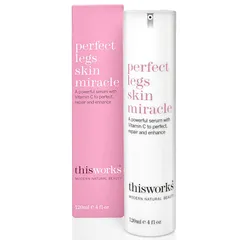
"this works - Perfect Legs Skin Miracle" could be helpful for: Anti-aging and Moisturizing, but its actives are not the most effective or are not well-studied.
Ingredient callouts
- Humectants (glycerin 2.10% - 2.60% and algae extract 0.40% - 0.60%). These ingredients help attract water to the upper layer of the skin and improve the skin hydration.
Price
The product retails from 38.00$ up to 59.00$ in the United States, for 165.67CA$ in Canada, for 146.78A$ in Australia and from 29.25£ up to 72.99£ in the United Kingdom.
For a detailed price comparison: click here.
Anti-aging
What does the product description say?
Enriched with Vitamin C and E, the non-greasy formula blends seamlessly onto skin to conceal the appearance of bruising and imperfections, whilst evening out skin tone and creating a natural-looking sheen.
Source: Beauty Expert
This product contains disodium lauriminodipropionate tocopheryl phosphates. This ingredient help neutralize free radicals in skin. By doing so, they might be able to prevent early signs of aging (like fine lines and wrinkles), at least to some extent. These ingredients will not be able to "reverse" signs of aging.
Plant extract that helps the skin to attract water and make it more smooth for touch. Also shows promise of anti-aging properties, but research is not extensive yet
A stable derivative of vitamin C. It is oil-soluble which means it is more likely to penetrate the skin compared to the pure form of vitamin C (which is water-soluble), but it is less bio-available and is way less effective in stimulating collagen and reducing wrinkles compared to the pure form of vitamin C (L-ascorbic acid) and its other derivatives (for example, magnesium ascorbyl phosphate). At the same time, this vitamin C derivative has been shown in studies to be effective in reducing acne, blemishes and clogged pores. It is less irritating then the pure form of vitamin C
A great moisturising ingredient that softens the skin and reduces water loss from its upper layer. It also can be helpful in protecting skin from free radicals
Moisturizing
What does the product description say?
A delicate blend of Caramel and Arnica work to smooth the surface texture and deeply hydrate for bare-legged confidence all year round.
Source: Mankind
This product can help improve hydration of the skin with the two types of ingredients.
The first type is called “humectants”:
these ingredients help attract water.
When humectants are on the surface of the skin, they “pull in” the moisture from the outside environment, or from
within deeper layers of the skin. The following ingredients in this product do the job:
algae extract, glycerin.
This product also contains ingredients called “occlusives”. They help reduce the speed with which our skin loses moisture to the outside environment. These ingredients also help soften the upper layer of the skin, so it feels less tight and nicer to the touch. The following ingredients in this product do the job: caprylic/capric triglyceride, cocos nucifera oil.
One of the best moisturizing ingredients. Naturally present in skin. It attracts water to the upper layer of the skin working as a humectant
Plant extract that helps the skin to attract water and make it more smooth for touch. Also shows promise of anti-aging properties, but research is not extensive yet
An emollient. Found to be as effective as a moisturizer for dry skin as mineral oil. Could be comedogenic
A good mix of fatty acids that forms a protective layer on the skin. Improves the shelf life of products. Derived from coconut and glycerin
An emollient that helps soften the skin and is used to improve product texture and stability
An emollient that helps soften the skin
Helps to soften the upper layer of the skin without creating a greasy texture
Used to create a nice product texture and help delivery of other ingredients. Might be somewhat helpful in attracting water to the upper layer of the skin
Helps preserve products and creates a nice product texture
Helps products spread more easily and works as an emollient to soften skin
Helps calm down inflammation in skin and can help reduce itching. Helps to repair the skin barrier and keep skin hydrated
A great moisturising ingredient that softens the skin and reduces water loss from its upper layer. It also can be helpful in protecting skin from free radicals
Evens skin tone
What does the product description say?
Easily absorbed, our non-greasy blend is enriched with Vitamin C and Vitamin E to help repair skin, whilst Arnica will help to even out skin tone and fade bruising.
Source: thisworks
Effective ingredients missing or their concentration is too low
How honest is this product?
| Promise | Can it deliver? |
|---|---|
| Moisturizing | |
| Evens skin tone |
Total Promises Fulfilled score: 37/100.
We receive a small commission for purchases made through these links at no cost for you. Thank you for your support! Learn more
Potential irritants
Comedogenic ingredients
User reviews (0)
Averages from community submissions.
No reviews yet for this product.
Be the first to share your experience!
Tried this product?
Help capture what the ingredient list can't—texture, finish, pilling, scent, and more. Answer what you can, skip the rest.
Takes ~30 seconds.
Reviews are shown in aggregate. No personal details.
| Product | Similarity | Price | Irritancy |
|---|---|---|---|
 this works Perfect Legs Skin Miracle | Current | $29.50 | |
 Avant Skincare Hi-Retinol Restoring and Lifting Serum | 51% | ≈ $46.79 | |
 Derma E Hyaluronic Acid Hydrating Serum | 46% | $21.00 | |
 BeautyLab BeautyLabreg; Anti-Ageing Relax Neuropeptide Serum | 46% | - | |
 White Egret Vitamin C Hyaluronic Acid Serum | 46% | ≈ $35.07 | |
 Enough Secret with re-active lifting ampoule | 46% | RUB 1,217.00 |
Key Actives
Helps calm down inflammation in skin and can help reduce itching. Helps to repair the skin barrier and keep skin hydrated
A stable derivative of vitamin C. It is oil-soluble which means it is more likely to penetrate the skin compared to the pure form of vitamin C (which is water-soluble), but it is less bio-available and is way less effective in stimulating collagen and reducing wrinkles compared to the pure form of vitamin C (L-ascorbic acid) and its other derivatives (for example, magnesium ascorbyl phosphate). At the same time, this vitamin C derivative has been shown in studies to be effective in reducing acne, blemishes and clogged pores. It is less irritating then the pure form of vitamin C
A great moisturising ingredient that softens the skin and reduces water loss from its upper layer. It also can be helpful in protecting skin from free radicals
A form of Vitamin E. In concentrations 1-3%, it can help neutralize free radicals in skin and support photodamage repair
Plant extract that helps the skin to attract water and make it more smooth for touch. Also shows promise of anti-aging properties, but research is not extensive yet
A good mix of fatty acids that forms a protective layer on the skin. Improves the shelf life of products. Derived from coconut and glycerin
One of the best moisturizing ingredients. Naturally present in skin. It attracts water to the upper layer of the skin working as a humectant
An emollient. Found to be as effective as a moisturizer for dry skin as mineral oil. Could be comedogenic
Potential irritants
A plant extract that can be irritating. It can have some anti-bacterial properties, but there are no evidence of a beneficial effect for skin
A preservative. Can be used to mask unpleasant smell. Can be irritating
An aromatic blend of unspecified and possibly irritating ingredients
A common frangrance that can easily irritate skin, especially if exposed to air, light or heat
An essentil oil from orange peel. Potential allergen and can be irritating
A good mix of fatty acids that forms a protective layer on the skin. Improves the shelf life of products. Derived from coconut and glycerin
A stable derivative of vitamin C. It is oil-soluble which means it is more likely to penetrate the skin compared to the pure form of vitamin C (which is water-soluble), but it is less bio-available and is way less effective in stimulating collagen and reducing wrinkles compared to the pure form of vitamin C (L-ascorbic acid) and its other derivatives (for example, magnesium ascorbyl phosphate). At the same time, this vitamin C derivative has been shown in studies to be effective in reducing acne, blemishes and clogged pores. It is less irritating then the pure form of vitamin C
Helps water and oil mix together and stabilize the product formulation
Helps preserve products and creates a nice product texture
Comedogenic ingredients
A great moisturising ingredient that softens the skin and reduces water loss from its upper layer. It also can be helpful in protecting skin from free radicals
Plant extract that helps the skin to attract water and make it more smooth for touch. Also shows promise of anti-aging properties, but research is not extensive yet
An emollient. Found to be as effective as a moisturizer for dry skin as mineral oil. Could be comedogenic
All ingredients
Helps products spread more easily and works as an emollient to soften skin
A good mix of fatty acids that forms a protective layer on the skin. Improves the shelf life of products. Derived from coconut and glycerin
Used to create a nice product texture and help delivery of other ingredients. Might be somewhat helpful in attracting water to the upper layer of the skin
One of the best moisturizing ingredients. Naturally present in skin. It attracts water to the upper layer of the skin working as a humectant
A stable derivative of vitamin C. It is oil-soluble which means it is more likely to penetrate the skin compared to the pure form of vitamin C (which is water-soluble), but it is less bio-available and is way less effective in stimulating collagen and reducing wrinkles compared to the pure form of vitamin C (L-ascorbic acid) and its other derivatives (for example, magnesium ascorbyl phosphate). At the same time, this vitamin C derivative has been shown in studies to be effective in reducing acne, blemishes and clogged pores. It is less irritating then the pure form of vitamin C
A form of Vitamin E. In concentrations 1-3%, it can help neutralize free radicals in skin and support photodamage repair
An emollient that helps soften the skin and is used to improve product texture and stability
A great moisturising ingredient that softens the skin and reduces water loss from its upper layer. It also can be helpful in protecting skin from free radicals
A preservative. It helps prevent bacterial growth in cosmetic products
Helps water and oil mix together and stabilize the product formulation
Creates an illusion of smoother and more radiant skin tone. Adds shimmer to the skin by reflecting light
A plant extract that can be irritating. It can have some anti-bacterial properties, but there are no evidence of a beneficial effect for skin
Helps calm down inflammation in skin and can help reduce itching. Helps to repair the skin barrier and keep skin hydrated
A preservative. Can be used to mask unpleasant smell. Can be irritating
Plant extract that helps the skin to attract water and make it more smooth for touch. Also shows promise of anti-aging properties, but research is not extensive yet
Helps to soften the upper layer of the skin without creating a greasy texture
An aromatic blend of unspecified and possibly irritating ingredients
Helps create a thicker or gel-like product texture. It is not a surfactant but can be used in gentle cleansing formulations
A common frangrance that can easily irritate skin, especially if exposed to air, light or heat
An essentil oil from orange peel. Potential allergen and can be irritating
An emollient. Found to be as effective as a moisturizer for dry skin as mineral oil. Could be comedogenic
Helps preserve products and creates a nice product texture
Ingredient list view
Water, Dicaprylyl carbonate, Caprylic/capric triglyceride, Butylene glycol, Coconut alkanes, Glycerin, Sodium ascorbyl phosphate, Disodium lauriminodipropionate tocopheryl phosphates, Sorbitan olivate, Laureth-4, Cetearyl olivate, Caramel, Cetyl palmitate, Butyrospermum parkii butter, Phenoxyethanol, Sorbitan palmitate, Hydrogenated macadamia seed oil, Mica, Arnica montana flower extract, Allantoin, Benzyl alcohol, Algae extract, Coco-caprylate/caprate, Sodium stearoyl glutamate, Macrocystis pyrifera, Parfum, Xanthan gum, Carbomer, Ethylhexylglycerin, Limonene, Dehydroacetic acid, Pogostemon cablin oil, Citrus aurantium dulcis peel oil, Pelargonium graveolens oil, Amyris balsamifera bark oil, Cinnamomum camphora wood oil, Boswellia carterii oil, Cocos nucifera oil, Rosa damascena absolute, Unknown, Evernia prunastri extract, Eugenia caryophyllus bud oil, Styrax benzoin resin extract, Hibiscus abelmoschus seed oil, Linalool, Isopropyl titanium triisostearate, Citronellol, Caprylyl glycol, Benzoic acid, Evernia prunastri extract, Chlorphenesin, Hexylene glycol, Geraniol, Eugenol, Potassium sorbate, Ci 77491
- Glycerol and the skin: holistic approach to its origin and functions
- Sodium ascorbyl phosphate shows in vitro and in vivo efficacy in the prevention and treatment of acne vulgaris
- Sodium ascorbyl phosphate in topical microemulsions
- Final report of the safety assessment of L-Ascorbic Acid, Calcium Ascorbate, Magnesium Ascorbate, Magnesium Ascorbyl Phosphate, Sodium Ascorbate, and Sodium Ascorbyl Phosphate as used in cosmetics
- Regulation of collagen synthesis in human dermal fibroblasts by the sodium and magnesium salts of ascorbyl-2-phosphate
- Comparison of clinical efficacies of sodium ascorbyl phosphate, retinol and their combination in acne treatment
- Application of l-ascorbic acid and its derivatives (sodium ascorbyl phosphate and magnesium ascorbyl phosphate) in topical cosmetic formulations: stability studies
- Sodium L-ascorbyl-2-phosphate 5% lotion for the treatment of acne vulgaris: a randomized, double-blind, controlled trial
- Final Report on the Safety Assessment of Laureths 4 and 23
- Effects of Topical Arnica Gel on Post-Laser Treatment Bruises
- Effects of microcurrent application alone or in combination with topical Hypericum perforatum L. and Arnica montana L. on surgically induced wound healing in Wistar rats
- The seamy side of natural medicines: contact sensitization to arnica (Arnica montana L.) and marigold (Calendula officinalis L.)
- Accelerated resolution of laser‐induced bruising with topical 20% arnica: a rater‐blinded randomized controlled trial
- Profile of wound healing process induced by allantoin
- Safety Assessment of Alkyl Esters as Used in Cosmetics
- 4 Final Report on the Safety Assessment of Sodium Dehydroacetate and Dehydroacetic Acid
- Annex I: Clinical evidence regarding sensitisation to individual fragrance chemicals and to natural extracts