Works for:
based on ingredients and %- Anti-aging
- Moisturizing
- Evens skin tone
- Anti-oxidation
Can it cause trouble?
- Irritation risk: high
- Comedogenic risk ingredients: 0
Key actives

Anti-aging
What does the product description say?
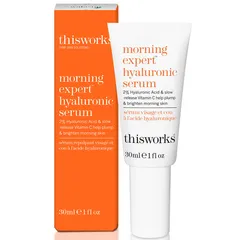
Enriched with powerful blend of wheat-based 2% Hyaluronic Acid and Vitamin C, the youth-boosting serum kicks morning skin concerns (like dullness, dehydration and fatigue) to the curb through brightening action and a slow-release moisture boost for all-day hydration.
Source: Mankind
This product contains ascorbyl glucoside. This ingredient might be able to help reduce and prevent fine lines and wrinkles, improve skin elasticity and firmness, but there is not enough evidence that it actually works.
A vitamin C derivative that is more stable but less potent than pure form of vitamin C. Has a potential to boost collagen production, nutralise free radicals and reduce hyperpigmentation, but the required concentration is likely to be much higher than for the pure form of vitamin C, limiting the ingredient's effectiveness in products
Anti-oxidation
This product contains antioxidants (ascorbyl glucoside) that might be able to help neutralize free radicals in skin to lessen the damage it gets from the UV light (sun). There is not enough evidence to confirm their effectiveness in skin though.
A vitamin C derivative that is more stable but less potent than pure form of vitamin C. Has a potential to boost collagen production, nutralise free radicals and reduce hyperpigmentation, but the required concentration is likely to be much higher than for the pure form of vitamin C, limiting the ingredient's effectiveness in products
A plant extract that might help to neutralize free radicals in skin. Is claimed to help reduce hyperpigmentation but evidence is missing
Evens skin tone
What does the product description say?
Enriched with powerful blend of wheat-based 2% Hyaluronic Acid and Vitamin C, the youth-boosting serum kicks morning skin concerns (like dullness, dehydration and fatigue) to the curb through brightening action and a slow-release moisture boost for all-day hydration.
Source: Mankind
The following ingredient (ingredients) in this product might be helpful, but there is no evidence to confirm that it actually works: albizia julibrissin bark extract, ascorbyl glucoside.
A vitamin C derivative that is more stable but less potent than pure form of vitamin C. Has a potential to boost collagen production, nutralise free radicals and reduce hyperpigmentation, but the required concentration is likely to be much higher than for the pure form of vitamin C, limiting the ingredient's effectiveness in products
A plant extract that might help to neutralize free radicals in skin. Is claimed to help reduce hyperpigmentation but evidence is missing
Moisturizing
What does the product description say?
With 2% Hyaluronic Acid and Vitamin C, morning expert hyaluronic serum targets dehydration on waking, helping to protect, strengthen and provide skin with daylong support and a super-charged glow 🍊
Source: thisworks
This product contains good ingredients to attract water to the upper layer of the skin. These ingredients are called "humectants": glycerin, sodium hyaluronate.
When humectants are on the surface of the skin, they “pull in” the moisture from the outside environment, or from within deeper layers of the skin. If the air is dry, humectants can speed up the moisture loss from the skin. This is why it is a good idea to use another product on top of this one to help "seal in" the moisture (look for ingredients like dimethicone, squalane, oils and butters).
One of the best moisturizing ingredients. Naturally present in skin. It attracts water to the upper layer of the skin working as a humectant
One of the best moisturizing ingredients. Attracts water into the upper layer of the skin
How honest is this product?
| Promise | Can it deliver? |
|---|---|
| Anti-aging | |
| Moisturizing | |
| Evens skin tone |
Total Promises Fulfilled score: 75/100.
We receive a small commission for purchases made through these links at no cost for you. Thank you for your support! Learn more
Potential irritants
Comedogenic ingredients
No comedogenic ingredients detected
User reviews (0)
Averages from community submissions.
No reviews yet for this product.
Be the first to share your experience!
Tried this product?
Help capture what the ingredient list can't—texture, finish, pilling, scent, and more. Answer what you can, skip the rest.
Takes ~30 seconds.
Reviews are shown in aggregate. No personal details.
| Product | Similarity | Price | Irritancy |
|---|---|---|---|
 this works Morning Expert Hyaluronic Serum | Current | $33.60 | |
 Skin Generics Brightening Brightening Serum Vitamin C 20% Active Complex | 47% | ≈ $34.69 | |
 laCabine Vit-C Serum | 47% | ≈ $18.41 | |
 Clarins Bright Plus Serum | 46% | $75.65 | |
 Temple Spa LET'S CONCENTRATE Skin Glowing Serum | 46% | - | |
mid/night Face Serum 00.22 | 46% | - |
Key Actives
A vitamin C derivative that is more stable but less potent than pure form of vitamin C. Has a potential to boost collagen production, nutralise free radicals and reduce hyperpigmentation, but the required concentration is likely to be much higher than for the pure form of vitamin C, limiting the ingredient's effectiveness in products
One of the best moisturizing ingredients. Naturally present in skin. It attracts water to the upper layer of the skin working as a humectant
One of the best moisturizing ingredients. Attracts water into the upper layer of the skin
Potential irritants
A plant extract that might help to neutralize free radicals in skin. Is claimed to help reduce hyperpigmentation but evidence is missing
A preservative. Can be used to mask unpleasant smell. Can be irritating
An aromatic blend of unspecified and possibly irritating ingredients
A common frangrance that can easily irritate skin, especially if exposed to air, light or heat
A vitamin C derivative that is more stable but less potent than pure form of vitamin C. Has a potential to boost collagen production, nutralise free radicals and reduce hyperpigmentation, but the required concentration is likely to be much higher than for the pure form of vitamin C, limiting the ingredient's effectiveness in products
An alpha-hydroxy acid (AHA), but is mostly used to stabilize product formulations in cosmetics
Can work as an exfoliant but is typically used to adjust the product pH
Comedogenic ingredients
We couldn't find any comedogenic ingredients in this product
All ingredients
One of the best moisturizing ingredients. Naturally present in skin. It attracts water to the upper layer of the skin working as a humectant
A vitamin C derivative that is more stable but less potent than pure form of vitamin C. Has a potential to boost collagen production, nutralise free radicals and reduce hyperpigmentation, but the required concentration is likely to be much higher than for the pure form of vitamin C, limiting the ingredient's effectiveness in products
One of the best moisturizing ingredients. Attracts water into the upper layer of the skin
A plant extract that might help to neutralize free radicals in skin. Is claimed to help reduce hyperpigmentation but evidence is missing
A preservative. It helps prevent bacterial growth in cosmetic products
A preservative. Can be used to mask unpleasant smell. Can be irritating
An alpha-hydroxy acid (AHA), but is mostly used to stabilize product formulations in cosmetics
An aromatic blend of unspecified and possibly irritating ingredients
Can work as an exfoliant but is typically used to adjust the product pH
A common frangrance that can easily irritate skin, especially if exposed to air, light or heat
Ingredient list view
Water, Glycerin, Ascorbyl glucoside, Sodium hyaluronate, Albizia julibrissin bark extract, Heptyl glucoside, Peg-40 hydrogenated castor oil, Phenoxyethanol, Sodium levulinate, Benzyl alcohol, Marrubium vulgare extract, Sodium anisate, Xanthan gum, Sodium hydroxide, Phytic acid, Ethylhexylglycerin, Parfum, Dehydroacetic acid, Linalool, Heptanol, Sodium benzoate, Citric acid, Limonene
- Glycerol and the skin: holistic approach to its origin and functions
- The Roles of Vitamin C in Skin Health
- Stability, transdermal penetration, and cutaneous effects of ascorbic acid and its derivatives
- Hyaluronic acid: A key molecule in skin aging
- Hyaluronan (Hyaluronic Acid): a natural moisturizer for skin care
- Phytopharmacological properties of Albizia species: A review
- Amended Safety Assessment of PEGylated Oils as Used in Cosmetics
- Cosmetic and dermatologic use of alpha hydroxy acids
- Comparative Evaluation of Efficacy and Tolerability of Glycolic Acid, Salicylic Mandelic Acid, and Phytic Acid Combination Peels in Melasma
- 4 Final Report on the Safety Assessment of Sodium Dehydroacetate and Dehydroacetic Acid