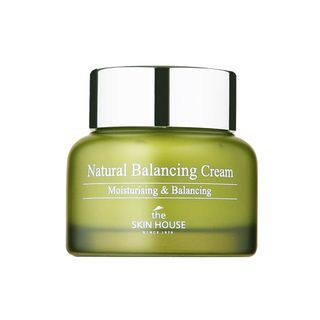
the SKIN HOUSE Natural Balancing Cream
Works for
1 of 1 advertised claim delivered
MoisturizingDimethicone, Squalane + 19 moreGood evidence
“Natural Balancing Cream”
This product can help improve hydration of the skin with the two types of ingredients.
The first type is called “humectants”:
these ingredients help attract water.
When humectants are on the surface of the skin, they “pull in” the moisture from the outside environment, or from
within deeper layers of the skin. The following ingredients in this product do the job:
glycerin, hydrolyzed collagen.
This product also contains ingredients called “occlusives”. They help reduce the speed with which our skin loses moisture to the outside environment. These ingredients also help soften the upper layer of the skin, so it feels less tight and nicer to the touch. The following ingredients in this product do the job: beeswax, butyrospermum parkii butter.
Can it cause trouble?
Irritancy3 strong irritants: Parfum, Rosa multiflora fruit extract + 1 more — patch-test recommendedHigh risk
Comedogenic2 ingredients rated 2 or more on the 0–5 pore-clogging scale2 flagged
User reviews
Be the first — your take helps the next person decide.
Ingredients
Filter by role to see what each ingredient is doing.
Water~45–55%
Butylene glycol~5.8–7.1%
- Irritation risk
- Low
Used to create a nice product texture and help delivery of other ingredients. Might be somewhat helpful in attracting water to the upper layer of the skin
More about Butylene glycolIsononyl isononanoate~4.4–5.4%
- Irritation risk
- Low
Forms a protective film on the surface of the skin to prevent moisture loss. Gives a velvety feel to products while reducing tackiness
More about Isononyl isononanoateGlycerin~3–3.6%
- Irritation risk
- Low
One of the best moisturizing ingredients. Naturally present in skin. It attracts water to the upper layer of the skin working as a humectant
More about GlycerinSodium polyacrylate~2.3–2.9%
- Irritation risk
- Low
Used to create a gel-like product texture, as well as to stabilize emulsions
More about Sodium polyacrylateHydrogenated polydecene~1.7–2.1%
- Irritation risk
- Low
Helps to soften the upper layer of the skin and create a nice product texture
More about Hydrogenated polydeceneTrideceth-6~1.5–1.8%
Butyrospermum parkii butter~1.4–1.7%
- Irritation risk
- Low
- Comedogenicity
- 3/5
A great moisturising ingredient that softens the skin and reduces water loss from its upper layer. It also can be helpful in protecting skin from free radicals
More about Butyrospermum parkii butterAloe barbadensis leaf extract~1.1–1.4%
- Irritation risk
- Medium
Traditionally used to treat sunburns, dermatitis and inflammation, but evidence for its effectiveness is lacking. The extract can contain humectants that help attract water into the skin
More about Aloe barbadensis leaf extractPaeonia lactiflora bark/sap extract~0.7–1%
- Irritation risk
- Low
Lilium tigrinum extract~0.5–0.8%
- Irritation risk
- Low
Nelumbium speciosum flower extract~0.45–0.65%
- Irritation risk
- Low
Lonicera japonica flower extract~0.4–0.65%
- Irritation risk
- High
A plant extract that might help neutralize free radicals in skin. Can contain volalite oils and be irritating
More about Lonicera japonica flower extractChrysanthemum indicum flower extract~0.35–0.6%
- Irritation risk
- Low
Cucurbita pepo fruit extract~0.3–0.55%
- Irritation risk
- Low
Solanum lycopersicum fruit extract~0.3–0.6%
- Irritation risk
- Low
Sorbitan stearate~0.3–0.55%
Orbignya oleifera seed oil~0.3–0.55%
- Irritation risk
- Low
A plant oil that can help soften the upper layer of the skin. Might be helpful in calming down inflammation in skin
More about Orbignya oleifera seed oilArachidyl alcohol~0.3–0.5%
- Irritation risk
- Low
Used to soften the upper layer of the skin and create a thicker product consistency
More about Arachidyl alcoholBehenyl alcohol~0.3–0.55%
- Irritation risk
- Low
Non-drying alcohol that helps water and oil mix together. Also serves as an emollient
More about Behenyl alcoholArachidyl glucoside~0.25–0.45%
Beeswax~0.25–0.5%
- Irritation risk
- Low
Forms a protective barrier that holds water and keeps dry skin hydrated. Keeps an emulsion from separating into its oil and liquid components, and increases the thickness of a product. Can be an allergen
More about BeeswaxPeg-40 stearate~0.2–0.4%
Cetearyl alcohol~0.25–0.45%
- Irritation risk
- Low
- Comedogenicity
- 2/5
A non-drying alcohol. Works as an emollient. Helps water and oil mix together and creates a nice product texture
More about Cetearyl alcoholTriethanolamine~0.2–0.4%
- Irritation risk
- Medium
Used to adjust pH of the product and can help improve the product's smell
More about TriethanolamineCarbomer~0.2–0.35%
- Irritation risk
- Low
Helps create a thicker or gel-like product texture. It is not a surfactant but can be used in gentle cleansing formulations
More about CarbomerTocopheryl acetate~0.2–0.4%
- Irritation risk
- Medium
A more stable but less bio-available form of vitamin E compared to Tocopherol. Might help moisturize and protect the skin from free radicals, but mostly used in low concentrations to stabilize other ingredients.
More about Tocopheryl acetateXanthan gum~0.2–0.4%
- Irritation risk
- Low
Used to create a thicker product consistency
More about Xanthan gumMethylparaben~0.15–0.3%
Citric acid~0.2–0.4%
- Irritation risk
- Medium
Can work as an exfoliant but is typically used to adjust the product pH
More about Citric acidDiisostearyl malate~0.25–0.45%
- Irritation risk
- Medium
Helps to soften the upper layer of the skin
More about Diisostearyl malateDimethicone~0.25–0.5%
- Irritation risk
- Low
A silicone that helps to reduce water loss from the surface of the skin. Can temporarily "fill in" lines and wrinkles, absorb oil, and create a nice product finish
More about DimethiconeSqualane~0.25–0.5%
- Irritation risk
- Low
An oil naturally present in skin. Works as an emollient to soften the skin and form a protective layer on its surface without a greasy feeling.
More about SqualaneVolcanic rock~0.3–0.55%
- Irritation risk
- Low
Water~0.25–0.45%
Myrciaria dubia fruit extract~0.25–0.4%
- Irritation risk
- Medium
A plant extract that might help neutralize free radicals in skin, but research on its effectiveness is lacking
More about Myrciaria dubia fruit extractEuterpe oleracea fruit extract~0.25–0.45%
- Irritation risk
- Medium
A plant extract that can have some anti-oxidant effect in skin
More about Euterpe oleracea fruit extractPaeonia lactiflora bark/sap extract~0.25–0.45%
- Irritation risk
- Low
Lilium tigrinum extract~0.25–0.45%
- Irritation risk
- Low
Cucurbita pepo fruit extract~0.25–0.45%
- Irritation risk
- Low
Solanum lycopersicum fruit extract~0.25–0.45%
- Irritation risk
- Low
Phenoxyethanol~0.25–0.45%
- Irritation risk
- Low
A preservative. It helps prevent bacterial growth in cosmetic products
More about PhenoxyethanolParfum~0.2–0.4%
- Irritation risk
- High
An aromatic blend of unspecified and possibly irritating ingredients
More about ParfumDipotassium glycyrrhizate~0.25–0.45%
- Irritation risk
- Low
A salt derived from licorice. Works as an emollient to soften the upper layer of the skin and can help calm down inflammation. Might be helpful for skin lightening
More about Dipotassium glycyrrhizatePanax ginseng root extract~0.25–0.5%
- Irritation risk
- High
A plant extract that might have some anti-inflammatory properties, but solid evidence is lacking. It can be irritating
More about Panax ginseng root extractAloe barbadensis leaf extract~0.3–0.55%
- Irritation risk
- Medium
Traditionally used to treat sunburns, dermatitis and inflammation, but evidence for its effectiveness is lacking. The extract can contain humectants that help attract water into the skin
More about Aloe barbadensis leaf extractCamellia sinensis leaf extract~0.25–0.45%
- Irritation risk
- Low
Can contain potent anti-oxidant compounds (abbreviated ECG, GCG, EGC, and EGCG) that might help protect the skin from free radicals. Can help calm down inflammation and has some anti-bacterial properties. Unfortunately, these antioxidants are unstable and lose their effectiveness very quickly in products. The concentration of the antioxidant compounds in the extract also tends to be low to be effective in topical formulation
More about Camellia sinensis leaf extractHoney~0.25–0.45%
- Irritation risk
- Low
Helps attract water to the skin and might have some anti-bacterial properties. Can be an allergen
More about HoneyRosa multiflora fruit extract~0.25–0.4%
Gardenia florida fruit extract~0.25–0.45%
- Irritation risk
- High
Used as a fragrance. Can be irritating.
More about Gardenia florida fruit extractScutellaria baicalensis root extract~0.2–0.4%
- Irritation risk
- High
A plant extract that might contain a compound baicalin that could be helpful in neutralizing free radicals and reducing inflammation in skin. The baicalin concentration in skincare products is often too low for an effective action. Can be used for its fragrant properties
More about Scutellaria baicalensis root extractLigustrum japonicum fruit extract~0.25–0.45%
- Irritation risk
- Low
Centella asiatica extract~0.3–0.55%
- Irritation risk
- Medium
A plant extract that has been shown to be able to reduce inflammation in skin, support restoration of skin barrier function, as well as support collagen production. Contains active compounds called centelloids: asiaticoside, madecasosside, asiatic acid and madecassic acid. Might be helpful in preventing stretch marks. It can be itself be irritating though.
More about Centella asiatica extractHydrolyzed collagen~0.3–0.5%
- Irritation risk
- Low
A typically plant-derived compound that is supposed mimic human collagen. Cannot penetrate the skin barrier so is not particularly useful in skincare products beyond attracting water to the upper layer of the skin
More about Hydrolyzed collagenSodium citrate~0.25–0.45%
- Irritation risk
- Medium
Helps to control the skin's pH level. Maintains the skin's natural film of amino-lactic acids and oils. Helps to preserve products
More about Sodium citrateDisodium edta~0.2–0.4%
Rh-oligopeptide-1~0.2–0.35%
- Irritation risk
- Low
Hydrogenated lecithin~0.2–0.35%
- Irritation risk
- Low
Helps to retain moisture by creating a protective barrier on the skin. Rich in fatty acids. Improves product texture and helps with the penetration of other ingredients.
More about Hydrogenated lecithinPotassium cetyl phosphate~0.2–0.35%
- Irritation risk
- Medium
Helps oil and water mix together
More about Potassium cetyl phosphateCaprylic/capric triglyceride~0.25–0.4%
- Irritation risk
- Medium
A good mix of fatty acids that forms a protective layer on the skin. Improves the shelf life of products. Derived from coconut and glycerin
More about Caprylic/capric triglycerideAminomethyl propanol~0.15–0.3%
Camellia sinensis callus culture extract~0.1–0.15%
- Irritation risk
- Low
Bambusa vulgaris callus culture extract~0.1–0.2%
- Irritation risk
- Low
Ingredient list view
Water, Butylene glycol, Isononyl isononanoate, Glycerin, Sodium polyacrylate, Hydrogenated polydecene, Trideceth-6, Butyrospermum parkii butter, Aloe barbadensis leaf extract, Paeonia lactiflora bark/sap extract, Lilium tigrinum extract, Nelumbium speciosum flower extract, Lonicera japonica flower extract, Chrysanthemum indicum flower extract, Cucurbita pepo fruit extract, Solanum lycopersicum fruit extract, Sorbitan stearate, Orbignya oleifera seed oil, Arachidyl alcohol, Behenyl alcohol, Arachidyl glucoside, Beeswax, Peg-40 stearate, Cetearyl alcohol, Triethanolamine, Carbomer, Tocopheryl acetate, Xanthan gum, Methylparaben, Citric acid, Diisostearyl malate, Dimethicone, Squalane, Volcanic rock, Water, Myrciaria dubia fruit extract, Euterpe oleracea fruit extract, Paeonia lactiflora bark/sap extract, Lilium tigrinum extract, Cucurbita pepo fruit extract, Solanum lycopersicum fruit extract, Phenoxyethanol, Parfum, Dipotassium glycyrrhizate, Panax ginseng root extract, Aloe barbadensis leaf extract, Camellia sinensis leaf extract, Honey, Rosa multiflora fruit extract, Gardenia florida fruit extract, Scutellaria baicalensis root extract, Ligustrum japonicum fruit extract, Centella asiatica extract, Hydrolyzed collagen, Sodium citrate, Disodium edta, Rh-oligopeptide-1, Hydrogenated lecithin, Potassium cetyl phosphate, Caprylic/capric triglyceride, Aminomethyl propanol, Camellia sinensis callus culture extract, Bambusa vulgaris callus culture extract
Compare prices
Retailers ranked by price — lowest first.

Sources cited in this review
Every concentration estimate and effectiveness label is anchored to one of these 27 studies and safety reviews.
- 1
- 2Safety Assessment of Polyene Group as Used in Cosmeticscir-safety.org
- 3
- 4
- 5
- 6

Affiliate links · As an Amazon Associate, WIMJ earns from qualifying purchases.