Works for
1 of 3 advertised claims delivered
MoisturizingArginine, Caprylic/capric triglyceride + 8 moreGood evidence
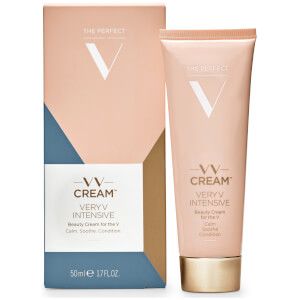
“VV Intensive Cream”
This product can help improve hydration of the skin with the two types of ingredients.
The first type is called “humectants”:
these ingredients help attract water.
When humectants are on the surface of the skin, they “pull in” the moisture from the outside environment, or from
within deeper layers of the skin. The following ingredients in this product do the job:
arginine, glycerin.
This product also contains ingredients called “occlusives”. They help reduce the speed with which our skin loses moisture to the outside environment. These ingredients also help soften the upper layer of the skin, so it feels less tight and nicer to the touch. The following ingredients in this product do the job: arginine, caprylic/capric triglyceride.
Evens skin toneZinc gluconate, Salicylic acid + 1 moreWeak evidence
“It promotes a more even skintone and texture.”
Effective ingredients missing or their concentration is too low
ExfoliationZinc gluconate, Salicylic acidWeak evidence
“It gently exfoliates and works to alleviate in-grown hair and red bumps while L-arginine, an essential amino acid, uses its healing properties and regenerates skin cells.”
This product does not contain effective exfoliating ingredients. It might be able to deliver physical exfoliation, that is scrub off some of the dead cells on the surface of the skin. We do not recommend physical exfoliation, because it is not uniform (some bits of skin can get exfoliated too much while others not at all). It can also traumatize the skin and aggrevate acne and other skin conditions.
Can it cause trouble?
Irritancy1 strong irritant: Alcohol denat.Medium risk
ComedogenicClean of flagged comedogenic ingredientsNone flagged

User reviews
Be the first — your take helps the next person decide.
Ingredients
Filter by role to see what each ingredient is doing.
Water~45–55%
Dicaprylyl carbonate~4.4–5.3%
- Irritation risk
- Low
Helps products spread more easily and works as an emollient to soften skin
More about Dicaprylyl carbonateCaprylic/capric triglyceride~4.6–5.6%
- Irritation risk
- Medium
A good mix of fatty acids that forms a protective layer on the skin. Improves the shelf life of products. Derived from coconut and glycerin
More about Caprylic/capric triglycerideArginine~3.3–4%
- Irritation risk
- Low
An amino acid that is naturally present in skin and helps keep it hydrated. When used together with AHAs, it can reduce their irritating effect on the skin
More about ArginineGlycerin~2.5–3.1%
- Irritation risk
- Low
One of the best moisturizing ingredients. Naturally present in skin. It attracts water to the upper layer of the skin working as a humectant
More about GlycerinPhenoxyethanol~0.5–1%
- Irritation risk
- Low
A preservative. It helps prevent bacterial growth in cosmetic products
More about PhenoxyethanolSilica~2–2.4%
Carbomer~1.5–1.8%
- Irritation risk
- Low
Helps create a thicker or gel-like product texture. It is not a surfactant but can be used in gentle cleansing formulations
More about CarbomerRosa canina fruit oil~1.3–1.6%
- Irritation risk
- Medium
A great emollient. Contains vitamin E (tocopherol) which may give it some anti-oxidant properties. Can contain volatile compounds and can be irritating
More about Rosa canina fruit oilMannitol~1–1.2%
- Irritation risk
- Low
Helps to attract water to the upper layer of the skin
More about MannitolAscorbyl tetraisopalmitate~0.75–1.15%
- Irritation risk
- Medium
A vitamin C derivative. Studies show that is might be effective in reducing hyperpigmentation, but there are no studies confirming that it is effectively converted into the bioavailable form of Vitamin C in skin. It is not clear how this derivative compares in effectiveness to the topical application of bioavailable form of vitamin C (L-ascorbic acid)
More about Ascorbyl tetraisopalmitatePolysorbate 80~0.65–0.95%
Alcohol denat.~0.55–0.85%
- Irritation risk
- High
Produces temporary toning effect. Can help dissolve other ingredients or preserve products
More about Alcohol denat.Ammonium glycyrrhizate~0.5–0.75%
- Irritation risk
- Low
Bisabolol~0.45–0.65%
- Irritation risk
- Low
An active component of chamomile plant that historically has been used to calm down irritated skin. A recent study shows that bisabolol indeed can have some anti-inflammatory effect on skin, even though conclusive data is lacking. Bisabolol has a sweet floral scent and can be added to products for its aromatic properties
More about BisabololChlorphenesin~0.16–0.32%
Ethylhexylglycerin~0.45–0.7%
Salicylic acid~0.4–0.6%
- Irritation risk
- High
Used for skin exfoliation. It has an anti-inflammatory and anti-bacterial effect, helps to unclog pores, prevent blemishes and speed up healing of the existing ones. Sometimes referred to as a BHA (beta-hydroxy acid)
More about Salicylic acidLecithin~0.45–0.65%
- Irritation risk
- Low
Used mostly for creating emulsions - helping oil and water mix together. Helps soften the upper layer of the skin
More about LecithinPeg-40 hydrogenated castor oil~0.35–0.65%
- Irritation risk
- Medium
Helps oil and water mix together
More about Peg-40 hydrogenated castor oilAvena strigosa seed extract~0.3–0.55%
- Irritation risk
- Low
Tocopheryl acetate~0.3–0.55%
- Irritation risk
- Medium
A more stable but less bio-available form of vitamin E compared to Tocopherol. Might help moisturize and protect the skin from free radicals, but mostly used in low concentrations to stabilize other ingredients.
More about Tocopheryl acetateAlaria esculenta extract~0.3–0.55%
- Irritation risk
- Low
Works as a humectant helping to attract water to the upper layer of the skin and might be effective as an anti-oxidant.
More about Alaria esculenta extractCaffeine~0.3–0.5%
- Irritation risk
- Medium
Might be helpful in neutralizing free radicals. Can have a dehydration effect that might somewhat decrease the look of puffy eyes
More about CaffeineRubus chamaemorus fruit extract~0.3–0.55%
- Irritation risk
- Low
Zinc gluconate~0.25–0.5%
- Irritation risk
- Medium
Typically used to stabilize the product formulations. It is a salt of a polyhydroxy acid (PHA) and in larger concentrations, can help shed the dead cells from the skin surface revealing smoother skin. It can help attract water to the upper layer of the skin. Might to be helpful against acne and clogged pores. Could be helpful in neutralizing free radicals, but solid research is missing. Due to the zinc content, might help calm down inflammation in skin
More about Zinc gluconateVaccinium myrtillus fruit extract~0.25–0.5%
- Irritation risk
- Medium
A plant extract that might help neutralize free radicals in skin, but research on its efficacy in skin is lacking
More about Vaccinium myrtillus fruit extractRosa canina fruit extract~0.25–0.5%
- Irritation risk
- Medium
A plant extract that might have some anti-oxidant properties, but evidence is lacking
More about Rosa canina fruit extractSambucus nigra flower extract~0.25–0.45%
- Irritation risk
- High
A plant extract that might help neutralize free radicals in skin
More about Sambucus nigra flower extractVaccinium vitis-idaea leaf extract~0.25–0.45%
- Irritation risk
- Low
Potassium sorbate~0.25–0.5%
Sodium benzoate~0.25–0.45%
Aesculus hippocastanum seed extract~0.25–0.45%
- Irritation risk
- High
Plant extract. Might have some anti-oxidant properties. Can be irritating
More about Aesculus hippocastanum seed extractSoy isoflavones~0.2–0.4%
- Irritation risk
- Low
Hippophae rhamnoides seed oil~0.2–0.4%
- Irritation risk
- Low
Lepidium sativum sprout extract~0.2–0.35%
- Irritation risk
- Low
Citric acid~0.15–0.3%
- Irritation risk
- Medium
Can work as an exfoliant but is typically used to adjust the product pH
More about Citric acidCi 77891~0.15–0.25%
- Irritation risk
- Low
Titanium dioxide~0.15–0.25%
- Irritation risk
- Low
Works as a UV filter when used in high concentrations. It is photostable and is effective mostly against the UVB light, with some protection in the UVA range. In small concentrations, used for its ability to improve the color of cosmetic products. Is usually well tolerated by the skin
More about Titanium dioxideCi 77491~0.1–0.15%
- Irritation risk
- Low
A red colorant made of iron oxide. Typically is not irritating
More about Ci 77491Iron oxides~0.1–0.2%
- Irritation risk
- Low
An umbrella term for the following three colorants: CI 77491, CI 77492, CI 77499. They might be able to offer some protection against visible light, but the degree of the protection is not clear
More about Iron oxidesIngredient list view
Water, Dicaprylyl carbonate, Caprylic/capric triglyceride, Arginine, Glycerin, Phenoxyethanol, Silica, Carbomer, Rosa canina fruit oil, Mannitol, Ascorbyl tetraisopalmitate, Polysorbate 80, Alcohol denat., Ammonium glycyrrhizate, Bisabolol, Chlorphenesin, Ethylhexylglycerin, Salicylic acid, Lecithin, Peg-40 hydrogenated castor oil, Avena strigosa seed extract, Tocopheryl acetate, Alaria esculenta extract, Caffeine, Rubus chamaemorus fruit extract, Zinc gluconate, Vaccinium myrtillus fruit extract, Rosa canina fruit extract, Sambucus nigra flower extract, Vaccinium vitis-idaea leaf extract, Potassium sorbate, Sodium benzoate, Aesculus hippocastanum seed extract, Soy isoflavones, Hippophae rhamnoides seed oil, Lepidium sativum sprout extract, Citric acid, Ci 77891, Titanium dioxide, Ci 77491, Iron oxides
Compare prices
Retailers ranked by price — lowest first.

Affiliate links · prices updated regularly
Worth comparing, line by line.
Match % combines shared ingredients, the first five ingredients, shared actives and hero ingredients, irritancy (lower counts in the alternative's favour), texture and body area. Only products in the same routine step are compared.
| The Perfect VVV Intensive CreamYOUR PRODUCT | Grahams NaturalKP Smoothing Cream | VotarySensitive Resurfacing Peel | BeautycounterCountermatch Recovery Sleeping Cream | |
|---|---|---|---|---|
| Match | — | 77% | 76% | 75% |
| Price | $48.00 | $23.99−$24.01 | $22046.98+$21998.98 | $62.00+$14.00 |
| Shared key ingredients | — | 3 of 12 | 5 of 12 | 4 of 12 |
| Key difference | — | Niacinamide | Lactic Acid | Betaine |
| Irritancy | Medium | Low | Low | Low |
| Drying alcohol | Contains drying alcohol | — | — | — |
| View product | Shop | Shop | Shop |

Sources cited in this review
Every concentration estimate and effectiveness label is anchored to one of these 22 studies and safety reviews.
- 1
- 2
- 3
- 4
- 5
- 6

Affiliate links · As an Amazon Associate, WIMJ earns from qualifying purchases.