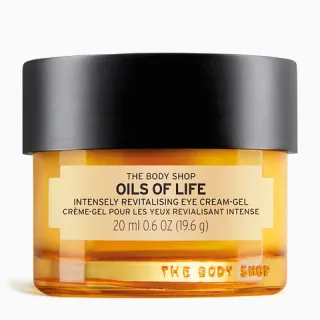
The Body Shop Oils of Life Eye Cream Gel

The Body Shop Oils of Life Eye Cream Gel

Efficacy100/100IrritancyMedium

Works for

Anti-aging
Adenosine, Camellia sinensis leaf extract + 1 more
Works well
What the product description says
“It works over time to fade dark circles, reduce fine lines, depuff bags and revitalise the eyes.”
Source: The body shop

This product can help reduce and prevent fine lines and wrinkles, improve skin elasticity and firmness because it contains adenosine.

Keep in mind that it typically takes at least 6 weeks to notice any results because the changes that are needed to improve fine lines and elasticity happen in the deeper layers of the skin. No topical anti-aging product can “erase” wrinkles or fully reverse signs of aging.

AdenosineKey activeEffect: HighMight help improve cell turnover and reduce inflammation in skin. One study shows that the ingredients might be able to help reduce dynamic wrinkles (for example, in the corners of the eyes or on the forehead)~0.2–0.35%
Camellia sinensis leaf extractEffect: LowCan contain potent anti-oxidant compounds (abbreviated ECG, GCG, EGC, and EGCG) that might help protect the skin from free radicals. Can help calm down inflammation and has some anti-bacterial properties. Unfortunately, these antioxidants are unstable and lose their effectiveness very quickly in products. The concentration of the antioxidant compounds in the extract also tends to be low to be effective in topical formulation~1.2–1.4%
TocopherolEffect: Low, below effective dosePure form of vitamin E. Can help moisturise and protect the skin from free radicals. Often used to help stabilise other ingredients or the formula itself~0.15–0.3%
Exfoliation
Side benefit · Salicylic acid
Works well

This product can help exfoliate the skin. In other words, it helps break down the bonds between dead cells on the surface of the skin and speed up the skin turnover. Skin often appears softer and brighter after exfoliation, but overdoing it can result in disrupted skin barrier. The following ingredient is doing the exfoliating job in this product: salicylic acid.

Salicylic acidKey activeEffect: HighUsed for skin exfoliation. It has an anti-inflammatory and anti-bacterial effect, helps to unclog pores, prevent blemishes and speed up healing of the existing ones. Sometimes referred to as a BHA (beta-hydroxy acid)~0.25–0.5%
Moisturizing
Side benefit the brand mentions · Glycerin, Coco-caprylate/caprate + 13 more
Works
What the product description says
“It protects the skin barrier all day long, quenches skin with 24-hr moisture and leaves it velvety and more supple.”
Source: The body shop

This product can help improve hydration of the skin with the two types of ingredients.

The first type is called “humectants”:
these ingredients help attract water. When humectants are on the surface of the skin, they “pull in” the moisture from the outside environment, or from within deeper layers of the skin. The following ingredients in this product do the job: glycerin, lactobacillus ferment.

This product also contains ingredients called “occlusives”. They help reduce the speed with which our skin loses moisture to the outside environment. These ingredients also help soften the upper layer of the skin, so it feels less tight and nicer to the touch. The following ingredients in this product do the job: ricinus communis seed oil, nigella sativa seed oil.

GlycerinKey active· HumectantEffect: HighOne of the best moisturizing ingredients. Naturally present in skin. It attracts water to the upper layer of the skin working as a humectant~4.5–5.5%
Coco-caprylate/caprateKey active· EmollientEffect: MediumHelps to soften the upper layer of the skin without creating a greasy texture~3.1–3.8%
Hydrogenated ethylhexyl olivateKey active· EmollientEffect: MediumHelps soften the upper layer of the skin~2.4–2.9%
Ricinus communis seed oilKey active· Emollient, OcclusiveEffect: HighA plant oil that can help soften the skin. It might be helpful in calming down inflammation, but solid research is lacking. Is often used in lip products to create the needed product consistency~1.7–2.1%
Lactobacillus ferment lysateKey activeEffect: MediumA "broth" with parts of dead cells of lactobacteria. Might be helpful supporting diverse microbiome in skin, but evidence is lacking~0.7–1.05%
Hydrogenated olive oil unsaponifiablesKey active· EmollientEffect: MediumHelp soften the upper layer of the skin~0.5–0.7%
Olea europaea fruit oilKey active· EmollientEffect: MediumAn emollient that helps soften the skin but is not effective for restoring its barrier function. Might be helpful to calm down inflammation~0.3–0.6%
Sodium hyaluronateKey active· HumectantEffect: HighOne of the best moisturizing ingredients. Attracts water into the upper layer of the skin~0.25–0.45%
Nigella sativa seed oilKey active· EmollientEffect: HighHelps soften the upper layer of the skin and support the skin's barrier due to the high content of linoleic acid~0.25–0.5%
Lactobacillus fermentKey active· HumectantEffect: HighA fermentation product created by bacteria Lactobacillus. The fermented product has anti-bacterial properties and might be helpful in calming down inflammation, but studies are lacking. Helps attract water to the upper layer of the skin. Can be used as a preservative~0.25–0.5%
AdenosineKey activeEffect: MediumMight help improve cell turnover and reduce inflammation in skin. One study shows that the ingredients might be able to help reduce dynamic wrinkles (for example, in the corners of the eyes or on the forehead)~0.2–0.35%
Camellia sinensis leaf extractEffect: LowCan contain potent anti-oxidant compounds (abbreviated ECG, GCG, EGC, and EGCG) that might help protect the skin from free radicals. Can help calm down inflammation and has some anti-bacterial properties. Unfortunately, these antioxidants are unstable and lose their effectiveness very quickly in products. The concentration of the antioxidant compounds in the extract also tends to be low to be effective in topical formulation~1.2–1.4%
TocopherolEffect: Low, below effective dosePure form of vitamin E. Can help moisturise and protect the skin from free radicals. Often used to help stabilise other ingredients or the formula itself~0.15–0.3%
Rosa canina fruit oilUnder-dosedA great emollient. Contains vitamin E (tocopherol) which may give it some anti-oxidant properties. Can contain volatile compounds and can be irritating~0.4–0.65%
Camellia oleifera seed oilUnder-dosedAn emollient that does not leave a greasy finish~0.35–0.6%
Anti-oxidation
Side benefit · Camellia sinensis leaf extract, Punica granatum extract + 6 more
May help

This product contains antioxidants (camellia sinensis leaf extract, punica granatum extract) that might be able to help neutralize free radicals in skin to lessen the damage it gets from the UV light (sun). There is not enough evidence to confirm their effectiveness in skin though.

Camellia sinensis leaf extractKey activeEffect: MediumCan contain potent anti-oxidant compounds (abbreviated ECG, GCG, EGC, and EGCG) that might help protect the skin from free radicals. Can help calm down inflammation and has some anti-bacterial properties. Unfortunately, these antioxidants are unstable and lose their effectiveness very quickly in products. The concentration of the antioxidant compounds in the extract also tends to be low to be effective in topical formulation~1.2–1.4%
Punica granatum extractKey activeEffect: MediumA plant extract that can help neutralize free radicals in skin and even out the skin tone, but is typically used in products in a concentration that is too low to be effective~0.5–0.75%
CaffeineEffect: LowMight be helpful in neutralizing free radicals. Can have a dehydration effect that might somewhat decrease the look of puffy eyes~1.4–1.8%
Lactobacillus fermentEffect: LowA fermentation product created by bacteria Lactobacillus. The fermented product has anti-bacterial properties and might be helpful in calming down inflammation, but studies are lacking. Helps attract water to the upper layer of the skin. Can be used as a preservative~0.25–0.5%
AdenosineEffect: LowMight help improve cell turnover and reduce inflammation in skin. One study shows that the ingredients might be able to help reduce dynamic wrinkles (for example, in the corners of the eyes or on the forehead)~0.2–0.35%
Rosa canina fruit oilEffect: Low, below effective doseA great emollient. Contains vitamin E (tocopherol) which may give it some anti-oxidant properties. Can contain volatile compounds and can be irritating~0.4–0.65%
Camellia oleifera seed oilEffect: Low, below effective doseAn emollient that does not leave a greasy finish~0.35–0.6%
TocopherolUnder-dosedPure form of vitamin E. Can help moisturise and protect the skin from free radicals. Often used to help stabilise other ingredients or the formula itself~0.15–0.3%

Can it cause trouble?

Irritancy
2 strong irritants: Alcohol denat., Menthoxypropanediol
Medium risk
We flagged 16 ingredients with irritancy potential. Severity depends on your sensitivity threshold; the table lists the worst offenders first.
IngredientFunctionIrritationEst. amount
Alcohol denat.Produces temporary toning effect. Can help dissolve other ingredients or preserve productsHigh~4.3–5.2%est.
Isopropyl alcoholA drying alcohol. Can increase skin's sensitivity and cause dryness and irritationHigh~0.45–0.65%est.
Salicylic acidUsed for skin exfoliation. It has an anti-inflammatory and anti-bacterial effect, helps to unclog pores, prevent blemishes and speed up healing of the existing ones. Sometimes referred to as a BHA (beta-hydroxy acid)High~0.25–0.5%est.
MenthoxypropanediolUsed as a fragrance. Can be irritatingHigh~0.25–0.45%est.
Ci 19140A yellow dyeHigh~0.05–0.1%est.
Hydroxypropyl starch phosphateHelps oil and water mix together and used to stabilize product formulationsMedium~2–2.4%est.
Ricinus communis seed oilA plant oil that can help soften the skin. It might be helpful in calming down inflammation, but solid research is lacking. Is often used in lip products to create the needed product consistencyMedium~1.7–2.1%est.
CaffeineMight be helpful in neutralizing free radicals. Can have a dehydration effect that might somewhat decrease the look of puffy eyesMedium~1.4–1.8%est.
Punica granatum extractA plant extract that can help neutralize free radicals in skin and even out the skin tone, but is typically used in products in a concentration that is too low to be effectiveMedium~0.5–0.75%est.
Tapioca starchUsed to create a thicker product consistencyMedium~0.5–0.75%est.
ChlorphenesinA preservativeMedium~0.16–0.32%est.
Rosa canina fruit oilA great emollient. Contains vitamin E (tocopherol) which may give it some anti-oxidant properties. Can contain volatile compounds and can be irritatingMedium~0.4–0.65%est.
Olea europaea fruit oilAn emollient that helps soften the skin but is not effective for restoring its barrier function. Might be helpful to calm down inflammationMedium~0.3–0.6%est.
Camellia oleifera seed oilAn emollient that does not leave a greasy finishMedium~0.35–0.6%est.
Nigella sativa seed oilHelps soften the upper layer of the skin and support the skin's barrier due to the high content of linoleic acidMedium~0.25–0.5%est.
Citric acidCan work as an exfoliant but is typically used to adjust the product pHMedium~0.15–0.25%est.
Comedogenic
Clean of flagged comedogenic ingredients
None flagged

User reviews

Would you recommend?
No community reviews yet.

Be the first — your take helps the next person decide.

Ingredients

Filter by role to see what each ingredient is doing.

Water~45–55%
Formula
Irritation risk
Low

Plain old water

More about Water
Glycerin~4.5–5.5%
Key active
Irritation risk
Low
Works for
Moisturizing

One of the best moisturizing ingredients. Naturally present in skin. It attracts water to the upper layer of the skin working as a humectant

More about Glycerin
Alcohol denat.~4.3–5.2%
Irritant · high
Irritation risk
High

Produces temporary toning effect. Can help dissolve other ingredients or preserve products

More about Alcohol denat.
Coco-caprylate/caprate~3.1–3.8%
Key active
Irritation risk
Low
Works for
Moisturizing

Helps to soften the upper layer of the skin without creating a greasy texture

More about Coco-caprylate/caprate
Hydrogenated ethylhexyl olivate~2.4–2.9%
Key active
Irritation risk
Low
Works for
Moisturizing

Helps soften the upper layer of the skin

More about Hydrogenated ethylhexyl olivate
Hydroxypropyl starch phosphate~2–2.4%
Irritant · medium
Irritation risk
Medium

Helps oil and water mix together and used to stabilize product formulations

More about Hydroxypropyl starch phosphate
Ricinus communis seed oil~1.7–2.1%
Key activeIrritant · medium
Irritation risk
Medium
Works for
MoisturizingAnti-inflammatory

A plant oil that can help soften the skin. It might be helpful in calming down inflammation, but solid research is lacking. Is often used in lip products to create the needed product consistency

More about Ricinus communis seed oil
Caffeine~1.4–1.8%
Irritant · medium
Irritation risk
Medium
Works for
De-puffingAnti-oxidation

Might be helpful in neutralizing free radicals. Can have a dehydration effect that might somewhat decrease the look of puffy eyes

More about Caffeine
Camellia sinensis leaf extract~1.2–1.4%
Key active
Irritation risk
Low
Works for
Anti-oxidationAntibacterialAnti-agingAnti-blemishEvens skin toneMoisturizing

Can contain potent anti-oxidant compounds (abbreviated ECG, GCG, EGC, and EGCG) that might help protect the skin from free radicals. Can help calm down inflammation and has some anti-bacterial properties. Unfortunately, these antioxidants are unstable and lose their effectiveness very quickly in products. The concentration of the antioxidant compounds in the extract also tends to be low to be effective in topical formulation

More about Camellia sinensis leaf extract
Carbomer~1–1.2%
Formula
Irritation risk
Low
Works for
Cleansing

Helps create a thicker or gel-like product texture. It is not a surfactant but can be used in gentle cleansing formulations

More about Carbomer
Lactobacillus ferment lysate~0.7–1.05%
Key active
Irritation risk
Low
Works for
Moisturizing

A "broth" with parts of dead cells of lactobacteria. Might be helpful supporting diverse microbiome in skin, but evidence is lacking

More about Lactobacillus ferment lysate
Phenoxyethanol~0.6–0.9%
Formula
Irritation risk
Low

A preservative. It helps prevent bacterial growth in cosmetic products

More about Phenoxyethanol
Punica granatum extract~0.5–0.75%
Key activeIrritant · medium
Irritation risk
Medium
Works for
Anti-oxidationEvens skin tone

A plant extract that can help neutralize free radicals in skin and even out the skin tone, but is typically used in products in a concentration that is too low to be effective

More about Punica granatum extract
Tapioca starch~0.5–0.75%
Irritant · medium
Irritation risk
Medium

Used to create a thicker product consistency

More about Tapioca starch
Isopropyl alcohol~0.45–0.65%
Irritant · high
Irritation risk
High

A drying alcohol. Can increase skin's sensitivity and cause dryness and irritation

More about Isopropyl alcohol
Hydrogenated olive oil unsaponifiables~0.5–0.7%
Key active
Irritation risk
Low
Works for
Moisturizing

Help soften the upper layer of the skin

More about Hydrogenated olive oil unsaponifiables
Xanthan gum~0.45–0.7%
Formula
Irritation risk
Low
Works for
Cleansing

Used to create a thicker product consistency

More about Xanthan gum
Chlorphenesin~0.16–0.32%
Irritant · medium
Irritation risk
Medium

A preservative

More about Chlorphenesin
Rosa canina fruit oil~0.4–0.65%
Under-dosedIrritant · medium
Irritation risk
Medium
Works for
MoisturizingAnti-oxidation

A great emollient. Contains vitamin E (tocopherol) which may give it some anti-oxidant properties. Can contain volatile compounds and can be irritating

More about Rosa canina fruit oil
Olea europaea fruit oil~0.3–0.6%
Key activeIrritant · medium
Irritation risk
Medium
Works for
Moisturizing

An emollient that helps soften the skin but is not effective for restoring its barrier function. Might be helpful to calm down inflammation

More about Olea europaea fruit oil
Camellia oleifera seed oil~0.35–0.6%
Under-dosedIrritant · medium
Irritation risk
Medium
Works for
MoisturizingAnti-oxidation

An emollient that does not leave a greasy finish

More about Camellia oleifera seed oil
Salicylic acid~0.25–0.5%
Key activeIrritant · high
Irritation risk
High
Works for
Anti-blemishExfoliationAnti-inflammatoryAntibacterialEvens skin tone

Used for skin exfoliation. It has an anti-inflammatory and anti-bacterial effect, helps to unclog pores, prevent blemishes and speed up healing of the existing ones. Sometimes referred to as a BHA (beta-hydroxy acid)

More about Salicylic acid
Sodium hydroxide~0.25–0.5%
Formula
Irritation risk
Low

Used to adjust the product's pH

More about Sodium hydroxide
Lactobacillus ferment~0.25–0.5%
Key active
Irritation risk
Low
Works for
MoisturizingAnti-inflammatoryAnti-oxidationReduces irritation

A fermentation product created by bacteria Lactobacillus. The fermented product has anti-bacterial properties and might be helpful in calming down inflammation, but studies are lacking. Helps attract water to the upper layer of the skin. Can be used as a preservative

More about Lactobacillus ferment
Nigella sativa seed oil~0.25–0.5%
Key activeIrritant · medium
Irritation risk
Medium
Works for
Moisturizing

Helps soften the upper layer of the skin and support the skin's barrier due to the high content of linoleic acid

More about Nigella sativa seed oil
Sodium hyaluronate~0.25–0.45%
Key active
Irritation risk
Low
Works for
Moisturizing

One of the best moisturizing ingredients. Attracts water into the upper layer of the skin

More about Sodium hyaluronate
Pentaerythrityl tetra-di-t-butyl hydroxyhydrocinnamate~0.25–0.5%
Formula
Irritation risk
Low

Used to increase stability of product formulations

More about Pentaerythrityl tetra-di-t-butyl hydroxyhydrocinnamate
Synthetic fluorphlogopite~0.25–0.5%
Formula
Irritation risk
Low

A mineral that is used as an optical filter (makes the skin looks nicer through light reflection) and to improve the texture of cosmetic products

More about Synthetic fluorphlogopite
Menthoxypropanediol~0.25–0.45%
Irritant · high
Irritation risk
High

Used as a fragrance. Can be irritating

More about Menthoxypropanediol
Sodium gluconate~0.2–0.4%
Formula
Irritation risk
Low

Helps stabilize product formulations

More about Sodium gluconate
Adenosine~0.2–0.35%
Key active
Irritation risk
Low
Works for
Anti-agingMoisturizingAnti-oxidation

Might help improve cell turnover and reduce inflammation in skin. One study shows that the ingredients might be able to help reduce dynamic wrinkles (for example, in the corners of the eyes or on the forehead)

More about Adenosine
Tin oxide~0.3–0.55%
Formula
Irritation risk
Low

A colorant that can add a pearl-like appearance to the formulation

More about Tin oxide
Tocopherol~0.15–0.3%
Under-dosed
Irritation risk
Low
Works for
Anti-oxidationAnti-agingAnti-inflammatoryMoisturizing

Pure form of vitamin E. Can help moisturise and protect the skin from free radicals. Often used to help stabilise other ingredients or the formula itself

More about Tocopherol
Citric acid~0.15–0.25%
Irritant · medium
Irritation risk
Medium

Can work as an exfoliant but is typically used to adjust the product pH

More about Citric acid
Ci 77891~0.1–0.2%
Formula
Irritation risk
Low
More about Ci 77891
Ci 77491~0.1–0.15%
Formula
Irritation risk
Low

A red colorant made of iron oxide. Typically is not irritating

More about Ci 77491
Ci 19140~0.05–0.1%
Irritant · high
Irritation risk
High

A yellow dye

More about Ci 19140
Ingredient list view

Water, Glycerin, Alcohol denat., Coco-caprylate/caprate, Hydrogenated ethylhexyl olivate, Hydroxypropyl starch phosphate, Ricinus communis seed oil, Caffeine, Camellia sinensis leaf extract, Carbomer, Lactobacillus ferment lysate, Phenoxyethanol, Punica granatum extract, Tapioca starch, Isopropyl alcohol, Hydrogenated olive oil unsaponifiables, Xanthan gum, Chlorphenesin, Rosa canina fruit oil, Olea europaea fruit oil, Camellia oleifera seed oil, Salicylic acid, Sodium hydroxide, Lactobacillus ferment, Nigella sativa seed oil, Sodium hyaluronate, Pentaerythrityl tetra-di-t-butyl hydroxyhydrocinnamate, Synthetic fluorphlogopite, Menthoxypropanediol, Sodium gluconate, Adenosine, Tin oxide, Tocopherol, Citric acid, Ci 77891, Ci 77491, Ci 19140

Compare prices

Retailers ranked by price — lowest first.

🇦🇺 Amazon Australia (AU)Price as of 11/8 15:00 GMT
≈ $26.74
Buy
🇨🇦 Amazon CA (CA)Price as of 11/8 15:00 GMT
≈ $27.40
Buy
🇬🇧 Amazon UK (UK)Price as of 11/8 15:00 GMT
≈ $29.28
Buy
🇬🇧 The body shop (UK)
≈ $29.28
Buy

Affiliate links · As an Amazon Associate, WIMJ earns from qualifying purchases.

Worth comparing, line by line.

Match % combines shared ingredients, the first five ingredients, shared actives and hero ingredients, irritancy (lower counts in the alternative's favour), texture and body area. Only products in the same routine step are compared.

Side-by-side comparison of this product against its closest alternatives
The Body ShopOils of Life Eye Cream GelYOUR PRODUCTPolaarEternal Snow Youthful Eye Contour with Arctic FlowersAvedaBotanical Kinetics Energizing Eye CremeDr SebaghFirming Eye Cream
Match—72%71%70%
Price—$52.70$36.30$64.23
Shared key ingredients—2 of 124 of 123 of 12
Key difference—Caprylic/Capric TriglycerideAminopropyl Ascorbyl PhosphateDimethicone
Irritancy Medium Low Low Low
Drying alcohol Contains drying alcohol ———
View product Shop Shop Shop

More alternatives: SCINIC Hyaluronic Acid Soothing StickPaula's choice Invisible Finish Moisture Gel

Cheaper alternatives? See how this stacks up against similar formulas.
We compare ingredient profiles across our catalog — pick the closest match for your budget.
Open dupe finder

Sources cited in this review

Every concentration estimate and effectiveness label is anchored to one of these 24 studies and safety reviews.

  1. 1
  2. 2
  3. 3
  4. 4
  5. 5
  6. 6
The Body Shop Oils of Life Eye Cream Gel
The Body ShopOils of Life Eye Cream Gel

Affiliate links · As an Amazon Associate, WIMJ earns from qualifying purchases.

As an Amazon Associate, WIMJ earns from qualifying purchases.