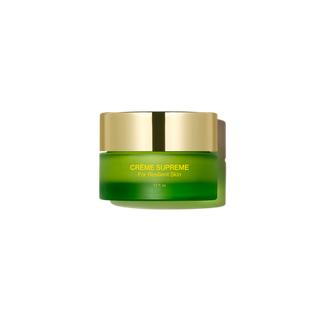
Works for
1 of 2 advertised claims delivered
MoisturizingIsosorbide dicaprylate, Bacillus ferment + 23 moreStrong evidence
“Our most sumptuous moisturizer helps skin visibly recapture 5 years with seven powerful, synergistic benefits.”
This product can help improve hydration of the skin with the two types of ingredients.
The first type is called “humectants”:
these ingredients help attract water.
When humectants are on the surface of the skin, they “pull in” the moisture from the outside environment, or from
within deeper layers of the skin. The following ingredients in this product do the job:
glycerin, glyceryl glucoside.
This product also contains ingredients called “occlusives”. They help reduce the speed with which our skin loses moisture to the outside environment. These ingredients also help soften the upper layer of the skin, so it feels less tight and nicer to the touch. The following ingredients in this product do the job: butyrospermum parkii butter, helianthus annuus seed oil.
The following ingredients in this product are especially good for supporting the skin barrier and helping with the hydration level: isosorbide dicaprylate
Anti-agingButyrospermum parkii butter, Camellia sinensis seed oil + 1 moreLimited evidence
“Our most sumptuous moisturizer helps skin visibly recapture 5 years with seven powerful, synergistic benefits.”
This product does not contain ingredients that are able to reduce fine lines and wrinkles or help with skin elasticity, but it can improve the look of the skin temporarily through moisturization. Well-moisturized skin might also be able to repair the sun damage better.This ingredient - butyrospermum parkii butter - could be helpful for preventing or repairing signs of aging in theory, but there is no evidence that it actually works.
Can it cause trouble?
Irritancy20 strong irritants: Rosa rubiginosa seed oil, Lavandula stoechas extract + 18 more — patch-test recommendedHigh risk
Comedogenic1 ingredient rated 2 or more on the 0–5 pore-clogging scale1 flagged


User reviews
Be the first — your take helps the next person decide.
Ingredients
Filter by role to see what each ingredient is doing.
Hordeum vulgare leaf juice~22–33%
- Irritation risk
- Low
C13-14 alkane~5.2–7.8%
- Irritation risk
- Low
Helps soften the upper layer of the skin
More about C13-14 alkaneGlycerin~4.1–6.2%
- Irritation risk
- Low
One of the best moisturizing ingredients. Naturally present in skin. It attracts water to the upper layer of the skin working as a humectant
More about GlycerinButyrospermum parkii butter~3.9–5.9%
- Irritation risk
- Low
- Comedogenicity
- 3/5
A great moisturising ingredient that softens the skin and reduces water loss from its upper layer. It also can be helpful in protecting skin from free radicals
More about Butyrospermum parkii butterBehenyl alcohol~2.9–4.4%
- Irritation risk
- Low
Non-drying alcohol that helps water and oil mix together. Also serves as an emollient
More about Behenyl alcoholWater~1.9–2.9%
Glyceryl stearate citrate~1.6–2.4%
- Irritation risk
- Low
Helps oil and water mix together while softening the upper layer of the skin
More about Glyceryl stearate citrateIsoamyl laurate~1.3–2%
- Irritation risk
- Medium
Helps stabilize emulsions and create a nice product texture
More about Isoamyl laurateTriheptanoin~0.95–1.45%
- Irritation risk
- Low
A synthetic triglyceride. Helps soften the upper layer of the skin
More about TriheptanoinIsosorbide dicaprylate~0.85–1.3%
- Irritation risk
- Low
Helps soften the upper layer of the skin. Early studies suggest that it can help strengthen the skin barrier
More about Isosorbide dicaprylateCamellia japonica seed oil~0.5–1.2%
- Irritation risk
- Low
A plant oil that helps to soften the upper layer of the skin and can help restore skin's barrier function. Might have an anti-oxidant effect
More about Camellia japonica seed oilOctyldodecanol~0.4–0.95%
- Irritation risk
- Low
An emollient that helps to soften the skin and create a pleasant product texture and stabilize the formulation
More about OctyldodecanolCoco-caprylate/caprate~0.35–0.85%
- Irritation risk
- Low
Helps to soften the upper layer of the skin without creating a greasy texture
More about Coco-caprylate/caprateSqualane~0.35–0.8%
- Irritation risk
- Low
An oil naturally present in skin. Works as an emollient to soften the skin and form a protective layer on its surface without a greasy feeling.
More about SqualaneGlyceryl glucoside~0.15–0.65%
- Irritation risk
- Low
Can help to restore skin barrier function and soften its upper layer
More about Glyceryl glucosidePhytosterols~0.3–0.7%
- Irritation risk
- Medium
Lipids that work as an emollient and can be helpful in repairing skin barrier function
More about PhytosterolsGlutamine~0.15–0.6%
- Irritation risk
- Low
Morus alba leaf extract~0.15–0.55%
- Irritation risk
- Low
Carthamus tinctorius seed oil~0.15–0.65%
- Irritation risk
- Low
An emollient that helps soften the skin and might help calm down inflammation
More about Carthamus tinctorius seed oilBioflavonoids~0.1–0.4%
- Irritation risk
- Low
Glycogen~0.1–0.35%
- Irritation risk
- Low
Helps attract water to the upper layer of the skin
More about GlycogenRosa rubiginosa seed oil~0.15–0.5%
- Irritation risk
- High
Plant oil that due to the high content of linoleic acid can support skin's barrier function and reduce moisture loss
More about Rosa rubiginosa seed oilCamellia sinensis seed oil~0.1–0.5%
- Irritation risk
- Low
A plant oil that helps to soften the upper layer of the skin and can help restore the skin barrier. Might have some anti-oxidant effect
More about Camellia sinensis seed oilLavandula stoechas extract~0.1–0.4%
Cistus incanus flower/leaf/stem extract~0.1–0.4%
- Irritation risk
- Low
Gynostemma pentaphyllum leaf/stem extract~0.15–0.5%
- Irritation risk
- Low
Polyglutamic acid~0.1–0.4%
- Irritation risk
- Low
Helps attract water to the upper layer of the skin.
More about Polyglutamic acidBacillus ferment~0.1–0.4%
- Irritation risk
- Low
A product of bacterial fermentation. Can help attract water to the upper layer of the skin
More about Bacillus fermentSantalum album wood extract~0.1–0.3%
Jania rubens extract~0.1–0.4%
- Irritation risk
- Low
Arnica montana extract~0.1–0.4%
- Irritation risk
- High
Borago officinalis leaf extract~0.1–0.4%
- Irritation risk
- Low
Calendula officinalis flower extract~0.1–0.35%
- Irritation risk
- High
A plant extract that has some anti-oxidant and anti-bacterial properties. Can be irritating
More about Calendula officinalis flower extractMedicago sativa extract~0.1–0.4%
- Irritation risk
- Medium
A plant extract that might help neutralize free radicals in skin
More about Medicago sativa extractSambucus nigra fruit extract~0.1–0.4%
- Irritation risk
- High
A plant extract that may contain a small amount of essential oils. Might be helpful in neutralizing free radicals in skin
More about Sambucus nigra fruit extractSpiraea ulmaria extract~0.1–0.35%
- Irritation risk
- Low
Caprylic/capric triglyceride~0.15–0.6%
- Irritation risk
- Medium
A good mix of fatty acids that forms a protective layer on the skin. Improves the shelf life of products. Derived from coconut and glycerin
More about Caprylic/capric triglycerideHelianthus annuus seed oil~0.15–0.55%
- Irritation risk
- Low
A great emollient due to its high linoleic acid content. One of the most effective plant oils in helping skin hydration and repairing skin barrier function
More about Helianthus annuus seed oilPropanediol~0.1–0.45%
- Irritation risk
- Low
Acts as a solvent for other ingredients. Speeds up the absorption of other ingredients into the skin
More about PropanediolCaprylyl glycol~0.15–0.55%
- Irritation risk
- Medium
Helps preserve products and creates a nice product texture
More about Caprylyl glycolDilinoleic acid/butanediol copolymer~0.15–0.65%
- Irritation risk
- Low
Xanthan gum~0.1–0.5%
- Irritation risk
- Low
Used to create a thicker product consistency
More about Xanthan gumMagnolia officinalis bark extract~0.1–0.45%
- Irritation risk
- Low
Decyl glucoside~0.15–0.65%
- Irritation risk
- High
Helps oil and water mix together. Can be irritating
More about Decyl glucosidePhenethyl alcohol~0.1–0.5%
Glyceryl caprylate~0.15–0.65%
- Irritation risk
- Low
An emollient that can also help water and oil mix together, as well as prevent bacteria growth in products
More about Glyceryl caprylateCitrus aurantium bergamia peel oil~0.1–0.45%
- Irritation risk
- High
Pelargonium graveolens oil~0.1–0.45%
Sodium phytate~0.1–0.45%
Olea europaea fruit oil~0.15–0.55%
- Irritation risk
- Medium
An emollient that helps soften the skin but is not effective for restoring its barrier function. Might be helpful to calm down inflammation
More about Olea europaea fruit oilCitrus paradisi peel oil~0.1–0.4%
Anthemis nobilis flower oil~0.1–0.4%
- Irritation risk
- High
An essential oil that is used as a fragrance and can be irritating. It might have some anti-oxidant effect in skin
More about Anthemis nobilis flower oilCastor oil/ipdi copolymer~0.15–0.65%
Michelia alba leaf oil~0.1–0.4%
- Irritation risk
- High
An essential oil used in cosmetics for its smell. Can be irritating
More about Michelia alba leaf oilSantalum spicata wood oil~0.1–0.4%
- Irritation risk
- High
Lavandula angustifolia oil~0.1–0.4%
- Irritation risk
- High
An essential oil. Potential allergen and can be irritating. It has some anti-bacterial properties
More about Lavandula angustifolia oilCitric acid~0.1–0.45%
- Irritation risk
- Medium
Can work as an exfoliant but is typically used to adjust the product pH
More about Citric acidTocopherol~0.1–0.45%
- Irritation risk
- Low
Pure form of vitamin E. Can help moisturise and protect the skin from free radicals. Often used to help stabilise other ingredients or the formula itself
More about TocopherolRosa damascena flower oil~0.1–0.45%
- Irritation risk
- High
Used as a fragrance. Can be irritating
More about Rosa damascena flower oilRosa damascena flower water extract~0.1–0.45%
- Irritation risk
- High
Alcohol~0.1–0.4%
- Irritation risk
- High
Can be drying and contribute to skin irritation. Used in formulars to dissolve other ingredients, create a thinner product consistency or for its antibacterial properties
More about AlcoholLimonene~0.1–0.35%
- Irritation risk
- High
A common frangrance that can easily irritate skin, especially if exposed to air, light or heat
More about LimoneneLinalool~0.1–0.4%
Citronellol~0.1–0.4%
Geraniol~0.1–0.4%
Linalyl acetate~0.1–0.45%
- Irritation risk
- Low
Santalol~0.1–0.4%
- Irritation risk
- Low
Pinene~0.1–0.45%
- Irritation risk
- Low
Beta-caryophyllene~0.1–0.4%
- Irritation risk
- Low
Farnesol~0.1–0.4%
Citral~0.1–0.35%
Terpineol~0.05–0.25%
- Irritation risk
- Low
Geranyl acetate~0.05–0.25%
- Irritation risk
- Low
Ingredient list view
Hordeum vulgare leaf juice, C13-14 alkane, Glycerin, Butyrospermum parkii butter, Behenyl alcohol, Water, Glyceryl stearate citrate, Isoamyl laurate, Triheptanoin, Isosorbide dicaprylate, Camellia japonica seed oil, Octyldodecanol, Coco-caprylate/caprate, Squalane, Glyceryl glucoside, Phytosterols, Glutamine, Morus alba leaf extract, Carthamus tinctorius seed oil, Bioflavonoids, Glycogen, Rosa rubiginosa seed oil, Camellia sinensis seed oil, Lavandula stoechas extract, Cistus incanus flower/leaf/stem extract, Gynostemma pentaphyllum leaf/stem extract, Polyglutamic acid, Bacillus ferment, Santalum album wood extract, Jania rubens extract, Arnica montana extract, Borago officinalis leaf extract, Calendula officinalis flower extract, Medicago sativa extract, Sambucus nigra fruit extract, Spiraea ulmaria extract, Caprylic/capric triglyceride, Helianthus annuus seed oil, Propanediol, Caprylyl glycol, Dilinoleic acid/butanediol copolymer, Xanthan gum, Magnolia officinalis bark extract, Decyl glucoside, Phenethyl alcohol, Glyceryl caprylate, Citrus aurantium bergamia peel oil, Pelargonium graveolens oil, Sodium phytate, Olea europaea fruit oil, Citrus paradisi peel oil, Anthemis nobilis flower oil, Castor oil/ipdi copolymer, Michelia alba leaf oil, Santalum spicata wood oil, Lavandula angustifolia oil, Citric acid, Tocopherol, Rosa damascena flower oil, Rosa damascena flower water extract, Alcohol, Limonene, Linalool, Citronellol, Geraniol, Linalyl acetate, Santalol, Pinene, Beta-caryophyllene, Farnesol, Citral, Terpineol, Geranyl acetate
Compare prices
Retailers ranked by price — lowest first.
Affiliate links · prices updated regularly · As an Amazon Associate, WIMJ earns from qualifying purchases.
Worth comparing, line by line.
Match % combines shared ingredients, the first five ingredients, shared actives and hero ingredients, irritancy (lower counts in the alternative's favour), texture and body area. Only products in the same routine step are compared.
| Tata HarperCrème SupremeYOUR PRODUCT | Skinbetter ScienceHydration Boosting Cream | Allies of SkinMolecular Multi-Nutrient Day Cream | The OrdinaryNatural Moisturizing Factors and PhytoCeramides Cream | |
|---|---|---|---|---|
| Match | — | 53% | 52% | 51% |
| Price | $54.40 | — | $112.00+$57.60 | $9.15−$45.25 |
| Shared key ingredients | — | 4 of 14 | 4 of 14 | 3 of 14 |
| Key difference | — | Niacinamide | Niacinamide | Anhydroxylitol |
| Irritancy | High | Medium | Medium | Medium |
| Drying alcohol | Contains drying alcohol | — | — | — |
| View product | Shop | Shop | Shop |

Sources cited in this review
Every concentration estimate and effectiveness label is anchored to one of these 26 studies and safety reviews.
- 1
- 2
- 3Safety Assessment of Alkyl Esters as Used in Cosmeticscir-safety.org
- 4
- 5
- 6

Affiliate links · As an Amazon Associate, WIMJ earns from qualifying purchases.