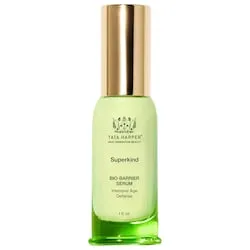
Tata Harper Bio-Barrier Serum for Skin Repair

Tata Harper Bio-Barrier Serum for Skin Repair

Efficacy75/100IrritancyHigh

Works for

Moisturizing
Ceramide np, Squalane + 17 more
Works well
What the product description says
“Dabberlocks Seaweed: Hydrates and support skin’s firmness for a smoother, more supple look.”
Source: Sephora CA

This product can help improve hydration of the skin with the two types of ingredients.

The first type is called “humectants”:
these ingredients help attract water. When humectants are on the surface of the skin, they “pull in” the moisture from the outside environment, or from within deeper layers of the skin. The following ingredients in this product do the job: glyceryl glucoside, saccharide isomerate.

This product also contains ingredients called “occlusives”. They help reduce the speed with which our skin loses moisture to the outside environment. These ingredients also help soften the upper layer of the skin, so it feels less tight and nicer to the touch. The following ingredients in this product do the job: ricinus communis seed oil, squalane.

The following ingredients in this product are especially good for supporting the skin barrier and helping with the hydration level: ceramide np

Ceramide npHero· EmollientEffect: HighA type of lipid similar to ceramides naturally present in skin. Helps to soften the upper layer of the skin and supports the skin barrier function to keep it hydrated. Can help to prevent inflammation in skin~4.4–6.6%
SqualaneKey active· Emollient, OcclusiveEffect: HighAn oil naturally present in skin. Works as an emollient to soften the skin and form a protective layer on its surface without a greasy feeling.~25–38%
Glyceryl glucosideKey active· HumectantEffect: HighCan help to restore skin barrier function and soften its upper layer~4.1–6.2%
Centella asiatica extractKey activeEffect: HighA plant extract that has been shown to be able to reduce inflammation in skin, support restoration of skin barrier function, as well as support collagen production. Contains active compounds called centelloids: asiaticoside, madecasosside, asiatic acid and madecassic acid. Might be helpful in preventing stretch marks. It can be itself be irritating though.~2.1–3.2%
Oenothera biennis oilKey active· EmollientEffect: HighHelps soften the upper layer of the skin and can support skin barrier function~2–3%
Ricinus communis seed oilKey active· Emollient, OcclusiveEffect: HighA plant oil that can help soften the skin. It might be helpful in calming down inflammation, but solid research is lacking. Is often used in lip products to create the needed product consistency~1.5–2.3%
Vitis vinifera seed oilKey active· EmollientEffect: HighA great emollient that can also have anti-oxidant properties~1.1–1.7%
Sodium hyaluronateKey active· HumectantEffect: HighOne of the best moisturizing ingredients. Attracts water into the upper layer of the skin~0.4–1%
Bacillus fermentKey activeEffect: HighA product of bacterial fermentation. Can help attract water to the upper layer of the skin~0.15–0.65%
Saccharide isomerateKey active· HumectantEffect: HighHelps attract water to the upper layer of the skin~0.15–0.55%
Chlorella vulgaris extractKey activeEffect: MediumA plant extract that can help to attract water to the upper layer of the skin and might have some anti-oxidant and anti-inflammatory properties~0.15–0.6%
Ophiopogon japonicus root extractEffect: LowPlant extract that might help neutralize free radicals and support skin barrier function, but research on its effectiveness in skin is lacking~3.2–4.8%
Glyceryl caprylate· EmollientEffect: LowAn emollient that can also help water and oil mix together, as well as prevent bacteria growth in products~0.2–0.7%
Avena sativa kernel oilUnder-dosedAn effective moisturizing and skin barrier repair ingredient. Helps calm down inflammation and has some anti-oxidant properties~0.5–1.2%
Alaria esculenta extractUnder-dosedWorks as a humectant helping to attract water to the upper layer of the skin and might be effective as an anti-oxidant.~0.4–0.9%
Simmondsia chinensis seed oilUnder-dosedSoftens the upper layer of skin and helps restore the healthy skin barrier. Has shown to help calm down inflammation in skin. It is a stable oil, meaning that it retains its properties even when exposed to air.~0.2–0.75%
Butyrospermum parkii butterUnder-dosedA great moisturising ingredient that softens the skin and reduces water loss from its upper layer. It also can be helpful in protecting skin from free radicals~0.2–0.75%
Laminaria digitata extractUnder-dosedSeaweed extract that helps the skin to attract water and make it more smooth for touch. Also shows promise of anti-aging properties, but good research is lacking at the moment~0.15–0.6%
Lactic acidUnder-dosedAn exfoliating and moisturizing alpha-hydroxy acid (AHA). Typically causes less irritation than other AHAs, for example, glycolic acid. At high concentrations (about 15%), lactic acid can help reduce lines and wrinkles. Recent studies show that lactic acid can support the "good" bacteria living on skin's surface (healthy skin microbiome)~0.1–0.45%
Anti-aging
Centella asiatica extract, Alaria esculenta extract + 3 more
May help
What the product description says
“What Else You Need to Know: This high-performance serum visibly smooths lines, firms, improves radiance, and supports the microbiome as it helps skin to better resist stressors for lasting comfort and a healthy look.”
Source: Sephora CA

This product contains centella asiatica extract. This ingredient might be able to help reduce and prevent fine lines and wrinkles, improve skin elasticity and firmness, but there is not enough evidence that it actually works.

Centella asiatica extractKey activeEffect: MediumA plant extract that has been shown to be able to reduce inflammation in skin, support restoration of skin barrier function, as well as support collagen production. Contains active compounds called centelloids: asiaticoside, madecasosside, asiatic acid and madecassic acid. Might be helpful in preventing stretch marks. It can be itself be irritating though.~2.1–3.2%
Alaria esculenta extractEffect: Low, below effective doseWorks as a humectant helping to attract water to the upper layer of the skin and might be effective as an anti-oxidant.~0.4–0.9%
Butyrospermum parkii butterEffect: Low, below effective doseA great moisturising ingredient that softens the skin and reduces water loss from its upper layer. It also can be helpful in protecting skin from free radicals~0.2–0.75%
Laminaria digitata extractEffect: Low, below effective doseSeaweed extract that helps the skin to attract water and make it more smooth for touch. Also shows promise of anti-aging properties, but good research is lacking at the moment~0.15–0.6%
Lactic acidUnder-dosedAn exfoliating and moisturizing alpha-hydroxy acid (AHA). Typically causes less irritation than other AHAs, for example, glycolic acid. At high concentrations (about 15%), lactic acid can help reduce lines and wrinkles. Recent studies show that lactic acid can support the "good" bacteria living on skin's surface (healthy skin microbiome)~0.1–0.45%
Evens skin tone
Glycyrrhiza glabra root extract, Lactic acid
Not delivered
What the product description says
“Alpine Rose: Soothes and visibly brightens skin while optimizing turnover of tired, aging cells.”
Source: Sephora CA

This product contains ingredients (glycyrrhiza glabra root extract) that could help reduce hyperpigmentation (for example, post-acne marks or age spots) in theory, but there is not enough evidence that they actually work.

Glycyrrhiza glabra root extractEffect: LowA plant extract that can help lighten the skin and calm down inflammation. Might be helpful in neutralizing free radicals~0.15–0.6%
Lactic acidUnder-dosedAn exfoliating and moisturizing alpha-hydroxy acid (AHA). Typically causes less irritation than other AHAs, for example, glycolic acid. At high concentrations (about 15%), lactic acid can help reduce lines and wrinkles. Recent studies show that lactic acid can support the "good" bacteria living on skin's surface (healthy skin microbiome)~0.1–0.45%
Anti-oxidation
Side benefit · Centella asiatica extract, Ophiopogon japonicus root extract + 11 more
May help

This product contains antioxidants (centella asiatica extract) that might be able to help neutralize free radicals in skin to lessen the damage it gets from the UV light (sun). There is not enough evidence to confirm their effectiveness in skin though.

Centella asiatica extractKey activeEffect: MediumA plant extract that has been shown to be able to reduce inflammation in skin, support restoration of skin barrier function, as well as support collagen production. Contains active compounds called centelloids: asiaticoside, madecasosside, asiatic acid and madecassic acid. Might be helpful in preventing stretch marks. It can be itself be irritating though.~2.1–3.2%
Ophiopogon japonicus root extractEffect: LowPlant extract that might help neutralize free radicals and support skin barrier function, but research on its effectiveness in skin is lacking~3.2–4.8%
Oenothera biennis oilEffect: LowHelps soften the upper layer of the skin and can support skin barrier function~2–3%
Pyrus malus seed oilEffect: LowCan contain essential oil that can be irritating. Can help to soften the upper layer of the skin. Might be helpful in neutralizing free radicals~1.6–2.4%
Vitis vinifera seed oilEffect: LowA great emollient that can also have anti-oxidant properties~1.1–1.7%
Salvia miltiorrhiza root extractEffect: LowAn aromatic plant root extract with a mint-like smell. Can be irritating. Used as a fragrance. Might have some anti-oxidant effect~0.85–1.25%
Calendula officinalis flower extractEffect: LowA plant extract that has some anti-oxidant and anti-bacterial properties. Can be irritating~0.3–0.7%
Glycyrrhiza glabra root extractEffect: LowA plant extract that can help lighten the skin and calm down inflammation. Might be helpful in neutralizing free radicals~0.15–0.6%
Medicago sativa extractEffect: LowA plant extract that might help neutralize free radicals in skin~0.15–0.7%
Chlorella vulgaris extractEffect: LowA plant extract that can help to attract water to the upper layer of the skin and might have some anti-oxidant and anti-inflammatory properties~0.15–0.6%
Alaria esculenta extractEffect: Low, below effective doseWorks as a humectant helping to attract water to the upper layer of the skin and might be effective as an anti-oxidant.~0.4–0.9%
Butyrospermum parkii butterEffect: Low, below effective doseA great moisturising ingredient that softens the skin and reduces water loss from its upper layer. It also can be helpful in protecting skin from free radicals~0.2–0.75%
Laminaria digitata extractEffect: Low, below effective doseSeaweed extract that helps the skin to attract water and make it more smooth for touch. Also shows promise of anti-aging properties, but good research is lacking at the moment~0.15–0.6%

Can it cause trouble?

Irritancy
4 strong irritants: Salvia miltiorrhiza root extract, Calendula officinalis flower extract + 2 more — patch-test recommended
High risk
We flagged 21 ingredients with irritancy potential. Severity depends on your sensitivity threshold; the table lists the worst offenders first.
IngredientFunctionIrritationEst. amount
Pyrus malus seed oilCan contain essential oil that can be irritating. Can help to soften the upper layer of the skin. Might be helpful in neutralizing free radicalsHigh~1.6–2.4%est.
Salvia miltiorrhiza root extractAn aromatic plant root extract with a mint-like smell. Can be irritating. Used as a fragrance. Might have some anti-oxidant effectHigh~0.85–1.25%est.
Rhododendron ferrugineum extract—High~0.35–0.8%est.
Calendula officinalis flower extractA plant extract that has some anti-oxidant and anti-bacterial properties. Can be irritatingHigh~0.3–0.7%est.
Chamomilla recutita flower extractPlant extract that can have healing and anti-inflammatory properties. It is a potential allergen and can be irritatingHigh~0.3–0.7%est.
Lavandula angustifolia extractUsed for fragrance and contains volatile compounds that can irritate the skinHigh~0.2–0.75%est.
Sodium anisateUsed as a fragranceHigh~0.1–0.5%est.
Ophiopogon japonicus root extractPlant extract that might help neutralize free radicals and support skin barrier function, but research on its effectiveness in skin is lackingMedium~3.2–4.8%est.
Centella asiatica extractA plant extract that has been shown to be able to reduce inflammation in skin, support restoration of skin barrier function, as well as support collagen production. Contains active compounds called centelloids: asiaticoside, madecasosside, asiatic acid and madecassic acid. Might be helpful in preventing stretch marks. It can be itself be irritating though.Medium~2.1–3.2%est.
Oenothera biennis oilHelps soften the upper layer of the skin and can support skin barrier functionMedium~2–3%est.
Ricinus communis seed oilA plant oil that can help soften the skin. It might be helpful in calming down inflammation, but solid research is lacking. Is often used in lip products to create the needed product consistencyMedium~1.5–2.3%est.
Vitis vinifera seed oilA great emollient that can also have anti-oxidant propertiesMedium~1.1–1.7%est.
Medicago sativa extractA plant extract that might help neutralize free radicals in skinMedium~0.15–0.7%est.
Chlorella vulgaris extractA plant extract that can help to attract water to the upper layer of the skin and might have some anti-oxidant and anti-inflammatory propertiesMedium~0.15–0.6%est.
Glycyrrhiza glabra root extractA plant extract that can help lighten the skin and calm down inflammation. Might be helpful in neutralizing free radicalsMedium~0.15–0.6%est.
Simmondsia chinensis seed oilSoftens the upper layer of skin and helps restore the healthy skin barrier. Has shown to help calm down inflammation in skin. It is a stable oil, meaning that it retains its properties even when exposed to air.Medium~0.2–0.75%est.
Sodium levulinateA preservativeMedium~0.15–0.5%est.
Lactic acidAn exfoliating and moisturizing alpha-hydroxy acid (AHA). Typically causes less irritation than other AHAs, for example, glycolic acid. At high concentrations (about 15%), lactic acid can help reduce lines and wrinkles. Recent studies show that lactic acid can support the "good" bacteria living on skin's surface (healthy skin microbiome)Medium~0.1–0.45%est.
Phytic acidAn alpha-hydroxy acid (AHA), but is mostly used to stabilize product formulations in cosmeticsMedium~0.1–0.45%est.
Citric acidCan work as an exfoliant but is typically used to adjust the product pHMedium~0.1–0.4%est.
Sodium citrateHelps to control the skin's pH level. Maintains the skin's natural film of amino-lactic acids and oils. Helps to preserve productsMedium~0.1–0.35%est.
Comedogenic
3 ingredients rated 2 or more on the 0–5 pore-clogging scale
3 flagged
These ingredients have a comedogenic rating of 2 or more on a 0–5 scale; the table shows each one's rating. In leave-on products they can clog pores in acne-prone skin.
IngredientFunctionRatingEst. amount
Chlorella vulgaris extractA plant extract that can help to attract water to the upper layer of the skin and might have some anti-oxidant and anti-inflammatory properties3/5~0.15–0.6%est.
Laminaria digitata extractSeaweed extract that helps the skin to attract water and make it more smooth for touch. Also shows promise of anti-aging properties, but good research is lacking at the moment3/5~0.15–0.6%est.
Butyrospermum parkii butterA great moisturising ingredient that softens the skin and reduces water loss from its upper layer. It also can be helpful in protecting skin from free radicals3/5~0.2–0.75%est.

User reviews

Would you recommend?
No community reviews yet.

Be the first — your take helps the next person decide.

Ingredients

Filter by role to see what each ingredient is doing.

Esters
Not recognized
Squalane~25–38%
Key active
Irritation risk
Low
Works for
Moisturizing

An oil naturally present in skin. Works as an emollient to soften the skin and form a protective layer on its surface without a greasy feeling.

More about Squalane
Glyceryl glucoside~4.1–6.2%
Key active
Irritation risk
Low
Works for
Moisturizing

Can help to restore skin barrier function and soften its upper layer

More about Glyceryl glucoside
Ceramide np~4.4–6.6%
Hero · Moisturizing
Irritation risk
Low
Works for
MoisturizingReduces irritationAnti-inflammatory

A type of lipid similar to ceramides naturally present in skin. Helps to soften the upper layer of the skin and supports the skin barrier function to keep it hydrated. Can help to prevent inflammation in skin

More about Ceramide np
Ophiopogon japonicus root extract~3.2–4.8%
Irritant · medium
Irritation risk
Medium
Works for
MoisturizingAnti-oxidation

Plant extract that might help neutralize free radicals and support skin barrier function, but research on its effectiveness in skin is lacking

More about Ophiopogon japonicus root extract
Centella asiatica extract~2.1–3.2%
Key activeIrritant · medium
Irritation risk
Medium
Works for
Reduces irritationAnti-inflammatoryReduces rednessMoisturizingAnti-agingAnti-oxidationAnti-blemish

A plant extract that has been shown to be able to reduce inflammation in skin, support restoration of skin barrier function, as well as support collagen production. Contains active compounds called centelloids: asiaticoside, madecasosside, asiatic acid and madecassic acid. Might be helpful in preventing stretch marks. It can be itself be irritating though.

More about Centella asiatica extract
Oenothera biennis oil~2–3%
Key activeIrritant · medium
Irritation risk
Medium
Works for
MoisturizingAnti-blemishAnti-inflammatoryAnti-oxidation

Helps soften the upper layer of the skin and can support skin barrier function

More about Oenothera biennis oil
Pyrus malus seed oil~1.6–2.4%
Irritant · high
Irritation risk
High
Works for
Anti-oxidation

Can contain essential oil that can be irritating. Can help to soften the upper layer of the skin. Might be helpful in neutralizing free radicals

More about Pyrus malus seed oil
Ricinus communis seed oil~1.5–2.3%
Key activeIrritant · medium
Irritation risk
Medium
Works for
MoisturizingAnti-inflammatory

A plant oil that can help soften the skin. It might be helpful in calming down inflammation, but solid research is lacking. Is often used in lip products to create the needed product consistency

More about Ricinus communis seed oil
Vitis vinifera seed oil~1.1–1.7%
Key activeIrritant · medium
Irritation risk
Medium
Works for
MoisturizingAnti-oxidation

A great emollient that can also have anti-oxidant properties

More about Vitis vinifera seed oil
Salvia miltiorrhiza root extract~0.85–1.25%
Irritant · high
Irritation risk
High
Works for
Anti-oxidation

An aromatic plant root extract with a mint-like smell. Can be irritating. Used as a fragrance. Might have some anti-oxidant effect

More about Salvia miltiorrhiza root extract
Avena sativa kernel oil~0.5–1.2%
Under-dosed
Irritation risk
Low
Works for
Moisturizing

An effective moisturizing and skin barrier repair ingredient. Helps calm down inflammation and has some anti-oxidant properties

More about Avena sativa kernel oil
Sodium hyaluronate~0.4–1%
Key active
Irritation risk
Low
Works for
Moisturizing

One of the best moisturizing ingredients. Attracts water into the upper layer of the skin

More about Sodium hyaluronate
Alaria esculenta extract~0.4–0.9%
Under-dosed
Irritation risk
Low
Works for
MoisturizingAnti-oxidationAnti-aging

Works as a humectant helping to attract water to the upper layer of the skin and might be effective as an anti-oxidant.

More about Alaria esculenta extract
Rhododendron ferrugineum extract~0.35–0.8%
Irritant · high
Borago officinalis leaf extract~0.3–0.75%
Formula
Calendula officinalis flower extract~0.3–0.7%
Irritant · high
Irritation risk
High
Works for
Anti-oxidation

A plant extract that has some anti-oxidant and anti-bacterial properties. Can be irritating

More about Calendula officinalis flower extract
Chamomilla recutita flower extract~0.3–0.7%
Irritant · high
Irritation risk
High
Works for
Anti-inflammatory

Plant extract that can have healing and anti-inflammatory properties. It is a potential allergen and can be irritating

More about Chamomilla recutita flower extract
Lavandula angustifolia extract~0.2–0.75%
Irritant · high
Irritation risk
High

Used for fragrance and contains volatile compounds that can irritate the skin

More about Lavandula angustifolia extract
Medicago sativa extract~0.15–0.7%
Irritant · medium
Irritation risk
Medium
Works for
Anti-oxidation

A plant extract that might help neutralize free radicals in skin

More about Medicago sativa extract
Bacillus ferment~0.15–0.65%
Key active
Irritation risk
Low
Works for
Moisturizing

A product of bacterial fermentation. Can help attract water to the upper layer of the skin

More about Bacillus ferment
Chlorella vulgaris extract~0.15–0.6%
Key activeComedogenic 3/5Irritant · medium
Irritation risk
Medium
Comedogenicity
3/5
Works for
MoisturizingAnti-inflammatoryAnti-oxidation

A plant extract that can help to attract water to the upper layer of the skin and might have some anti-oxidant and anti-inflammatory properties

More about Chlorella vulgaris extract
Laminaria digitata extract~0.15–0.6%
Under-dosedComedogenic 3/5
Irritation risk
Low
Comedogenicity
3/5
Works for
MoisturizingAnti-oxidationAnti-aging

Seaweed extract that helps the skin to attract water and make it more smooth for touch. Also shows promise of anti-aging properties, but good research is lacking at the moment

More about Laminaria digitata extract
Glycyrrhiza glabra root extract~0.15–0.6%
Irritant · medium
Irritation risk
Medium
Works for
Reduces rednessEvens skin toneAnti-oxidationAnti-inflammatoryAntibacterial

A plant extract that can help lighten the skin and calm down inflammation. Might be helpful in neutralizing free radicals

More about Glycyrrhiza glabra root extract
Butyrospermum parkii butter~0.2–0.75%
Under-dosedComedogenic 3/5
Irritation risk
Low
Comedogenicity
3/5
Works for
MoisturizingAnti-oxidationAnti-aging

A great moisturising ingredient that softens the skin and reduces water loss from its upper layer. It also can be helpful in protecting skin from free radicals

More about Butyrospermum parkii butter
Saccharide isomerate~0.15–0.55%
Key active
Irritation risk
Low
Works for
Moisturizing

Helps attract water to the upper layer of the skin

More about Saccharide isomerate
Stevioside~0.15–0.55%
Formula
Irritation risk
Low
More about Stevioside
Simmondsia chinensis seed oil~0.2–0.75%
Under-dosedIrritant · medium
Irritation risk
Medium
Works for
Moisturizing

Softens the upper layer of skin and helps restore the healthy skin barrier. Has shown to help calm down inflammation in skin. It is a stable oil, meaning that it retains its properties even when exposed to air.

More about Simmondsia chinensis seed oil
Hydrogenated lecithin~0.15–0.6%
Formula
Irritation risk
Low
Works for
Cleansing

Helps to retain moisture by creating a protective barrier on the skin. Rich in fatty acids. Improves product texture and helps with the penetration of other ingredients.

More about Hydrogenated lecithin
Polyglyceryl-3 stearate~0.15–0.6%
Formula
Irritation risk
Low
Works for
Cleansing

Helps oil and water mix together

More about Polyglyceryl-3 stearate
Xanthan gum~0.15–0.55%
Formula
Irritation risk
Low
Works for
Cleansing

Used to create a thicker product consistency

More about Xanthan gum
Maltodextrin~0.15–0.55%
Formula
Irritation risk
Low
Works for
Mattifying

Used to stabilize the product formulation and can help absorb oil

More about Maltodextrin
Sodium levulinate~0.15–0.5%
Irritant · medium
Irritation risk
Medium

A preservative

More about Sodium levulinate
Glyceryl caprylate~0.2–0.7%
Formula
Irritation risk
Low
Works for
CleansingMoisturizing

An emollient that can also help water and oil mix together, as well as prevent bacteria growth in products

More about Glyceryl caprylate
Sodium anisate~0.1–0.5%
Irritant · high
Irritation risk
High

Used as a fragrance

More about Sodium anisate
Lactic acid~0.1–0.45%
Under-dosedIrritant · medium
Irritation risk
Medium
Works for
ExfoliationEvens skin toneMoisturizingAnti-aging

An exfoliating and moisturizing alpha-hydroxy acid (AHA). Typically causes less irritation than other AHAs, for example, glycolic acid. At high concentrations (about 15%), lactic acid can help reduce lines and wrinkles. Recent studies show that lactic acid can support the "good" bacteria living on skin's surface (healthy skin microbiome)

More about Lactic acid
Phytic acid~0.1–0.45%
Irritant · medium
Irritation risk
Medium

An alpha-hydroxy acid (AHA), but is mostly used to stabilize product formulations in cosmetics

More about Phytic acid
Citric acid~0.1–0.4%
Irritant · medium
Irritation risk
Medium

Can work as an exfoliant but is typically used to adjust the product pH

More about Citric acid
Sodium citrate~0.1–0.35%
Irritant · medium
Irritation risk
Medium

Helps to control the skin's pH level. Maintains the skin's natural film of amino-lactic acids and oils. Helps to preserve products

More about Sodium citrate
Ingredient list view

Unknown, Squalane, Glyceryl glucoside, Ceramide np, Ophiopogon japonicus root extract, Centella asiatica extract, Oenothera biennis oil, Pyrus malus seed oil, Ricinus communis seed oil, Vitis vinifera seed oil, Salvia miltiorrhiza root extract, Avena sativa kernel oil, Sodium hyaluronate, Alaria esculenta extract, Rhododendron ferrugineum extract, Borago officinalis leaf extract, Calendula officinalis flower extract, Chamomilla recutita flower extract, Lavandula angustifolia extract, Medicago sativa extract, Bacillus ferment, Chlorella vulgaris extract, Laminaria digitata extract, Glycyrrhiza glabra root extract, Butyrospermum parkii butter, Saccharide isomerate, Stevioside, Simmondsia chinensis seed oil, Hydrogenated lecithin, Polyglyceryl-3 stearate, Xanthan gum, Maltodextrin, Sodium levulinate, Glyceryl caprylate, Sodium anisate, Lactic acid, Phytic acid, Citric acid, Sodium citrate

Compare prices

Retailers ranked by price — lowest first.

Sephora
$158.00
Buy
Amazon US
Price unavailable Out of stock
Check

Affiliate links · As an Amazon Associate, WIMJ earns from qualifying purchases.

Worth comparing, line by line.

Match % combines shared ingredients, the first five ingredients, shared actives and hero ingredients, irritancy (lower counts in the alternative's favour), texture and body area. Only products in the same routine step are compared.

Side-by-side comparison of this product against its closest alternatives
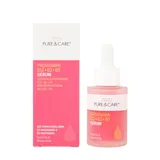
Tata HarperBio-Barrier Serum for Skin RepairYOUR PRODUCTPuca Pure&CareProvitamin B12 + B3 + B5 SerumElizabeth GrantProfessional Institute Ceramide Drops DuoTIRTIRCica Care Serum
Match—55%54%53%
Price$158.00$10.43−$147.57$26.00−$132.00$24.75−$133.25
Shared key ingredients—5 of 133 of 134 of 13
Key difference—MadecassosidePanthenolMadecassoside
Irritancy High Medium Medium Medium
Drying alcohol————
View product Shop Shop Shop

More alternatives: INNBEAUTY PROJECT Elastic Skin Firming & Plumping Vegan Growth Factor Serum with Copper PeptidesTeluris Glow Plump Serum

Cheaper alternatives? See how this stacks up against similar formulas.
We compare ingredient profiles across our catalog — pick the closest match for your budget.
Open dupe finder

Sources cited in this review

Every concentration estimate and effectiveness label is anchored to one of these 28 studies and safety reviews.

  1. 1
  2. 2
  3. 3
  4. 4
  5. 5
  6. 6
Tata Harper Bio-Barrier Serum for Skin Repair
Tata HarperBio-Barrier Serum for Skin Repair

Affiliate links · As an Amazon Associate, WIMJ earns from qualifying purchases.

As an Amazon Associate, WIMJ earns from qualifying purchases.