Works for
2 of 3 advertised claims delivered
Moisturizing17 ingredients credited for this claimStrong support
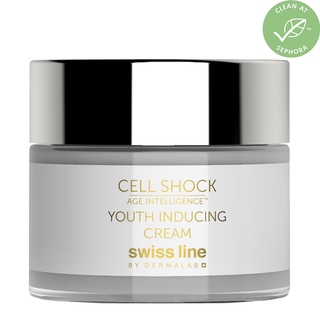
“Youth Inducing Cream”
This product can help improve hydration of the skin with the two types of ingredients.
The first type is called “humectants”:
these ingredients help attract water.
When humectants are on the surface of the skin, they “pull in” the moisture from the outside environment, or from
within deeper layers of the skin. The following ingredients in this product do the job:
glycerin, hydrolyzed soy protein.
This product also contains ingredients called “occlusives”. They help reduce the speed with which our skin loses moisture to the outside environment. These ingredients also help soften the upper layer of the skin, so it feels less tight and nicer to the touch. The following ingredients in this product do the job: dimethicone, helianthus annuus seed oil.
The following ingredients in this product are especially good for supporting the skin barrier and helping with the hydration level: arginine/lysine polypeptide, madecassoside
Anti-aging3 ingredients credited for this claimModerate support
“It boosts the skin's repair metabolism and collagen synthesis, offering a more resilient and younger looking skin.”
This product contains arginine/lysine polypeptide, madecassoside. These ingredients might be able to help reduce and prevent fine lines and wrinkles, improve skin elasticity and firmness, but there is not enough evidence that it actually works.
Evens skin tone3 ingredients credited for this claimLimited support
“loss of firmness, wrinkles, pigmentation and enlarged pores.”
This product contains ingredients (madecassoside) that could help reduce hyperpigmentation (for example, post-acne marks or age spots) in theory, but there is not enough evidence that they actually work.
Anti-oxidationNot advertised by the brand · 4 ingredients credited for this claimStrong support
This product contains antioxidants (madecassoside) that can help neutralize free radicals in skin. By doing so, they can lessen the damage the skin gets from the UV light (sun).
Can it cause trouble?
Irritancy2 strong irritants: Retinyl palmitate, ParfumMedium risk
Comedogenic1 ingredient rated 2 or more on the 0–5 pore-clogging scale1 flagged
User reviews
Be the first — your take helps the next person decide.
Ingredients
Filter by role to see what each ingredient is doing.
Water~45–55%
Dimethicone~6.2–7.5%
- Irritation risk
- Low
A silicone that helps to reduce water loss from the surface of the skin. Can temporarily "fill in" lines and wrinkles, absorb oil, and create a nice product finish
More about DimethiconeCyclohexasiloxane~4.5–5.5%
- Irritation risk
- Low
A silicone that serves as an emollient. Helps create a nice non-greasy feels
More about CyclohexasiloxaneCyclopentasiloxane~3.2–4%
- Irritation risk
- Low
A silicone that helps improve the product texture and spreadability. Can absorb oil creating a short-term mattifying effect on the skin
More about CyclopentasiloxaneGlycerin~2.5–3%
- Irritation risk
- Low
One of the best moisturizing ingredients. Naturally present in skin. It attracts water to the upper layer of the skin working as a humectant
More about GlycerinButylene glycol~2–2.4%
- Irritation risk
- Low
Used to create a nice product texture and help delivery of other ingredients. Might be somewhat helpful in attracting water to the upper layer of the skin
More about Butylene glycolPolysilicone-11~1.8–2.2%
- Irritation risk
- Low
A silicone that forms a light film on the skin surface helping to bind water and temporarily absorb oils creating a matt and powdery feel
More about Polysilicone-11Cetyl peg/ppg-10/1 dimethicone~1.5–1.8%
- Irritation risk
- Low
A type of silicone that helps water and oil mix together. Can help to soften upper layer of the skin
More about Cetyl peg/ppg-10/1 dimethiconeSqualane~1.3–1.6%
- Irritation risk
- Low
An oil naturally present in skin. Works as an emollient to soften the skin and form a protective layer on its surface without a greasy feeling.
More about SqualanePsilanthus bengalensis leaf cell culture extract~0.95–1.2%
- Irritation risk
- Low
Palmaria palmata extract~0.7–1.05%
- Irritation risk
- Low
- Comedogenicity
- 3/5
Red algae extract that helps attract water to the upper layer of the skin
More about Palmaria palmata extractMadecassoside~0.6–0.9%
- Irritation risk
- Medium
An antioxidant that is typically derived from plant Centella Asiatica. It can help neutralize free radicals in skin and support skin barrier function. It could, however, itself be irritating. It is often unstable in formulations
More about MadecassosideArginine/lysine polypeptide~0.5–0.8%
- Irritation risk
- Low
A type of peptide. Peptides are excellent moisturizers and might be able support collagen production reducing fine lines and wrinkles
More about Arginine/lysine polypeptideHydrolyzed soy protein~0.5–0.75%
- Irritation risk
- Low
Helps attract water to the upper layer of the skin. Might have some anti-aging, anti-oxidant, and skin lightening properties, but solid evidence is missing
More about Hydrolyzed soy proteinHydrolyzed wheat protein~0.45–0.65%
- Irritation risk
- Medium
Can help attract water to the upper layer of the skin. Avoid if sensitive to gluten
More about Hydrolyzed wheat proteinCeratonia siliqua gum~0.5–0.75%
- Irritation risk
- Medium
Used to stabilize product formulations and create thicker consistency
More about Ceratonia siliqua gumCitric acid~0.45–0.65%
- Irritation risk
- Medium
Can work as an exfoliant but is typically used to adjust the product pH
More about Citric acidRetinyl palmitate~0.35–0.6%
- Irritation risk
- High
Three steps removed from the active form of vitamin A - retinoic acid. To have an effect in the skin, it first needs to be converted twice to become the retinoic acid. This means it is less potent than retinol, but could also be less irritating. Once converted to the retinoic acid in the skin, it helps against all signs of aging, improves skin cell turnover and helps fight blemishes and clogged pores. However, in many cosmetic formulations, it is used in a concentration that is too low to have the full effect
More about Retinyl palmitateTocopheryl acetate~0.35–0.6%
- Irritation risk
- Medium
A more stable but less bio-available form of vitamin E compared to Tocopherol. Might help moisturize and protect the skin from free radicals, but mostly used in low concentrations to stabilize other ingredients.
More about Tocopheryl acetateHelianthus annuus seed oil~0.35–0.6%
- Irritation risk
- Low
A great emollient due to its high linoleic acid content. One of the most effective plant oils in helping skin hydration and repairing skin barrier function
More about Helianthus annuus seed oilNylon-12~0.3–0.6%
Silica~0.4–0.65%
Isohexadecane~0.35–0.65%
- Irritation risk
- Low
Improves the texture of the product and helps soften the skin. Helps oil and water mix together and can be used as a cleansing agent
More about IsohexadecaneCaprylyl glycol~0.25–0.5%
- Irritation risk
- Medium
Helps preserve products and creates a nice product texture
More about Caprylyl glycolAmmonium polyacryloyldimethyl taurate~0.25–0.45%
- Irritation risk
- Low
Used to create a thicker product consistency
More about Ammonium polyacryloyldimethyl tauratePeg-10 dimethicone~0.3–0.55%
- Irritation risk
- Low
A silicone that works to soften the upper layer of the skin and reduce its water loss
More about Peg-10 dimethiconeParfum~0.2–0.35%
- Irritation risk
- High
An aromatic blend of unspecified and possibly irritating ingredients
More about ParfumPolysorbate 80~0.25–0.45%
Polysorbate 40~0.2–0.4%
Phenoxyethanol~0.15–0.3%
- Irritation risk
- Low
A preservative. It helps prevent bacterial growth in cosmetic products
More about PhenoxyethanolHexylene glycol~0.15–0.25%
- Irritation risk
- Medium
Helps create a more spreadable product texture
More about Hexylene glycolSorbic acid~0.15–0.25%
Bht~0.1–0.15%
Ethylhexylglycerin~0.1–0.15%
Ingredient list view
Water, Dimethicone, Cyclohexasiloxane, Cyclopentasiloxane, Glycerin, Butylene glycol, Polysilicone-11, Cetyl peg/ppg-10/1 dimethicone, Squalane, Psilanthus bengalensis leaf cell culture extract, Palmaria palmata extract, Madecassoside, Arginine/lysine polypeptide, Hydrolyzed soy protein, Hydrolyzed wheat protein, Ceratonia siliqua gum, Citric acid, Retinyl palmitate, Tocopheryl acetate, Helianthus annuus seed oil, Nylon-12, Silica, Isohexadecane, Caprylyl glycol, Ammonium polyacryloyldimethyl taurate, Peg-10 dimethicone, Parfum, Polysorbate 80, Polysorbate 40, Phenoxyethanol, Hexylene glycol, Sorbic acid, Bht, Ethylhexylglycerin
Compare prices
Retailers ranked by price — lowest first.
Worth comparing, line by line.
Match % combines shared ingredients, the first five ingredients, shared actives and hero ingredients, irritancy (lower counts in the alternative's favour), texture and body area. Only products in the same routine step are compared.
| SwisslineYouth Inducing CreamYOUR PRODUCT | innisfreeYouth-enriched cream | |
|---|---|---|
| Match | — | 50% |
| Price | — | $29.00 |
| Shared key ingredients | — | 7 of 11 |
| Key difference | — | Niacinamide |
| Irritancy | Medium | High |
| Drying alcohol | — | — |
| View product | Shop |


Sources cited in this review
Every concentration estimate and effectiveness label is anchored to one of these 20 studies and safety reviews.
- 1
- 2Final Report on the Safety Assessment of Dimethicone Copolyoljournals.sagepub.com
- 3
- 4Centella asiatica in Dermatology: An Overviewonlinelibrary.wiley.com
- 5
- 6

Affiliate links · As an Amazon Associate, WIMJ earns from qualifying purchases.