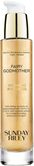
SUNDAY RILEY Fairy Godmother Shimmering Body Oil Gel
Works for
2 of 3 advertised claims delivered
Anti-agingUbiquinone, Tocopherol + 1 moreModerate evidence
“Minimizes signs of aging such as dullness, loss of firmness, fine lines, wrinkles and dark spotsImproves the look of damaged skinSoothes dry or tired skin”
This product contains ubiquinone. This ingredient help neutralize free radicals in skin. By doing so, they might be able to prevent early signs of aging (like fine lines and wrinkles), at least to some extent. These ingredients will not be able to "reverse" signs of aging.
MoisturizingVitis vinifera seed oil, Caprylic/capric triglyceride + 9 moreGood evidence
“This dry body oil instantly absorbs, leaving behind a subtle, tinted sparkle and smooth hydration.”
This product can help soften the skin and reduce its moisture loss with emollients and occlusives: caprylic/capric triglyceride, cocos nucifera oil.
Keep in mind that this product does not contain effective ingredients to attract water to the upper layer of the skin. This is why an additional product with humectants like glycerin or hyaluronic acid can be helpful (apply it before this product for the best results).
Evens skin toneTetrahexyldecyl ascorbateWeak evidence
“Minimizes signs of aging such as dullness, loss of firmness, fine lines, wrinkles and dark spotsImproves the look of damaged skinSoothes dry or tired skin”
Effective ingredients missing or their concentration is too low
Anti-oxidationNot advertised by the brand · Ubiquinone, Pimpinella anisum fruit extract + 8 moreStrong evidence
This product contains antioxidants (ubiquinone) that can help neutralize free radicals in skin. By doing so, they can lessen the damage the skin gets from the UV light (sun).
Can it cause trouble?
Irritancy7 strong irritants: Gardenia taitensis flower extract, Vanilla planifolia fruit extract + 5 more — patch-test recommendedHigh risk
Comedogenic2 ingredients rated 2 or more on the 0–5 pore-clogging scale2 flagged
User reviews
Be the first — your take helps the next person decide.
Ingredients
Filter by role to see what each ingredient is doing.
Neopentyl glycol diethylhexanoate~22–33%
- Irritation risk
- Low
Caprylic/capric triglyceride~6.2–9.3%
- Irritation risk
- Medium
A good mix of fatty acids that forms a protective layer on the skin. Improves the shelf life of products. Derived from coconut and glycerin
More about Caprylic/capric triglycerideCetyl ethylhexanoate~4.9–7.4%
- Irritation risk
- Medium
An emollient that helps soften the skin and creates a thicker product texture
More about Cetyl ethylhexanoateCaprylyl caprylate/caprate~3.8–5.7%
- Irritation risk
- Low
Helps soften the upper layer of the skin
More about Caprylyl caprylate/caprateVitis vinifera seed oil~2.9–4.3%
- Irritation risk
- Medium
A great emollient that can also have anti-oxidant properties
More about Vitis vinifera seed oilDextrin palmitate~1.9–2.9%
- Irritation risk
- Medium
Helps water and oil mix together
More about Dextrin palmitateSynthetic fluorphlogopite~1.6–2.4%
- Irritation risk
- Low
A mineral that is used as an optical filter (makes the skin looks nicer through light reflection) and to improve the texture of cosmetic products
More about Synthetic fluorphlogopiteTitanium dioxide~1.7–2.5%
- Irritation risk
- Low
Works as a UV filter when used in high concentrations. It is photostable and is effective mostly against the UVB light, with some protection in the UVA range. In small concentrations, used for its ability to improve the color of cosmetic products. Is usually well tolerated by the skin
More about Titanium dioxideTetrahexyldecyl ascorbate~1–1.5%
- Irritation risk
- Medium
Being a lipid soluble form of vitamin C, it is more stable than ascorbic acid, but still degrades quickly and needs to be stabilized in a formulation with another ingredient. It is claimed to penetrate skin better than pure vitamin C and have the the similar benefits, but solid studies of its effectiveness are lacking. Is likely to require a higher concentration in a product than pure vitamin C to be effective. It might be able to help reduce pore clogging.
More about Tetrahexyldecyl ascorbateCocos nucifera oil~0.9–1.35%
- Irritation risk
- Low
- Comedogenicity
- 3/5
An emollient. Found to be as effective as a moisturizer for dry skin as mineral oil. Could be comedogenic
More about Cocos nucifera oilGardenia taitensis flower extract~0.5–1.15%
Ubiquinone~0.4–1%
- Irritation risk
- Low
Coenzyme Q10. It helps neutralize free radicals in skin, improves skin hydration and might be helpful agains fine lines and wrinkles. It can be an allergen
More about UbiquinoneVanilla planifolia fruit extract~0.35–0.85%
- Irritation risk
- High
A plant extract used as a fragrance. Can be irritating
More about Vanilla planifolia fruit extractCocos nucifera fruit extract~0.4–0.9%
- Irritation risk
- Low
- Comedogenicity
- 3/5
An emollient. Found to be as effective as a moisturizer for dry skin as mineral oil. Could be comedogenic
More about Cocos nucifera fruit extractPrunus armeniaca fruit extract~0.3–0.7%
- Irritation risk
- Medium
A fruit extract that might have some antioxidant properties and might help attract water to the skin, but evidence of effectiveness is lacking
More about Prunus armeniaca fruit extractPimpinella anisum fruit extract~0.3–0.7%
- Irritation risk
- High
A plant extract that can have some anti-oxidant properties. Can be used as a fragrance and to help preserve product formulations. Can be irritating
More about Pimpinella anisum fruit extractRubus idaeus fruit extract~0.2–0.75%
- Irritation risk
- Medium
A fruit extract that might have some anti-oxidant properties but evidence of effectiveness in skin is lacking
More about Rubus idaeus fruit extractCucumis melo fruit extract~0.15–0.7%
- Irritation risk
- Medium
A fruit extract that might have some anti-oxidant properties
More about Cucumis melo fruit extractAnanas sativus fruit extract~0.15–0.65%
- Irritation risk
- Medium
A fruit extract that might help to attract water to the upper layer of the skin, but there is no evidence for any other benefits to the skin
More about Ananas sativus fruit extractCitrus aurantium dulcis peel extract~0.15–0.6%
Citrus grandis peel extract~0.15–0.55%
- Irritation risk
- High
An aromatic irritating plant extract that can cause photosensitivity in skin
More about Citrus grandis peel extractCitrus tangerina peel oil~0.15–0.6%
- Irritation risk
- High
Essential oil that can be irritating. Can lead to photosensitivity
More about Citrus tangerina peel oilCalendula officinalis flower extract~0.15–0.5%
- Irritation risk
- High
A plant extract that has some anti-oxidant and anti-bacterial properties. Can be irritating
More about Calendula officinalis flower extractCitrus limon peel oil~0.15–0.5%
Punica granatum fruit extract~0.15–0.6%
- Irritation risk
- High
A fruit extract that is used to add a fragrance to the product. It might have some antioxidant properties
More about Punica granatum fruit extractC12-15 alkyl benzoate~0.2–0.8%
- Irritation risk
- Low
Enhances the product texture and makes it more spreadable. Helps reduce water loss from the outer layer of skin. Extands the shelf life by preventing bacteria growth
More about C12-15 alkyl benzoatePentaerythrityl tetra-di-t-butyl hydroxyhydrocinnamate~0.15–0.6%
- Irritation risk
- Low
Used to increase stability of product formulations
More about Pentaerythrityl tetra-di-t-butyl hydroxyhydrocinnamateBenzotriazolyl dodecyl p-cresol~0.15–0.5%
- Irritation risk
- Medium
Used to stabilize the product formulation protecting it from sun light
More about Benzotriazolyl dodecyl p-cresolMica~0.15–0.6%
- Irritation risk
- Low
Creates an illusion of smoother and more radiant skin tone. Adds shimmer to the skin by reflecting light
More about MicaTin oxide~0.2–0.75%
- Irritation risk
- Low
A colorant that can add a pearl-like appearance to the formulation
More about Tin oxideIron oxides~0.1–0.35%
- Irritation risk
- Low
An umbrella term for the following three colorants: CI 77491, CI 77492, CI 77499. They might be able to offer some protection against visible light, but the degree of the protection is not clear
More about Iron oxidesTocopherol~0.1–0.35%
- Irritation risk
- Low
Pure form of vitamin E. Can help moisturise and protect the skin from free radicals. Often used to help stabilise other ingredients or the formula itself
More about TocopherolTocopheryl acetate~0.1–0.3%
- Irritation risk
- Medium
A more stable but less bio-available form of vitamin E compared to Tocopherol. Might help moisturize and protect the skin from free radicals, but mostly used in low concentrations to stabilize other ingredients.
More about Tocopheryl acetateTriethyl citrate~0.05–0.2%
Ingredient list view
Neopentyl glycol diethylhexanoate, Caprylic/capric triglyceride, Cetyl ethylhexanoate, Caprylyl caprylate/caprate, Vitis vinifera seed oil, Dextrin palmitate, Synthetic fluorphlogopite, Titanium dioxide, Tetrahexyldecyl ascorbate, Cocos nucifera oil, Gardenia taitensis flower extract, Ubiquinone, Vanilla planifolia fruit extract, Cocos nucifera fruit extract, Prunus armeniaca fruit extract, Pimpinella anisum fruit extract, Rubus idaeus fruit extract, Cucumis melo fruit extract, Ananas sativus fruit extract, Citrus aurantium dulcis peel extract, Citrus grandis peel extract, Citrus tangerina peel oil, Calendula officinalis flower extract, Citrus limon peel oil, Punica granatum fruit extract, C12-15 alkyl benzoate, Pentaerythrityl tetra-di-t-butyl hydroxyhydrocinnamate, Benzotriazolyl dodecyl p-cresol, Mica, Tin oxide, Iron oxides, Tocopherol, Tocopheryl acetate, Triethyl citrate
Compare prices
Retailers ranked by price — lowest first.

Sources cited in this review
Every concentration estimate and effectiveness label is anchored to one of these 17 studies and safety reviews.
- 1
- 2
- 3
- 4
- 5
- 6

Affiliate links · As an Amazon Associate, WIMJ earns from qualifying purchases.