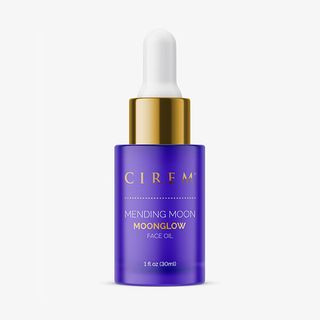
Cirem Skincare Mending Moon Moonglow Face Oil
Works for
1 of 2 advertised claims delivered
Moisturizing11 ingredients credited for this claimGood support
“Mending Moon Moonglow Face Oil”
This product can help soften the skin and reduce its moisture loss with emollients and occlusives: caprylic/capric triglyceride, squalane.
Keep in mind that this product does not contain effective ingredients to attract water to the upper layer of the skin. This is why an additional product with humectants like glycerin or hyaluronic acid can be helpful (apply it before this product for the best results).
Evens skin tone1 ingredient credited for this claimWeak support
“With a transformative, potent inclusion of 20% Vitamin C (THD Ascorbate), visibility of hyper-pigmentation, age spots, sun damage, and other imperfections are dramatically reduced.”
Effective ingredients missing or their concentration is too low
Can it cause trouble?
Irritancy2 strong irritants: Rosa moschata seed oil, ParfumMedium risk
Comedogenic1 ingredient rated 2 or more on the 0–5 pore-clogging scale1 flagged
User reviews
Be the first — your take helps the next person decide.
Ingredients
Filter by role to see what each ingredient is doing.
Opuntia ficus-indica seed oil~23–34%
- Irritation risk
- Medium
A plant oil that helps soften the upper layer of the skin and can support skin's barrier function due to its high content of linoleic acid. It also has anti-microbial properties
More about Opuntia ficus-indica seed oilEthylhexyl palmitate~6.6–9.9%
- Irritation risk
- Low
- Comedogenicity
- 3/5
An emollient that helps soften the skin and create a nice product texture
More about Ethylhexyl palmitateCaprylic/capric triglyceride~5.5–8.2%
- Irritation risk
- Medium
A good mix of fatty acids that forms a protective layer on the skin. Improves the shelf life of products. Derived from coconut and glycerin
More about Caprylic/capric triglycerideTetrahexyldecyl ascorbate~3.9–5.8%
- Irritation risk
- Medium
Being a lipid soluble form of vitamin C, it is more stable than ascorbic acid, but still degrades quickly and needs to be stabilized in a formulation with another ingredient. It is claimed to penetrate skin better than pure vitamin C and have the the similar benefits, but solid studies of its effectiveness are lacking. Is likely to require a higher concentration in a product than pure vitamin C to be effective. It might be able to help reduce pore clogging.
More about Tetrahexyldecyl ascorbateTocopheryl acetate~2.7–4.1%
- Irritation risk
- Medium
A more stable but less bio-available form of vitamin E compared to Tocopherol. Might help moisturize and protect the skin from free radicals, but mostly used in low concentrations to stabilize other ingredients.
More about Tocopheryl acetateArgania spinosa kernel oil~2.3–3.5%
- Irritation risk
- Medium
An emollient that helps soften the upper layer of the skin. Might have some weak anti-oxidant properties
More about Argania spinosa kernel oilPersea gratissima oil~1.7–2.6%
- Irritation risk
- Medium
An emollient that helps soften the skin and could be helpful in repairing its barrier function
More about Persea gratissima oilAloe barbadensis leaf extract~1.4–2.1%
- Irritation risk
- Medium
Traditionally used to treat sunburns, dermatitis and inflammation, but evidence for its effectiveness is lacking. The extract can contain humectants that help attract water into the skin
More about Aloe barbadensis leaf extractCanola oil~1.1–1.7%
- Irritation risk
- Medium
A plant oil that can help soften the upper layer of the skin
More about Canola oilAvena sativa kernel extract~0.95–1.45%
- Irritation risk
- Low
An effective moisturizing and skin barrier repair ingredient. Helps calm down inflammation and has some anti-oxidant properties
More about Avena sativa kernel extractRosa moschata seed oil~0.6–1.4%
- Irritation risk
- High
Squalane~0.55–1.25%
- Irritation risk
- Low
An oil naturally present in skin. Works as an emollient to soften the skin and form a protective layer on its surface without a greasy feeling.
More about SqualaneOpuntia ficus-indica seed oil~0.45–1%
- Irritation risk
- Medium
A plant oil that helps soften the upper layer of the skin and can support skin's barrier function due to its high content of linoleic acid. It also has anti-microbial properties
More about Opuntia ficus-indica seed oilPinus sibirica seed oil~0.3–0.7%
- Irritation risk
- Low
Perilla ocymoides seed oil~0.15–0.65%
- Irritation risk
- High
A plant extract that works as an emollient. It might help neutralize free radicals in skin but solid research is lacking. Contains some volatile compounds and could be irritating
More about Perilla ocymoides seed oilPhenoxyethanol~0.1–0.45%
- Irritation risk
- Low
A preservative. It helps prevent bacterial growth in cosmetic products
More about PhenoxyethanolCaprylyl glycol~0.15–0.6%
- Irritation risk
- Medium
Helps preserve products and creates a nice product texture
More about Caprylyl glycolChlorphenesin~0.16–0.32%
Parfum~0.05–0.3%
- Irritation risk
- High
An aromatic blend of unspecified and possibly irritating ingredients
More about ParfumIngredient list view
Opuntia ficus-indica seed oil, Ethylhexyl palmitate, Caprylic/capric triglyceride, Tetrahexyldecyl ascorbate, Tocopheryl acetate, Argania spinosa kernel oil, Persea gratissima oil, Aloe barbadensis leaf extract, Canola oil, Avena sativa kernel extract, Rosa moschata seed oil, Squalane, Opuntia ficus-indica seed oil, Pinus sibirica seed oil, Perilla ocymoides seed oil, Phenoxyethanol, Caprylyl glycol, Chlorphenesin, Parfum
Compare prices
Retailers ranked by price — lowest first.
Affiliate links · prices updated regularly
Sources cited in this review
Every concentration estimate and effectiveness label is anchored to one of these 7 studies and safety reviews.
- 1
- 2Allergic contact dermatitis due to Opuntia ficus‐indica var. sabotenpubmed.ncbi.nlm.nih.gov
- 3
- 4
- 5
- 6Canola Oilsciencedirect.com

Affiliate links · As an Amazon Associate, WIMJ earns from qualifying purchases.