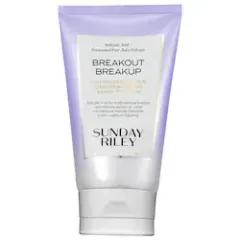
Works for:
based on ingredients and %- Anti-blemish
- Cleansing
- Exfoliation
Can it cause trouble?
- Irritation risk: medium
- Comedogenic risk ingredients: 0
Key actives


Works for
Anti-blemish
What does the product description say?
Breakout Breakup Salicylic Acid Cleanser for Blemish-Prone Skin
Source: Sephora
This product can help reduce breakouts and clogged pores because it contains the following ingredient: salicylic acid. This ingredient is used for treating acne and can have a noticeable effect.
Used for skin exfoliation. It has an anti-inflammatory and anti-bacterial effect, helps to unclog pores, prevent blemishes and speed up healing of the existing ones. Sometimes referred to as a BHA (beta-hydroxy acid)
Cleansing
What does the product description say?
Breakout Breakup Salicylic Acid Cleanser for Blemish-Prone Skin
Source: Sephora
This product works by removing dirt and oil from the surface of the skin. It uses a combination of mild cleansing agents (capryloyl glycine, caprylyl/capryl glucoside, cocamidopropyl dimethylamine, cocamidopropyl hydroxysultaine, coco-glucoside, decyl glucoside, disodium laureth sulfosuccinate, peg-120 methyl glucose dioleate, sodium hydroxypropylsulfonate laurylglucoside crosspolymer) and should be able to cleanse the skin gently. Still keep in mind that any cleansing can disrupt the skin barrier, and most people do not need to cleanse their skin more than once per day.
Even though this formulation is mild, the following cleansing agents could trigger an irritation or allergy for some people: cocamidopropyl dimethylamine, coco-glucoside, decyl glucoside
Helps oil and water mix together, preserve cosmetic products, and attract water to the upper layer of the skin
Helps oil and water mix together. Can be used as a cleansing agent
Helps oil and water mix together. Can work as a cleansing agent. Can be irritating
Used as a cleansing agent. Helps water and oil mix together
Used as a cleansing agent (surfactant) in cleansers. Helps water and oil mix together in lotions. Can be irritating
Helps oil and water mix together. Can be irritating
Exfoliation
What does the product description say?
Fermented Pear Juice: Rich in lactic acid, gently exfoliates to smooth texture and brighten skin.
Source: Sephora
This product can help exfoliate the skin. In other words, it helps break down the bonds between dead cells on the surface of the skin and speed up the skin turnover. Skin often appears softer and brighter after exfoliation, but overdoing it can result in disrupted skin barrier. The following ingredient is doing the exfoliating job in this product: salicylic acid.
Used for skin exfoliation. It has an anti-inflammatory and anti-bacterial effect, helps to unclog pores, prevent blemishes and speed up healing of the existing ones. Sometimes referred to as a BHA (beta-hydroxy acid)
How honest is this product?
| Promise | Can it deliver? |
|---|---|
| Cleansing | |
| Exfoliation | |
| Anti-blemish |
Total Promises Fulfilled score: 100/100.
We receive a small commission for purchases made through these links at no cost for you. Thank you for your support! Learn more
Potential irritants
Comedogenic ingredients
No comedogenic ingredients detected
User reviews (0)
Averages from community submissions.
No reviews yet for this product.
Be the first to share your experience!
Tried this product?
Help capture what the ingredient list can't—texture, finish, pilling, scent, and more. Answer what you can, skip the rest.
Takes ~30 seconds.
Reviews are shown in aggregate. No personal details.
| Product | Similarity | Price | Irritancy |
|---|---|---|---|
 SUNDAY RILEY Breakout Breakup Salicylic Acid Cleanser for Blemish-Prone Skin | Current | $29.75 | |
 OleHenriksen Daily D-Clog Pore-Clearing Salicylic Acid Cleanser | 88% | ≈ $34.00 | |
 PCA SKIN Acne Control Prebiotic Gel Cleanser 7 | 86% | $46.00 | |
 VERSO Acne Deep Cleanse | 86% | ≈ $30.75 | |
 Avène Cleanance Acne Medicated Clearing Gel Cleanser | 85% | - | |
Eau Thermale Avene Cleanance Acne Cleanser | 85% | ≈ $18.68 |
Key Actives
Used for skin exfoliation. It has an anti-inflammatory and anti-bacterial effect, helps to unclog pores, prevent blemishes and speed up healing of the existing ones. Sometimes referred to as a BHA (beta-hydroxy acid)
A fermentation product created by bacteria Lactobacillus. The fermented product has anti-bacterial properties and might be helpful in calming down inflammation, but studies are lacking. Helps attract water to the upper layer of the skin. Can be used as a preservative
Helps oil and water mix together, preserve cosmetic products, and attract water to the upper layer of the skin
Helps attract water to the upper layer of the skin
One of the best moisturizing ingredients. Naturally present in skin. It attracts water to the upper layer of the skin working as a humectant
Used as a cleansing agent. Helps water and oil mix together
Helps oil and water mix together. Can work as a cleansing agent. Can be irritating
Used as a cleansing agent (surfactant) in cleansers. Helps water and oil mix together in lotions. Can be irritating
Helps oil and water mix together. Can be used as a cleansing agent
Helps oil and water mix together. Can be irritating
Helps attract water to the upper layer of the skin and repair the skin barrier function
Potential irritants
Helps oil and water mix together. Can work as a cleansing agent. Can be irritating
Used as a cleansing agent (surfactant) in cleansers. Helps water and oil mix together in lotions. Can be irritating
A plant extract that can help calm down inflammation in skin. Can, however, itself be irritating
Used for skin exfoliation. It has an anti-inflammatory and anti-bacterial effect, helps to unclog pores, prevent blemishes and speed up healing of the existing ones. Sometimes referred to as a BHA (beta-hydroxy acid)
A drying alcohol. Can increase skin's sensitivity and cause dryness and irritation
Used as a cleansing agent. Helps water and oil mix together
Helps oil and water mix together. Can be used as a cleansing agent
Helps preserve products and creates a nice product texture
Helps attract water to the upper layer of the skin
Can have some moisturizing properties due to its sugar content
Used to improve stability of the formulation
A fruit extract that might have some anti-oxidant properties but evidence of effectiveness in skin is lacking
Used to improve the product consistency and stabilize formulations
Can work as an exfoliant but is typically used to adjust the product pH
Comedogenic ingredients
We couldn't find any comedogenic ingredients in this product
All ingredients
One of the best moisturizing ingredients. Naturally present in skin. It attracts water to the upper layer of the skin working as a humectant
Used as a cleansing agent. Helps water and oil mix together
Helps water and oil mix together and can help attract water to the upper layer of the skin
Helps to attract water to the upper layer of the skin. Can add sweet taste to lip products
Helps oil and water mix together, preserve cosmetic products, and attract water to the upper layer of the skin
Helps oil and water mix together. Can work as a cleansing agent. Can be irritating
Used as a cleansing agent (surfactant) in cleansers. Helps water and oil mix together in lotions. Can be irritating
Used to create a nice product texture and help delivery of other ingredients. Might be somewhat helpful in attracting water to the upper layer of the skin
Helps oil and water mix together. Can be used as a cleansing agent
A plant extract that can help calm down inflammation in skin. Can, however, itself be irritating
Used for skin exfoliation. It has an anti-inflammatory and anti-bacterial effect, helps to unclog pores, prevent blemishes and speed up healing of the existing ones. Sometimes referred to as a BHA (beta-hydroxy acid)
Helps preserve products and creates a nice product texture
Helps attract water to the upper layer of the skin
A fermentation product created by bacteria Lactobacillus. The fermented product has anti-bacterial properties and might be helpful in calming down inflammation, but studies are lacking. Helps attract water to the upper layer of the skin. Can be used as a preservative
Can have some moisturizing properties due to its sugar content
Used to improve stability of the formulation
A fruit extract that might have some anti-oxidant properties but evidence of effectiveness in skin is lacking
Used to stabilize mixtures of oil and water, and create thicker, gel-like product textures
Helps attract water to the upper layer of the skin and repair the skin barrier function
Helps reduce the irritating effect of surfactants
Used to improve the product consistency and stabilize formulations
A preservative. It helps prevent bacterial growth in cosmetic products
Can work as an exfoliant but is typically used to adjust the product pH
A drying alcohol. Can increase skin's sensitivity and cause dryness and irritation
Ingredient list view
Water, Glycerin, Sodium hydroxypropylsulfonate laurylglucoside crosspolymer, Disodium laureth sulfosuccinate, Cocamidopropyl hydroxysultaine, Maltooligosyl glucoside, Peg-120 methyl glucose dioleate, Hydrogenated starch hydrolysate, Capryloyl glycine, Cocamidopropyl dimethylamine, Coco-glucoside, Butylene glycol, Lactobacillus/pear juice ferment filtrate, Caprylyl/capryl glucoside, Hamamelis virginiana leaf extract, Salicylic acid, Caprylyl glycol, Decyl glucoside, Malus domestica fruit extract, Lactobacillus ferment, Pyrus communis fruit extract, Lavandula angustifolia flower water, Trisodium ethylenediamine disuccinate, Musa sapientum fruit extract, Rubus idaeus fruit extract, Sodium chloride, Xylitylglucoside, Hydroxypropyl guar hydroxypropyltrimonium chloride, Sodium sulfate, Phenoxyethanol, Citric acid, Sodium hydroxide, Isopropyl alcohol, Sodium benzoate, Potassium sorbate
- Glycerol and the skin: holistic approach to its origin and functions
- Safety assessment of hydrogenated starch hydrolysates
- Occupational contact allergy to cocamidopropyl betaine and its impurities
- In Vitro Assessment of Skin Irritation Potential of Surfactant-based Formulations by Using a 3-D Skin Reconstructed Tissue Model and Cytokine Response
- Allergen of the Year—Alkyl Glucoside
- Salicylic acid as a peeling agent: a comprehensive review
- Beta Hydroxy Acids
- A review of toxicity from topical salicylic acid preparations
- Glycolic Acid Peels Versus Salicylic–Mandelic Acid Peels in Active Acne Vulgaris and Post‐Acne Scarring and Hyperpigmentation: A Comparative Study
- Ecofriendly surfactant is allergen of the year
- The effect of probiotics on immune regulation, acne, and photoaging
- Comparison of clinical and histological effects between lactobacillus-fermented Chamaecyparis obtusa and tea tree oil for the treatment of acne: an eight-week double-blind randomized controlled split-face study
- Use of Probiotics for Dermal Applications
- Amended Safety Assessment of Sodium Sulfate as Used in Cosmetics