Works for:
based on ingredients and %- Exfoliation
- Anti-blemish
- Cleansing
Can it cause trouble?
- Irritation risk: low
- Comedogenic risk ingredients: 0
Key actives


Works for
Anti-blemish
What does the product description say?
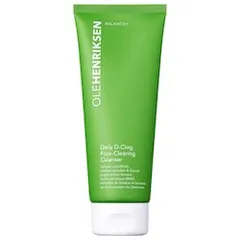
What it is: A plush, visibly pore-clearing, milky gel cleanser with salicylic acid to clear blemishes and soothe skin.
Source: Sephora CA
This product can help reduce breakouts and clogged pores because it contains the following ingredient: salicylic acid. This ingredient is used for treating acne and can have a noticeable effect.
In addition, this product contains betaine salicylate. It can help in reducing blemishes, even though it is less effective.
Exfoliating acid, a "relative" of salicylic acid
Used for skin exfoliation. It has an anti-inflammatory and anti-bacterial effect, helps to unclog pores, prevent blemishes and speed up healing of the existing ones. Sometimes referred to as a BHA (beta-hydroxy acid)
Cleansing
What does the product description say?
Daily D-Clog Pore-Clearing Salicylic Acid Cleanser
Source: Sephora CA
This product works by removing dirt and oil from the surface of the skin. It uses a combination of mild cleansing agents (cocamidopropyl hydroxysultaine, decyl glucoside, lauryl glucoside, sodium c14-16 olefin sulfonate, sodium cocoyl isethionate, sodium methyl cocoyl taurate) and should be able to cleanse the skin gently. Still keep in mind that any cleansing can disrupt the skin barrier, and most people do not need to cleanse their skin more than once per day.
Even though this formulation is mild, the following cleansing agents could trigger an irritation or allergy for some people: decyl glucoside, sodium c14-16 olefin sulfonate, sodium methyl cocoyl taurate
Helps oil and water mix together. Can be used as cleansing agent
Used as a cleansing agent. Helps water and oil mix together
Helps oil and water mix together. Can be irritating
Helps oil and water mix together
Helps oil and water mix together and used as a cleansing agent. Can be irritating and is better avoided for sensitive skin
Helps water and oil mix together. Can be used as a cleansing agent
Exfoliation
What does the product description say?
- Salicylic Acid (BHA) and Betaine Salicylate: Exfoliates skin and refines pores.
Source: Sephora CA
This product can help exfoliate the skin. In other words, it helps break down the bonds between dead cells on the surface of the skin and speed up the skin turnover. Skin often appears softer and brighter after exfoliation, but overdoing it can result in disrupted skin barrier. The following ingredient is doing the exfoliating job in this product: betaine salicylate, salicylic acid.
Used for skin exfoliation. It has an anti-inflammatory and anti-bacterial effect, helps to unclog pores, prevent blemishes and speed up healing of the existing ones. Sometimes referred to as a BHA (beta-hydroxy acid)
Exfoliating acid, a "relative" of salicylic acid
An exfoliating and moisturizing alpha-hydroxy acid (AHA). Typically causes less irritation than other AHAs, for example, glycolic acid. At high concentrations (about 15%), lactic acid can help reduce lines and wrinkles. Recent studies show that lactic acid can support the "good" bacteria living on skin's surface (healthy skin microbiome)
How honest is this product?
| Promise | Can it deliver? |
|---|---|
| Cleansing | |
| Exfoliation | |
| Anti-blemish |
Total Promises Fulfilled score: 100/100.
We receive a small commission for purchases made through these links at no cost for you. Thank you for your support! Learn more
Affiliate link · supports WIMJ at no cost to you
Potential irritants
Comedogenic ingredients
No comedogenic ingredients detected
User reviews (0)
Averages from community submissions.
No reviews yet for this product.
Be the first to share your experience!
Tried this product?
Help capture what the ingredient list can't—texture, finish, pilling, scent, and more. Answer what you can, skip the rest.
Takes ~30 seconds.
Reviews are shown in aggregate. No personal details.
| Product | Similarity | Price | Irritancy |
|---|---|---|---|
 OleHenriksen Daily D-Clog Pore-Clearing Salicylic Acid Cleanser | Current | ≈ $33.39 | |
Eau Thermale Avene Cleanance Acne Cleanser | 85% | ≈ $16.30 | |
Peach Slices Acne Clarifying Cleanser | 85% | $10.99 | |
 Avène Cleanance Acne Medicated Clearing Gel Cleanser | 85% | $21.00 | |
 Carbon Theory SALICYLIC ACID EXFOLIATING GEL CLEANSER | 83% | $9.99 | |
 The Elements Purifying Gel Cleanser | 81% | ≈ $10.58 |
Key Actives
Used for skin exfoliation. It has an anti-inflammatory and anti-bacterial effect, helps to unclog pores, prevent blemishes and speed up healing of the existing ones. Sometimes referred to as a BHA (beta-hydroxy acid)
A fermentation product created by bacteria Lactobacillus. The fermented product has anti-bacterial properties and might be helpful in calming down inflammation, but studies are lacking. Helps attract water to the upper layer of the skin. Can be used as a preservative
Exfoliating acid, a "relative" of salicylic acid
Helps oil and water mix together and used as a cleansing agent. Can be irritating and is better avoided for sensitive skin
Used as a cleansing agent. Helps water and oil mix together
Helps water and oil mix together. Can be used as a cleansing agent
One of the best moisturizing ingredients. Naturally present in skin. It attracts water to the upper layer of the skin working as a humectant
Helps attract water to the upper layer of the skin and improves the product texture
Helps oil and water mix together. Can be irritating
Helps oil and water mix together. Can be used as cleansing agent
Potential irritants
Helps oil and water mix together and used as a cleansing agent. Can be irritating and is better avoided for sensitive skin
Used for skin exfoliation. It has an anti-inflammatory and anti-bacterial effect, helps to unclog pores, prevent blemishes and speed up healing of the existing ones. Sometimes referred to as a BHA (beta-hydroxy acid)
Helps oil and water mix together. Can be used as cleansing agent
Used as a cleansing agent. Helps water and oil mix together
Berry extract that might have some anti-oxidant effect
Helps water and oil mix together. Can be used as a cleansing agent
Used to stabilize product formulation, help create an even product layer over skin (for example, in sunscreen) and create a thicker product consistency
Might be somewhat helpful in reducing hyperpigmentation and neutralizing free radicals but its typical concentration in a product is too low for having an effect
Can work as an exfoliant but is typically used to adjust the product pH
An exfoliating and moisturizing alpha-hydroxy acid (AHA). Typically causes less irritation than other AHAs, for example, glycolic acid. At high concentrations (about 15%), lactic acid can help reduce lines and wrinkles. Recent studies show that lactic acid can support the "good" bacteria living on skin's surface (healthy skin microbiome)
Helps preserve products and creates a nice product texture
Comedogenic ingredients
We couldn't find any comedogenic ingredients in this product
All ingredients
Helps oil and water mix together and used as a cleansing agent. Can be irritating and is better avoided for sensitive skin
Used as a cleansing agent. Helps water and oil mix together
Berry extract that might have some anti-oxidant effect
Acts as a solvent for other ingredients. Speeds up the absorption of other ingredients into the skin
Helps water and oil mix together. Can be used as a cleansing agent
One of the best moisturizing ingredients. Naturally present in skin. It attracts water to the upper layer of the skin working as a humectant
Used to stabilize product formulation, help create an even product layer over skin (for example, in sunscreen) and create a thicker product consistency
Used to stabilize mixtures of oil and water, and create thicker, gel-like product textures
Used for skin exfoliation. It has an anti-inflammatory and anti-bacterial effect, helps to unclog pores, prevent blemishes and speed up healing of the existing ones. Sometimes referred to as a BHA (beta-hydroxy acid)
A fermentation product created by bacteria Lactobacillus. The fermented product has anti-bacterial properties and might be helpful in calming down inflammation, but studies are lacking. Helps attract water to the upper layer of the skin. Can be used as a preservative
Might be somewhat helpful in reducing hyperpigmentation and neutralizing free radicals but its typical concentration in a product is too low for having an effect
Helps attract water to the upper layer of the skin and improves the product texture
Helps reduce the irritating effect of surfactants
Helps oil and water mix together. Can be used as cleansing agent
Can work as an exfoliant but is typically used to adjust the product pH
An exfoliating and moisturizing alpha-hydroxy acid (AHA). Typically causes less irritation than other AHAs, for example, glycolic acid. At high concentrations (about 15%), lactic acid can help reduce lines and wrinkles. Recent studies show that lactic acid can support the "good" bacteria living on skin's surface (healthy skin microbiome)
Helps preserve products and creates a nice product texture
A preservative. It helps prevent bacterial growth in cosmetic products
Works as a UV filter when used in high concentrations. It is photostable and is effective mostly against the UVB light, with some protection in the UVA range. In small concentrations, used for its ability to improve the color of cosmetic products. Is usually well tolerated by the skin
Ingredient list view
Water, Sodium c14-16 olefin sulfonate, Cocamidopropyl hydroxysultaine, Juniperus communis fruit extract, Propanediol, Sodium cocoyl isethionate, Glycerin, Acrylates copolymer, Sodium chloride, Salicylic acid, Betaine salicylate, Lactobacillus/salix purpurea bark ferment extract, Lactobacillus ferment, Cucumis sativus fruit extract, Betaine, Hydroxypropyl guar hydroxypropyltrimonium chloride, Decyl glucoside, Lauryl glucoside, Sodium methyl cocoyl taurate, Citric acid, Lactic acid, Sodium hydroxide, Tetrasodium glutamate diacetate, Caprylyl glycol, Sodium benzoate, Phenoxyethanol, Titanium dioxide
- Final Report On the Safety Assessment of Sodium Alpha-Olefin Sulfonates
- Final Report on the Safety Assessment of Sodium Cocoyl Isethionate
- Glycerol and the skin: holistic approach to its origin and functions
- Final Report on the Safety Assessment of Acrylates Copolymer and 33 Related Cosmetic Ingredients
- Amended Safety Assessment of Acrylates Copolymers as Used in Cosmetics
- Salicylic acid as a peeling agent: a comprehensive review
- Beta Hydroxy Acids
- A review of toxicity from topical salicylic acid preparations
- Glycolic Acid Peels Versus Salicylic–Mandelic Acid Peels in Active Acne Vulgaris and Post‐Acne Scarring and Hyperpigmentation: A Comparative Study
- The effect of probiotics on immune regulation, acne, and photoaging
- Comparison of clinical and histological effects between lactobacillus-fermented Chamaecyparis obtusa and tea tree oil for the treatment of acne: an eight-week double-blind randomized controlled split-face study
- Use of Probiotics for Dermal Applications
- Ecofriendly surfactant is allergen of the year
- Safety Assessment of Alkyl Taurate Amides and Taurate Salts as Used in Cosmetics
- Epidermal and dermal effects of topical lactic acid
- Dual Effects of Alpha-Hydroxy Acids on the Skin