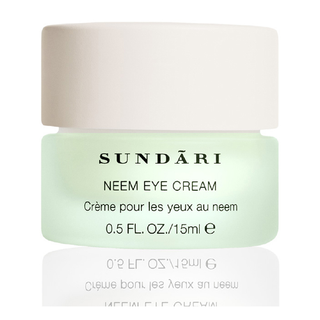
Works for
1 of 2 advertised claims delivered
MoisturizingSesamum indicum seed oil, Squalane + 16 moreGood evidence
“Increases skin hydration around the eyes by 63%”
This product can help improve hydration of the skin with the two types of ingredients.
The first type is called “humectants”:
these ingredients help attract water.
When humectants are on the surface of the skin, they “pull in” the moisture from the outside environment, or from
within deeper layers of the skin. The following ingredients in this product do the job:
glycerin.
This product also contains ingredients called “occlusives”. They help reduce the speed with which our skin loses moisture to the outside environment. These ingredients also help soften the upper layer of the skin, so it feels less tight and nicer to the touch. The following ingredients in this product do the job: chondrus crispus extract, helianthus annuus seed oil.
Anti-agingDipalmitoyl hydroxyproline, Ascorbyl palmitate + 3 moreLimited evidence
“Centella Asiatica, a natural anti-oxidant helps reduce the appearance of fine lines and wrinkles.”
This product does not contain ingredients that are able to reduce fine lines and wrinkles or help with skin elasticity, but it can improve the look of the skin temporarily through moisturization. Well-moisturized skin might also be able to repair the sun damage better.This ingredient - dipalmitoyl hydroxyproline - could be helpful for preventing or repairing signs of aging in theory, but there is no evidence that it actually works.
This ingredient emblica officinalis fruit extract might be able to help neutralize free radicals in skin and help it fight off some of the sun damage.
Anti-oxidationNot advertised by the brand · Emblica officinalis fruit extract, Dipalmitoyl hydroxyproline + 9 moreModerate evidence
This product contains antioxidants (emblica officinalis fruit extract) that might be able to help neutralize free radicals in skin to lessen the damage it gets from the UV light (sun). There is not enough evidence to confirm their effectiveness in skin though.
Can it cause trouble?
Irritancy6 strong irritants: Rosa damascena flower water, Santalum spicata wood oil + 4 more — patch-test recommendedHigh risk
Comedogenic2 ingredients rated 2 or more on the 0–5 pore-clogging scale2 flagged
User reviews
Be the first — your take helps the next person decide.
Ingredients
Filter by role to see what each ingredient is doing.
Water~45–55%
Prunus armeniaca kernel oil~4.4–5.4%
- Irritation risk
- Medium
An emollient that helps soften the skin
More about Prunus armeniaca kernel oilSesamum indicum seed oil~4.1–5%
- Irritation risk
- Low
A good moisturizing plant oil. Due to the high linoleic acid content, it helps soften the upper layer of the skin, reduce water loss and support skin barrier function
More about Sesamum indicum seed oilGlycerin~3–3.6%
- Irritation risk
- Low
One of the best moisturizing ingredients. Naturally present in skin. It attracts water to the upper layer of the skin working as a humectant
More about GlycerinCetearyl alcohol~2.3–2.8%
- Irritation risk
- Low
- Comedogenicity
- 2/5
A non-drying alcohol. Works as an emollient. Helps water and oil mix together and creates a nice product texture
More about Cetearyl alcoholPopulus tremuloides bark extract~1.9–2.3%
- Irritation risk
- Low
Squalane~1.7–2.1%
- Irritation risk
- Low
An oil naturally present in skin. Works as an emollient to soften the skin and form a protective layer on its surface without a greasy feeling.
More about SqualaneRosa damascena flower water~1.4–1.7%
- Irritation risk
- High
Used to add a nice rose smell to the product. Might help attract water to the upper layer of the skin and have some anti-oxidant effect. Can be irritating
More about Rosa damascena flower waterArachidyl alcohol~1.2–1.5%
- Irritation risk
- Low
Used to soften the upper layer of the skin and create a thicker product consistency
More about Arachidyl alcoholDipalmitoyl hydroxyproline~0.95–1.15%
- Irritation risk
- Low
Is claimed to stimulate collagen and elastin production, as well as work as an anti-oxidant. There is however not enough evidence for its effectiveness
More about Dipalmitoyl hydroxyprolineMangifera indica seed butter~0.7–1.05%
- Irritation risk
- Low
Helps to soften the upper layer of the skin and might have some anti-oxidant effect
More about Mangifera indica seed butterBehenyl alcohol~0.65–1%
- Irritation risk
- Low
Non-drying alcohol that helps water and oil mix together. Also serves as an emollient
More about Behenyl alcoholCetearyl glucoside~0.55–0.85%
- Irritation risk
- Medium
Helps water and oil in the product mix well together and improves product texture
More about Cetearyl glucosideTerminalia bellerica fruit extract~0.55–0.8%
- Irritation risk
- Low
Emblica officinalis fruit extract~0.45–0.7%
- Irritation risk
- Medium
A plant extract that might be helping in neutralizing free radicals in skin. It could help reduce hyperpigmentation. There is some research to confirm its effectiveness in skin
More about Emblica officinalis fruit extractTerminalia chebula fruit extract~0.45–0.7%
- Irritation risk
- Low
Arachidyl glucoside~0.5–0.75%
P-anisic acid~0.45–0.65%
- Irritation risk
- High
Helps preserve products. Can mask unpleasant smell. Could be irritating
More about P-anisic acidAzadirachta indica leaf extract~0.35–0.65%
- Irritation risk
- Low
Phospholipids~0.35–0.65%
- Irritation risk
- Low
Emollients that are naturaly present in skin. In addition, they help water and oil mix together in the product
More about PhospholipidsXanthan gum~0.35–0.6%
- Irritation risk
- Low
Used to create a thicker product consistency
More about Xanthan gumSantalum spicata wood oil~0.3–0.5%
- Irritation risk
- High
Rosa damascena flower oil~0.25–0.5%
- Irritation risk
- High
Used as a fragrance. Can be irritating
More about Rosa damascena flower oilOryza sativa extract~0.25–0.5%
- Irritation risk
- Low
A grain extract that helps to create a thicker product consistency. It might have some anti-oxidant properties and help attract water to the upper layer of the skin
More about Oryza sativa extractChondrus crispus extract~0.25–0.5%
- Irritation risk
- Low
- Comedogenicity
- 3/5
Red algae extract that helps attract water to the upper layer of the skin and create a nicer product consistency
More about Chondrus crispus extractCitric acid~0.25–0.4%
- Irritation risk
- Medium
Can work as an exfoliant but is typically used to adjust the product pH
More about Citric acidAloe barbadensis leaf juice~0.2–0.4%
- Irritation risk
- Medium
Traditionally used to treat sunburns, dermatitis and inflammation, but evidence for its effectiveness is lacking. The extract can contain humectants that help attract water into the skin
More about Aloe barbadensis leaf juiceGlycoproteins~0.2–0.35%
Pelargonium graveolens flower oil~0.2–0.35%
- Irritation risk
- High
An essential oil. Can be irritating. Can become an allergen with oxidation
More about Pelargonium graveolens flower oilRosmarinus officinalis leaf extract~0.15–0.25%
- Irritation risk
- High
Can be helpful in reducing inflammation in skin, including inflamed acne. It can be irritating
More about Rosmarinus officinalis leaf extractCentella asiatica extract~0.2–0.4%
- Irritation risk
- Medium
A plant extract that has been shown to be able to reduce inflammation in skin, support restoration of skin barrier function, as well as support collagen production. Contains active compounds called centelloids: asiaticoside, madecasosside, asiatic acid and madecassic acid. Might be helpful in preventing stretch marks. It can be itself be irritating though.
More about Centella asiatica extractTocopheryl acetate~0.15–0.25%
- Irritation risk
- Medium
A more stable but less bio-available form of vitamin E compared to Tocopherol. Might help moisturize and protect the skin from free radicals, but mostly used in low concentrations to stabilize other ingredients.
More about Tocopheryl acetateHelianthus annuus seed oil~0.15–0.25%
- Irritation risk
- Low
A great emollient due to its high linoleic acid content. One of the most effective plant oils in helping skin hydration and repairing skin barrier function
More about Helianthus annuus seed oilAscorbyl palmitate~0.05–0.1%
- Irritation risk
- Medium
Being a lipid soluble form of vitamin C, it is more stable and can penetrate the skin better than L-Ascorbic acid. It is effective in protecting the skin from free radicals, as well as evening the skin tone, but is less effective in stimulating collagen production compared to L-Ascorbic acid.
More about Ascorbyl palmitateRetinyl palmitate~0.05–0.1%
- Irritation risk
- High
Three steps removed from the active form of vitamin A - retinoic acid. To have an effect in the skin, it first needs to be converted twice to become the retinoic acid. This means it is less potent than retinol, but could also be less irritating. Once converted to the retinoic acid in the skin, it helps against all signs of aging, improves skin cell turnover and helps fight blemishes and clogged pores. However, in many cosmetic formulations, it is used in a concentration that is too low to have the full effect
More about Retinyl palmitateIngredient list view
Water, Prunus armeniaca kernel oil, Sesamum indicum seed oil, Glycerin, Cetearyl alcohol, Populus tremuloides bark extract, Squalane, Rosa damascena flower water, Arachidyl alcohol, Dipalmitoyl hydroxyproline, Mangifera indica seed butter, Behenyl alcohol, Cetearyl glucoside, Terminalia bellerica fruit extract, Emblica officinalis fruit extract, Terminalia chebula fruit extract, Arachidyl glucoside, P-anisic acid, Azadirachta indica leaf extract, Phospholipids, Xanthan gum, Santalum spicata wood oil, Rosa damascena flower oil, Oryza sativa extract, Chondrus crispus extract, Citric acid, Aloe barbadensis leaf juice, Glycoproteins, Pelargonium graveolens flower oil, Rosmarinus officinalis leaf extract, Centella asiatica extract, Tocopheryl acetate, Helianthus annuus seed oil, Ascorbyl palmitate, Retinyl palmitate
Compare prices
Retailers ranked by price — lowest first.
Affiliate links · prices updated regularly · As an Amazon Associate, WIMJ earns from qualifying purchases.
Sources cited in this review
Every concentration estimate and effectiveness label is anchored to one of these 27 studies and safety reviews.
- 1
- 2Triglyceride composition of Sesamum indicum seed oilonlinelibrary.wiley.com
- 3
- 4
- 5
- 6Extraction and Characteristics of Seed Kernel Oil from Mangopdfs.semanticscholar.org

Affiliate links · As an Amazon Associate, WIMJ earns from qualifying purchases.