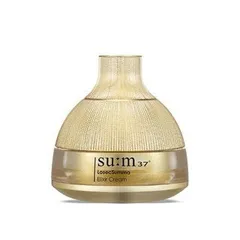

Based on the ingredients included, "su: m37 - LosecSumma Elixir Cream" works well for moisturizing the skin. To work well, any moisturizer needs to include a combination of water-binding and emollient ingredients. Su: m37 - LosecSumma Elixir Cream ticks this box. Panthenol, alanyl glutamine, betaine, biosaccharide gum-1 and glycerin in this product (humectants) attract water molecules to the upper layer of the skin (the water comes from the outside air or from the deeper layers of the skin if the air is dry). Emollients in this formulation (ceramide np, palmitoyl tetrapeptide-7, palmitoyl tripeptide-1, cholesterol and grifola frondosa fruiting body extract) help to reduce the moisture loss from the skin. They also soften the skin surface and relieve the feeling of dryness and tightness.
There are quite a few common irritants in this product, including ingredients without particular skin benefits. We would not recommend it for sensitive skin. We assess the overall irritancy of this moisturizer to be high. For a detailed overview of all potential irritants: click here
You can see the detailed formula review with the breakdown of all actives in the product and the full ingredient list with estimated concentrations in the tables below.
The product retails for 247.60$ in the United States.
For a detailed price comparison: click here.
Its cream texture leaves the skin healthier and youthful.
Source: Yesstyle
This product can help reduce and prevent fine lines and wrinkles, improve skin elasticity and firmness because it contains adenosine.
These ingredients in the product can also be helpful, even though there is less evidence for their effectiveness: alanyl glutamine, palmitoyl tetrapeptide-7, palmitoyl tripeptide-1.
Keep in mind that it typically takes at least 6 weeks to notice any results because the changes that are needed to improve fine lines and elasticity happen in the deeper layers of the skin. No topical anti-aging product can “erase” wrinkles or fully reverse signs of aging.
Might help improve cell turnover and reduce inflammation in skin. One study shows that the ingredients might be able to help reduce dynamic wrinkles (for example, in the corners of the eyes or on the forehead)
A type of peptide. Peptides are excellent moisturizers and might be able support collagen production reducing fine lines and wrinkles
Helps attract water to the upper layer of the skin, calm down inflammation and irritation, restore the barrier function and support wound healing. It can be helpful in reducing fine lines and wrinkles
Is helpful in restoring skin barrier function supporting its moisture levels. Is claimed to stimulte collagen production in skin but evidence is lacking
Is proven to be effective in reducing blemishes, evening out skin tone and helping to improve lines and wrinkles. It helps the skin to repair sun damage, calm down inflammation and keep maintain good levels of moisture. The concentration of about 2% is effective for supporting the skin barrier and evening out the skin tone. Concentration of 4-6% is better for helping with acne and balancing the sebum production
A plant extract that has been shown to be able to reduce inflammation in skin, support restoration of skin barrier function, as well as support collagen production. Contains active compounds called centelloids: asiaticoside, madecasosside, asiatic acid and madecassic acid. Might be helpful in preventing stretch marks. It can be itself be irritating though.
Can contain potent anti-oxidant compounds (abbreviated ECG, GCG, EGC, and EGCG) that might help protect the skin from free radicals. Can help calm down inflammation and has some anti-bacterial properties. Unfortunately, these antioxidants are unstable and lose their effectiveness very quickly in products. The concentration of the antioxidant compounds in the extract also tends to be low to be effective in topical formulation
A great moisturising ingredient that softens the skin and reduces water loss from its upper layer. It also can be helpful in protecting skin from free radicals
A plant extract that might be helpful in neutralizing free radicals and have a skin lightening effect if used in high enough concentrations
LosecSumma Elixir Cream
Source: From product name
This product can help improve hydration of the skin with the two types of ingredients.
The first type is called “humectants”:
these ingredients help attract water.
When humectants are on the surface of the skin, they “pull in” the moisture from the outside environment, or from
within deeper layers of the skin. The following ingredients in this product do the job:
alanyl glutamine, betaine.
This product also contains ingredients called “occlusives”. They help reduce the speed with which our skin loses moisture to the outside environment. These ingredients also help soften the upper layer of the skin, so it feels less tight and nicer to the touch. The following ingredients in this product do the job: chondrus crispus extract, dimethicone.
The following ingredients in this product are especially good for supporting the skin barrier and helping with the hydration level: ceramide np, palmitoyl tetrapeptide-7, palmitoyl tripeptide-1, panthenol
A seaweed extract that helps attract water to the upper layer of the skin and might have an anti-oxidant effect
A type of peptide. Peptides are excellent moisturizers and might be able support collagen production reducing fine lines and wrinkles
Helps attract water to the upper layer of the skin, calm down inflammation and irritation, restore the barrier function and support wound healing. It can be helpful in reducing fine lines and wrinkles
Helps attract water to the upper layer of the skin and improves the product texture
Helps attract water to the upper layer of the skin and is claimed to provide a longer-lasting hydration because of its ability to create a water-binding film on the surface of the skin
A type of lipid similar to ceramides naturally present in skin. Helps to soften the upper layer of the skin and supports the skin barrier function to keep it hydrated. Can help to prevent inflammation in skin
An emollient that is naturally found in skin
Red algae extract that helps attract water to the upper layer of the skin and create a nicer product consistency
A silicone that helps to reduce water loss from the surface of the skin. Can temporarily "fill in" lines and wrinkles, absorb oil, and create a nice product finish
One of the best moisturizing ingredients. Naturally present in skin. It attracts water to the upper layer of the skin working as a humectant
Helps attract water to the upper layer of the skin and provide a longer-lasting hydration. Can create a thicker product consistency
Mushroom extract that helps attract water to the upper layer of the skin and might be able to stimulate sebum production in skin
Is helpful in restoring skin barrier function supporting its moisture levels. Is claimed to stimulte collagen production in skin but evidence is lacking
An emollient made of jojoba oil. Helps soften the skin and support its barrier function
A fermentation product created by bacteria Lactobacillus. The fermented product has anti-bacterial properties and might be helpful in calming down inflammation, but studies are lacking. Helps attract water to the upper layer of the skin. Can be used as a preservative
Helps attract water to the upper layer of the skin
A type of peptide. Peptides are excellent moisturizers and might be able support collagen production reducing fine lines and wrinkles
Helps attract water to the upper layer of the skin and can help improve skin barrier function
A mix of amino acids and plant-based lipids. Helps to soften the upper layer of the skin and reduce water loss over time
A silicone that improves product texture and helps dissolve other ingredients. Can form a non-greasy film on the skin to prevent moisture loss
A fermented sweet black tea. There is no studies on particular benefits of this ingredient in skin. It can help attract water to the upper layer of the skin, and might have some anti-oxidant effect. It is used in skincare for mostly marketing purposes because of the popularity of kombucha drinks
Plant oil that due to its high content of linoleic acid can help support skin's barrier function improving its hydration
One of the best moisturizing ingredients. Attracts water into the upper layer of the skin
An oil naturally present in skin. Works as an emollient to soften the skin and form a protective layer on its surface without a greasy feeling.
Helps soften the upper layer of the skin and might as well help to attract moisture to its upper layer
A sugar that attracts water to the upper layer of the skin
Helps soften the upper layer of the skin
Helps create a nice product texture and attract water to the upper layer of the skin
Helps attract water to the upper layer of the skin and soften it
A non-drying alcohol. Works as an emollient. Helps water and oil mix together and creates a nice product texture
Might help improve cell turnover and reduce inflammation in skin. One study shows that the ingredients might be able to help reduce dynamic wrinkles (for example, in the corners of the eyes or on the forehead)
Helps attract water to the upper layer of the skin
A yeast extract that can help neutralize free radicals in skin and can help attract water to its upper layers
A fermentation product created by bacteria Lactobacillus out of soybean. The fermented product helps to attract water to the upper layer of the skin and has anti-bacterial properties. It might be helpful in calming down inflammation and could be helpful in evening out skin tone, but studies are lacking
A type of silicone that helps soften the upper layer of the skin and create a nice product texture
Used to create a nice product texture and help delivery of other ingredients. Might be somewhat helpful in attracting water to the upper layer of the skin
Helps soften the upper layer of the skin and improve the product's texture
A plant extract that has some anti-oxidant activity, but solid research is lacking. Can help attract water to the upper layer of the skin
Helps oil and water mix together and can enhance the penetration of other ingredients into the skin. It can be irritating
A fruit extract that might have some antioxidant properties and might help attract water to the skin, but evidence of effectiveness is lacking
Can have some moisturizing properties due to its sugar content
Used to soften the upper layer of the skin and create a thicker product consistency
Non-drying alcohol that helps water and oil mix together. Also serves as an emollient
An emollient that is naturally present in skin and helps soften it
Helps attract water to the upper layer of the skin and improves the product texture
Helps soften the upper layer of the skin and create a nice product consistency
An emollient that softens the skin and forms a protective layer on its surface. Helps water and oil mix together
An emollient that helps create a nice silky finish on the skin
Helps to soften the upper layer of the skin and create a nice product texture
Used to improve the product consistency and soften the upper layer of the skin
Used as a fragrance. Can be irritating
Used to create a nice product texture
A salt derived from licorice. Works as an emollient to soften the upper layer of the skin and can help calm down inflammation. Might be helpful for skin lightening
An emollient. Is not recommended for acne-prone skin as it can be comedogenic
A good mix of fatty acids that forms a protective layer on the skin. Improves the shelf life of products. Derived from coconut and glycerin
A plant extract that has been shown to be able to reduce inflammation in skin, support restoration of skin barrier function, as well as support collagen production. Contains active compounds called centelloids: asiaticoside, madecasosside, asiatic acid and madecassic acid. Might be helpful in preventing stretch marks. It can be itself be irritating though.
A great moisturising ingredient that softens the skin and reduces water loss from its upper layer. It also can be helpful in protecting skin from free radicals
Is proven to be effective in reducing blemishes, evening out skin tone and helping to improve lines and wrinkles. It helps the skin to repair sun damage, calm down inflammation and keep maintain good levels of moisture. The concentration of about 2% is effective for supporting the skin barrier and evening out the skin tone. Concentration of 4-6% is better for helping with acne and balancing the sebum production
An excellent emollient. Helps soften the skin, restore its barrier function, and can help to calm down inflammation. It can be helpful to prevent blemishes and clogged pores
Helps oil and water mix together and works as an emollient
Can contain potent anti-oxidant compounds (abbreviated ECG, GCG, EGC, and EGCG) that might help protect the skin from free radicals. Can help calm down inflammation and has some anti-bacterial properties. Unfortunately, these antioxidants are unstable and lose their effectiveness very quickly in products. The concentration of the antioxidant compounds in the extract also tends to be low to be effective in topical formulation
This product contains antioxidants (ficus carica fruit extract, saccharomyces/barley seed ferment filtrate) that might be able to help neutralize free radicals in skin to lessen the damage it gets from the UV light (sun). There is not enough evidence to confirm their effectiveness in skin though.
A plant extract that can help neutralize free radicals. The concentrations typically used in cosmetics are too small to have an effect
A yeast extract that can help neutralize free radicals in skin and can help attract water to its upper layers
Helps attract water to the upper layer of the skin, calm down inflammation and irritation, restore the barrier function and support wound healing. It can be helpful in reducing fine lines and wrinkles
Plant extract that might help calm down inflammation and have some anti-oxidant properties
A plant extract that might help neutralize free radicals in skin
Might help improve cell turnover and reduce inflammation in skin. One study shows that the ingredients might be able to help reduce dynamic wrinkles (for example, in the corners of the eyes or on the forehead)
A plant extract that might have some anti-oxidant properties
Plant extract that might be somewhat helpful in neutralizing free radicals in skin
A plant extract that can have some anti-oxidant effect in skin
A plant extract that can help lighten the skin and calm down inflammation. Might be helpful in neutralizing free radicals
A plant extract (perforate St John's-wort) that might have some anti-oxidant effect. Can be used as a fragrance and be irritating
A fermentation product created by bacteria Lactobacillus. The fermented product has anti-bacterial properties and might be helpful in calming down inflammation, but studies are lacking. Helps attract water to the upper layer of the skin. Can be used as a preservative
A plant extract that might help neutralize free radicals in skin. Can contain volalite oils and be irritating
Helps attract water to the upper layer of the skin
Used as a fragrance for its mint-like smell
A plant extract that has some anti-oxidant activity, but solid research is lacking. Can help attract water to the upper layer of the skin
A plant extract that might have some anti-oxidant properties
A seaweed extract that helps attract water to the upper layer of the skin and might have an anti-oxidant effect
A plant extract tha can have anti-oxidant properties, but evidence of effectiveness in skin is lacking
Pepper extract. Might be able to help neutralize free radicals
A plant extract that can contain an irritating essential oil. Might have some anti-oxidant effect, but evidence is lacking
A fruit extact. Might have some anti-oxidant properties
Carrot extract. Might have anti-oxidant properties and be used to add orange color
A fruit extract that might have some anti-oxidant properties but evidence of effectiveness in skin is lacking
A mix of amino acids and plant-based lipids. Helps to soften the upper layer of the skin and reduce water loss over time
Can contain potent anti-oxidant compounds (abbreviated ECG, GCG, EGC, and EGCG) that might help protect the skin from free radicals. Can help calm down inflammation and has some anti-bacterial properties. Unfortunately, these antioxidants are unstable and lose their effectiveness very quickly in products. The concentration of the antioxidant compounds in the extract also tends to be low to be effective in topical formulation
A plant extract that has been shown to be able to reduce inflammation in skin, support restoration of skin barrier function, as well as support collagen production. Contains active compounds called centelloids: asiaticoside, madecasosside, asiatic acid and madecassic acid. Might be helpful in preventing stretch marks. It can be itself be irritating though.
A plant extract that might be helpful in neutralizing free radicals and have a skin lightening effect if used in high enough concentrations
A great moisturising ingredient that softens the skin and reduces water loss from its upper layer. It also can be helpful in protecting skin from free radicals
A plant extract that can contain an antioxidant compound
Can be helpful in reducing inflammation in skin, including inflamed acne. It can be irritating
A plant extract that might have some antioxidant properties, but mostly used in cosmetics for its color
| Promise | Can it deliver? |
|---|---|
| Anti-aging | |
| Moisturizing |
Total Promises Fulfilled score: 100/100.
We receive a small commission for purchases made through these links at no cost for you. Thank you for your support! Learn more
Averages from community submissions.
No reviews yet for this product.
Be the first to share your experience!
Help capture what the ingredient list can't—texture, finish, pilling, scent, and more. Answer what you can, skip the rest.
Takes ~30 seconds.
Reviews are shown in aggregate. No personal details.
| Product | Similarity | Price | Irritancy |
|---|---|---|---|
![]() su:m37 LosecSumma Elixir Cream | Current | $247.60 | |
![]() NEOGEN X SUR.MEDIC Surmedic 24K Gold Caviar Repair Vital Cream | 78% | $39.59 | |
![]() 23 years old Bakuchiol A Cream | 78% | $24.71 | |
![]() AHC Eye Cream For Face | 76% | $14.95 | |
![]() MEDI-PEEL Cica Antio Cream | 75% | $22.30 | |
![]() Vichy Liftactiv Collagen Specialist Peptide & Vitamin C Firming Moisturiser | 75% | $27.26 |
Is proven to be effective in reducing blemishes, evening out skin tone and helping to improve lines and wrinkles. It helps the skin to repair sun damage, calm down inflammation and keep maintain good levels of moisture. The concentration of about 2% is effective for supporting the skin barrier and evening out the skin tone. Concentration of 4-6% is better for helping with acne and balancing the sebum production
A plant extract that has been shown to be able to reduce inflammation in skin, support restoration of skin barrier function, as well as support collagen production. Contains active compounds called centelloids: asiaticoside, madecasosside, asiatic acid and madecassic acid. Might be helpful in preventing stretch marks. It can be itself be irritating though.
Can contain potent anti-oxidant compounds (abbreviated ECG, GCG, EGC, and EGCG) that might help protect the skin from free radicals. Can help calm down inflammation and has some anti-bacterial properties. Unfortunately, these antioxidants are unstable and lose their effectiveness very quickly in products. The concentration of the antioxidant compounds in the extract also tends to be low to be effective in topical formulation
Helps attract water to the upper layer of the skin, calm down inflammation and irritation, restore the barrier function and support wound healing. It can be helpful in reducing fine lines and wrinkles
Can contain potent anti-oxidant compounds (abbreviated ECG, GCG, EGC, and EGCG) that might help protect the skin from free radicals. Can help calm down inflammation and has some anti-bacterial properties. Unfortunately, these antioxidants are unstable and lose their effectiveness very quickly in products. The concentration of the antioxidant compounds in the extract also tends to be low to be effective in topical formulation
Helps attract water to the upper layer of the skin, calm down inflammation and irritation, restore the barrier function and support wound healing. It can be helpful in reducing fine lines and wrinkles
Can contain potent anti-oxidant compounds (abbreviated ECG, GCG, EGC, and EGCG) that might help protect the skin from free radicals. Can help calm down inflammation and has some anti-bacterial properties. Unfortunately, these antioxidants are unstable and lose their effectiveness very quickly in products. The concentration of the antioxidant compounds in the extract also tends to be low to be effective in topical formulation
Helps attract water to the upper layer of the skin, calm down inflammation and irritation, restore the barrier function and support wound healing. It can be helpful in reducing fine lines and wrinkles
Can contain potent anti-oxidant compounds (abbreviated ECG, GCG, EGC, and EGCG) that might help protect the skin from free radicals. Can help calm down inflammation and has some anti-bacterial properties. Unfortunately, these antioxidants are unstable and lose their effectiveness very quickly in products. The concentration of the antioxidant compounds in the extract also tends to be low to be effective in topical formulation
A fermentation product created by bacteria Lactobacillus. The fermented product has anti-bacterial properties and might be helpful in calming down inflammation, but studies are lacking. Helps attract water to the upper layer of the skin. Can be used as a preservative
Helps attract water to the upper layer of the skin and can help improve skin barrier function
A great moisturising ingredient that softens the skin and reduces water loss from its upper layer. It also can be helpful in protecting skin from free radicals
A plant extract that might be helpful in neutralizing free radicals and have a skin lightening effect if used in high enough concentrations
Can be helpful in reducing inflammation in skin, including inflamed acne. It can be irritating
A plant extract that might be helpful in neutralizing free radicals and have a skin lightening effect if used in high enough concentrations
Might help improve cell turnover and reduce inflammation in skin. One study shows that the ingredients might be able to help reduce dynamic wrinkles (for example, in the corners of the eyes or on the forehead)
Helps attract water to the upper layer of the skin and can help improve skin barrier function
Can be helpful in reducing inflammation in skin, including inflamed acne. It can be irritating
A type of lipid similar to ceramides naturally present in skin. Helps to soften the upper layer of the skin and supports the skin barrier function to keep it hydrated. Can help to prevent inflammation in skin
A great moisturising ingredient that softens the skin and reduces water loss from its upper layer. It also can be helpful in protecting skin from free radicals
Might help improve cell turnover and reduce inflammation in skin. One study shows that the ingredients might be able to help reduce dynamic wrinkles (for example, in the corners of the eyes or on the forehead)
A plant extract that might be helpful in neutralizing free radicals and have a skin lightening effect if used in high enough concentrations
Can be helpful in reducing inflammation in skin, including inflamed acne. It can be irritating
Helps attract water to the upper layer of the skin and can help improve skin barrier function
Is helpful in restoring skin barrier function supporting its moisture levels. Is claimed to stimulte collagen production in skin but evidence is lacking
A type of lipid similar to ceramides naturally present in skin. Helps to soften the upper layer of the skin and supports the skin barrier function to keep it hydrated. Can help to prevent inflammation in skin
An excellent emollient. Helps soften the skin, restore its barrier function, and can help to calm down inflammation. It can be helpful to prevent blemishes and clogged pores
Helps attract water to the upper layer of the skin and can help improve skin barrier function
A plant extract that might be helpful in neutralizing free radicals and have a skin lightening effect if used in high enough concentrations
Can be helpful in reducing inflammation in skin, including inflamed acne. It can be irritating
Might help improve cell turnover and reduce inflammation in skin. One study shows that the ingredients might be able to help reduce dynamic wrinkles (for example, in the corners of the eyes or on the forehead)
A salt derived from licorice. Works as an emollient to soften the upper layer of the skin and can help calm down inflammation. Might be helpful for skin lightening
A plant extract that might be helpful in neutralizing free radicals and have a skin lightening effect if used in high enough concentrations
Can be helpful in reducing inflammation in skin, including inflamed acne. It can be irritating
Helps attract water to the upper layer of the skin and can help improve skin barrier function
Might help improve cell turnover and reduce inflammation in skin. One study shows that the ingredients might be able to help reduce dynamic wrinkles (for example, in the corners of the eyes or on the forehead)
Can be helpful in reducing inflammation in skin, including inflamed acne. It can be irritating
A plant extract that might be helpful in neutralizing free radicals and have a skin lightening effect if used in high enough concentrations
A silicone that helps to reduce water loss from the surface of the skin. Can temporarily "fill in" lines and wrinkles, absorb oil, and create a nice product finish
A mix of amino acids and plant-based lipids. Helps to soften the upper layer of the skin and reduce water loss over time
Helps attract water to the upper layer of the skin
A seaweed extract that helps attract water to the upper layer of the skin and might have an anti-oxidant effect
A yeast extract that can help neutralize free radicals in skin and can help attract water to its upper layers
Helps attract water to the upper layer of the skin
A silicone that helps to reduce water loss from the surface of the skin. Can temporarily "fill in" lines and wrinkles, absorb oil, and create a nice product finish
Helps attract water to the upper layer of the skin
An emollient that is naturally found in skin
A yeast extract that can help neutralize free radicals in skin and can help attract water to its upper layers
Helps attract water to the upper layer of the skin
A type of peptide. Peptides are excellent moisturizers and might be able support collagen production reducing fine lines and wrinkles
An emollient that is naturally found in skin
A silicone that helps to reduce water loss from the surface of the skin. Can temporarily "fill in" lines and wrinkles, absorb oil, and create a nice product finish
A yeast extract that can help neutralize free radicals in skin and can help attract water to its upper layers
Helps attract water to the upper layer of the skin
A type of peptide. Peptides are excellent moisturizers and might be able support collagen production reducing fine lines and wrinkles
A silicone that helps to reduce water loss from the surface of the skin. Can temporarily "fill in" lines and wrinkles, absorb oil, and create a nice product finish
A yeast extract that can help neutralize free radicals in skin and can help attract water to its upper layers
Helps attract water to the upper layer of the skin
A seaweed extract that helps attract water to the upper layer of the skin and might have an anti-oxidant effect
A yeast extract that can help neutralize free radicals in skin and can help attract water to its upper layers
Helps attract water to the upper layer of the skin
A seaweed extract that helps attract water to the upper layer of the skin and might have an anti-oxidant effect
One of the best moisturizing ingredients. Naturally present in skin. It attracts water to the upper layer of the skin working as a humectant
Helps soften the upper layer of the skin
A good mix of fatty acids that forms a protective layer on the skin. Improves the shelf life of products. Derived from coconut and glycerin
A sugar that attracts water to the upper layer of the skin
An emollient. Is not recommended for acne-prone skin as it can be comedogenic
Helps soften the upper layer of the skin and might as well help to attract moisture to its upper layer
An emollient made of jojoba oil. Helps soften the skin and support its barrier function
Anti-bacterial compound that works as a preservative
A fermented sweet black tea. There is no studies on particular benefits of this ingredient in skin. It can help attract water to the upper layer of the skin, and might have some anti-oxidant effect. It is used in skincare for mostly marketing purposes because of the popularity of kombucha drinks
A plant extract that can help neutralize free radicals. The concentrations typically used in cosmetics are too small to have an effect
Mushroom extract that helps attract water to the upper layer of the skin and might be able to stimulate sebum production in skin
Plant oil that due to its high content of linoleic acid can help support skin's barrier function improving its hydration
One of the best moisturizing ingredients. Naturally present in skin. It attracts water to the upper layer of the skin working as a humectant
Anti-bacterial compound that works as a preservative
A fermented sweet black tea. There is no studies on particular benefits of this ingredient in skin. It can help attract water to the upper layer of the skin, and might have some anti-oxidant effect. It is used in skincare for mostly marketing purposes because of the popularity of kombucha drinks
A plant extract that can help neutralize free radicals. The concentrations typically used in cosmetics are too small to have an effect
Mushroom extract that helps attract water to the upper layer of the skin and might be able to stimulate sebum production in skin
Plant oil that due to its high content of linoleic acid can help support skin's barrier function improving its hydration
One of the best moisturizing ingredients. Attracts water into the upper layer of the skin
Helps attract water to the upper layer of the skin and improves the product texture
A good mix of fatty acids that forms a protective layer on the skin. Improves the shelf life of products. Derived from coconut and glycerin
Used to create a gel-like product texture, as well as to stabilize emulsions
Helps attract water to the upper layer of the skin and provide a longer-lasting hydration. Can create a thicker product consistency
One of the best moisturizing ingredients. Naturally present in skin. It attracts water to the upper layer of the skin working as a humectant
Helps soften the upper layer of the skin
Helps attract water to the upper layer of the skin and improves the product texture
Anti-bacterial compound that works as a preservative
A plant extract that can help neutralize free radicals. The concentrations typically used in cosmetics are too small to have an effect
An oil naturally present in skin. Works as an emollient to soften the skin and form a protective layer on its surface without a greasy feeling.
Mushroom extract that helps attract water to the upper layer of the skin and might be able to stimulate sebum production in skin
Plant oil that due to its high content of linoleic acid can help support skin's barrier function improving its hydration
A good mix of fatty acids that forms a protective layer on the skin. Improves the shelf life of products. Derived from coconut and glycerin
Works as a UV filter when used in high concentrations. It is photostable and is effective mostly against the UVB light, with some protection in the UVA range. In small concentrations, used for its ability to improve the color of cosmetic products. Is usually well tolerated by the skin
A fermented sweet black tea. There is no studies on particular benefits of this ingredient in skin. It can help attract water to the upper layer of the skin, and might have some anti-oxidant effect. It is used in skincare for mostly marketing purposes because of the popularity of kombucha drinks
One of the best moisturizing ingredients. Naturally present in skin. It attracts water to the upper layer of the skin working as a humectant
A sugar that attracts water to the upper layer of the skin
Anti-bacterial compound that works as a preservative
A fermented sweet black tea. There is no studies on particular benefits of this ingredient in skin. It can help attract water to the upper layer of the skin, and might have some anti-oxidant effect. It is used in skincare for mostly marketing purposes because of the popularity of kombucha drinks
A plant extract that can help neutralize free radicals. The concentrations typically used in cosmetics are too small to have an effect
Mushroom extract that helps attract water to the upper layer of the skin and might be able to stimulate sebum production in skin
Plant oil that due to its high content of linoleic acid can help support skin's barrier function improving its hydration
Helps attract water to the upper layer of the skin and improves the product texture
One of the best moisturizing ingredients. Attracts water into the upper layer of the skin
A good mix of fatty acids that forms a protective layer on the skin. Improves the shelf life of products. Derived from coconut and glycerin
One of the best moisturizing ingredients. Naturally present in skin. It attracts water to the upper layer of the skin working as a humectant
Anti-bacterial compound that works as a preservative
A fermented sweet black tea. There is no studies on particular benefits of this ingredient in skin. It can help attract water to the upper layer of the skin, and might have some anti-oxidant effect. It is used in skincare for mostly marketing purposes because of the popularity of kombucha drinks
A plant extract that can help neutralize free radicals. The concentrations typically used in cosmetics are too small to have an effect
Mushroom extract that helps attract water to the upper layer of the skin and might be able to stimulate sebum production in skin
Plant oil that due to its high content of linoleic acid can help support skin's barrier function improving its hydration
One of the best moisturizing ingredients. Attracts water into the upper layer of the skin
A silicone that improves product texture and helps dissolve other ingredients. Can form a non-greasy film on the skin to prevent moisture loss
Used to create a gel-like product texture, as well as to stabilize emulsions
Works as a UV filter when used in high concentrations. It is photostable and is effective mostly against the UVB light, with some protection in the UVA range. In small concentrations, used for its ability to improve the color of cosmetic products. Is usually well tolerated by the skin
A good mix of fatty acids that forms a protective layer on the skin. Improves the shelf life of products. Derived from coconut and glycerin
Helps attract water to the upper layer of the skin and is claimed to provide a longer-lasting hydration because of its ability to create a water-binding film on the surface of the skin
Helps attract water to the upper layer of the skin and provide a longer-lasting hydration. Can create a thicker product consistency
One of the best moisturizing ingredients. Naturally present in skin. It attracts water to the upper layer of the skin working as a humectant
Red algae extract that helps attract water to the upper layer of the skin and create a nicer product consistency
A fermented sweet black tea. There is no studies on particular benefits of this ingredient in skin. It can help attract water to the upper layer of the skin, and might have some anti-oxidant effect. It is used in skincare for mostly marketing purposes because of the popularity of kombucha drinks
Anti-bacterial compound that works as a preservative
A plant extract that can help neutralize free radicals. The concentrations typically used in cosmetics are too small to have an effect
Mushroom extract that helps attract water to the upper layer of the skin and might be able to stimulate sebum production in skin
Plant oil that due to its high content of linoleic acid can help support skin's barrier function improving its hydration
Used to create a gel-like product texture, as well as to stabilize emulsions
A silicone that improves product texture and helps dissolve other ingredients. Can form a non-greasy film on the skin to prevent moisture loss
Helps attract water to the upper layer of the skin and provide a longer-lasting hydration. Can create a thicker product consistency
A good mix of fatty acids that forms a protective layer on the skin. Improves the shelf life of products. Derived from coconut and glycerin
One of the best moisturizing ingredients. Naturally present in skin. It attracts water to the upper layer of the skin working as a humectant
Anti-bacterial compound that works as a preservative
A fermented sweet black tea. There is no studies on particular benefits of this ingredient in skin. It can help attract water to the upper layer of the skin, and might have some anti-oxidant effect. It is used in skincare for mostly marketing purposes because of the popularity of kombucha drinks
A plant extract that can help neutralize free radicals. The concentrations typically used in cosmetics are too small to have an effect
Plant oil that due to its high content of linoleic acid can help support skin's barrier function improving its hydration
Mushroom extract that helps attract water to the upper layer of the skin and might be able to stimulate sebum production in skin
A good mix of fatty acids that forms a protective layer on the skin. Improves the shelf life of products. Derived from coconut and glycerin
Works as a UV filter when used in high concentrations. It is photostable and is effective mostly against the UVB light, with some protection in the UVA range. In small concentrations, used for its ability to improve the color of cosmetic products. Is usually well tolerated by the skin
Anti-bacterial compound that works as a preservative
An enzyme-based exfoliant
A plant extract that is used as a fragrance. Can be irritating
A plant extract that can contain an irritating essential oil. Might have some anti-oxidant effect, but evidence is lacking
Used for fragrance and contains volatile compounds that can irritate the skin
A plant extract (perforate St John's-wort) that might have some anti-oxidant effect. Can be used as a fragrance and be irritating
Anise fruit extract. Used as a fragrance. Can be irritating
A plant extract that can contain an active compound curcumin, that may have some anti-inflammatory properties when applied to the skin, but solid research is lacking and the typical concentration used in skincare products is too low. Can be an irritant
A plant extract that might help neutralize free radicals in skin. Can contain volalite oils and be irritating
Can be helpful in reducing inflammation in skin, including inflamed acne. It can be irritating
Used as a frangrance. Can be irritating. Might have some anti-bacterial properties
A fruit extact. Might have some anti-oxidant properties
Plant extract that has some anti-bacterial properties. Can be used as a fragrance. Can be irritating
A plant extract that might have anti-oxidant properties. Can be irritating
Contains essential oil. Can be irritating and lead to photosensitivity
Used as a fragrance for its mint-like smell
A plant extract that one one hand, can contain compounds that can help calm down skin irritation, but, on the other hand, its other compounds (especially fragrant ones) can themselves be irritating
Produces temporary toning effect. Can help dissolve other ingredients or preserve products
Anti-bacterial compound that works as a preservative
An enzyme-based exfoliant
A plant extract that might help neutralize free radicals in skin. Can contain volalite oils and be irritating
Can be helpful in reducing inflammation in skin, including inflamed acne. It can be irritating
Used as a frangrance. Can be irritating. Might have some anti-bacterial properties
A fruit extact. Might have some anti-oxidant properties
A plant extract that can contain an irritating essential oil. Might have some anti-oxidant effect, but evidence is lacking
Plant extract that has some anti-bacterial properties. Can be used as a fragrance. Can be irritating
A plant extract that might have anti-oxidant properties. Can be irritating
Contains essential oil. Can be irritating and lead to photosensitivity
Used as a fragrance for its mint-like smell
Plant extract that can have healing and anti-inflammatory properties. It is a potential allergen and can be irritating
Essential oil that can be irritating
A plant extract (perforate St John's-wort) that might have some anti-oxidant effect. Can be used as a fragrance and be irritating
A plant extract that is used as a fragrance. Can be irritating
Anise fruit extract. Used as a fragrance. Can be irritating
A plant extract that can contain an active compound curcumin, that may have some anti-inflammatory properties when applied to the skin, but solid research is lacking and the typical concentration used in skincare products is too low. Can be an irritant
A plant oil with a high content of volatile compounds that can irritate the skin and lead to allergic reactions. Can lead to photosensitivity
A plant oil with high content of volatile compounds that, especially when exposed to air, can cause allergic reactions and irritate the skin
A common frangrance that can easily irritate skin, especially if exposed to air, light or heat
A plant extract that can contain an active compound curcumin, that may have some anti-inflammatory properties when applied to the skin, but solid research is lacking and the typical concentration used in skincare products is too low. Can be an irritant
A plant extract that might help neutralize free radicals in skin. Can contain volalite oils and be irritating
Essential oil that can be irritating
Anti-bacterial compound that works as a preservative
An enzyme-based exfoliant
Can be helpful in reducing inflammation in skin, including inflamed acne. It can be irritating
Used as a frangrance. Can be irritating. Might have some anti-bacterial properties
A fruit extact. Might have some anti-oxidant properties
A plant extract that can contain an irritating essential oil. Might have some anti-oxidant effect, but evidence is lacking
A plant extract (perforate St John's-wort) that might have some anti-oxidant effect. Can be used as a fragrance and be irritating
Plant extract that has some anti-bacterial properties. Can be used as a fragrance. Can be irritating
A plant extract that might have anti-oxidant properties. Can be irritating
Contains essential oil. Can be irritating and lead to photosensitivity
Used as a fragrance for its mint-like smell
Plant extract that can have healing and anti-inflammatory properties. It is a potential allergen and can be irritating
A plant extract that is used as a fragrance. Can be irritating
Anise fruit extract. Used as a fragrance. Can be irritating
A plant oil with a high content of volatile compounds that can irritate the skin and lead to allergic reactions. Can lead to photosensitivity
A plant oil with high content of volatile compounds that, especially when exposed to air, can cause allergic reactions and irritate the skin
An essential oil. Potential allergen and can be irritating. It has some anti-bacterial properties
A common frangrance that can easily irritate skin, especially if exposed to air, light or heat
An enzyme-based exfoliant
A plant extract that is used as a fragrance. Can be irritating
Essential oil that can be irritating
A plant extract (perforate St John's-wort) that might have some anti-oxidant effect. Can be used as a fragrance and be irritating
Anise fruit extract. Used as a fragrance. Can be irritating
A plant extract that can contain an irritating essential oil. Might have some anti-oxidant effect, but evidence is lacking
Anti-bacterial compound that works as a preservative
A plant extract that can contain an active compound curcumin, that may have some anti-inflammatory properties when applied to the skin, but solid research is lacking and the typical concentration used in skincare products is too low. Can be an irritant
A plant extract that might help neutralize free radicals in skin. Can contain volalite oils and be irritating
Can be helpful in reducing inflammation in skin, including inflamed acne. It can be irritating
Used as a frangrance. Can be irritating. Might have some anti-bacterial properties
A fruit extact. Might have some anti-oxidant properties
Plant extract that has some anti-bacterial properties. Can be used as a fragrance. Can be irritating
A plant extract that might have anti-oxidant properties. Can be irritating
Contains essential oil. Can be irritating and lead to photosensitivity
Used as a fragrance for its mint-like smell
Plant extract that can have healing and anti-inflammatory properties. It is a potential allergen and can be irritating
Helps oil and water mix together and can enhance the penetration of other ingredients into the skin. It can be irritating
A plant oil with a high content of volatile compounds that can irritate the skin and lead to allergic reactions. Can lead to photosensitivity
A plant oil with high content of volatile compounds that, especially when exposed to air, can cause allergic reactions and irritate the skin
A common frangrance that can easily irritate skin, especially if exposed to air, light or heat
Produces temporary toning effect. Can help dissolve other ingredients or preserve products
Anti-bacterial compound that works as a preservative
An enzyme-based exfoliant
A plant extract that is used as a fragrance. Can be irritating
Essential oil that can be irritating
A plant extract (perforate St John's-wort) that might have some anti-oxidant effect. Can be used as a fragrance and be irritating
Anise fruit extract. Used as a fragrance. Can be irritating
A plant extract that can contain an irritating essential oil. Might have some anti-oxidant effect, but evidence is lacking
A plant extract that can contain an active compound curcumin, that may have some anti-inflammatory properties when applied to the skin, but solid research is lacking and the typical concentration used in skincare products is too low. Can be an irritant
A plant extract that might help neutralize free radicals in skin. Can contain volalite oils and be irritating
Can be helpful in reducing inflammation in skin, including inflamed acne. It can be irritating
Used as a frangrance. Can be irritating. Might have some anti-bacterial properties
A fruit extact. Might have some anti-oxidant properties
Plant extract that has some anti-bacterial properties. Can be used as a fragrance. Can be irritating
A plant extract that might have anti-oxidant properties. Can be irritating
Contains essential oil. Can be irritating and lead to photosensitivity
Used as a fragrance for its mint-like smell
Plant extract that can have healing and anti-inflammatory properties. It is a potential allergen and can be irritating
An essential oil. Potential allergen and can be irritating. It has some anti-bacterial properties
A plant oil with high content of volatile compounds that, especially when exposed to air, can cause allergic reactions and irritate the skin
A plant oil with a high content of volatile compounds that can irritate the skin and lead to allergic reactions. Can lead to photosensitivity
A common frangrance that can easily irritate skin, especially if exposed to air, light or heat
Produces temporary toning effect. Can help dissolve other ingredients or preserve products
An enzyme-based exfoliant
A plant extract that is used as a fragrance. Can be irritating
Used for fragrance and contains volatile compounds that can irritate the skin
A plant extract (perforate St John's-wort) that might have some anti-oxidant effect. Can be used as a fragrance and be irritating
Anise fruit extract. Used as a fragrance. Can be irritating
Anti-bacterial compound that works as a preservative
A plant extract that can contain an irritating essential oil. Might have some anti-oxidant effect, but evidence is lacking
A plant extract that can contain an active compound curcumin, that may have some anti-inflammatory properties when applied to the skin, but solid research is lacking and the typical concentration used in skincare products is too low. Can be an irritant
A plant extract that might help neutralize free radicals in skin. Can contain volalite oils and be irritating
Can be helpful in reducing inflammation in skin, including inflamed acne. It can be irritating
Used as a frangrance. Can be irritating. Might have some anti-bacterial properties
A fruit extact. Might have some anti-oxidant properties
Plant extract that has some anti-bacterial properties. Can be used as a fragrance. Can be irritating
A plant extract that might have anti-oxidant properties. Can be irritating
Contains essential oil. Can be irritating and lead to photosensitivity
Used as a fragrance for its mint-like smell
Plant extract that can have healing and anti-inflammatory properties. It is a potential allergen and can be irritating
A plant oil with a high content of volatile compounds that can irritate the skin and lead to allergic reactions. Can lead to photosensitivity
A plant oil with high content of volatile compounds that, especially when exposed to air, can cause allergic reactions and irritate the skin
An essential oil. Potential allergen and can be irritating. It has some anti-bacterial properties
A common frangrance that can easily irritate skin, especially if exposed to air, light or heat
Anti-bacterial compound that works as a preservative
An enzyme-based exfoliant
A plant extract that is used as a fragrance. Can be irritating
Used for fragrance and contains volatile compounds that can irritate the skin
Anise fruit extract. Used as a fragrance. Can be irritating
A plant extract (perforate St John's-wort) that might have some anti-oxidant effect. Can be used as a fragrance and be irritating
A plant extract that can contain an irritating essential oil. Might have some anti-oxidant effect, but evidence is lacking
Contains essential oil. Can be irritating and lead to photosensitivity
A fruit extact. Might have some anti-oxidant properties
Used as a fragrance for its mint-like smell
A plant extract that one one hand, can contain compounds that can help calm down skin irritation, but, on the other hand, its other compounds (especially fragrant ones) can themselves be irritating
A plant extract that might have anti-oxidant properties. Can be irritating
A plant extract that can contain an active compound curcumin, that may have some anti-inflammatory properties when applied to the skin, but solid research is lacking and the typical concentration used in skincare products is too low. Can be an irritant
Can be helpful in reducing inflammation in skin, including inflamed acne. It can be irritating
Used as a frangrance. Can be irritating. Might have some anti-bacterial properties
Plant extract that has some anti-bacterial properties. Can be used as a fragrance. Can be irritating
A plant extract that might help neutralize free radicals in skin. Can contain volalite oils and be irritating
Produces temporary toning effect. Can help dissolve other ingredients or preserve products
A plant oil with a high content of volatile compounds that can irritate the skin and lead to allergic reactions. Can lead to photosensitivity
A plant oil with high content of volatile compounds that, especially when exposed to air, can cause allergic reactions and irritate the skin
An essential oil. Potential allergen and can be irritating. It has some anti-bacterial properties
A common frangrance that can easily irritate skin, especially if exposed to air, light or heat
A good mix of fatty acids that forms a protective layer on the skin. Improves the shelf life of products. Derived from coconut and glycerin
Helps water and oil in the product mix well together and improves product texture
An emollient. Is not recommended for acne-prone skin as it can be comedogenic
Helps soften the upper layer of the skin and might as well help to attract moisture to its upper layer
An emollient made of jojoba oil. Helps soften the skin and support its barrier function
Helps soften the upper layer of the skin and improve the product's texture
A plant extract that can have some anti-oxidant effect in skin
A plant extract tha can have anti-oxidant properties, but evidence of effectiveness in skin is lacking
A plant extract that might be helpful in neutralizing free radicals and have a skin lightening effect if used in high enough concentrations
A plant extract that can help lighten the skin and calm down inflammation. Might be helpful in neutralizing free radicals
A plant extract that might help neutralize free radicals in skin
A fruit extract that might have some anti-oxidant properties but evidence of effectiveness in skin is lacking
A plant extract that has some anti-oxidant activity, but solid research is lacking. Can help attract water to the upper layer of the skin
A plant extract that can help neutralize free radicals. The concentrations typically used in cosmetics are too small to have an effect
A plant extract that has been shown to be able to reduce inflammation in skin, support restoration of skin barrier function, as well as support collagen production. Contains active compounds called centelloids: asiaticoside, madecasosside, asiatic acid and madecassic acid. Might be helpful in preventing stretch marks. It can be itself be irritating though.
A plant extract that might have some antioxidant properties, but mostly used in cosmetics for its color
Plant extract that might be somewhat helpful in neutralizing free radicals in skin
Helps attract water to the upper layer of the skin
A plant extract that can contain an antioxidant compound
A plant extract that might have some anti-oxidant properties
Plant extract that might help calm down inflammation and have some anti-oxidant properties
Mushroom extract that helps attract water to the upper layer of the skin and might be able to stimulate sebum production in skin
A plant extract. Might have some antioxidant properties
A plant extract that can help lighten the skin and calm down inflammation. Might be helpful in neutralizing free radicals
A plant extract that might help neutralize free radicals in skin
A fruit extract that might have some anti-oxidant properties but evidence of effectiveness in skin is lacking
A plant extract that has some anti-oxidant activity, but solid research is lacking. Can help attract water to the upper layer of the skin
A plant extract that can help neutralize free radicals. The concentrations typically used in cosmetics are too small to have an effect
A plant extract that has been shown to be able to reduce inflammation in skin, support restoration of skin barrier function, as well as support collagen production. Contains active compounds called centelloids: asiaticoside, madecasosside, asiatic acid and madecassic acid. Might be helpful in preventing stretch marks. It can be itself be irritating though.
A plant extract that might have some antioxidant properties, but mostly used in cosmetics for its color
Plant extract that might be somewhat helpful in neutralizing free radicals in skin
Helps attract water to the upper layer of the skin
A fruit extract that might have some antioxidant properties and might help attract water to the skin, but evidence of effectiveness is lacking
A plant extract that can contain an antioxidant compound
A plant extract that might have some anti-oxidant properties
Plant extract that might help calm down inflammation and have some anti-oxidant properties
Mushroom extract that helps attract water to the upper layer of the skin and might be able to stimulate sebum production in skin
A plant extract tha can have anti-oxidant properties, but evidence of effectiveness in skin is lacking
A plant extract that can have some anti-oxidant effect in skin
A plant extract that might be helpful in neutralizing free radicals and have a skin lightening effect if used in high enough concentrations
A good mix of fatty acids that forms a protective layer on the skin. Improves the shelf life of products. Derived from coconut and glycerin
Helps attract water to the upper layer of the skin and provide a longer-lasting hydration. Can create a thicker product consistency
A plant extract that can help lighten the skin and calm down inflammation. Might be helpful in neutralizing free radicals
A plant extract that might help neutralize free radicals in skin
A fruit extract that might have some anti-oxidant properties but evidence of effectiveness in skin is lacking
A plant extract that has some anti-oxidant activity, but solid research is lacking. Can help attract water to the upper layer of the skin
A plant extract that can help neutralize free radicals. The concentrations typically used in cosmetics are too small to have an effect
Helps oil and water mix together. Could be comedogenic
A plant extract that has been shown to be able to reduce inflammation in skin, support restoration of skin barrier function, as well as support collagen production. Contains active compounds called centelloids: asiaticoside, madecasosside, asiatic acid and madecassic acid. Might be helpful in preventing stretch marks. It can be itself be irritating though.
A plant extract tha can have anti-oxidant properties, but evidence of effectiveness in skin is lacking
A plant extract that might have some antioxidant properties, but mostly used in cosmetics for its color
Plant extract that might be somewhat helpful in neutralizing free radicals in skin
Helps attract water to the upper layer of the skin
A fruit extract that might have some antioxidant properties and might help attract water to the skin, but evidence of effectiveness is lacking
A plant extract that can contain an antioxidant compound
A plant extract that might have some anti-oxidant properties
A plant extract that can have some anti-oxidant effect in skin
Plant extract that might help calm down inflammation and have some anti-oxidant properties
Helps stabilize emulsions and create a nice product texture
A plant extract that might be helpful in neutralizing free radicals and have a skin lightening effect if used in high enough concentrations
Mushroom extract that helps attract water to the upper layer of the skin and might be able to stimulate sebum production in skin
A good mix of fatty acids that forms a protective layer on the skin. Improves the shelf life of products. Derived from coconut and glycerin
A plant extract tha can have anti-oxidant properties, but evidence of effectiveness in skin is lacking
A plant extract that can have some anti-oxidant effect in skin
A plant extract that might be helpful in neutralizing free radicals and have a skin lightening effect if used in high enough concentrations
A fruit extract that might have some anti-oxidant properties but evidence of effectiveness in skin is lacking
A plant extract that can help lighten the skin and calm down inflammation. Might be helpful in neutralizing free radicals
A plant extract that might help neutralize free radicals in skin
A plant extract that has some anti-oxidant activity, but solid research is lacking. Can help attract water to the upper layer of the skin
A plant extract that can help neutralize free radicals. The concentrations typically used in cosmetics are too small to have an effect
A plant extract that has been shown to be able to reduce inflammation in skin, support restoration of skin barrier function, as well as support collagen production. Contains active compounds called centelloids: asiaticoside, madecasosside, asiatic acid and madecassic acid. Might be helpful in preventing stretch marks. It can be itself be irritating though.
A plant extract that might have some antioxidant properties, but mostly used in cosmetics for its color
Plant extract that might be somewhat helpful in neutralizing free radicals in skin
Helps attract water to the upper layer of the skin
A fruit extract that might have some antioxidant properties and might help attract water to the skin, but evidence of effectiveness is lacking
A plant extract that can contain an antioxidant compound
A plant extract that might have some anti-oxidant properties
Can have some moisturizing properties due to its sugar content
Mushroom extract that helps attract water to the upper layer of the skin and might be able to stimulate sebum production in skin
A good mix of fatty acids that forms a protective layer on the skin. Improves the shelf life of products. Derived from coconut and glycerin
Maintains the texture of skincare products. Allows the product to spread evenly. Helps oil and water mix together
A plant extract that can have some anti-oxidant effect in skin
A plant extract tha can have anti-oxidant properties, but evidence of effectiveness in skin is lacking
A plant extract that might be helpful in neutralizing free radicals and have a skin lightening effect if used in high enough concentrations
A fruit extract that might have some anti-oxidant properties but evidence of effectiveness in skin is lacking
Pepper extract. Might be able to help neutralize free radicals
A plant extract that can help lighten the skin and calm down inflammation. Might be helpful in neutralizing free radicals
A plant extract that might help neutralize free radicals in skin
A plant extract that has some anti-oxidant activity, but solid research is lacking. Can help attract water to the upper layer of the skin
A plant extract that can help neutralize free radicals. The concentrations typically used in cosmetics are too small to have an effect
A plant extract that has been shown to be able to reduce inflammation in skin, support restoration of skin barrier function, as well as support collagen production. Contains active compounds called centelloids: asiaticoside, madecasosside, asiatic acid and madecassic acid. Might be helpful in preventing stretch marks. It can be itself be irritating though.
A plant extract that might have some antioxidant properties, but mostly used in cosmetics for its color
Plant extract that might be somewhat helpful in neutralizing free radicals in skin
Helps attract water to the upper layer of the skin
A fruit extract that might have some antioxidant properties and might help attract water to the skin, but evidence of effectiveness is lacking
A plant extract that can contain an antioxidant compound
A plant extract that might have some anti-oxidant properties
Plant extract that might help calm down inflammation and have some anti-oxidant properties
Mushroom extract that helps attract water to the upper layer of the skin and might be able to stimulate sebum production in skin
Maintains the texture of skincare products. Allows the product to spread evenly. Helps oil and water mix together
A good mix of fatty acids that forms a protective layer on the skin. Improves the shelf life of products. Derived from coconut and glycerin
Helps attract water to the upper layer of the skin and provide a longer-lasting hydration. Can create a thicker product consistency
A plant extract that might be helpful in neutralizing free radicals and have a skin lightening effect if used in high enough concentrations
A plant extract that can have some anti-oxidant effect in skin
A plant extract tha can have anti-oxidant properties, but evidence of effectiveness in skin is lacking
A plant extract that can help lighten the skin and calm down inflammation. Might be helpful in neutralizing free radicals
A plant extract that might help neutralize free radicals in skin
A fruit extract that might have some anti-oxidant properties but evidence of effectiveness in skin is lacking
A plant extract that has some anti-oxidant activity, but solid research is lacking. Can help attract water to the upper layer of the skin
A plant extract that can help neutralize free radicals. The concentrations typically used in cosmetics are too small to have an effect
A plant extract that has been shown to be able to reduce inflammation in skin, support restoration of skin barrier function, as well as support collagen production. Contains active compounds called centelloids: asiaticoside, madecasosside, asiatic acid and madecassic acid. Might be helpful in preventing stretch marks. It can be itself be irritating though.
A plant extract that might have some antioxidant properties, but mostly used in cosmetics for its color
Plant extract that might be somewhat helpful in neutralizing free radicals in skin
Helps attract water to the upper layer of the skin
A plant extract that can contain an antioxidant compound
A plant extract that might have some anti-oxidant properties
Plant extract that might help calm down inflammation and have some anti-oxidant properties
Mushroom extract that helps attract water to the upper layer of the skin and might be able to stimulate sebum production in skin
Helps attract water to the upper layer of the skin and provide a longer-lasting hydration. Can create a thicker product consistency
Maintains the texture of skincare products. Allows the product to spread evenly. Helps oil and water mix together
A good mix of fatty acids that forms a protective layer on the skin. Improves the shelf life of products. Derived from coconut and glycerin
Helps water and oil mix together. Has anti-bacterial properties that might be helpful in preventing blemishes
Helps oil and water mix together and works as a cleansing agent
Helps oil and water mix together. Could be comedogenic
Used to stabilize product formulation, help create an even product layer over skin (for example, in sunscreen) and create a thicker product consistency
Maintains the texture of skincare products. Allows the product to spread evenly. Helps oil and water mix together
Helps attract water to the upper layer of the skin
A plant extract that can contain an antioxidant compound
A plant extract that can help neutralize free radicals. The concentrations typically used in cosmetics are too small to have an effect
Plant extract that might be somewhat helpful in neutralizing free radicals in skin
A fruit extract that might have some anti-oxidant properties but evidence of effectiveness in skin is lacking
Plant extract that might help calm down inflammation and have some anti-oxidant properties
A plant extract that can help lighten the skin and calm down inflammation. Might be helpful in neutralizing free radicals
Mushroom extract that helps attract water to the upper layer of the skin and might be able to stimulate sebum production in skin
A plant extract. Might have some antioxidant properties
A plant extract that might have some antioxidant properties, but mostly used in cosmetics for its color
A plant extract that has some anti-oxidant activity, but solid research is lacking. Can help attract water to the upper layer of the skin
A plant extract that might have some anti-oxidant properties
A plant extract that has been shown to be able to reduce inflammation in skin, support restoration of skin barrier function, as well as support collagen production. Contains active compounds called centelloids: asiaticoside, madecasosside, asiatic acid and madecassic acid. Might be helpful in preventing stretch marks. It can be itself be irritating though.
A good mix of fatty acids that forms a protective layer on the skin. Improves the shelf life of products. Derived from coconut and glycerin
A plant extract that can have some anti-oxidant effect in skin
A plant extract tha can have anti-oxidant properties, but evidence of effectiveness in skin is lacking
A plant extract that might be helpful in neutralizing free radicals and have a skin lightening effect if used in high enough concentrations
A non-drying alcohol. Works as an emollient. Helps water and oil mix together and creates a nice product texture
An emollient. Is not recommended for acne-prone skin as it can be comedogenic
A great moisturising ingredient that softens the skin and reduces water loss from its upper layer. It also can be helpful in protecting skin from free radicals
Helps oil and water mix together. Could be comedogenic
A non-drying alcohol. Works as an emollient. Helps water and oil mix together and creates a nice product texture
A great moisturising ingredient that softens the skin and reduces water loss from its upper layer. It also can be helpful in protecting skin from free radicals
A non-drying alcohol. Works as an emollient. Helps water and oil mix together and creates a nice product texture
Red algae extract that helps attract water to the upper layer of the skin and create a nicer product consistency
Helps water and oil mix together. Has anti-bacterial properties that might be helpful in preventing blemishes
Helps oil and water mix together. Could be comedogenic
One of the best moisturizing ingredients. Naturally present in skin. It attracts water to the upper layer of the skin working as a humectant
A silicone that helps to reduce water loss from the surface of the skin. Can temporarily "fill in" lines and wrinkles, absorb oil, and create a nice product finish
Helps to dissolve other ingredients in a formulation. Slows down the rate of product drying
Used to create a nice product texture and help delivery of other ingredients. Might be somewhat helpful in attracting water to the upper layer of the skin
A non-drying alcohol. Works as an emollient. Helps water and oil mix together and creates a nice product texture
Helps to soften the upper layer of the skin and create a nice product texture
Used to improve the product consistency and soften the upper layer of the skin
A good mix of fatty acids that forms a protective layer on the skin. Improves the shelf life of products. Derived from coconut and glycerin
An emollient that softens the skin and forms a protective layer on its surface. Helps water and oil mix together
A fermentation product created by bacteria Lactobacillus out of soybean. The fermented product helps to attract water to the upper layer of the skin and has anti-bacterial properties. It might be helpful in calming down inflammation and could be helpful in evening out skin tone, but studies are lacking
A non-drying alcohol. Works as an emollient. Helps water and oil mix together and creates a nice product texture
Helps attract water to the upper layer of the skin and can help improve skin barrier function
A mix of amino acids and plant-based lipids. Helps to soften the upper layer of the skin and reduce water loss over time
Helps soften the upper layer of the skin and create a nice product consistency
An emollient that is naturally present in skin and helps soften it
Helps oil and water mix togehter and creates a nice product texture
Helps water and oil in the product mix well together and improves product texture
An emollient. Is not recommended for acne-prone skin as it can be comedogenic
A great moisturising ingredient that softens the skin and reduces water loss from its upper layer. It also can be helpful in protecting skin from free radicals
Helps soften the upper layer of the skin and might as well help to attract moisture to its upper layer
An emollient made of jojoba oil. Helps soften the skin and support its barrier function
Helps soften the upper layer of the skin and improve the product's texture
Anti-bacterial compound that works as a preservative
An enzyme-based exfoliant
A plant extract that is used as a fragrance. Can be irritating
A plant extract that can contain an irritating essential oil. Might have some anti-oxidant effect, but evidence is lacking
Used for fragrance and contains volatile compounds that can irritate the skin
A plant extract (perforate St John's-wort) that might have some anti-oxidant effect. Can be used as a fragrance and be irritating
Anise fruit extract. Used as a fragrance. Can be irritating
A plant extract that can have some anti-oxidant effect in skin
A plant extract tha can have anti-oxidant properties, but evidence of effectiveness in skin is lacking
A plant extract that might be helpful in neutralizing free radicals and have a skin lightening effect if used in high enough concentrations
Can contain potent anti-oxidant compounds (abbreviated ECG, GCG, EGC, and EGCG) that might help protect the skin from free radicals. Can help calm down inflammation and has some anti-bacterial properties. Unfortunately, these antioxidants are unstable and lose their effectiveness very quickly in products. The concentration of the antioxidant compounds in the extract also tends to be low to be effective in topical formulation
A fermented sweet black tea. There is no studies on particular benefits of this ingredient in skin. It can help attract water to the upper layer of the skin, and might have some anti-oxidant effect. It is used in skincare for mostly marketing purposes because of the popularity of kombucha drinks
A plant extract that can help lighten the skin and calm down inflammation. Might be helpful in neutralizing free radicals
A plant extract that can contain an active compound curcumin, that may have some anti-inflammatory properties when applied to the skin, but solid research is lacking and the typical concentration used in skincare products is too low. Can be an irritant
A plant extract that might help neutralize free radicals in skin. Can contain volalite oils and be irritating
Carrot extract. Might have anti-oxidant properties and be used to add orange color
A plant extract that might help neutralize free radicals in skin
A fruit extract that might have some anti-oxidant properties but evidence of effectiveness in skin is lacking
Can be helpful in reducing inflammation in skin, including inflamed acne. It can be irritating
A plant extract that has some anti-oxidant activity, but solid research is lacking. Can help attract water to the upper layer of the skin
A plant extract that can help neutralize free radicals. The concentrations typically used in cosmetics are too small to have an effect
Used as a frangrance. Can be irritating. Might have some anti-bacterial properties
A plant extract that has been shown to be able to reduce inflammation in skin, support restoration of skin barrier function, as well as support collagen production. Contains active compounds called centelloids: asiaticoside, madecasosside, asiatic acid and madecassic acid. Might be helpful in preventing stretch marks. It can be itself be irritating though.
A fruit extact. Might have some anti-oxidant properties
A plant extract that might have some antioxidant properties, but mostly used in cosmetics for its color
Plant extract that might be somewhat helpful in neutralizing free radicals in skin
Helps attract water to the upper layer of the skin
Plant extract that has some anti-bacterial properties. Can be used as a fragrance. Can be irritating
A plant extract that might have anti-oxidant properties. Can be irritating
A plant extract that can contain an antioxidant compound
A plant extract that might have some anti-oxidant properties
Plant extract that might help calm down inflammation and have some anti-oxidant properties
Contains essential oil. Can be irritating and lead to photosensitivity
Mushroom extract that helps attract water to the upper layer of the skin and might be able to stimulate sebum production in skin
A plant extract. Might have some antioxidant properties
Used as a fragrance for its mint-like smell
Plant oil that due to its high content of linoleic acid can help support skin's barrier function improving its hydration
A seaweed extract that helps attract water to the upper layer of the skin and might have an anti-oxidant effect
A plant extract that one one hand, can contain compounds that can help calm down skin irritation, but, on the other hand, its other compounds (especially fragrant ones) can themselves be irritating
A yeast extract that can help neutralize free radicals in skin and can help attract water to its upper layers
One of the best moisturizing ingredients. Naturally present in skin. It attracts water to the upper layer of the skin working as a humectant
Helps to dissolve other ingredients in a formulation. Slows down the rate of product drying
Produces temporary toning effect. Can help dissolve other ingredients or preserve products
Helps create a nice product texture and attract water to the upper layer of the skin
A fermentation product created by bacteria Lactobacillus. The fermented product has anti-bacterial properties and might be helpful in calming down inflammation, but studies are lacking. Helps attract water to the upper layer of the skin. Can be used as a preservative
Anti-bacterial compound that works as a preservative
An enzyme-based exfoliant
A fermentation product created by bacteria Lactobacillus out of soybean. The fermented product helps to attract water to the upper layer of the skin and has anti-bacterial properties. It might be helpful in calming down inflammation and could be helpful in evening out skin tone, but studies are lacking
A yeast extract that can help neutralize free radicals in skin and can help attract water to its upper layers
A fermented sweet black tea. There is no studies on particular benefits of this ingredient in skin. It can help attract water to the upper layer of the skin, and might have some anti-oxidant effect. It is used in skincare for mostly marketing purposes because of the popularity of kombucha drinks
A plant extract that can help lighten the skin and calm down inflammation. Might be helpful in neutralizing free radicals
A plant extract that might help neutralize free radicals in skin. Can contain volalite oils and be irritating
Carrot extract. Might have anti-oxidant properties and be used to add orange color
A plant extract that might help neutralize free radicals in skin
A fruit extract that might have some anti-oxidant properties but evidence of effectiveness in skin is lacking
Can be helpful in reducing inflammation in skin, including inflamed acne. It can be irritating
A plant extract that has some anti-oxidant activity, but solid research is lacking. Can help attract water to the upper layer of the skin
A plant extract that can help neutralize free radicals. The concentrations typically used in cosmetics are too small to have an effect
Used as a frangrance. Can be irritating. Might have some anti-bacterial properties
A plant extract that has been shown to be able to reduce inflammation in skin, support restoration of skin barrier function, as well as support collagen production. Contains active compounds called centelloids: asiaticoside, madecasosside, asiatic acid and madecassic acid. Might be helpful in preventing stretch marks. It can be itself be irritating though.
A fruit extact. Might have some anti-oxidant properties
A plant extract that might have some antioxidant properties, but mostly used in cosmetics for its color
Plant extract that might be somewhat helpful in neutralizing free radicals in skin
Helps attract water to the upper layer of the skin
A fruit extract that might have some antioxidant properties and might help attract water to the skin, but evidence of effectiveness is lacking
A plant extract that can contain an irritating essential oil. Might have some anti-oxidant effect, but evidence is lacking
Plant extract that has some anti-bacterial properties. Can be used as a fragrance. Can be irritating
A plant extract that might have anti-oxidant properties. Can be irritating
A plant extract that can contain an antioxidant compound
A plant extract that might have some anti-oxidant properties
Plant extract that might help calm down inflammation and have some anti-oxidant properties
Contains essential oil. Can be irritating and lead to photosensitivity
Mushroom extract that helps attract water to the upper layer of the skin and might be able to stimulate sebum production in skin
Used as a fragrance for its mint-like smell
A plant extract that might have some anti-oxidant properties
Plant oil that due to its high content of linoleic acid can help support skin's barrier function improving its hydration
Plant extract that can have healing and anti-inflammatory properties. It is a potential allergen and can be irritating
Essential oil that can be irritating
A plant extract (perforate St John's-wort) that might have some anti-oxidant effect. Can be used as a fragrance and be irritating
A plant extract that is used as a fragrance. Can be irritating
Anise fruit extract. Used as a fragrance. Can be irritating
A plant extract that can contain an active compound curcumin, that may have some anti-inflammatory properties when applied to the skin, but solid research is lacking and the typical concentration used in skincare products is too low. Can be an irritant
A plant extract tha can have anti-oxidant properties, but evidence of effectiveness in skin is lacking
A plant extract that can have some anti-oxidant effect in skin
A plant extract that might be helpful in neutralizing free radicals and have a skin lightening effect if used in high enough concentrations
Can contain potent anti-oxidant compounds (abbreviated ECG, GCG, EGC, and EGCG) that might help protect the skin from free radicals. Can help calm down inflammation and has some anti-bacterial properties. Unfortunately, these antioxidants are unstable and lose their effectiveness very quickly in products. The concentration of the antioxidant compounds in the extract also tends to be low to be effective in topical formulation
Might help improve cell turnover and reduce inflammation in skin. One study shows that the ingredients might be able to help reduce dynamic wrinkles (for example, in the corners of the eyes or on the forehead)
Helps attract water to the upper layer of the skin, calm down inflammation and irritation, restore the barrier function and support wound healing. It can be helpful in reducing fine lines and wrinkles
One of the best moisturizing ingredients. Attracts water into the upper layer of the skin
Helps attract water to the upper layer of the skin and can help improve skin barrier function
Helps attract water to the upper layer of the skin and improves the product texture
Helps to retain moisture by creating a protective barrier on the skin. Rich in fatty acids. Improves product texture and helps with the penetration of other ingredients.
Used to create a nice product texture and help delivery of other ingredients. Might be somewhat helpful in attracting water to the upper layer of the skin
A good mix of fatty acids that forms a protective layer on the skin. Improves the shelf life of products. Derived from coconut and glycerin
A silicone that helps to reduce water loss from the surface of the skin. Can temporarily "fill in" lines and wrinkles, absorb oil, and create a nice product finish
Helps create a thicker or gel-like product texture. It is not a surfactant but can be used in gentle cleansing formulations
Used to create a gel-like product texture, as well as to stabilize emulsions
Increases thickness of a product. Texture enhancer for oil-in-water emulsions
Helps attract water to the upper layer of the skin and provide a longer-lasting hydration. Can create a thicker product consistency
A plant oil with a high content of volatile compounds that can irritate the skin and lead to allergic reactions. Can lead to photosensitivity
A plant oil with high content of volatile compounds that, especially when exposed to air, can cause allergic reactions and irritate the skin
A common frangrance that can easily irritate skin, especially if exposed to air, light or heat
One of the best moisturizing ingredients. Naturally present in skin. It attracts water to the upper layer of the skin working as a humectant
Helps to soften the upper layer of the skin and create a nice product texture
Used to create a nice product texture and help delivery of other ingredients. Might be somewhat helpful in attracting water to the upper layer of the skin
A plant extract that can contain an active compound curcumin, that may have some anti-inflammatory properties when applied to the skin, but solid research is lacking and the typical concentration used in skincare products is too low. Can be an irritant
A silicone that helps to reduce water loss from the surface of the skin. Can temporarily "fill in" lines and wrinkles, absorb oil, and create a nice product finish
Used to improve the product consistency and soften the upper layer of the skin
Helps to retain moisture by creating a protective barrier on the skin. Rich in fatty acids. Improves product texture and helps with the penetration of other ingredients.
Helps attract water to the upper layer of the skin and improves the product texture
Helps attract water to the upper layer of the skin and can help improve skin barrier function
A plant extract that can help lighten the skin and calm down inflammation. Might be helpful in neutralizing free radicals
An emollient that softens the skin and forms a protective layer on its surface. Helps water and oil mix together
A plant extract that might help neutralize free radicals in skin. Can contain volalite oils and be irritating
Can contain potent anti-oxidant compounds (abbreviated ECG, GCG, EGC, and EGCG) that might help protect the skin from free radicals. Can help calm down inflammation and has some anti-bacterial properties. Unfortunately, these antioxidants are unstable and lose their effectiveness very quickly in products. The concentration of the antioxidant compounds in the extract also tends to be low to be effective in topical formulation
Carrot extract. Might have anti-oxidant properties and be used to add orange color
A plant extract that might help neutralize free radicals in skin
Essential oil that can be irritating
A fruit extract that might have some anti-oxidant properties but evidence of effectiveness in skin is lacking
Anti-bacterial compound that works as a preservative
An enzyme-based exfoliant
A fermentation product created by bacteria Lactobacillus out of soybean. The fermented product helps to attract water to the upper layer of the skin and has anti-bacterial properties. It might be helpful in calming down inflammation and could be helpful in evening out skin tone, but studies are lacking
A fermentation product created by bacteria Lactobacillus. The fermented product has anti-bacterial properties and might be helpful in calming down inflammation, but studies are lacking. Helps attract water to the upper layer of the skin. Can be used as a preservative
Can be helpful in reducing inflammation in skin, including inflamed acne. It can be irritating
Creates an illusion of smoother and more radiant skin tone. Adds shimmer to the skin by reflecting light
A plant extract that has some anti-oxidant activity, but solid research is lacking. Can help attract water to the upper layer of the skin
A plant extract that can help neutralize free radicals. The concentrations typically used in cosmetics are too small to have an effect
Helps oil and water mix together. Could be comedogenic
Used as a frangrance. Can be irritating. Might have some anti-bacterial properties
Non-drying alcohol that helps water and oil mix together. Also serves as an emollient
A plant extract that has been shown to be able to reduce inflammation in skin, support restoration of skin barrier function, as well as support collagen production. Contains active compounds called centelloids: asiaticoside, madecasosside, asiatic acid and madecassic acid. Might be helpful in preventing stretch marks. It can be itself be irritating though.
A fruit extact. Might have some anti-oxidant properties
A plant extract tha can have anti-oxidant properties, but evidence of effectiveness in skin is lacking
A plant extract that might have some antioxidant properties, but mostly used in cosmetics for its color
Plant extract that might be somewhat helpful in neutralizing free radicals in skin
Helps attract water to the upper layer of the skin
A fruit extract that might have some antioxidant properties and might help attract water to the skin, but evidence of effectiveness is lacking
A plant extract that can contain an irritating essential oil. Might have some anti-oxidant effect, but evidence is lacking
A plant extract (perforate St John's-wort) that might have some anti-oxidant effect. Can be used as a fragrance and be irritating
Plant extract that has some anti-bacterial properties. Can be used as a fragrance. Can be irritating
A type of lipid similar to ceramides naturally present in skin. Helps to soften the upper layer of the skin and supports the skin barrier function to keep it hydrated. Can help to prevent inflammation in skin
A non-drying alcohol. Works as an emollient. Helps water and oil mix together and creates a nice product texture
A plant extract that might have anti-oxidant properties. Can be irritating
A plant extract that can contain an antioxidant compound
A great moisturising ingredient that softens the skin and reduces water loss from its upper layer. It also can be helpful in protecting skin from free radicals
An oil naturally present in skin. Works as an emollient to soften the skin and form a protective layer on its surface without a greasy feeling.
A plant extract that might have some anti-oxidant properties
Might help improve cell turnover and reduce inflammation in skin. One study shows that the ingredients might be able to help reduce dynamic wrinkles (for example, in the corners of the eyes or on the forehead)
Used to soften the upper layer of the skin and create a thicker product consistency
A plant extract that can have some anti-oxidant effect in skin
Plant extract that might help calm down inflammation and have some anti-oxidant properties
Contains essential oil. Can be irritating and lead to photosensitivity
Helps stabilize emulsions and create a nice product texture
A plant extract that might be helpful in neutralizing free radicals and have a skin lightening effect if used in high enough concentrations
Mushroom extract that helps attract water to the upper layer of the skin and might be able to stimulate sebum production in skin
Used as a fragrance for its mint-like smell
A plant extract that might have some anti-oxidant properties
Plant oil that due to its high content of linoleic acid can help support skin's barrier function improving its hydration
Helps create a thicker or gel-like product texture. It is not a surfactant but can be used in gentle cleansing formulations
A good mix of fatty acids that forms a protective layer on the skin. Improves the shelf life of products. Derived from coconut and glycerin
Plant extract that can have healing and anti-inflammatory properties. It is a potential allergen and can be irritating
A plant extract that is used as a fragrance. Can be irritating
Works as a UV filter when used in high concentrations. It is photostable and is effective mostly against the UVB light, with some protection in the UVA range. In small concentrations, used for its ability to improve the color of cosmetic products. Is usually well tolerated by the skin
Anise fruit extract. Used as a fragrance. Can be irritating
Helps oil and water mix togehter and creates a nice product texture
Helps soften the upper layer of the skin and create a nice product consistency
A yeast extract that can help neutralize free radicals in skin and can help attract water to its upper layers
A fermented sweet black tea. There is no studies on particular benefits of this ingredient in skin. It can help attract water to the upper layer of the skin, and might have some anti-oxidant effect. It is used in skincare for mostly marketing purposes because of the popularity of kombucha drinks
A plant oil with a high content of volatile compounds that can irritate the skin and lead to allergic reactions. Can lead to photosensitivity
A plant oil with high content of volatile compounds that, especially when exposed to air, can cause allergic reactions and irritate the skin
An essential oil. Potential allergen and can be irritating. It has some anti-bacterial properties
A common frangrance that can easily irritate skin, especially if exposed to air, light or heat
One of the best moisturizing ingredients. Naturally present in skin. It attracts water to the upper layer of the skin working as a humectant
Helps create a nice product texture and attract water to the upper layer of the skin
Used to create a nice product texture and help delivery of other ingredients. Might be somewhat helpful in attracting water to the upper layer of the skin
Helps to dissolve other ingredients in a formulation. Slows down the rate of product drying
Is proven to be effective in reducing blemishes, evening out skin tone and helping to improve lines and wrinkles. It helps the skin to repair sun damage, calm down inflammation and keep maintain good levels of moisture. The concentration of about 2% is effective for supporting the skin barrier and evening out the skin tone. Concentration of 4-6% is better for helping with acne and balancing the sebum production
Can contain potent anti-oxidant compounds (abbreviated ECG, GCG, EGC, and EGCG) that might help protect the skin from free radicals. Can help calm down inflammation and has some anti-bacterial properties. Unfortunately, these antioxidants are unstable and lose their effectiveness very quickly in products. The concentration of the antioxidant compounds in the extract also tends to be low to be effective in topical formulation
A plant extract tha can have anti-oxidant properties, but evidence of effectiveness in skin is lacking
A plant extract that can have some anti-oxidant effect in skin
A plant extract that might be helpful in neutralizing free radicals and have a skin lightening effect if used in high enough concentrations
An enzyme-based exfoliant
A plant extract that is used as a fragrance. Can be irritating
Essential oil that can be irritating
A plant extract (perforate St John's-wort) that might have some anti-oxidant effect. Can be used as a fragrance and be irritating
Anise fruit extract. Used as a fragrance. Can be irritating
A plant extract that can contain an irritating essential oil. Might have some anti-oxidant effect, but evidence is lacking
A fruit extract that might have some anti-oxidant properties but evidence of effectiveness in skin is lacking
Anti-bacterial compound that works as a preservative
A yeast extract that can help neutralize free radicals in skin and can help attract water to its upper layers
A fermentation product created by bacteria Lactobacillus out of soybean. The fermented product helps to attract water to the upper layer of the skin and has anti-bacterial properties. It might be helpful in calming down inflammation and could be helpful in evening out skin tone, but studies are lacking
A fermented sweet black tea. There is no studies on particular benefits of this ingredient in skin. It can help attract water to the upper layer of the skin, and might have some anti-oxidant effect. It is used in skincare for mostly marketing purposes because of the popularity of kombucha drinks
A plant extract that can help lighten the skin and calm down inflammation. Might be helpful in neutralizing free radicals
A plant extract that can contain an active compound curcumin, that may have some anti-inflammatory properties when applied to the skin, but solid research is lacking and the typical concentration used in skincare products is too low. Can be an irritant
A plant extract that might help neutralize free radicals in skin. Can contain volalite oils and be irritating
Carrot extract. Might have anti-oxidant properties and be used to add orange color
A plant extract that might help neutralize free radicals in skin
Can be helpful in reducing inflammation in skin, including inflamed acne. It can be irritating
A plant extract that has some anti-oxidant activity, but solid research is lacking. Can help attract water to the upper layer of the skin
A plant extract that can help neutralize free radicals. The concentrations typically used in cosmetics are too small to have an effect
Used as a frangrance. Can be irritating. Might have some anti-bacterial properties
A plant extract that has been shown to be able to reduce inflammation in skin, support restoration of skin barrier function, as well as support collagen production. Contains active compounds called centelloids: asiaticoside, madecasosside, asiatic acid and madecassic acid. Might be helpful in preventing stretch marks. It can be itself be irritating though.
A fruit extact. Might have some anti-oxidant properties
A plant extract that might have some antioxidant properties, but mostly used in cosmetics for its color
Plant extract that might be somewhat helpful in neutralizing free radicals in skin
Helps attract water to the upper layer of the skin
A fruit extract that might have some antioxidant properties and might help attract water to the skin, but evidence of effectiveness is lacking
Plant extract that has some anti-bacterial properties. Can be used as a fragrance. Can be irritating
A plant extract that might have anti-oxidant properties. Can be irritating
A plant extract that can contain an antioxidant compound
A plant extract that might have some anti-oxidant properties
Can have some moisturizing properties due to its sugar content
Contains essential oil. Can be irritating and lead to photosensitivity
Mushroom extract that helps attract water to the upper layer of the skin and might be able to stimulate sebum production in skin
Used as a fragrance for its mint-like smell
A plant extract that might have some anti-oxidant properties
Plant oil that due to its high content of linoleic acid can help support skin's barrier function improving its hydration
Plant extract that can have healing and anti-inflammatory properties. It is a potential allergen and can be irritating
A type of peptide. Peptides are excellent moisturizers and might be able support collagen production reducing fine lines and wrinkles
A type of silicone that helps soften the upper layer of the skin and create a nice product texture
Helps to retain moisture by creating a protective barrier on the skin. Rich in fatty acids. Improves product texture and helps with the penetration of other ingredients.
Helps attract water to the upper layer of the skin and can help improve skin barrier function
Is helpful in restoring skin barrier function supporting its moisture levels. Is claimed to stimulte collagen production in skin but evidence is lacking
Helps attract water to the upper layer of the skin and improves the product texture
One of the best moisturizing ingredients. Attracts water into the upper layer of the skin
A type of lipid similar to ceramides naturally present in skin. Helps to soften the upper layer of the skin and supports the skin barrier function to keep it hydrated. Can help to prevent inflammation in skin
An excellent emollient. Helps soften the skin, restore its barrier function, and can help to calm down inflammation. It can be helpful to prevent blemishes and clogged pores
An emollient that is naturally present in skin and helps soften it
Helps oil and water mix together and can enhance the penetration of other ingredients into the skin. It can be irritating
Helps attract water to the upper layer of the skin, calm down inflammation and irritation, restore the barrier function and support wound healing. It can be helpful in reducing fine lines and wrinkles
Helps create a thicker or gel-like product texture. It is not a surfactant but can be used in gentle cleansing formulations
A silicone that helps to reduce water loss from the surface of the skin. Can temporarily "fill in" lines and wrinkles, absorb oil, and create a nice product finish
A good mix of fatty acids that forms a protective layer on the skin. Improves the shelf life of products. Derived from coconut and glycerin
A non-drying alcohol. Works as an emollient. Helps water and oil mix together and creates a nice product texture
Maintains the texture of skincare products. Allows the product to spread evenly. Helps oil and water mix together
Used to thicken product formulations and create gel-like textures
A plant oil with a high content of volatile compounds that can irritate the skin and lead to allergic reactions. Can lead to photosensitivity
A plant oil with high content of volatile compounds that, especially when exposed to air, can cause allergic reactions and irritate the skin
A common frangrance that can easily irritate skin, especially if exposed to air, light or heat
One of the best moisturizing ingredients. Naturally present in skin. It attracts water to the upper layer of the skin working as a humectant
Helps to dissolve other ingredients in a formulation. Slows down the rate of product drying
Produces temporary toning effect. Can help dissolve other ingredients or preserve products
Used to create a nice product texture and help delivery of other ingredients. Might be somewhat helpful in attracting water to the upper layer of the skin
Helps attract water to the upper layer of the skin and improves the product texture
Helps attract water to the upper layer of the skin and can help improve skin barrier function
A plant extract that can have some anti-oxidant effect in skin
A plant extract tha can have anti-oxidant properties, but evidence of effectiveness in skin is lacking
A plant extract that might be helpful in neutralizing free radicals and have a skin lightening effect if used in high enough concentrations
Can contain potent anti-oxidant compounds (abbreviated ECG, GCG, EGC, and EGCG) that might help protect the skin from free radicals. Can help calm down inflammation and has some anti-bacterial properties. Unfortunately, these antioxidants are unstable and lose their effectiveness very quickly in products. The concentration of the antioxidant compounds in the extract also tends to be low to be effective in topical formulation
A fruit extract that might have some anti-oxidant properties but evidence of effectiveness in skin is lacking
Anti-bacterial compound that works as a preservative
An enzyme-based exfoliant
A plant extract that is used as a fragrance. Can be irritating
Pepper extract. Might be able to help neutralize free radicals
Essential oil that can be irritating
A plant extract (perforate St John's-wort) that might have some anti-oxidant effect. Can be used as a fragrance and be irritating
Anise fruit extract. Used as a fragrance. Can be irritating
A plant extract that can contain an irritating essential oil. Might have some anti-oxidant effect, but evidence is lacking
A yeast extract that can help neutralize free radicals in skin and can help attract water to its upper layers
A fermentation product created by bacteria Lactobacillus out of soybean. The fermented product helps to attract water to the upper layer of the skin and has anti-bacterial properties. It might be helpful in calming down inflammation and could be helpful in evening out skin tone, but studies are lacking
A fermented sweet black tea. There is no studies on particular benefits of this ingredient in skin. It can help attract water to the upper layer of the skin, and might have some anti-oxidant effect. It is used in skincare for mostly marketing purposes because of the popularity of kombucha drinks
A plant extract that can help lighten the skin and calm down inflammation. Might be helpful in neutralizing free radicals
A plant extract that can contain an active compound curcumin, that may have some anti-inflammatory properties when applied to the skin, but solid research is lacking and the typical concentration used in skincare products is too low. Can be an irritant
A plant extract that might help neutralize free radicals in skin. Can contain volalite oils and be irritating
Carrot extract. Might have anti-oxidant properties and be used to add orange color
A plant extract that might help neutralize free radicals in skin
Can be helpful in reducing inflammation in skin, including inflamed acne. It can be irritating
A plant extract that has some anti-oxidant activity, but solid research is lacking. Can help attract water to the upper layer of the skin
A plant extract that can help neutralize free radicals. The concentrations typically used in cosmetics are too small to have an effect
Used as a frangrance. Can be irritating. Might have some anti-bacterial properties
A plant extract that has been shown to be able to reduce inflammation in skin, support restoration of skin barrier function, as well as support collagen production. Contains active compounds called centelloids: asiaticoside, madecasosside, asiatic acid and madecassic acid. Might be helpful in preventing stretch marks. It can be itself be irritating though.
A fruit extact. Might have some anti-oxidant properties
A plant extract that might have some antioxidant properties, but mostly used in cosmetics for its color
Plant extract that might be somewhat helpful in neutralizing free radicals in skin
Helps attract water to the upper layer of the skin
A fruit extract that might have some antioxidant properties and might help attract water to the skin, but evidence of effectiveness is lacking
Plant extract that has some anti-bacterial properties. Can be used as a fragrance. Can be irritating
A plant extract that might have anti-oxidant properties. Can be irritating
A plant extract that can contain an antioxidant compound
A plant extract that might have some anti-oxidant properties
Plant extract that might help calm down inflammation and have some anti-oxidant properties
Contains essential oil. Can be irritating and lead to photosensitivity
Mushroom extract that helps attract water to the upper layer of the skin and might be able to stimulate sebum production in skin
Used as a fragrance for its mint-like smell
A plant extract that might have some anti-oxidant properties
Plant oil that due to its high content of linoleic acid can help support skin's barrier function improving its hydration
Plant extract that can have healing and anti-inflammatory properties. It is a potential allergen and can be irritating
One of the best moisturizing ingredients. Attracts water into the upper layer of the skin
Might help improve cell turnover and reduce inflammation in skin. One study shows that the ingredients might be able to help reduce dynamic wrinkles (for example, in the corners of the eyes or on the forehead)
A silicone that improves product texture and helps dissolve other ingredients. Can form a non-greasy film on the skin to prevent moisture loss
Helps attract water to the upper layer of the skin and soften it
A type of peptide. Peptides are excellent moisturizers and might be able support collagen production reducing fine lines and wrinkles
Helps create a thicker or gel-like product texture. It is not a surfactant but can be used in gentle cleansing formulations
Maintains the texture of skincare products. Allows the product to spread evenly. Helps oil and water mix together
A silicone that helps to reduce water loss from the surface of the skin. Can temporarily "fill in" lines and wrinkles, absorb oil, and create a nice product finish
A salt derived from licorice. Works as an emollient to soften the upper layer of the skin and can help calm down inflammation. Might be helpful for skin lightening
Used to thicken product formulations and create gel-like textures
Used to create a gel-like product texture, as well as to stabilize emulsions
Helps to retain moisture by creating a protective barrier on the skin. Rich in fatty acids. Improves product texture and helps with the penetration of other ingredients.
Creates an illusion of smoother and more radiant skin tone. Adds shimmer to the skin by reflecting light
Works as a UV filter when used in high concentrations. It is photostable and is effective mostly against the UVB light, with some protection in the UVA range. In small concentrations, used for its ability to improve the color of cosmetic products. Is usually well tolerated by the skin
A good mix of fatty acids that forms a protective layer on the skin. Improves the shelf life of products. Derived from coconut and glycerin
Helps attract water to the upper layer of the skin and is claimed to provide a longer-lasting hydration because of its ability to create a water-binding film on the surface of the skin
Helps attract water to the upper layer of the skin and provide a longer-lasting hydration. Can create a thicker product consistency
An essential oil. Potential allergen and can be irritating. It has some anti-bacterial properties
A plant oil with high content of volatile compounds that, especially when exposed to air, can cause allergic reactions and irritate the skin
A plant oil with a high content of volatile compounds that can irritate the skin and lead to allergic reactions. Can lead to photosensitivity
A common frangrance that can easily irritate skin, especially if exposed to air, light or heat
One of the best moisturizing ingredients. Naturally present in skin. It attracts water to the upper layer of the skin working as a humectant
Acts as a solvent for other ingredients. Speeds up the absorption of other ingredients into the skin
Produces temporary toning effect. Can help dissolve other ingredients or preserve products
Used to create a nice product texture and help delivery of other ingredients. Might be somewhat helpful in attracting water to the upper layer of the skin
A fermentation product created by bacteria Lactobacillus out of soybean. The fermented product helps to attract water to the upper layer of the skin and has anti-bacterial properties. It might be helpful in calming down inflammation and could be helpful in evening out skin tone, but studies are lacking
Red algae extract that helps attract water to the upper layer of the skin and create a nicer product consistency
A plant extract that might be helpful in neutralizing free radicals and have a skin lightening effect if used in high enough concentrations
An enzyme-based exfoliant
A plant extract that is used as a fragrance. Can be irritating
Used for fragrance and contains volatile compounds that can irritate the skin
A plant extract (perforate St John's-wort) that might have some anti-oxidant effect. Can be used as a fragrance and be irritating
Anise fruit extract. Used as a fragrance. Can be irritating
A yeast extract that can help neutralize free radicals in skin and can help attract water to its upper layers
A fermented sweet black tea. There is no studies on particular benefits of this ingredient in skin. It can help attract water to the upper layer of the skin, and might have some anti-oxidant effect. It is used in skincare for mostly marketing purposes because of the popularity of kombucha drinks
Anti-bacterial compound that works as a preservative
A plant extract that can have some anti-oxidant effect in skin
A plant extract tha can have anti-oxidant properties, but evidence of effectiveness in skin is lacking
Helps attract water to the upper layer of the skin, calm down inflammation and irritation, restore the barrier function and support wound healing. It can be helpful in reducing fine lines and wrinkles
A plant extract that can contain an irritating essential oil. Might have some anti-oxidant effect, but evidence is lacking
A plant extract that can help lighten the skin and calm down inflammation. Might be helpful in neutralizing free radicals
A plant extract that can contain an active compound curcumin, that may have some anti-inflammatory properties when applied to the skin, but solid research is lacking and the typical concentration used in skincare products is too low. Can be an irritant
A plant extract that might help neutralize free radicals in skin. Can contain volalite oils and be irritating
Carrot extract. Might have anti-oxidant properties and be used to add orange color
A plant extract that might help neutralize free radicals in skin
A fruit extract that might have some anti-oxidant properties but evidence of effectiveness in skin is lacking
Can be helpful in reducing inflammation in skin, including inflamed acne. It can be irritating
A plant extract that has some anti-oxidant activity, but solid research is lacking. Can help attract water to the upper layer of the skin
A plant extract that can help neutralize free radicals. The concentrations typically used in cosmetics are too small to have an effect
Used as a frangrance. Can be irritating. Might have some anti-bacterial properties
A plant extract that has been shown to be able to reduce inflammation in skin, support restoration of skin barrier function, as well as support collagen production. Contains active compounds called centelloids: asiaticoside, madecasosside, asiatic acid and madecassic acid. Might be helpful in preventing stretch marks. It can be itself be irritating though.
A fruit extact. Might have some anti-oxidant properties
A plant extract that might have some antioxidant properties, but mostly used in cosmetics for its color
Plant extract that might be somewhat helpful in neutralizing free radicals in skin
Helps attract water to the upper layer of the skin
Plant extract that has some anti-bacterial properties. Can be used as a fragrance. Can be irritating
A plant extract that might have anti-oxidant properties. Can be irritating
A plant extract that can contain an antioxidant compound
A plant extract that might have some anti-oxidant properties
Plant extract that might help calm down inflammation and have some anti-oxidant properties
Contains essential oil. Can be irritating and lead to photosensitivity
Mushroom extract that helps attract water to the upper layer of the skin and might be able to stimulate sebum production in skin
Used as a fragrance for its mint-like smell
Plant oil that due to its high content of linoleic acid can help support skin's barrier function improving its hydration
A seaweed extract that helps attract water to the upper layer of the skin and might have an anti-oxidant effect
Plant extract that can have healing and anti-inflammatory properties. It is a potential allergen and can be irritating
Used to create a gel-like product texture, as well as to stabilize emulsions
A type of silicone that helps soften the upper layer of the skin and create a nice product texture
Helps attract water to the upper layer of the skin and can help improve skin barrier function
Might help improve cell turnover and reduce inflammation in skin. One study shows that the ingredients might be able to help reduce dynamic wrinkles (for example, in the corners of the eyes or on the forehead)
An emollient that helps create a nice silky finish on the skin
A silicone that improves product texture and helps dissolve other ingredients. Can form a non-greasy film on the skin to prevent moisture loss
Helps attract water to the upper layer of the skin and provide a longer-lasting hydration. Can create a thicker product consistency
Maintains the texture of skincare products. Allows the product to spread evenly. Helps oil and water mix together
A good mix of fatty acids that forms a protective layer on the skin. Improves the shelf life of products. Derived from coconut and glycerin
Helps create a thicker or gel-like product texture. It is not a surfactant but can be used in gentle cleansing formulations
A plant oil with a high content of volatile compounds that can irritate the skin and lead to allergic reactions. Can lead to photosensitivity
A plant oil with high content of volatile compounds that, especially when exposed to air, can cause allergic reactions and irritate the skin
An essential oil. Potential allergen and can be irritating. It has some anti-bacterial properties
A common frangrance that can easily irritate skin, especially if exposed to air, light or heat
Helps water and oil mix together. Has anti-bacterial properties that might be helpful in preventing blemishes
Helps oil and water mix together and works as a cleansing agent
Helps oil and water mix together. Could be comedogenic
Used to stabilize product formulation, help create an even product layer over skin (for example, in sunscreen) and create a thicker product consistency
One of the best moisturizing ingredients. Naturally present in skin. It attracts water to the upper layer of the skin working as a humectant
Used to create a nice product texture and help delivery of other ingredients. Might be somewhat helpful in attracting water to the upper layer of the skin
Anti-bacterial compound that works as a preservative
An enzyme-based exfoliant
A plant extract that is used as a fragrance. Can be irritating
Used for fragrance and contains volatile compounds that can irritate the skin
Anise fruit extract. Used as a fragrance. Can be irritating
A plant extract (perforate St John's-wort) that might have some anti-oxidant effect. Can be used as a fragrance and be irritating
A plant extract that can contain an irritating essential oil. Might have some anti-oxidant effect, but evidence is lacking
Can contain potent anti-oxidant compounds (abbreviated ECG, GCG, EGC, and EGCG) that might help protect the skin from free radicals. Can help calm down inflammation and has some anti-bacterial properties. Unfortunately, these antioxidants are unstable and lose their effectiveness very quickly in products. The concentration of the antioxidant compounds in the extract also tends to be low to be effective in topical formulation
Maintains the texture of skincare products. Allows the product to spread evenly. Helps oil and water mix together
A yeast extract that can help neutralize free radicals in skin and can help attract water to its upper layers
A fermentation product created by bacteria Lactobacillus out of soybean. The fermented product helps to attract water to the upper layer of the skin and has anti-bacterial properties. It might be helpful in calming down inflammation and could be helpful in evening out skin tone, but studies are lacking
A fermented sweet black tea. There is no studies on particular benefits of this ingredient in skin. It can help attract water to the upper layer of the skin, and might have some anti-oxidant effect. It is used in skincare for mostly marketing purposes because of the popularity of kombucha drinks
Contains essential oil. Can be irritating and lead to photosensitivity
Helps attract water to the upper layer of the skin
A plant extract that can contain an antioxidant compound
A fruit extact. Might have some anti-oxidant properties
A plant extract that can help neutralize free radicals. The concentrations typically used in cosmetics are too small to have an effect
Plant extract that might be somewhat helpful in neutralizing free radicals in skin
A fruit extract that might have some anti-oxidant properties but evidence of effectiveness in skin is lacking
Plant extract that might help calm down inflammation and have some anti-oxidant properties
Used as a fragrance for its mint-like smell
A seaweed extract that helps attract water to the upper layer of the skin and might have an anti-oxidant effect
Carrot extract. Might have anti-oxidant properties and be used to add orange color
A plant extract that can help lighten the skin and calm down inflammation. Might be helpful in neutralizing free radicals
Plant oil that due to its high content of linoleic acid can help support skin's barrier function improving its hydration
Mushroom extract that helps attract water to the upper layer of the skin and might be able to stimulate sebum production in skin
A plant extract. Might have some antioxidant properties
A plant extract that one one hand, can contain compounds that can help calm down skin irritation, but, on the other hand, its other compounds (especially fragrant ones) can themselves be irritating
A plant extract that might have anti-oxidant properties. Can be irritating
A plant extract that might have some antioxidant properties, but mostly used in cosmetics for its color
A plant extract that can contain an active compound curcumin, that may have some anti-inflammatory properties when applied to the skin, but solid research is lacking and the typical concentration used in skincare products is too low. Can be an irritant
Can be helpful in reducing inflammation in skin, including inflamed acne. It can be irritating
Used as a frangrance. Can be irritating. Might have some anti-bacterial properties
Plant extract that has some anti-bacterial properties. Can be used as a fragrance. Can be irritating
A plant extract that might help neutralize free radicals in skin. Can contain volalite oils and be irritating
A plant extract that has some anti-oxidant activity, but solid research is lacking. Can help attract water to the upper layer of the skin
A plant extract that might have some anti-oxidant properties
A plant extract that has been shown to be able to reduce inflammation in skin, support restoration of skin barrier function, as well as support collagen production. Contains active compounds called centelloids: asiaticoside, madecasosside, asiatic acid and madecassic acid. Might be helpful in preventing stretch marks. It can be itself be irritating though.
A good mix of fatty acids that forms a protective layer on the skin. Improves the shelf life of products. Derived from coconut and glycerin
A plant extract that can have some anti-oxidant effect in skin
A plant extract tha can have anti-oxidant properties, but evidence of effectiveness in skin is lacking
A plant extract that might be helpful in neutralizing free radicals and have a skin lightening effect if used in high enough concentrations
Produces temporary toning effect. Can help dissolve other ingredients or preserve products
Creates an illusion of smoother and more radiant skin tone. Adds shimmer to the skin by reflecting light
Works as a UV filter when used in high concentrations. It is photostable and is effective mostly against the UVB light, with some protection in the UVA range. In small concentrations, used for its ability to improve the color of cosmetic products. Is usually well tolerated by the skin
A plant oil with a high content of volatile compounds that can irritate the skin and lead to allergic reactions. Can lead to photosensitivity
A plant oil with high content of volatile compounds that, especially when exposed to air, can cause allergic reactions and irritate the skin
An essential oil. Potential allergen and can be irritating. It has some anti-bacterial properties
A common frangrance that can easily irritate skin, especially if exposed to air, light or heat
Cream, Water, Glycerin, Triethylhexanoin, Dimethicone, Dipropylene glycol, Butylene glycol, Cetearyl alcohol, 1,2-hexanediol, Hydrogenated polydecene, Hydrogenated polyisobutene, Caprylic/capric triglyceride, Glyceryl stearate, Lactobacillus/soybean ferment extract, Cetearyl alcohol, Myristica fragrans extract, Trehalose, Panthenol, Phytosteryl/octyldodecyl lauroyl glutamate, Phytosteryl/isostearyl/cetyl/stearyl/behenyl dimer dilinoleate, Stearic acid, Palmitic acid, Peg-100 stearate, Cetearyl glucoside, Sorbitan olivate, Myristyl myristate, Butyrospermum parkii butter, Theobroma grandiflorum seed butter, Jojoba esters, Cetearyl olivate, C12-16 alcohols, Boswellia serrata resin extract, Vinegar, Lactobacillus/wasabia japonica root ferment extract, Saccharomyces/grape ferment extract, Lactobacillus/punica granatum fruit ferment extract, Eugenia caryophyllus flower extract, Yeast ferment extract, Zingiber officinale root extract, Salvia officinalis leaf extract, Coriandrum sativum fruit/leaf extract, Fraxinus excelsior leaf extract, Lavandula angustifolia extract, Cymbopogon citratus extract, Nigella sativa seed extract, Hypericum perforatum flower/leaf/stem extract, Marrubium vulgare extract, Carum petroselinum extract, Illicium verum fruit extract, Foeniculum vulgare fruit extract, Honey extract, Valeriana officinalis rhizome/root extract, Cinnamomum cassia bark extract, Euterpe oleracea fruit extract, Vaccinium angustifolium fruit extract, Phyllanthus emblica fruit extract, Azadirachta indica leaf extract, Artemisia annua extract, Camellia sinensis leaf extract, Wine extract, Lactobacillus/pear juice ferment filtrate, Lactobacillus/water hyacinth ferment, Lactobacillus/panax ginseng root ferment filtrate, Lactobacillus/rye flour ferment, Monascus/rice ferment, Saccharomyces/xylinum/black tea ferment, Glycyrrhiza glabra root extract, Diospyros kaki fruit extract, Curcuma longa root extract, Actinidia polygama fruit extract, Cassia tora seed extract, Ipomoea batatas extract, Trichosanthes kirilowii root extract, Lycium chinense fruit extract, Citrus unshiu peel extract, Lonicera japonica flower extract, Panicum miliaceum seed extract, Glechoma hederacea extract, Platycodon grandiflorus root extract, Acer palmatum leaf extract, Daucus carota sativa root extract, Codonopsis lanceolata extract, Camellia japonica leaf extract, Rubus idaeus fruit extract, Melissa officinalis extract, Lippia citriodora leaf extract, Rosmarinus officinalis leaf extract, Allium sativum bulb extract, Portulaca oleracea extract, Chaenomeles sinensis fruit extract, Raphanus sativus root extract, Ficus carica fruit extract, Musa sapientum fruit extract, Ocimum basilicum leaf extract, Citrus aurantium bergamia leaf extract, Centella asiatica extract, Prunus persica fruit extract, Beta vulgaris root extract, Eriobotrya japonica leaf extract, Malus domestica fruit extract, Morus bombycis leaf extract, Prunus armeniaca kernel extract, Taraxacum officinale leaf extract, Thymus vulgaris leaf extract, Equisetum arvense extract, Citrullus lanatus fruit extract, Brassica rapa leaf extract, Spinacia oleracea leaf extract, Artemisia princeps leaf extract, Brassica oleracea capitata leaf extract, Allium cepa bulb extract, Houttuynia cordata extract, Sasa veitchii leaf extract, Nelumbo nucifera root extract, Cucumis sativus extract, Plantago major seed extract, Hemerocallis fulva flower extract, Citrus junos fruit extract, Akebia quinata extract, Ginkgo biloba nut extract, Crataegus cuneata fruit extract, Grifola frondosa fruiting body extract, Prunus domestica fruit extract, Perilla frutescens leaf extract, Geranium robertianum extract, Unknown, Rehmannia chinensis root extract, Sesamum indicum seed extract, Undaria pinnatifida extract, Acorus calamus root extract, Cichorium intybus root extract, Anthemis nobilis flower extract, Carica papaya fruit extract, Phaseolus angularis seed extract, Mentha piperita flower/leaf/stem extract, Lentinus edodes extract, Helianthus annuus seed extract, Schizonepeta tenuifolia extract, Carthamus tinctorius flower extract, Saccharomyces/barley seed ferment filtrate, Water, Glycerin, Dipropylene glycol, 1,2-hexanediol, Alcohol denat., Peg/ppg/polybutylene glycol-8/5/3 glycerin, Lactobacillus ferment, Lactobacillus/wasabia japonica root ferment extract, Lactobacillus/pear juice ferment filtrate, Lactobacillus/water hyacinth ferment, Lactobacillus/punica granatum fruit ferment extract, Lactobacillus/panax ginseng root ferment filtrate, Lactobacillus/soybean ferment extract, Lactobacillus/rye flour ferment, Yeast ferment extract, Saccharomyces/potato extract ferment filtrate, Saccharomyces/barley seed ferment filtrate, Saccharomyces/xylinum/black tea ferment, Saccharomyces/grape ferment extract, Monascus/rice ferment, Glycyrrhiza glabra root extract, Diospyros kaki fruit extract, Actinidia polygama fruit extract, Cassia tora seed extract, Ipomoea batatas extract, Trichosanthes kirilowii root extract, Lycium chinense fruit extract, Citrus unshiu peel extract, Lonicera japonica flower extract, Panicum miliaceum seed extract, Glechoma hederacea extract, Platycodon grandiflorus root extract, Acer palmatum leaf extract, Daucus carota sativa root extract, Codonopsis lanceolata extract, Camellia japonica leaf extract, Rubus idaeus fruit extract, Melissa officinalis extract, Lippia citriodora leaf extract, Rosmarinus officinalis leaf extract, Allium sativum bulb extract, Portulaca oleracea extract, Chaenomeles sinensis fruit extract, Raphanus sativus root extract, Ficus carica fruit extract, Musa sapientum fruit extract, Ocimum basilicum leaf extract, Citrus aurantium bergamia leaf extract, Centella asiatica extract, Prunus persica fruit extract, Beta vulgaris root extract, Eriobotrya japonica leaf extract, Malus domestica fruit extract, Morus bombycis leaf extract, Prunus armeniaca fruit extract, Zingiber officinale root extract, Taraxacum officinale leaf extract, Thymus vulgaris leaf extract, Salvia officinalis leaf extract, Equisetum arvense extract, Citrullus lanatus fruit extract, Brassica rapa leaf extract, Spinacia oleracea leaf extract, Artemisia princeps leaf extract, Brassica oleracea capitata leaf extract, Allium cepa bulb extract, Houttuynia cordata extract, Sasa veitchii leaf extract, Nelumbo nucifera root extract, Cucumis sativus extract, Plantago major seed extract, Hemerocallis fulva flower extract, Citrus junos fruit extract, Akebia quinata extract, Ginkgo biloba nut extract, Crataegus cuneata fruit extract, Grifola frondosa fruiting body extract, Prunus salicina fruit extract, Perilla frutescens leaf extract, Geranium robertianum extract, Anemarrhena asphodeloides root extract, Rehmannia chinensis root extract, Sesamum indicum seed extract, Kjellmaniella gyrata extract, Acorus calamus root extract, Cichorium intybus root extract, Chamomilla recutita flower extract, Carica papaya fruit extract, Phaseolus angularis seed extract, Mentha piperita flower/leaf/stem extract, Lentinus edodes extract, Helianthus annuus seed extract, Schizonepeta tenuifolia extract, Carthamus tinctorius flower extract, Coriandrum sativum fruit/leaf extract, Fraxinus excelsior leaf extract, Honey extract, Lavandula angustifolia flower extract, Cymbopogon citratus extract, Nigella sativa seed extract, Hypericum perforatum flower/leaf/stem extract, Valeriana officinalis rhizome/root extract, Marrubium vulgare extract, Cinnamomum cassia bark extract, Eugenia caryophyllus flower extract, Petroselinum sativum extract, Illicium verum fruit extract, Foeniculum vulgare fruit extract, Curcuma longa root extract, Vinegar, Wine extract, Vaccinium angustifolium fruit extract, Euterpe oleracea fruit extract, Phyllanthus emblica fruit extract, Boswellia serrata resin extract, Azadirachta indica leaf extract, Camellia sinensis leaf extract, Artemisia annua extract, Peg/ppg-17/6 copolymer, Adenosine, Beta-glucan, Sodium hyaluronate, Glycereth-26, Panthenol, Betaine, Hydrogenated lecithin, Butylene glycol, Caprylic/capric triglyceride, Peg-40 hydrogenated castor oil, Dimethicone, Carbomer, Sodium polyacrylate, Ammonium acryloyldimethyltaurate/vp copolymer, Glyceryl acrylate/acrylic acid copolymer, Tromethamine, Trisodium edta, Citrus aurantium bergamia fruit oil, Citrus grandis peel oil, Rosa damascena flower oil, Elettaria cardamomum seed oil, Citronellol, Limonene, Geraniol, Linalool, Water, Glycerin, Triethylhexanoin, Hydrogenated polydecene, Butylene glycol, Curcuma longa root extract, Dimethicone, Hydrogenated polyisobutene, 1,2-hexanediol, Hydrogenated lecithin, Betaine, Panthenol, Glycyrrhiza glabra root extract, Diospyros kaki fruit extract, Actinidia polygama fruit extract, Cassia tora seed extract, Ipomoea batatas extract, Coriandrum sativum fruit/leaf extract, Trichosanthes kirilowii root extract, Lycium chinense fruit extract, Fraxinus excelsior leaf extract, Citrus unshiu peel extract, Glyceryl stearate, Lonicera japonica flower extract, Panicum miliaceum seed extract, Glechoma hederacea extract, Platycodon grandiflorus root extract, Honey extract, Camellia sinensis leaf extract, Azadirachta indica leaf extract, Acer palmatum leaf extract, Daucus carota sativa root extract, Codonopsis lanceolata extract, Camellia japonica leaf extract, Lavandula angustifolia flower extract, Rubus idaeus fruit extract, Lactobacillus/wasabia japonica root ferment extract, Lactobacillus/pear juice ferment filtrate, Lactobacillus/water hyacinth ferment, Lactobacillus/punica granatum fruit ferment extract, Lactobacillus/panax ginseng root ferment filtrate, Lactobacillus/soybean ferment extract, Lactobacillus/rye flour ferment, Lactobacillus ferment, Cymbopogon citratus extract, Melissa officinalis extract, Lippia citriodora leaf extract, Rosmarinus officinalis leaf extract, Allium sativum bulb extract, Mica, Portulaca oleracea extract, Chaenomeles sinensis fruit extract, Raphanus sativus root extract, Ficus carica fruit extract, Myristic acid, Musa sapientum fruit extract, Ocimum basilicum leaf extract, Citrus aurantium bergamia leaf extract, Behenic acid, Behenyl alcohol, Centella asiatica extract, Prunus persica fruit extract, Monascus/rice ferment, Nigella sativa seed extract, Vaccinium angustifolium fruit extract, Vinegar, Beta vulgaris root extract, Eriobotrya japonica leaf extract, Malus domestica fruit extract, Morus bombycis leaf extract, Prunus armeniaca fruit extract, Zingiber officinale root extract, Hypericum perforatum flower/leaf/stem extract, Taraxacum officinale leaf extract, Thymus vulgaris leaf extract, Valeriana officinalis rhizome/root extract, Ceramide np, Salvia officinalis leaf extract, Cetearyl alcohol, Equisetum arvense extract, Citrullus lanatus fruit extract, Brassica rapa leaf extract, Butyrospermum parkii butter, Squalane, Stearic acid, Stearyl alcohol, Spinacia oleracea leaf extract, Marrubium vulgare extract, Adenosine, Arachidyl glucoside, Arachidyl alcohol, Euterpe oleracea fruit extract, Artemisia princeps leaf extract, Brassica oleracea capitata leaf extract, Allium cepa bulb extract, Houttuynia cordata extract, Sasa veitchii leaf extract, Nelumbo nucifera root extract, Cucumis sativus extract, Plantago major seed extract, Hemerocallis fulva flower extract, Citrus junos fruit extract, Cinnamomum cassia bark extract, Akebia quinata extract, Ginkgo biloba nut extract, Isoamyl laurate, Boswellia serrata resin extract, Phyllanthus emblica fruit extract, Crataegus cuneata fruit extract, Grifola frondosa fruiting body extract, Prunus salicina fruit extract, Perilla frutescens leaf extract, Xanthan gum, Ci 15850, Unknown, Geranium robertianum extract, Anemarrhena asphodeloides root extract, Rehmannia chinensis root extract, Sesamum indicum seed extract, Kjellmaniella gyrata extract, Acorus calamus root extract, Artemisia annua extract, Cichorium intybus root extract, Carbomer, Caprylic/capric triglyceride, Chamomilla recutita flower extract, Cholesterol, Eugenia caryophyllus flower extract, Tromethamine, Trisodium edta, Titanium dioxide, Petroselinum sativum extract, Carica papaya fruit extract, Illicium verum fruit extract, Phaseolus angularis seed extract, Mentha piperita flower/leaf/stem extract, Wine extract, Lentinus edodes extract, Peg-5 glyceryl stearate, Peg-100 stearate, Phytosteryl/isostearyl/cetyl/stearyl/behenyl dimer dilinoleate, Helianthus annuus seed extract, Schizonepeta tenuifolia extract, Carthamus tinctorius flower extract, Foeniculum vulgare fruit extract, Saccharomyces/potato extract ferment filtrate, Saccharomyces/barley seed ferment filtrate, Saccharomyces/xylinum/black tea ferment, Saccharomyces/grape ferment extract, Yeast ferment extract, Citrus aurantium bergamia fruit oil, Citrus grandis peel oil, Elettaria cardamomum seed oil, Rosa damascena flower oil, Cananga odorata flower oil, Lavandula angustifolia oil, Pogostemon cablin oil, Jasminum sambac flower extract, Citrus aurantium dulcis flower oil, Limonene, Linalool, Citronellol, Citral, Geraniol, Water, Glycerin, Peg/ppg/polybutylene glycol-8/5/3 glycerin, Butylene glycol, Dipropylene glycol, 1,2-hexanediol, Niacinamide, Trehalose, Azadirachta indica leaf extract, Artemisia annua extract, Camellia sinensis leaf extract, Wine extract, Boswellia serrata resin extract, Vaccinium angustifolium fruit extract, Euterpe oleracea fruit extract, Phyllanthus emblica fruit extract, Saccharomyces/grape ferment extract, Lactobacillus/punica granatum fruit ferment extract, Eugenia caryophyllus flower extract, Yeast ferment extract, Coriandrum sativum fruit/leaf extract, Fraxinus excelsior leaf extract, Lavandula angustifolia flower extract, Cymbopogon citratus extract, Nigella sativa seed extract, Hypericum perforatum flower/leaf/stem extract, Marrubium vulgare extract, Petroselinum sativum extract, Illicium verum fruit extract, Foeniculum vulgare fruit extract, Zingiber officinale root extract, Salvia officinalis leaf extract, Honey extract, Valeriana officinalis rhizome/root extract, Cinnamomum cassia bark extract, Rubus idaeus fruit extract, Lactobacillus/wasabia japonica root ferment extract, Lactobacillus/pear juice ferment filtrate, Saccharomyces/barley seed ferment filtrate, Lactobacillus/water hyacinth ferment, Lactobacillus/panax ginseng root ferment filtrate, Lactobacillus/soybean ferment extract, Lactobacillus/rye flour ferment, Monascus/rice ferment, Saccharomyces/potato extract ferment filtrate, Saccharomyces/xylinum/black tea ferment, Glycyrrhiza glabra root extract, Diospyros kaki fruit extract, Curcuma longa root extract, Actinidia polygama fruit extract, Cassia tora seed extract, Ipomoea batatas extract, Trichosanthes kirilowii root extract, Lycium chinense fruit extract, Citrus unshiu peel extract, Lonicera japonica flower extract, Panicum miliaceum seed extract, Glechoma hederacea extract, Platycodon grandiflorus root extract, Acer palmatum leaf extract, Daucus carota sativa root extract, Codonopsis lanceolata extract, Camellia japonica leaf extract, Melissa officinalis extract, Lippia citriodora leaf extract, Rosmarinus officinalis leaf extract, Allium sativum bulb extract, Portulaca oleracea extract, Chaenomeles sinensis fruit extract, Raphanus sativus root extract, Ficus carica fruit extract, Musa sapientum fruit extract, Ocimum basilicum leaf extract, Citrus aurantium bergamia leaf extract, Centella asiatica extract, Prunus persica fruit extract, Beta vulgaris root extract, Eriobotrya japonica leaf extract, Malus domestica fruit extract, Morus bombycis leaf extract, Prunus armeniaca fruit extract, Taraxacum officinale leaf extract, Thymus vulgaris leaf extract, Equisetum arvense extract, Citrullus lanatus fruit extract, Brassica rapa leaf extract, Spinacia oleracea leaf extract, Artemisia princeps leaf extract, Pyrus communis fruit extract, Allium cepa bulb extract, Houttuynia cordata extract, Sasa veitchii leaf extract, Nelumbo nucifera root extract, Cucumis sativus extract, Plantago major seed extract, Hemerocallis fulva flower extract, Citrus junos fruit extract, Akebia quinata extract, Ginkgo biloba nut extract, Crataegus cuneata fruit extract, Grifola frondosa fruiting body extract, Prunus salicina fruit extract, Perilla frutescens leaf extract, Geranium robertianum extract, Anemarrhena asphodeloides root extract, Rehmannia chinensis root extract, Sesamum indicum seed extract, Kjellmaniella gyrata extract, Acorus calamus root extract, Cichorium intybus root extract, Chamomilla recutita flower extract, Carica papaya fruit extract, Phaseolus angularis seed extract, Mentha piperita flower/leaf/stem extract, Lentinus edodes extract, Helianthus annuus seed extract, Schizonepeta tenuifolia extract, Carthamus tinctorius flower extract, Palmitoyl tripeptide-1, Palmitoyl tetrapeptide-7, Bis-peg-18 methyl ether dimethyl silane, Hydrogenated lecithin, Panthenol, Sucrose stearate, Hydroxyproline, Betaine, Sodium hyaluronate, Vanilla tahitensis fruit extract, Cholesterol, Ceramide np, Linoleic acid, Palmitic acid, Vinegar, Propylene glycol, Beta-glucan, Polysorbate 20, Carbomer, Dimethicone, Caprylic/capric triglyceride, Glyceryl polymethacrylate, Cetearyl alcohol, Acrylates/c10-30 alkyl acrylate crosspolymer, Hydroxyethylcellulose, Trisodium edta, Tromethamine, Citrus aurantium bergamia fruit oil, Citrus grandis peel oil, Rosa damascena flower oil, Elettaria cardamomum seed oil, Citronellol, Limonene, Water, Glycerin, Dipropylene glycol, Alcohol denat., Butylene glycol, Sorbitol, 1,2-hexanediol, Panthenol, Peg-150, Boswellia serrata resin extract, Wine extract, Euterpe oleracea fruit extract, Vaccinium angustifolium fruit extract, Vinegar, Phyllanthus emblica fruit extract, Azadirachta indica leaf extract, Artemisia annua extract, Camellia sinensis leaf extract, Rubus idaeus fruit extract, Lactobacillus/wasabia japonica root ferment extract, Saccharomyces/grape ferment extract, Lactobacillus/punica granatum fruit ferment extract, Eugenia caryophyllus flower extract, Yeast ferment extract, Capsicum annuum fruit extract, Fraxinus excelsior leaf extract, Lavandula angustifolia flower extract, Cymbopogon citratus extract, Nigella sativa seed extract, Hypericum perforatum flower/leaf/stem extract, Marrubium vulgare extract, Petroselinum sativum extract, Illicium verum fruit extract, Foeniculum vulgare fruit extract, Zingiber officinale root extract, Salvia officinalis leaf extract, Honey extract, Valeriana officinalis rhizome/root extract, Cinnamomum cassia bark extract, Lactobacillus/pear juice ferment filtrate, Saccharomyces/barley seed ferment filtrate, Lactobacillus/water hyacinth ferment, Lactobacillus/panax ginseng root ferment filtrate, Lactobacillus/soybean ferment extract, Lactobacillus/rye flour ferment, Monascus/rice ferment, Saccharomyces/potato extract ferment filtrate, Saccharomyces/xylinum/black tea ferment, Glycyrrhiza glabra root extract, Diospyros kaki fruit extract, Curcuma longa root extract, Actinidia polygama fruit extract, Cassia tora seed extract, Ipomoea batatas extract, Trichosanthes kirilowii root extract, Lycium chinense fruit extract, Citrus unshiu peel extract, Lonicera japonica flower extract, Panicum miliaceum seed extract, Glechoma hederacea extract, Platycodon grandiflorus root extract, Acer palmatum leaf extract, Daucus carota sativa root extract, Codonopsis lanceolata extract, Camellia japonica leaf extract, Melissa officinalis extract, Lippia citriodora leaf extract, Rosmarinus officinalis leaf extract, Allium sativum bulb extract, Portulaca oleracea extract, Chaenomeles sinensis fruit extract, Raphanus sativus root extract, Ficus carica fruit extract, Musa sapientum fruit extract, Ocimum basilicum leaf extract, Citrus aurantium bergamia leaf extract, Centella asiatica extract, Prunus persica fruit extract, Beta vulgaris root extract, Eriobotrya japonica leaf extract, Malus domestica fruit extract, Morus bombycis leaf extract, Prunus armeniaca fruit extract, Taraxacum officinale leaf extract, Thymus vulgaris leaf extract, Equisetum arvense extract, Citrullus lanatus fruit extract, Brassica rapa leaf extract, Spinacia oleracea leaf extract, Artemisia princeps leaf extract, Brassica oleracea capitata leaf extract, Allium cepa bulb extract, Houttuynia cordata extract, Sasa veitchii leaf extract, Nelumbo nucifera root extract, Cucumis sativus extract, Plantago major seed extract, Hemerocallis fulva flower extract, Citrus junos fruit extract, Akebia quinata extract, Ginkgo biloba nut extract, Crataegus cuneata fruit extract, Grifola frondosa fruiting body extract, Prunus salicina fruit extract, Perilla frutescens leaf extract, Geranium robertianum extract, Anemarrhena asphodeloides root extract, Rehmannia chinensis root extract, Sesamum indicum seed extract, Kjellmaniella gyrata extract, Acorus calamus root extract, Cichorium intybus root extract, Chamomilla recutita flower extract, Carica papaya fruit extract, Phaseolus angularis seed extract, Mentha piperita flower/leaf/stem extract, Lentinus edodes extract, Helianthus annuus seed extract, Schizonepeta tenuifolia extract, Carthamus tinctorius flower extract, Gold, Sodium hyaluronate, Adenosine, Lauryl dimethicone/polyglycerin-3 crosspolymer, Polymethylsilsesquioxane, Methyl gluceth-20, Alanyl glutamine, Peg-40 hydrogenated castor oil, Tromethamine, Carbomer, Acrylates/c10-30 alkyl acrylate crosspolymer, Dimethicone, Dipotassium glycyrrhizate, Hydroxyethylcellulose, Sodium polyacrylate, Hydrogenated lecithin, Trisodium edta, Mica, Titanium dioxide, Ci 15850, Unknown, Caprylic/capric triglyceride, Biosaccharide gum-1, Glyceryl acrylate/acrylic acid copolymer, Ethylhexylglycerin, Jasminum sambac flower extract, Pogostemon cablin oil, Lavandula angustifolia oil, Cananga odorata flower oil, Citrus grandis peel oil, Rosa damascena flower oil, Elettaria cardamomum seed oil, Citrus aurantium bergamia fruit oil, Citrus aurantium dulcis flower oil, Limonene, Citronellol, Linalool, Water, Glycerin, Propanediol, Alcohol denat., 1,2-hexanediol, Butylene glycol, Lactobacillus/soybean ferment extract, Chondrus crispus extract, Azadirachta indica leaf extract, Boswellia serrata resin extract, Phyllanthus emblica fruit extract, Gold, Vinegar, Lactobacillus/punica granatum fruit ferment extract, Eugenia caryophyllus flower extract, Yeast ferment extract, Coriandrum sativum fruit/leaf extract, Fraxinus excelsior leaf extract, Lavandula angustifolia extract, Cymbopogon citratus extract, Nigella sativa seed extract, Hypericum perforatum flower/leaf/stem extract, Marrubium vulgare extract, Carum petroselinum extract, Illicium verum fruit extract, Foeniculum vulgare fruit extract, Honey extract, Valeriana officinalis rhizome/root extract, Cinnamomum cassia bark extract, Lactobacillus/pear juice ferment filtrate, Saccharomyces/barley seed ferment filtrate, Monascus/rice ferment, Lactobacillus/panax ginseng root ferment filtrate, Saccharomyces/xylinum/black tea ferment, Saccharomyces/potato extract ferment filtrate, Lactobacillus/water hyacinth ferment, Lactobacillus/rye flour ferment, Lactobacillus/wasabia japonica root ferment extract, Saccharomyces/grape ferment extract, Euterpe oleracea fruit extract, Vaccinium angustifolium fruit extract, Carthamus tinctorius flower extract, Artemisia annua extract, Unknown, Beta-glucan, Zingiber officinale root extract, Salvia officinalis leaf extract, Glycyrrhiza glabra root extract, Diospyros kaki fruit extract, Curcuma longa root extract, Actinidia polygama fruit extract, Cassia tora seed extract, Ipomoea batatas extract, Trichosanthes kirilowii root extract, Lycium chinense fruit extract, Citrus unshiu peel extract, Lonicera japonica flower extract, Panicum miliaceum seed extract, Glechoma hederacea extract, Platycodon grandiflorus root extract, Acer palmatum leaf extract, Daucus carota sativa root extract, Codonopsis lanceolata extract, Camellia japonica leaf extract, Rubus idaeus fruit extract, Melissa officinalis extract, Lippia citriodora leaf extract, Rosmarinus officinalis leaf extract, Allium sativum bulb extract, Portulaca oleracea extract, Chaenomeles sinensis fruit extract, Raphanus sativus root extract, Ficus carica fruit extract, Musa sapientum fruit extract, Ocimum basilicum leaf extract, Citrus aurantium bergamia leaf extract, Centella asiatica extract, Prunus persica fruit extract, Beta vulgaris root extract, Eriobotrya japonica leaf extract, Malus domestica fruit extract, Morus bombycis leaf extract, Prunus armeniaca kernel extract, Taraxacum officinale leaf extract, Thymus vulgaris leaf extract, Equisetum arvense extract, Citrullus lanatus fruit extract, Brassica rapa leaf extract, Spinacia oleracea leaf extract, Artemisia princeps leaf extract, Brassica oleracea capitata leaf extract, Allium cepa bulb extract, Houttuynia cordata extract, Sasa veitchii leaf extract, Nelumbo nucifera root extract, Cucumis sativus extract, Plantago major seed extract, Hemerocallis fulva flower extract, Citrus junos fruit extract, Akebia quinata extract, Ginkgo biloba nut extract, Crataegus cuneata fruit extract, Grifola frondosa fruiting body extract, Prunus salicina fruit extract, Perilla frutescens leaf extract, Geranium robertianum extract, Unknown, Rehmannia chinensis root extract, Sesamum indicum seed extract, Undaria pinnatifida extract, Acorus calamus root extract, Cichorium intybus root extract, Chamomilla recutita flower extract, Carica papaya fruit extract, Phaseolus angularis seed extract, Mentha piperita flower/leaf/stem extract, Lentinus edodes extract, Helianthus annuus seed extract, Schizonepeta tenuifolia extract, Sodium polyacrylate, Bis-peg-18 methyl ether dimethyl silane, Panthenol, Adenosine, Polyquaternium-51, Peg-40 hydrogenated castor oil, Lauryl dimethicone/polyglycerin-3 crosspolymer, Polymethylsilsesquioxane, Glyceryl acrylate/acrylic acid copolymer, Acrylates/c10-30 alkyl acrylate crosspolymer, Caprylic/capric triglyceride, Carbomer, Trisodium edta, Tromethamine, Citrus aurantium bergamia fruit oil, Citrus grandis peel oil, Elettaria cardamomum seed oil, Rosa damascena flower oil, Cananga odorata flower oil, Lavandula angustifolia oil, Pogostemon cablin oil, Jasminum sambac flower extract, Citrus aurantium dulcis flower oil, Limonene, Citronellol, Linalool, Water, Lauric acid, Disodium cocoamphodiacetate, Potassium hydroxide, Myristic acid, Acrylates copolymer, Glycerin, Butylene glycol, Yeast ferment extract, Lactobacillus/wasabia japonica root ferment extract, Lactobacillus/punica granatum fruit ferment extract, Saccharomyces/grape ferment extract, Eugenia caryophyllus flower extract, Lavandula angustifolia extract, Illicium verum fruit extract, Coriandrum sativum fruit/leaf extract, Foeniculum vulgare fruit extract, Hypericum perforatum flower/leaf/stem extract, Nigella sativa seed extract, Carum petroselinum extract, Cymbopogon citratus extract, Fraxinus excelsior leaf extract, Marrubium vulgare extract, Salvia officinalis leaf extract, Zingiber officinale root extract, Valeriana officinalis rhizome/root extract, Cinnamomum cassia bark extract, Honey extract, Gold, Artemisia annua extract, Azadirachta indica leaf extract, Camellia sinensis leaf extract, Acrylates/c10-30 alkyl acrylate crosspolymer, Vinegar, Lactobacillus/pear juice ferment filtrate, Saccharomyces/barley seed ferment filtrate, Monascus/rice ferment, Lactobacillus/panax ginseng root ferment filtrate, Lactobacillus/soybean ferment extract, Saccharomyces/xylinum/black tea ferment, Saccharomyces/potato extract ferment filtrate, Lactobacillus/water hyacinth ferment, Lactobacillus/rye flour ferment, Citrus unshiu peel extract, Citrus junos fruit extract, Malus domestica fruit extract, Musa sapientum fruit extract, Carica papaya fruit extract, Diospyros kaki fruit extract, Citrullus lanatus fruit extract, Prunus persica fruit extract, Ficus carica fruit extract, Chaenomeles sinensis fruit extract, Eriobotrya japonica leaf extract, Prunus armeniaca kernel extract, Rubus idaeus fruit extract, Lycium chinense fruit extract, Phaseolus angularis seed extract, Panicum miliaceum seed extract, Hemerocallis fulva flower extract, Brassica oleracea capitata leaf extract, Morus bombycis leaf extract, Perilla frutescens leaf extract, Ipomoea batatas extract, Undaria pinnatifida extract, Raphanus sativus root extract, Brassica rapa leaf extract, Daucus carota sativa root extract, Nelumbo nucifera root extract, Allium cepa bulb extract, Glycyrrhiza glabra root extract, Sesamum indicum seed extract, Ginkgo biloba nut extract, Actinidia polygama fruit extract, Grifola frondosa fruiting body extract, Prunus domestica fruit extract, Akebia quinata extract, Crataegus cuneata fruit extract, Houttuynia cordata extract, Artemisia princeps leaf extract, Sasa veitchii leaf extract, Glechoma hederacea extract, Anthemis nobilis flower extract, Equisetum arvense extract, Cassia tora seed extract, Taraxacum officinale leaf extract, Carthamus tinctorius flower extract, Allium sativum bulb extract, Beta vulgaris root extract, Curcuma longa root extract, Helianthus annuus seed extract, Lentinus edodes extract, Plantago major seed extract, Cichorium intybus root extract, Platycodon grandiflorus root extract, Mentha piperita flower/leaf/stem extract, Citrus aurantium bergamia leaf extract, Lippia citriodora leaf extract, Rosmarinus officinalis leaf extract, Ocimum basilicum leaf extract, Melissa officinalis extract, Thymus vulgaris leaf extract, Rehmannia chinensis root extract, Lonicera japonica flower extract, Acer palmatum leaf extract, Geranium robertianum extract, Schizonepeta tenuifolia extract, Portulaca oleracea extract, Trichosanthes kirilowii root extract, Unknown, Cucumis sativus extract, Spinacia oleracea leaf extract, Codonopsis lanceolata extract, Centella asiatica extract, Acorus calamus root extract, Camellia japonica extract, Wine extract, Caprylic/capric triglyceride, Boswellia serrata resin extract, Euterpe oleracea fruit extract, Vaccinium angustifolium fruit extract, Phyllanthus emblica fruit extract, Alcohol denat., Mica, Titanium dioxide, Ci 77491, 1,2-hexanediol, Tetrasodium edta, Citrus aurantium bergamia fruit oil, Citrus grandis peel oil, Elettaria cardamomum seed oil, Rosa damascena flower oil, Cananga odorata flower oil, Lavandula angustifolia oil, Pogostemon cablin oil, Jasminum sambac flower extract, Citrus aurantium dulcis flower oil, Citronellol, Limonene, Linalool

